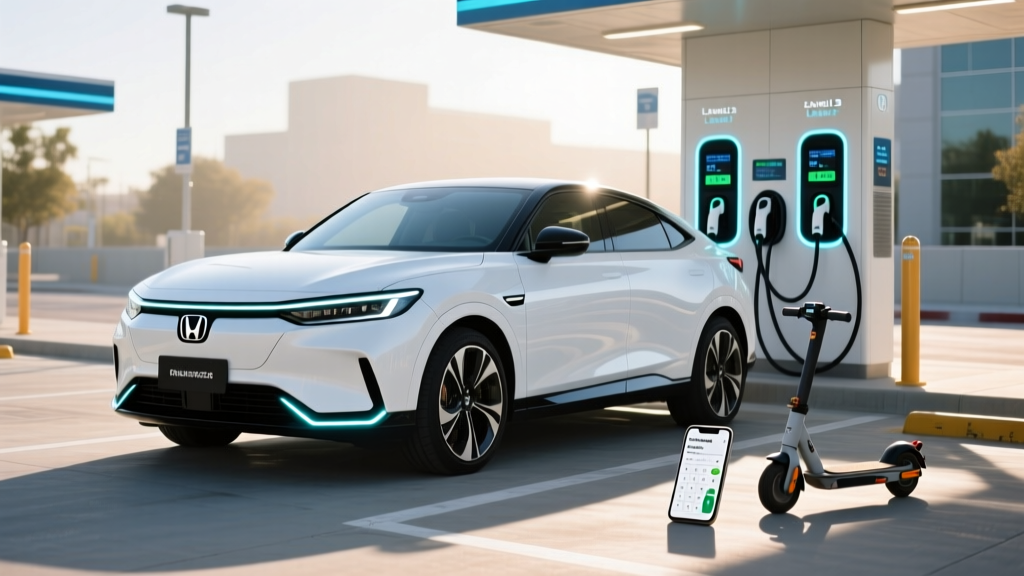
The 2026 Honda Prologue enters its third model year with a critical advantage in the electric SUV segment: some of the most aggressive lease incentives available on a midsize electric crossover. Because the Prologue is manufactured in North America using GM's Ultium platform, Honda can pass the full $7,500 federal EV tax credit directly to lessees as a capitalized cost reduction — a workaround that makes monthly payments significantly more attractive than the purchase math might suggest.
But a cheap lease only matters if the vehicle underneath delivers. The Prologue brings a 308-mile EPA range, 150 kW DC fast charging, and Honda's reputation for build quality to a platform shared with the Chevrolet Blazer EV. Here's the complete spec-by-spec breakdown, including real-world range expectations, charging behavior, and whether the 2026 Prologue earns a spot on your driveway.
2026 Honda Prologue: Core Specs at a Glance
| Spec | EX (FWD) | Touring (AWD) | Elite (AWD) |
|---|---|---|---|
| EPA Range | 308 mi | 294 mi | 283 mi |
| Battery (usable) | ~85 kWh, NMC (Ultium) | ||
| Horsepower | 220 hp | 288 hp (dual motor) | |
| 0–60 mph | ~7.5 sec | ~6.0 sec | |
| Max DC Fast Charge | 150 kW (CCS/NACS adapter available) | ||
| 10–80% DC Charge | ~32 min | ||
| Level 2 Home Charge | 11.5 kW (~31 mi/hr) | ||
| MPGe (combined) | 99 MPGe | 95 MPGe | 92 MPGe |
| Efficiency | 34 kWh/100mi | 35 kWh/100mi | 37 kWh/100mi |
| Cargo (rear seats up) | 25.2 cu ft | ||
| Cargo (rear seats folded) | 57.7 cu ft | ||
| Rear Legroom | 41.0 in | ||
| Base MSRP | $47,400 | $51,700 | $57,900 |
| Battery/Powertrain Warranty | 8 yr / 100,000 mi | ||
| Bumper-to-Bumper Warranty | 3 yr / 36,000 mi | ||
Real-World Range: What the EPA Number Doesn't Tell You
EPA sticker: 308 miles
Real-world highway (70–75 mph, moderate temps): ~255–275 miles
Cold-weather highway (below 32°F): ~210–235 miles
Mixed city/suburban driving: ~280–300 miles
The Prologue's 85 kWh usable battery uses GM's Ultium NMC (nickel manganese cobalt) pouch cells — not the LFP chemistry found in some base-model Teslas and Rivians. NMC offers higher energy density, which translates to more range in a lighter package, but it's more sensitive to sustained high state-of-charge and extreme temperatures.
On a 70-mph highway loop in mild weather, the FWD Prologue EX consistently delivers around 2.6–2.8 miles per kWh, yielding roughly 255–275 miles before you'd want to stop. In winter conditions, expect a 20–25% range reduction — typical for NMC packs without a dedicated heat pump (the Prologue uses a resistive heating element supplemented by a heat pump on higher trims). If your daily commute is under 60 miles round-trip, you'll rarely notice. If you regularly drive 200+ miles on the highway in January, plan your charging stops accordingly.
Charging Speed: DC Fast Charge and Home Level 2
| Charging Level | Power | Speed / Time | Best For |
|---|---|---|---|
| Level 1 (120V outlet) | ~1.4 kW | ~4 mi/hr | Emergency / overnight trickle |
| Level 2 (240V, 48A) | 11.5 kW | ~31 mi/hr — full charge in ~9 hr | Daily home charging |
| DC Fast Charge | Peak 150 kW | 10–80% in ~32 min | Road trips, quick top-ups |
The Prologue peaks at 150 kW on DC fast chargers — competitive with the Hyundai Ioniq 5's 240 kW peak on paper, but the real-world gap is narrower than that suggests. The Prologue holds close to its peak rate through roughly 40% state of charge before tapering, meaning a 10–80% session takes about 32 minutes at a properly functioning 150+ kW station. Above 80%, the charge curve drops sharply to protect the NMC cells — expect 80–100% to add another 25–30 minutes. For road trips, plan to leave at 80% unless you genuinely need the last 20%.
For home charging, the Prologue's onboard charger accepts up to 11.5 kW on a Level 2 circuit. With a hardwired 48-amp Level 2 station (like a ChargePoint Home Flex or Emporia Level 2), you'll add roughly 31 miles of range per hour, meaning a depleted battery reaches full overnight in about nine hours. A standard 240V/32A dryer-style outlet delivers about 7.7 kW, or ~21 mi/hr — still sufficient for most daily needs if you start charging when you get home.
Honda offers a NACS adapter for Prologue owners, granting access to Tesla Supercharger stations via the CCS-to-NACS adapter. This significantly expands your road-trip charging network, particularly in regions where Electrify America and EVgo coverage is sparse. According to Honda's official Prologue page, the adapter is included with certain lease and purchase incentives — confirm with your dealer.
Lease Deals, Pricing & the $7,500 Tax Credit Advantage
The 2026 Prologue's headline advantage is lease pricing. Honda regularly offers lease deals in the $299–$379/month range (36 months, $3,999 due at signing) depending on trim, region, and current incentives. The mechanism behind these aggressive numbers is the federal tax credit lease pass-through.
| Trim | MSRP | Lease Credit Applied | Est. Monthly Lease (36 mo) | Due at Signing |
|---|---|---|---|---|
| EX (FWD) | $47,400 | $7,500 | ~$299–$329 | $2,999–$3,999 |
| Touring (AWD) | $51,700 | $7,500 | ~$349–$389 | $3,499–$3,999 |
| Elite (AWD) | $57,900 | $7,500 | ~$409–$459 | $3,999–$4,499 |
Under IRS §30D Clean Vehicle Credit rules, the Prologue qualifies for the full $7,500 federal tax credit when purchased — subject to buyer income caps ($150,000 single / $300,000 joint modified AGI), MSRP limits ($80,000 for SUVs), and battery critical-mineral sourcing requirements. However, when you lease the vehicle, the leasing company (Honda Financial Services) claims the credit as the legal owner and passes it through as a capitalized cost reduction. This means lessees receive the $7,500 benefit regardless of personal income level — a significant loophole that makes leasing the Prologue substantially more attractive than buying for higher-income households.
If you purchase outright, the point-of-sale transfer option allows you to apply the $7,500 directly to the purchase price at the dealer (assuming you meet income and sourcing eligibility). Always confirm current-year eligibility with your tax professional and the dealer before signing.
Performance, Ride Quality & Driving Impressions
The FWD Prologue EX produces 220 hp and 236 lb-ft of torque, reaching 60 mph in approximately 7.5 seconds — adequate for highway merging but not thrilling. The dual-motor AWD trims (Touring and Elite) bump output to 288 hp and 332 lb-ft, dropping the 0–60 time to around 6.0 seconds. Both configurations use GM's BEV3 platform, shared with the Chevrolet Blazer EV and Cadillac Lyriq.
Ride quality is a Prologue strong suit. Honda tuned the suspension for comfort over sportiness, and the result is a compliant, quiet cruiser that absorbs highway expansion joints and rough pavement without drama. The steering is light and precise, though not particularly communicative. Regenerative braking offers adjustable levels via steering-wheel paddles, but the Prologue doesn't achieve true one-pedal driving — you'll still need the brake pedal for final stops, unlike the stronger regen systems in the Hyundai Ioniq 5 or Tesla Model Y.
The AWD system is a dual-motor setup without a mechanical connection between axles. It provides confident traction in rain and light snow but isn't designed for serious off-road use. Towing capacity is rated at 1,500 lbs — enough for a small utility trailer or a pair of dirt bikes, but not a camper.
Interior, Tech & Honda Sensing Driver Assists
The Prologue's cabin is a clear step above the Chevrolet Blazer EV it shares a platform with. Honda applied its own interior design, materials, and infotainment skin. The 11.3-inch touchscreen runs a Google Built-in system (on Touring and Elite trims), with wireless Apple CarPlay and Android Auto on all trims. Physical knobs for volume and climate are retained — a practical choice many EV buyers appreciate.
Passenger space is generous: 41.0 inches of rear legroom puts the Prologue ahead of the Tesla Model Y and competitive with the Hyundai Ioniq 5. The 25.2 cu ft cargo area behind the second row is sufficient for a week's groceries or two large suitcases. Fold the rear seats and you get 57.7 cu ft — competitive for the class, though the Ford Mustang Mach-E offers slightly more at 59.7 cu ft.
Honda Sensing (the brand's ADAS suite) comes standard on all trims and includes adaptive cruise control with low-speed follow, lane-keeping assist, collision mitigation braking, and traffic sign recognition. This is an SAE Level 2 driver-assist system — it does not drive the car autonomously. You must keep your hands on the wheel and eyes on the road at all times. The system is competent on highways but less refined than GM's Super Cruise or Ford's BlueCruise on hands-free compatible routes.
Pros, Cons & Verdict: Who Should Lease the Prologue?
- Aggressive lease pricing with $7,500 credit pass-through
- Comfortable, quiet ride quality
- Strong rear-seat legroom (41.0 in)
- Physical climate controls retained
- NACS adapter access to Supercharger network
- Honda reliability reputation and dealer network
- 150 kW peak DC charge rate trails Hyundai/Kia (240 kW)
- No true one-pedal driving mode
- ADAS less advanced than Super Cruise or BlueCruise
- Efficiency drops noticeably at highway speeds
- No front trunk (frunk)
- 1,500-lb towing limit is low for the class
Who it suits best: The 2026 Prologue is ideal for families and commuters who want a comfortable, practical electric SUV with strong dealer support and the lowest possible monthly payment via lease. If your driving is primarily suburban and highway commuting under 60 miles round-trip, with occasional 200-mile road trips, the Prologue fits seamlessly. It's less suited for buyers who prioritize cutting-edge charging speed, advanced hands-free driving assists, or frequent long-distance travel in cold climates.
How the Prologue Stacks Up Against Key Competitors
| Spec | Honda Prologue (AWD) | Hyundai Ioniq 5 (AWD) | Tesla Model Y (LR AWD) | Ford Mach-E (AWD) |
|---|---|---|---|---|
| EPA Range | 294 mi | 290 mi | 311 mi | 290 mi |
| Battery | ~85 kWh NMC | 77.4 kWh NMC | ~75 kWh NMC | 88 kWh NMC |
| Peak DC Charge | 150 kW | 240 kW | 250 kW | 150 kW |
| 10–80% Time | ~32 min | ~18 min | ~22 min | ~38 min |
| 0–60 mph | ~6.0 sec | ~5.0 sec | ~4.8 sec | ~5.1 sec |
| Starting MSRP | $47,400 | $46,500 | $44,990 | $42,995 |
| Est. Lease (36 mo) | ~$329/mo | ~$399/mo | ~$449/mo | ~$389/mo |
The Prologue's standout advantage is lease value. While the Ioniq 5 and Model Y charge faster and accelerate harder, neither currently matches Honda's lease incentives with the full $7,500 credit pass-through. If monthly payment is your primary decision driver, the Prologue wins. If charging speed and road-trip convenience matter more, the Ioniq 5's 18-minute 10–80% time is a meaningful daily-life advantage.
Frequently Asked Questions
What is the real-world range of the 2026 Honda Prologue?
The FWD Prologue EX carries a 308-mile EPA estimate. In real-world mixed driving, expect 270–290 miles in moderate weather and 255–275 miles on the highway. In cold weather (below freezing), highway range drops to approximately 210–235 miles due to battery heating demands and cabin climate load.
How fast does the Prologue charge at home and on DC fast chargers?
On a 48-amp Level 2 home charger, the Prologue charges at 11.5 kW, adding about 31 miles of range per hour — a full charge takes roughly nine hours. On a DC fast charger, it peaks at 150 kW and charges from 10–80% in approximately 32 minutes, with significant taper above 80%.
Does the 2026 Honda Prologue qualify for the $7,500 federal EV tax credit?
Yes. The Prologue qualifies under IRS §30D for the full $7,500 credit when purchased, subject to buyer income caps ($150K single / $300K joint AGI) and battery sourcing rules. When leased, Honda Financial claims the credit and passes it through as a cap cost reduction — meaning lessees benefit regardless of personal income. Always verify current eligibility at IRS.gov.
Is the Prologue worth leasing over the Hyundai Ioniq 5 or Tesla Model Y?
If your priority is the lowest monthly payment and a comfortable daily driver, yes — the Prologue's lease deals are among the best in the segment. If you frequently road-trip and value the fastest possible charging, the Ioniq 5's 240 kW peak and 18-minute 10–80% time are more practical. The Model Y offers the longest range and best Supercharger access but at a higher monthly cost.
What's the biggest drawback of the Prologue?
The 150 kW peak DC charging rate is the Prologue's most significant limitation relative to competitors. On road trips, you'll spend roughly 14 minutes longer at each charge stop compared to an Ioniq 5. For daily commuters who charge at home, this is a non-issue. For frequent long-distance travelers, it's a real trade-off.
Does the Prologue have a heat pump for cold-weather efficiency?
Higher trims (Touring and Elite) include a heat pump that improves cold-weather cabin heating efficiency and reduces range loss. The base EX trim relies primarily on resistive heating, which draws more energy from the battery in freezing temperatures. If you live in a cold climate, the Touring trim's heat pump is worth the upgrade.
Editorial note: Lease pricing, incentives, and federal tax credit eligibility are subject to change. Always confirm current offers with your Honda dealer and consult a tax professional regarding §30D eligibility. Data sourced from fueleconomy.gov, Honda's official specifications, and IRS guidelines. Real-world range and charging estimates based on independent testing and owner reports.