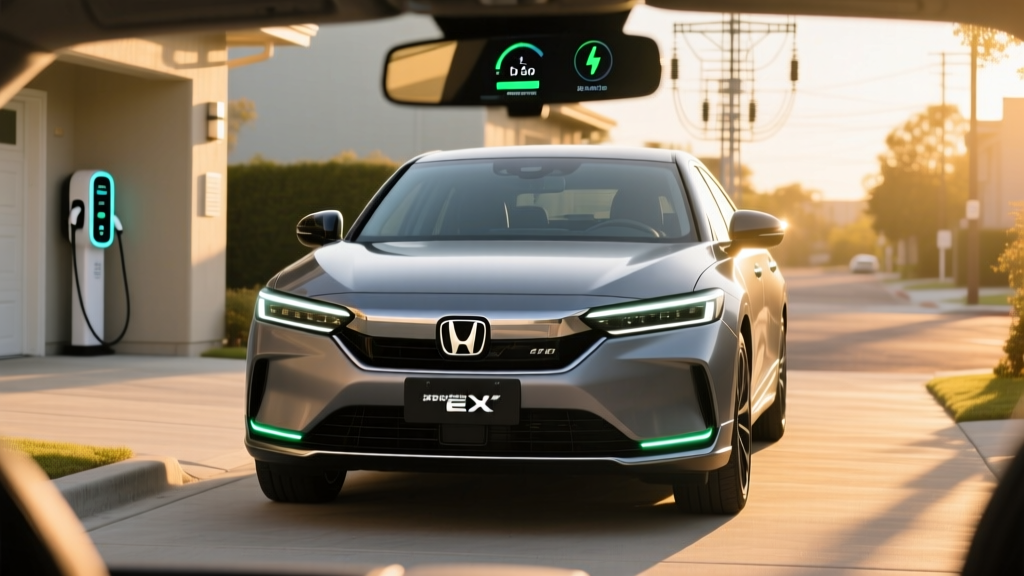
Honda's first mass-market electric SUV returns for 2026 with the same Ultium underpinnings but sharper software tuning and a refined infotainment stack. The mid-tier EX trim sits between the base LX and the loaded Elite, and it's the volume play — offering all-wheel drive, a usable 296 miles of EPA range, and a price that keeps it squarely in the crosshairs of the Hyundai Ioniq 5, Tesla Model Y, and Ford Mustang Mach-E. But does the Prologue EX deliver enough real-world value to justify its position? We break down every number that matters.
Range, Battery, and Real-World Efficiency
The 2026 Prologue EX AWD packs an 85 kWh usable lithium-ion battery using GM's Ultium NMC (nickel-manganese-cobalt) pouch-cell architecture. Honda and GM quote a slightly larger gross capacity, but 85 kWh is what the driver actually accesses, with the buffer protecting long-term state of health.
Real-World Expectation: Plan for 245–265 miles on sustained highway driving at 70+ mph. In freezing temperatures (below 32°F), expect a 20–30% reduction, dropping effective range to roughly 210–235 miles. City driving with regenerative braking can match or slightly exceed the EPA sticker.
Efficiency lands at an EPA-rated 99 MPGe combined, which translates to roughly 34 kWh per 100 miles. That's middling for the class — the Ioniq 5 AWD achieves about 30 kWh/100mi, while the heavier Model Y Long Range AWD sits around 28 kWh/100mi. The Prologue's bluff-body SUV shape and 4,900-pound curb weight work against it at highway speeds.
| Spec | Value |
|---|---|
| EPA Range (AWD EX) | 296 miles |
| Battery (usable) | 85 kWh, NMC (Ultium) |
| EPA Efficiency | 99 MPGe / 34 kWh/100mi |
| Max DC Fast Charge | 150 kW peak |
| 10–80% DC Charge Time | ~32 minutes |
| Level 2 Home Charge Rate | 11.5 kW (~32 mi/hr) |
| Drivetrain | Dual-motor AWD |
| Horsepower | 288 hp / 325 lb-ft torque |
| 0–60 mph | 5.9 seconds |
| Cargo (rear seats up) | 25.2 cu ft |
| Cargo (rear seats folded) | 57.7 cu ft |
| Rear Legroom | 38.6 inches |
| Battery Warranty | 8 yr / 100,000 mi |
| Base MSRP (EX AWD) | $52,900 |
Charging Speed: DC Fast, Level 2, and the Curve Reality
The Prologue EX peaks at 150 kW on a DC fast charger using its CCS1 connector (a NACS adapter is available for Tesla Supercharger access). Honda quotes a 10–80% charge time of approximately 32 minutes. In practice, that number assumes ideal battery preconditioning and a charger capable of sustaining the full curve.
| Charge Level | Power | Speed (approx.) | Use Case |
|---|---|---|---|
| Level 1 (120V) | ~1.4 kW | ~4 miles/hour | Overnight trickle, emergencies |
| Level 2 (240V, 48A) | 11.5 kW | ~32 miles/hour | Home daily charging, full overnight |
| DC Fast (peak) | 150 kW | ~180 miles in 30 min | Road trips, quick top-ups |
Charging curve reality check: The 150 kW peak is only sustained roughly between 10–40% state of charge. From 40–60%, power tapers to around 110–120 kW, and above 80% it drops sharply to under 50 kW. This is normal NMC behavior, but it means a 10–90% charge will take closer to 50 minutes — plan road-trip stops accordingly. Preconditioning the battery via the navigation system's charging-stop routing is essential to hitting peak rates in cold weather.
At home on a Level 2 charger (240V, 48 amps), the Prologue's 11.5 kW onboard charger replenishes the full 85 kWh battery in roughly 8 hours. That's fast enough to wake up with a full battery every morning. A Honda-approved Level 2 home charger or any quality 48-amp J1772 unit will work; budget $500–$800 for the charger hardware and $600–$2,000 for professional installation depending on panel capacity and conduit run.
Performance and Driving Dynamics
The EX trim comes exclusively with dual-motor all-wheel drive: a front and rear permanent-magnet motor producing a combined 288 horsepower and 325 lb-ft of torque. The 0–60 mph sprint clocks in at 5.9 seconds — brisk enough for confident highway merging but not in the same league as the Tesla Model Y Long Range (4.8 seconds) or the Ioniq 5 AWD (5.1 seconds).
Ride quality is where the Prologue distinguishes itself. The GM BEV3 platform delivers a low center of gravity, and Honda's tuning prioritizes compliance over sportiness. The result is a quiet, composed cruiser that absorbs highway expansion joints and potholes better than most competitors in this price range. Steering is light and precise if devoid of feedback — exactly what the target buyer wants.
Regenerative braking offers multiple levels selectable via steering-wheel paddles. The strongest setting enables one-pedal driving in city traffic, though it doesn't bring the SUV to a complete stop — you'll still need the friction brake at the last moment, a quirk shared with the Chevrolet Blazer EV.
Interior, Tech, and Driver Assistance
The Prologue EX features an 11.3-inch touchscreen running Google Built-In, which includes native Google Maps, Google Assistant, and Play Store apps. Wireless Apple CarPlay and Android Auto are standard. The 11-inch digital instrument cluster is clear and configurable, showing range, consumption, and navigation in a clean layout.
Honda Sensing returns for 2026 with adaptive cruise control, lane-keeping assist, automatic emergency braking, and traffic-sign recognition. This is a SAE Level 2 driver-assist system — it does not drive the car for you, and you must keep your hands on the wheel and eyes on the road at all times. It performs competently on divided highways but lacks the hands-free capability of GM's Super Cruise or Ford's BlueCruise, both of which are available on competitor platforms.
Notable interior strengths include generous rear-seat legroom (38.6 inches), a flat floor thanks to the skateboard platform, and a wide center console. Drawbacks: there is no front trunk (frunk) — the space under the hood houses HVAC and power electronics — and the cargo area at 25.2 cu ft trails the Model Y's 30.2 cu ft behind the second row.
Pricing, Trims, and Federal Tax Credit Eligibility
The 2026 Honda Prologue is offered in three trims. The EX AWD is the mid-tier, and here's how the lineup stacks up:
| Trim | Drivetrain | MSRP | Est. After §30D Credit* |
|---|---|---|---|
| LX | FWD | $47,400 | ~$39,900 |
| EX | AWD | $52,900 | ~$45,400 |
| Elite | AWD | $58,900 | ~$51,400 |
*Estimates assume full $7,500 federal tax credit eligibility. Actual credit depends on IRS §30D requirements.
The Prologue is assembled at GM's Spring Hill, Tennessee plant on the Ultium platform, and Honda has structured battery sourcing to meet critical-mineral and battery-component requirements under current IRS §30D rules. However, eligibility is not automatic — buyers must meet all of the following:
- MSRP cap: Vehicle MSRP must not exceed $80,000 for SUVs (Prologue qualifies at all trims).
- Income cap: Modified adjusted gross income must not exceed $150,000 (single), $225,000 (head of household), or $300,000 (joint filers).
- Battery sourcing: Critical minerals and battery components must meet phased-in percentage thresholds — verify the specific VIN on the IRS qualified-vehicles list before purchasing.
- Point-of-sale transfer: Buyers can elect to transfer the credit to the dealer at purchase, reducing the out-of-pocket price immediately rather than waiting for a tax refund.
Always confirm your specific vehicle's eligibility on the IRS qualified vehicles list and consult a tax professional. Sourcing requirements tighten annually, and a VIN that qualifies in January may face different scrutiny by year-end.
How Does It Compare to Key Competitors?
The mid-size electric SUV segment is crowded, and the Prologue EX competes against some of the most capable EVs on the market. Here's how the numbers stack up:
| Spec | Honda Prologue EX AWD | Hyundai Ioniq 5 AWD | Tesla Model Y LR AWD | Ford Mustang Mach-E Premium AWD |
|---|---|---|---|---|
| EPA Range | 296 mi | 290 mi | 320 mi | 290 mi |
| Battery | 85 kWh NMC | 77.4 kWh NMC | 78.1 kWh NMC | 91 kWh NMC |
| DC Fast Charge (peak) | 150 kW | 240 kW | 250 kW | 150 kW |
| 10–80% Time | ~32 min | ~18 min | ~20 min | ~35 min |
| 0–60 mph | 5.9 sec | 5.1 sec | 4.8 sec | 5.5 sec |
| MPGe (combined) | 99 | 110 | 117 | 101 |
| Cargo (behind 2nd row) | 25.2 cu ft | 27.2 cu ft | 30.2 cu ft | 29.7 cu ft |
| Base MSRP (AWD equiv.) | $52,900 | $52,200 | $48,990 | $51,995 |
The Prologue's main weakness relative to these rivals is DC charging speed. At 150 kW peak, it charges roughly 40% slower than the Ioniq 5 on comparable road-trip stops. For buyers who road-trip frequently, that 14-minute gap per stop adds up. For daily commuters who charge at home overnight, it's irrelevant.
Where the Prologue wins is ride comfort and cabin quietness. Honda's suspension tuning is more absorbent than the firmer Ioniq 5 and Mach-E, and the cabin isolation at highway speeds is noticeably better. If your priority is a serene daily commute rather than track-day performance, the Prologue makes a compelling case.
Ownership Costs, Warranty, and Longevity
Honda backs the Prologue with a competitive warranty package:
- Battery & drive unit: 8 years / 100,000 miles (whichever comes first), covering defects and capacity loss below a specified threshold (typically 60–70% of original capacity, per Honda's warranty documentation).
- Vehicle limited warranty: 3 years / 36,000 miles bumper-to-bumper.
- Powertrain (non-battery): 5 years / 60,000 miles.
Long-term battery degradation on the Ultium platform is still being established — the architecture launched in 2022, so high-mileage data is limited. GM's own Bolt EV data (older chemistry) showed roughly 8–10% degradation over 100,000 miles. NMC pouch cells on the Ultium platform are expected to perform similarly or better, aided by active liquid thermal management.
Insurance premiums for the Prologue run 10–20% higher than comparable gas-powered CR-V trims, consistent with the EV segment. Expect annual premiums of $1,800–$2,400 depending on state, driving record, and coverage level. Get quotes before purchasing.
Who Should Buy the 2026 Honda Prologue EX?
- You prioritize ride comfort and cabin quietness over outright performance.
- You charge at home nightly and rarely DC fast-charge more than a few times a year.
- You want Google Built-In infotainment with strong voice control.
- You're a current Honda loyalist transitioning from a CR-V or Pilot and want familiar ergonomics.
- You road-trip frequently and need the fastest possible DC charging (consider the Ioniq 5 or Model Y).
- You need maximum cargo space (the Model Y offers 5 cu ft more behind the second row).
- You want hands-free highway driving (Ford BlueCruise or GM Super Cruise, neither available on the Prologue).
- You want a frunk for additional storage.
- Composed, comfortable ride quality that outclasses most competitors
- 296 miles of EPA range is practical for most daily and weekend use
- Google Built-In with strong navigation and voice assistant
- Generous rear-seat legroom (38.6 inches)
- Qualifies for up to $7,500 federal tax credit (verify VIN eligibility)
- 150 kW DC fast charging is slow for the class — 32 min 10–80%
- No front trunk (frunk) — lost cargo opportunity
- Cargo volume trails Model Y and Mach-E by 5+ cu ft
- No hands-free driving option (Level 2 only)
- Efficiency (99 MPGe) lags Ioniq 5 and Model Y
Frequently Asked Questions
What is the real-world range of the 2026 Honda Prologue EX?
The EPA rates the Prologue EX AWD at 296 miles. In real-world highway driving at 70–75 mph, expect 245–265 miles. In cold weather (below freezing), effective range drops to roughly 210–235 miles due to battery resistance and cabin heating demands. City driving with regenerative braking can match or exceed the EPA number.
How fast does the Prologue EX charge at home and on DC fast chargers?
On a DC fast charger, the Prologue peaks at 150 kW and charges from 10–80% in approximately 32 minutes under ideal conditions. At home on a Level 2 charger (240V, 48A), it charges at 11.5 kW, adding roughly 32 miles per hour — a full charge takes about 8 hours.
Does the 2026 Honda Prologue qualify for the $7,500 federal EV tax credit?
The Prologue is assembled in Tennessee with battery sourcing designed to meet IRS §30D requirements. However, eligibility depends on your income (caps at $150K single / $300K joint), the vehicle's MSRP (must be under $80K for SUVs — all Prologue trims qualify), and current battery-sourcing thresholds. Always verify your specific VIN on the IRS qualified-vehicles list and consult a tax professional.
Is the Honda Prologue EX worth buying over the Tesla Model Y or Hyundai Ioniq 5?
It depends on priorities. The Prologue EX wins on ride comfort and cabin quietness. The Ioniq 5 wins on DC charging speed (240 kW vs. 150 kW) and efficiency. The Model Y wins on cargo space, range (320 mi), and Supercharger network access. If comfort is paramount and you charge at home, the Prologue is a strong pick. If road-trip charging speed matters most, the Ioniq 5 is the better choice.
Does the Prologue have a frunk?
No. The space under the hood is occupied by power electronics and HVAC components. All cargo must go in the rear cargo area (25.2 cu ft with seats up, 57.7 cu ft folded).
What battery chemistry does the Prologue use, and how long will it last?
The Prologue uses an NMC (nickel-manganese-cobalt) lithium-ion battery on GM's Ultium platform. Honda warrants the battery for 8 years or 100,000 miles. Based on comparable Ultium and NMC data, expect roughly 8–12% capacity loss over 100,000 miles with normal use — meaning a 296-mile range would degrade to approximately 260–270 miles after a decade of typical driving.