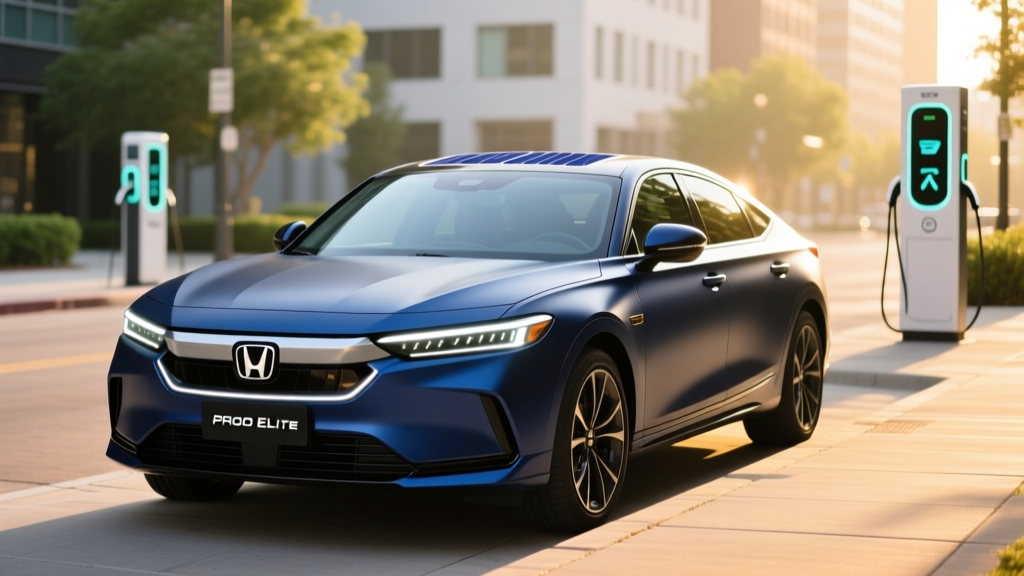
The Honda Prologue enters its third model year in 2026, and the Elite trim remains the flagship of Honda's all-electric lineup. Built on General Motors' Ultium platform through a partnership that gives Honda access to proven battery and drivetrain engineering, the Prologue Elite targets mainstream family buyers who want a spacious two-row electric SUV without the complexity or price of a luxury badge. But does a rebadged Blazer EV with Honda tuning deliver enough to stand out in a crowded midsize electric SUV segment? We break down every number that matters.
Quick Verdict: Who the Prologue Elite Is For
The 2026 Honda Prologue Elite is best suited for suburban families and daily commuters who prioritize interior space, straightforward infotainment, and reliable Level 2 home charging over cutting-edge performance or autonomous driving features. If you need a comfortable, competent electric SUV for school runs, grocery hauling, and occasional 200-mile road trips — and you want to stay under the federal tax credit MSRP cap — the Prologue Elite makes a strong case. It is not the fastest-charging or longest-range option in its class, but it is one of the most livable.
Range, Efficiency, and Real-World Expectations
The 2026 Prologue Elite is equipped with an 85 kWh usable lithium-ion battery pack using GM's Ultium NMC (nickel manganese cobalt) pouch cells. Honda and the EPA rate the Elite AWD at 296 miles of combined range.
EPA sticker: 296 miles combined
Highway driving (70-75 mph): Expect 245–265 miles. The Prologue's boxy SUV shape and AWD drivetrain exact a toll at sustained highway speeds.
Cold weather (below 32°F): Plan for 210–235 miles. The NMC pack lacks the cold-weather resilience of LFP chemistry, and cabin heating draws significant energy despite the standard heat pump.
City/commuter driving: 280–300+ miles is achievable thanks to regenerative braking and lower average speeds.
Efficiency is rated at 99 MPGe combined (approximately 34 kWh per 100 miles) according to fueleconomy.gov. That places the Prologue Elite mid-pack among competitors — slightly behind the Hyundai Ioniq 5's 114 MPGe but comparable to the Ford Mustang Mach-E AWD.
| Spec | Value |
|---|---|
| EPA Range (AWD) | 296 miles |
| Battery (usable) | 85 kWh, NMC (Ultium) |
| Efficiency | 99 MPGe / 34 kWh/100 mi |
| Max DC Fast Charge | 150 kW (peak) |
| 10–80% DC Charge Time | ~32 minutes |
| Level 2 Home Charging | 11.5 kW (~32 mi/hr) |
| Drivetrain | Dual-motor AWD |
| Horsepower / Torque | 288 hp / 333 lb-ft |
| 0–60 mph | 5.9 seconds |
| Cargo (rear seats up / down) | 25.2 / 57.7 cu ft |
| Rear Legroom | 38.6 inches |
| Battery Warranty | 8 years / 100,000 miles |
| Base MSRP (Elite AWD) | $51,900 |
Charging Speed: DC Fast, Level 2, and the Curve
Charging is where buyers should pay close attention, because the Prologue Elite's 150 kW peak DC fast-charging rate is respectable but not class-leading. Here is what to expect at each charging level:
| Charging Level | Power (kW) | Speed / Time |
|---|---|---|
| Level 1 (120V household) | ~1.4 kW | ~4 miles per hour |
| Level 2 (240V home / public) | 11.5 kW | ~32 miles per hour; full charge in ~8.5 hrs |
| DC Fast Charge (peak) | 150 kW | 10–80% in ~32 min |
Understanding the charge curve: The Prologue hits its 150 kW peak between roughly 10% and 35% state of charge (SoC). Above 50%, the rate tapers to approximately 90–100 kW, and above 80% it drops further to protect battery health — typical behavior for NMC chemistry. If you regularly road-trip, plan your stops around the 10–80% window; charging from 80–100% on DC can add another 25+ minutes for relatively few miles gained.
At home on a Level 2 charger (the kind a licensed electrician would install on a 240V, 48-amp circuit), the 11.5 kW onboard charger replenishes the 85 kWh pack in roughly 8.5 hours — ideal for overnight charging. Most owners will wake up to a full battery every morning with a properly installed Level 2 setup.
The Prologue uses the NACS (North American Charging Standard) connector as of the 2025 model year, giving it native access to Tesla's Supercharger network — a significant advantage over CCS-only competitors that still require adapters.
Performance and Driving Impressions
The Elite trim comes exclusively with dual-motor all-wheel drive, producing 288 horsepower and 333 lb-ft of torque. The 0–60 mph sprint takes 5.9 seconds, which is adequate for highway merging and passing but not exhilarating. For comparison, the Hyundai Ioniq 5 AWD does it in 5.1 seconds, while the Ford Mustang Mach-E Premium AWD clocks 5.4 seconds.
Where the Prologue distinguishes itself is ride comfort. Honda's tuning prioritizes compliance over sportiness — the suspension absorbs highway expansion joints and potholes with less harshness than the stiffer Mach-E. Steering is light and predictable, making it an easy SUV to park and maneuver. Regenerative braking offers multiple levels selectable via steering-wheel paddles, though true one-pedal driving requires selecting the strongest regen mode in the drive settings.
Interior, Cargo, and Technology
The Prologue Elite's cabin is where Honda's influence is most apparent. Materials quality is a step above the Chevrolet Blazer EV it shares a platform with, with soft-touch surfaces on the dashboard and door panels, heated and ventilated front seats, and a heated steering wheel as standard on the Elite trim.
Space: With 25.2 cubic feet of cargo volume behind the rear seats and 57.7 cubic feet with them folded, the Prologue matches or beats most midsize electric SUVs. Rear legroom of 38.6 inches is generous enough for adult passengers on long trips. However, there is no front trunk (frunk) — the space under the hood is occupied by HVAC and power electronics, a packaging choice inherited from the GM platform.
Infotainment: An 11.3-inch touchscreen running Honda's latest interface anchors the dashboard, with wireless Apple CarPlay and Android Auto, Google built-in navigation, and a 12-speaker Bose audio system on the Elite. The system is responsive and logically laid out, though it lacks the expansive app ecosystem of Tesla's native OS.
Driver Assistance: Honda Sensing comes standard across all trims and includes adaptive cruise control with stop-and-go, lane-keeping assist, blind-spot monitoring, and automatic emergency braking. This is an SAE Level 2 driver-assistance system — it requires continuous driver attention and hands-on-wheel supervision. It is not self-driving. The system performs competently on highways but can be overly conservative with lane-centering in construction zones.
Honda Sensing is a Level 2 system. You must keep your hands on the steering wheel and eyes on the road at all times. It does not navigate autonomously, handle all construction zones, or drive itself in inclement weather. Never treat it as a substitute for an attentive driver.
Pricing, Trims, and Federal Tax Credit
The 2026 Honda Prologue is offered in three trims. The Elite sits at the top:
| Trim | Drivetrain | MSRP | Est. After §30D Credit |
|---|---|---|---|
| EX (FWD) | FWD | $41,900 | ~$34,400* |
| Touring (AWD) | AWD | $46,900 | ~$39,400* |
| Elite (AWD) | AWD | $51,900 | ~$44,400* |
*Price after credit assumes full $7,500 §30D eligibility. Actual credit depends on your tax situation and vehicle qualification.
Federal tax credit eligibility (§30D): Under current IRS rules, the Prologue may qualify for up to $7,500 in federal tax credits, but several conditions apply:
- MSRP cap: The Prologue is classified as an SUV, so the MSRP cap is $80,000. All trims clear this threshold easily.
- Buyer income cap: Modified adjusted gross income must not exceed $150,000 (single), $225,000 (head of household), or $300,000 (married filing jointly).
- Battery sourcing: A percentage of critical minerals and battery components must be sourced from the U.S. or free-trade-agreement countries. The Ultium platform has been progressively increasing domestic sourcing, but the exact credit amount ($3,750 or $7,500) depends on the model year's compliance with these thresholds. Confirm with your tax professional before purchasing.
- Point-of-sale transfer: Eligible buyers can transfer the credit to the dealer at purchase, reducing the upfront price rather than waiting for a tax refund.
The as-tested price for our Elite AWD with no additional packages came to $52,860 including destination charges. After a potential $7,500 credit, the effective cost drops to approximately $45,360 — competitive with a well-equipped Hyundai Ioniq 5 Limited AWD or Ford Mustang Mach-E Premium AWD.
Competitor Comparison: Prologue Elite vs. the Field
| Spec | Honda Prologue Elite | Hyundai Ioniq 5 Limited AWD | Ford Mach-E Premium AWD |
|---|---|---|---|
| EPA Range | 296 mi | 290 mi | 290 mi |
| Battery | 85 kWh NMC | 77.4 kWh NMC | 91 kWh NMC |
| Peak DC Charge | 150 kW | 240 kW | 150 kW |
| 10–80% DC Time | ~32 min | ~18 min | ~36 min |
| 0–60 mph | 5.9 sec | 5.1 sec | 5.4 sec |
| Cargo (rear up) | 25.2 cu ft | 27.2 cu ft | 29.7 cu ft |
| Base MSRP (top AWD) | $51,900 | $54,250 | $51,995 |
Where the Prologue wins: Ride comfort, interior material quality at this price point, and Honda's reputation for long-term reliability and dealer network breadth.
Where it trails: The Ioniq 5 charges dramatically faster (18 vs. 32 minutes for 10–80%), which matters significantly for road-trippers. The Mach-E offers more cargo space. Neither rival has a frunk advantage over the Prologue — only the Ioniq 5 offers a small one.
Pros, Cons, and Ownership Outlook
- Comfortable, compliant ride quality
- Spacious cabin with generous rear legroom (38.6 in)
- NACS connector — native Supercharger access
- Strong Honda dealer network for service
- Competitive pricing under the §30D MSRP cap
- 8-year / 100,000-mile battery warranty
- 150 kW peak charge rate is slow vs. Ioniq 5 / EV6
- No front trunk (frunk)
- Range drops significantly in cold weather
- Conservative driver-assist tuning
- Elite trim pushes past $50K before incentives
- GM-sourced platform means Honda has less control over future battery upgrades
Battery warranty: Honda covers the Prologue's battery pack for 8 years or 100,000 miles (whichever comes first), with a capacity retention threshold of 70%. If the pack degrades below that level within the warranty period, Honda will repair or replace it. This matches the industry standard and aligns with GM's Ultium warranty terms.
Who should buy the Prologue Elite? Families who want a comfortable, well-equipped electric SUV with excellent rear-seat space, don't regularly take 300+ mile road trips, and value Honda's dealer network for service peace of mind. If you road-trip frequently and fast charging is a priority, the Hyundai Ioniq 5 or Kia EV6 are better choices. If maximum cargo space is your priority, test-drive the Mach-E.
Frequently Asked Questions
What is the real-world range of the 2026 Honda Prologue Elite?
The EPA rates it at 296 miles combined. In real-world highway driving at 70-75 mph, expect 245–265 miles. In cold weather below freezing, that can drop to 210–235 miles. City commuters using regenerative braking may see 280–300 miles.
How fast does the Prologue Elite charge?
On a DC fast charger, it peaks at 150 kW and charges from 10% to 80% in approximately 32 minutes. At home on a Level 2 charger (240V, 48A), it charges at 11.5 kW, adding about 32 miles of range per hour and fully replenishing the battery overnight in roughly 8.5 hours.
Does the 2026 Honda Prologue qualify for the federal EV tax credit?
It may qualify for up to $7,500 under IRS §30D, depending on battery-sourcing compliance, your income (caps of $150K single / $300K joint), and the vehicle's MSRP (must be under $80K for SUVs, which all Prologue trims satisfy). The credit can be transferred to the dealer at point of sale. Always verify current eligibility on irs.gov and consult a tax professional.
Is the Honda Prologue Elite worth buying over competitors?
It depends on your priorities. For ride comfort, interior quality, and Honda's dealer support, it's an excellent choice. For fast DC charging and road-trip convenience, the Hyundai Ioniq 5 is superior. For cargo space, the Ford Mustang Mach-E offers more. Test-drive all three before deciding.
Does the Prologue have a frunk?
No. The Prologue does not have a front trunk. The space under the hood houses HVAC components and power electronics from the GM Ultium platform.
What connector does the 2026 Prologue use?
The 2026 Prologue uses the NACS (Tesla) connector natively, giving it direct access to the Tesla Supercharger network without an adapter. This is a significant practical advantage for public charging access.