Quick Answer: Honda's 2026 electric lineup centers on the Prologue SUV, offering an EPA-estimated 296 miles of range (FWD trim), DC fast charging up to 150 kW, and a starting MSRP around $47,400. A new, smaller Honda 0 Series SUV is announced for late 2026 but not yet on sale. For most buyers, the Prologue makes sense if you have home Level 2 charging and drive under 250 miles daily; Honda's hybrid lineup (CR-V Hybrid, Accord Hybrid) remains more practical if you lack reliable charging access or frequently tow.
Honda's 2026 EV Lineup: What You Can Actually Buy
Honda's electrification strategy in 2026 spans two distinct approaches: the currently available Prologue (built on GM's Ultium platform) and the announced Honda 0 Series vehicles built on Honda's own architecture. Understanding this distinction matters because it affects everything from charging connector type to long-term parts support.
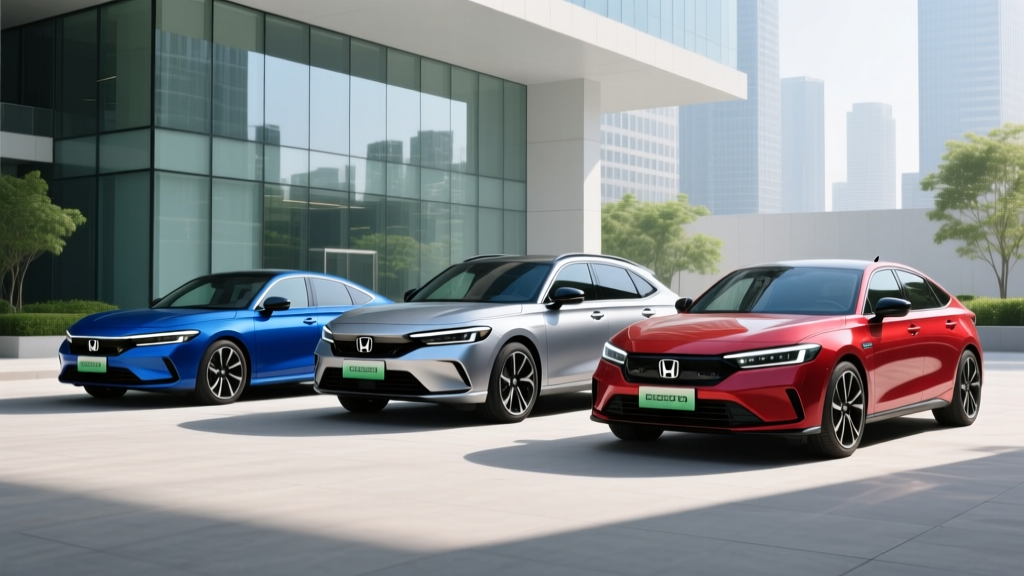
The 2026 Honda Prologue is a midsize two-row SUV available now in three trims: EX, Touring, and Elite. It shares its bones with the Chevrolet Blazer EV and Cadillac Lyriq, meaning proven Ultium battery hardware and widespread GM dealer service capability. The upcoming Honda 0 Series SUV, previewed at CES 2025, targets a 2027 model year with initial deliveries in late 2026 — Honda has published preliminary specs but final EPA numbers and pricing remain unconfirmed.
| Spec | EX (FWD) | Touring (FWD) | Elite (AWD) |
|---|---|---|---|
| EPA Range | 296 mi | 291 mi | 273 mi |
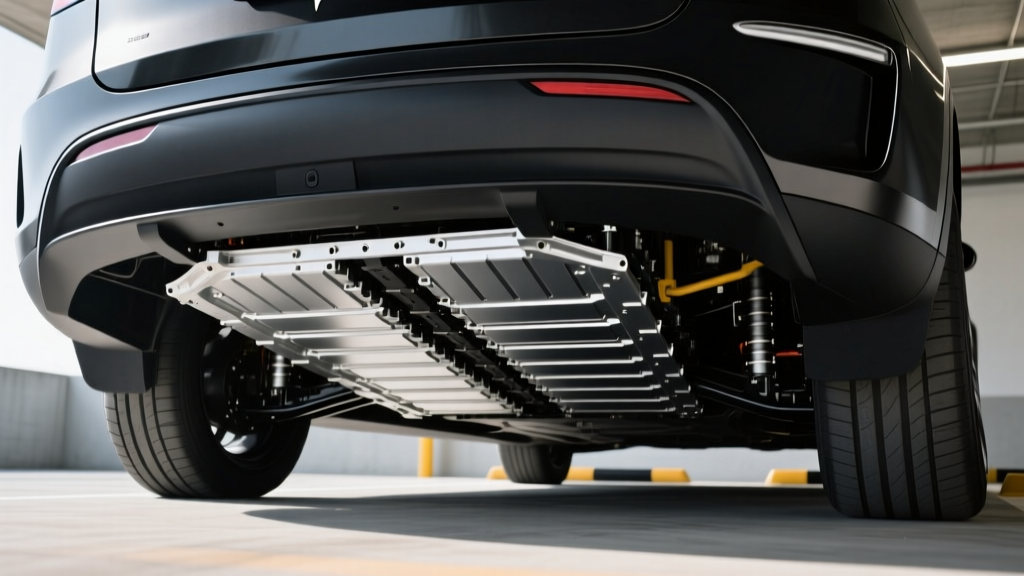
| Battery (usable) | 85 kWh, NMC lithium-ion (Ultium) | ||
| Motor Output | 212 hp / 236 lb-ft | 212 hp / 236 lb-ft | 288 hp / 333 lb-ft |
| 0–60 mph | ~7.8 sec | ~7.8 sec | ~6.2 sec |
| Max DC Fast Charge | 150 kW (CCS1) | ||
| 10–80% DC Charge | ~34 minutes | ||
| Level 2 (240V) Rate | 11.5 kW (~77 mi in 10 hrs) | ||
| MPGe (combined) | 99 MPGe | 97 MPGe | 90 MPGe |
| Base MSRP | $47,400 | $52,400 | $57,900 |
| Battery Warranty | 8 years / 100,000 miles | ||
Sources: EPA fueleconomy.gov, Honda Newsroom. MSRP excludes destination.
Real-World Range: What the EPA Sticker Doesn't Tell You
EPA vs. Reality: The Prologue EX's 296-mile EPA estimate assumes mixed driving at moderate temperatures. In real-world conditions:
- Highway (70–75 mph, summer): Expect ~245–260 miles. Aerodynamic drag hits SUVs hard at sustained speed.
- Cold weather (below 30°F): Range drops 20–30%, yielding ~195–230 miles. The Prologue lacks a heat pump, relying on resistive cabin heating, which draws significant energy.
- City/regen-heavy driving: You may match or slightly exceed the EPA figure thanks to regenerative braking recapturing energy.
The Prologue's 85 kWh usable NMC battery provides solid energy density, but the vehicle's 4,900+ lb curb weight (AWD Elite) works against efficiency. At highway speeds, expect consumption around 330–360 Wh/mi — reasonable for the class but noticeably higher than a Tesla Model Y's ~270 Wh/mi. This matters on road trips: you'll stop to charge slightly more often than a more aerodynamic crossover.
One ownership nuance: the Prologue's battery management system maintains a buffer above and below the displayed state of charge (SoC). You'll never truly hit 0% or 100% at the cell level, which protects long-term battery health but means the 85 kWh "usable" figure is already net of these buffers.
Charging Speeds and Infrastructure: The CCS Reality
The 2026 Prologue uses a CCS1 connector for DC fast charging and a J1772 inlet for Level 2 AC charging. This is a critical detail because Honda has committed to the NACS (Tesla-style) connector for its 0 Series vehicles, and the broader industry is migrating toward NACS. In 2026, CCS chargers remain widely available on Electrify America, EVgo, and ChargePoint networks, but new installations increasingly favor NACS.
| Level | Power | Miles Added | Typical Use Case |
|---|---|---|---|
| Level 1 (120V) | ~1.4 kW | ~4 mi/hr | Emergency/overnight top-up only |
| Level 2 (240V, 48A) | 11.5 kW | ~32 mi/hr | Home daily charging — full charge in ~8 hrs |
| DC Fast (peak) | 150 kW | ~180 mi in 20 min | Road trips; 10–80% in ~34 min |
The 150 kW peak DC charge rate is adequate but not class-leading. Competitors like the Hyundai Ioniq 5 and Kia EV6 accept up to 240 kW on 800V architectures, completing a 10–80% charge in roughly 18 minutes. The Prologue's charge curve also tapers noticeably above 80% SoC — a 10–90% charge takes closer to 50 minutes. On road trips, plan to charge to 80% and go; the time penalty for the last 10–20% is steep.
Home charging reality: A full Level 2 home installation (240V/48A hardwired charger) typically costs $800–$2,200 depending on your panel capacity and run length. If your electrical panel is at or near capacity (common in older homes with 100A service), a panel upgrade to 200A can add $1,500–$3,500. Get a quote from a licensed electrician before purchasing any EV — this is the single most overlooked cost.
Prologue vs. Gas and Hybrid: The Ownership Cost Breakdown
The most common cross-shopping question: does the Prologue save money versus a CR-V Hybrid or a gas-powered Pilot? Let's run the numbers over a 5-year, 75,000-mile ownership period.
| Cost Category | Prologue EX ($47,400) | CR-V Hybrid Sport ($37,000) | Pilot EX-L Gas ($44,000) |
|---|---|---|---|
| Purchase Price | $47,400 | $37,000 | $44,000 |
| Est. Federal Tax Credit | Up to $7,500* | $0 | $0 |
| Home Charger Install | $1,500 | $0 | $0 |
| Fuel / Electricity (75k mi) | $4,200** | $7,800 | $10,500 |
| Maintenance (5 yr) | $1,800 | $3,200 | $4,100 |
| Insurance (5 yr avg) | $9,500 | $7,200 | $7,800 |
| Est. Depreciation | $18,000 | $13,500 | $16,000 |
| Total Est. Cost | $64,900 | $55,700 | $66,400 |
*Tax credit eligibility depends on income caps, MSRP limits, battery sourcing, and point-of-sale transfer rules under IRS §30D. Verify at irs.gov or with a tax professional. **Electricity cost assumes $0.16/kWh national average, primarily home charging.
Key takeaway: the Prologue saves significantly on fuel and maintenance (no oil changes, fewer brake replacements due to regen), but the higher purchase price, home charger install, steeper insurance premiums, and faster depreciation partially offset those savings. Over five years, the Prologue lands between the CR-V Hybrid and the Pilot in total cost — and beats the gas Pilot if you qualify for the full tax credit.
Federal Tax Credit: Does the Prologue Qualify?
Under current IRS §30D rules, the Prologue may qualify for up to $7,500 in federal tax credits, but eligibility is not automatic. Here's what determines whether you get the credit:
- MSRP cap: SUVs must be under $80,000 — all Prologue trims qualify.
- Buyer income cap: Modified AGI must not exceed $150,000 (single), $225,000 (head of household), or $300,000 (joint).
- Battery sourcing: Critical minerals and battery components must meet phased-in percentage thresholds from US or FTA-partner countries. Honda sources the Ultium battery from the GM/LG Ultium Cells joint venture in the US, which helps component compliance, but critical-mineral sourcing is evaluated annually.
- Point-of-sale transfer: You can transfer the credit to the dealer at purchase for an immediate price reduction, or claim it on your tax return.
The sourcing requirements tighten each year. Always confirm current-year eligibility on fueleconomy.gov before signing a purchase agreement — the credit amount can shift with supply chain changes.
Common EV Misconceptions — Fact-Checked for Honda Buyers
| Myth | Fact |
|---|---|
| "EV batteries need replacing every few years." | Honda warrants the Prologue's battery for 8 years/100,000 miles against capacity loss below ~70%. Real-world Ultium degradation data from GM vehicles shows ~5–8% loss over 100k miles. Full replacement, if ever needed, runs $12,000–$18,000 out of warranty. |
| "You can't drive an EV in cold weather." | You can — but expect 20–30% range reduction below 30°F. Preconditioning the battery while plugged in (a Prologue feature via the HondaLink app) recovers some efficiency by warming the pack before departure. |
| "Charging takes too long for road trips." | A 10–80% charge takes ~34 minutes at a 150 kW DC station. Plan charging stops around meal or rest breaks. The bigger issue is charger reliability — Electrify America and EVgo uptime averages 85–92%, meaning occasional broken stalls. |
| "EVs cost more to insure." | Generally true: EV insurance premiums run 15–25% higher than comparable gas vehicles due to higher repair costs and specialized parts. Get quotes before purchasing — the gap varies significantly by insurer and zip code. |
| "I need a Tesla to use Superchargers." | As of 2026, Tesla has opened select Supercharger stalls to non-Tesla CCS vehicles via the "Charge with NACS Adapter" program and built-in Magic Dock adapters. Coverage is growing but still limited compared to CCS networks. Honda's 0 Series will ship with native NACS. |
Decision Framework: Is the 2026 Prologue Right for You?
Choose the Prologue if:
- You have (or can install) Level 2 home charging — this is the single biggest factor in EV satisfaction.
- Your daily driving is under 200 miles, with occasional road trips under 350 miles between stops.
- You want a midsize SUV with a comfortable ride, straightforward infotainment (Google Built-in on Touring/Elite), and Honda's safety suite (Honda Sensing).
- You qualify for the §30D tax credit, bringing the effective price closer to $40,000.
- You value a proven Ultium battery platform with GM service network backing.
Choose a Honda Hybrid (CR-V Hybrid, Accord Hybrid) instead if:
- You lack reliable home or workplace charging access — apartment dwellers without charger access should wait.
- You regularly tow (the Prologue is rated for only 1,500 lbs; the Pilot tows 3,500–5,000 lbs).
- You live in a region with extreme cold and frequently drive 300+ miles in winter — the compounded range loss is punishing.
- You want to minimize upfront cost: the CR-V Hybrid starts ~$10,000 lower and achieves 40 MPG combined.
Wait for the Honda 0 Series if:
- Native NACS charging (full Supercharger access) is important to you.
- You prefer Honda's own engineering over a GM-sourced platform.
- You can wait until late 2026/2027 for deliveries and accept unconfirmed pricing and specs.
First-Time EV Buyer Essentials
If the Prologue is your first electric vehicle, here's what no brochure will tell you:
kW vs. kWh — know the difference. kW (kilowatts) measures power — how fast energy flows, like water pressure in a hose. kWh (kilowatt-hours) measures energy — how much the battery holds, like the size of a fuel tank. The Prologue's battery is 85 kWh; it charges at up to 150 kW. Mixing these up leads to confusion about range and charging time.
Charge curves matter more than peak kW. The Prologue hits 150 kW only at low state of charge (~10–20%). As the battery fills, charge speed tapers — by 80% SoC, you might be at 40–60 kW. This is why manufacturers quote "10–80%" times. Charging from 80–100% at a DC fast charger is painfully slow; save that for overnight Level 2 at home.
Preconditioning is your friend. Use the HondaLink app to start battery preconditioning 15–20 minutes before a DC fast charge session (or before departure in cold weather). A warm battery charges faster and delivers more range. This is especially important in the Prologue because its thermal management system performs best when the pack is pre-warmed.
Download charging apps before you need them. Install Electrify America, EVgo, ChargePoint, and PlugShare before your first road trip. Create accounts, add payment methods, and familiarize yourself with each app's interface. Fumbling with a new app at a broken charger in the rain is an avoidable frustration.
Frequently Asked Questions
Is the 2026 Honda Prologue eligible for the full $7,500 federal tax credit?
It may be, depending on your income, the vehicle's current battery-sourcing compliance, and MSRP. All Prologue trims fall under the $80,000 SUV cap. Buyer income must not exceed $300,000 (joint) / $150,000 (single). Verify current eligibility on fueleconomy.gov and consult a tax professional. The credit can be transferred to the dealer at point of sale for an immediate price reduction.
How does the Prologue compare to the Hyundai Ioniq 5 or Tesla Model Y?
The Ioniq 5 charges faster (240 kW peak, 10–80% in ~18 min vs. the Prologue's ~34 min) and offers slightly better efficiency. The Model Y has superior Supercharger network access and more cargo space. The Prologue's advantages are its conventional SUV styling, comfortable ride quality, and Honda/GM dealer service footprint. If charging speed is your top priority, the Ioniq 5 wins; if network reliability matters most, the Model Y still leads.
What happens if the Prologue's battery degrades significantly?
Honda's battery warranty covers capacity loss below a specified threshold (typically ~70% of original capacity) for 8 years or 100,000 miles. Ultium-based batteries in GM vehicles have shown modest degradation (~5–8% at 100k miles) in early data. If a full replacement is needed out of warranty, expect $12,000–$18,000 — though module-level repairs may be cheaper as the platform matures.
Can I charge a Prologue at Tesla Superchargers?
Limited access is expanding. Tesla has opened select Supercharger stalls to CCS-equipped non-Tesla vehicles via built-in Magic Dock adapters or the Tesla app. However, coverage remains spotty compared to dedicated CCS networks like Electrify America. The upcoming Honda 0 Series will use native NACS connectors for full Supercharger compatibility.
Should I buy the Prologue now or wait for Honda's 0 Series?
If you need an EV in the next 6 months and the Prologue fits your needs, buy it — the Ultium platform is proven and tax credit rules may tighten. If you can wait until late 2026/2027, the 0 Series promises native NACS charging, Honda's own engineering, and potentially better efficiency. Just know that early-production vehicles sometimes carry first-year quirks, and final pricing/specs remain unconfirmed.