Quick Verdict: The Three-Row Luxury EREV That Bridges the Gap
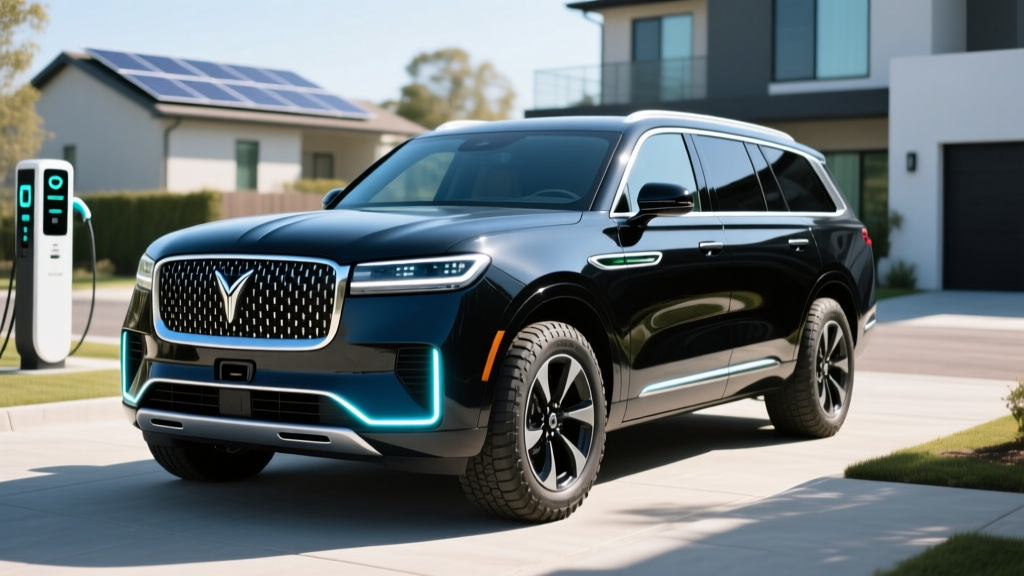
The 2026 Grand Wagoneer EREV (Extended-Range Electric Vehicle) occupies a narrow but compelling lane: a full-size, body-on-frame luxury SUV that drives on electric motors alone for daily commutes while carrying a gasoline range-extender for 300+ mile road trips. Stellantis positions it against the BMW XM and the upcoming electric Cadillac Escalade, but the EREV formula is closer to a luxury take on the Chevy Volt's original premise — battery-first, gas as backup.
With 44 miles of EPA-rated electric-only range, a combined total range exceeding 357 miles, and a 690-horsepower dual-motor powertrain, the Grand Wagoneer EREV targets buyers who want silent, zero-tailpipe-emission school runs and grocery trips but refuse to plan their lives around DC fast-charger availability. It is not a pure BEV. It is not a traditional hybrid. It is a series-hybrid with a plug — and that distinction matters for your daily routine and your wallet.
Range, Battery & Real-World Efficiency
The 2026 Grand Wagoneer EREV uses a 110 kWh (gross) nickel-manganese-cobalt (NMC) lithium-ion battery pack mounted between the frame rails. Usable capacity is approximately 96 kWh, with a top-and-bottom buffer to preserve long-term state of health. The EPA rates it at 44 miles of electric-only range on a full charge.
EPA estimate: 44 miles electric-only / 357 miles total (gas + electric).
Expect ~35–38 electric miles on the highway at 70+ mph, where aerodynamic drag dominates this 6,300-lb SUV. In freezing temperatures (below 32°F), electric-only range drops to roughly 28–32 miles due to cabin-heating load and reduced battery efficiency — a pattern consistent with all large NMC packs. Total range with the 3.0L Hurricane I-6 range-extender remains robust at 310–340 miles in mixed driving, since the engine acts as a generator and runs at its most efficient RPM regardless of vehicle speed.
The series-hybrid architecture means the gasoline engine never mechanically drives the wheels. It generates electricity to feed the motors or recharge the pack. This yields a smooth, linear, EV-like driving feel at all times — no gear hunting, no torque-converter lag. Once the battery depletes to its hold threshold, the Hurricane inline-six spins up as a generator, and combined MPGe on electric is rated at 58 MPGe. On gasoline alone (charge-sustaining mode), expect roughly 19–21 MPG combined — competitive with the standard Grand Wagoneer but thirstier than unibody crossovers.
| Spec | Value |
|---|---|
| Battery (gross / usable) | 110 kWh / ~96 kWh (NMC) |
| EPA Electric-Only Range | 44 miles |
| Total Range (gas + electric) | ~357 miles |
| MPGe (electric) | 58 MPGe |
| MPG (gas, charge-sustaining) | ~20 MPG combined |
| Horsepower | 690 hp (dual-motor AWD) |
| Torque | 680 lb-ft |
| 0–60 mph | ~4.7 seconds |
| Drivetrain | Dual-motor AWD (series hybrid) |
| Max DC Fast Charge | ~130 kW peak |
| 10–80% DC Charge Time | ~38 minutes |
| Level 2 Charge Rate | 11.5 kW (~18 mi/hr) |
| Towing Capacity | 7,500 lbs (est.) |
| Base MSRP | $94,995 |
Charging Speeds: DC Fast, Level 2 & Home Setup
The Grand Wagoneer EREV uses a CCS1 charge port (NACS adapter availability TBD via Stellantis). Because it's a PHEV-class vehicle with a large battery, DC fast-charging capability is moderate — adequate for topping up on road trips but not designed for the 10–80% sprints you'd see on a dedicated BEV like the Rivian R1S.
| Level | Power (kW) | Miles of EV Range Added | Time (10–80%) |
|---|---|---|---|
| Level 1 (120V / 12A) | ~1.4 kW | ~2 mi/hr | ~48+ hours |
| Level 2 (240V / 48A) | 11.5 kW | ~18 mi/hr | ~6.5 hours |
| DC Fast Charge | ~130 kW peak | ~120 mi/hr (peak) | ~38 minutes |
Charging-curve reality: The ~130 kW peak only holds between roughly 15–45% state of charge. Above 60%, the curve tapers significantly, and above 80% it slows to under 40 kW to protect the NMC cells. This is normal behavior, but it means a 10–90% session will take closer to 55 minutes. For daily use, Level 2 home charging is the play — plug in overnight, wake up to a full 44-mile buffer every morning. At 11.5 kW, a full 0–100% charge takes about 8.3 hours, which fits comfortably within an overnight window.
Home installation note: the onboard 11.5 kW charger requires a 60-amp dedicated circuit (NEMA 14-60 or hardwired wall connector). Budget $800–$2,500 for a licensed electrician to install a Level 2 circuit, depending on panel proximity and whether your home's 200-amp service needs an upgrade. Always consult a licensed electrician for final specs.
Performance & Drivetrain
The dual-motor all-wheel-drive system produces a combined 690 horsepower and 680 lb-ft of torque, with the front motor handling roughly 250 hp and the rear motor delivering 440 hp. Because this is a series-hybrid, the gasoline engine is decoupled from the driveline — torque delivery is instant and seamless, with no shift shock or turbo lag.
The 0–60 mph sprint takes approximately 4.7 seconds, which is brisk for a body-on-frame SUV tipping the scales above 6,300 pounds. For context, the standard Grand Wagoneer with the Hurricane twin-turbo I-6 does 0–60 in about 5.0 seconds, while the BMW XM Label (the closest luxury EREV competitor) hits it in 4.3 seconds but offers only 31 miles of electric range and two rows of seats.
Ride quality benefits from the standard air suspension and adaptive dampers, which isolate the cabin from road imperfections while managing the EREV's considerable mass through corners. Regenerative braking offers two levels — a mild coast mode and a stronger regen setting that approaches one-pedal driving in city traffic, though it does not bring the SUV to a complete stop.
Interior, Cargo & Technology
The Grand Wagoneer EREV retains the flagship interior that has defined the nameplate's revival: available 75-inch cumulative screen real estate across the dashboard (driver cluster, center stack, passenger display), McIntosh 23-speaker audio, and Palermo leather with open-pore wood trim. The EREV variant adds a unique "EV Mode" display cluster and a dedicated charge-scheduling interface in the Uconnect 5 infotainment system.
Passenger and cargo dimensions:
- First-row legroom: 40.9 inches
- Second-row legroom: 42.7 inches (captain's chairs) / 37.2 inches (bench)
- Third-row legroom: 36.8 inches (usable for adults on shorter trips)
- Cargo behind 3rd row: ~27.4 cu ft (slightly reduced vs. gas model due to battery packaging)
- Cargo behind 2nd row: ~63 cu ft
- Max cargo (2nd/3rd folded): ~103 cu ft
The battery pack's underfloor mounting preserves the three-row seating configuration, but cargo volume behind the third row drops by roughly 2–3 cubic feet compared to the standard Grand Wagoneer. If maximum cargo space is a priority, this is worth measuring against your needs.
Driver-assistance technology: The EREV comes equipped with Stellantis' Active Driving Assist — a SAE Level 2 system providing adaptive cruise control with lane-centering on divided highways. This is not autonomous driving; the driver must keep hands on the wheel and eyes on the road at all times. Hands-free Active Driving Assist (comparable to Ford BlueCruise or GM Super Cruise) is available on select trims for approved highway segments, but the driver remains responsible for vehicle operation per NHTSA guidelines.
Pricing, Trims & Federal Tax Credit Eligibility
The 2026 Grand Wagoneer EREV launches in two trims:
- Series II EREV: $94,995 MSRP (includes destination)
- Series III EREV (Obsidian): $109,995 MSRP
Both trims are well-equipped, but the Series III adds the hands-free driving assist, 24-way massaging front seats, head-up display, and the full McIntosh audio system. As-tested pricing on a loaded Series III can approach $118,000 with options.
The Grand Wagoneer EREV is a PHEV with sufficient battery capacity (>7 kWh) and is assembled in North America. However, §30D eligibility for 2026 depends on three moving targets:
- MSRP cap: SUVs/vans/pickups must have an MSRP at or below $80,000. The Grand Wagoneer EREV exceeds this cap at $94,995 base.
- Buyer income cap: AGI must not exceed $300,000 (MFJ), $225,000 (HOH), or $150,000 (single).
- Battery sourcing: Critical minerals and battery components must meet escalating domestic-content thresholds (see IRS §30D guidance).
Ownership Costs, Warranty & Who Should Buy
Stellantis provides the following warranty coverage for the 2026 Grand Wagoneer EREV:
- Basic vehicle: 3 years / 36,000 miles
- Powertrain (including engine-generator): 5 years / 60,000 miles
- High-voltage battery & electric drive components: 8 years / 100,000 miles (with a capacity-retention threshold of 70% — if SoH drops below this within the warranty period, Stellantis will repair or replace)
For daily driving under 40 miles, EREV owners who charge at home will rarely visit a gas station — perhaps 6–10 fill-ups per year for longer road trips. At $0.14/kWh (national average residential rate), fully recharging the 96 kWh usable pack costs roughly $13.44, yielding an effective fuel cost of about $0.31 per electric mile. Compare that to $0.48–$0.55 per mile on premium gasoline at 20 MPG — meaningful savings on the daily commute, even if the total-range economics are similar to the gas Grand Wagoneer.
Who the Grand Wagoneer EREV suits best:
- Large families who need genuine three-row comfort and 7,000+ lb towing but want electric-only school runs and errands.
- Luxury-SUV buyers in areas with unreliable public charging infrastructure who aren't ready to commit to a pure BEV.
- Two-car households where the EREV serves as the do-everything vehicle — electric commute, gas-assisted weekend road trips, trailer towing.
Who should look elsewhere: Budget-conscious buyers (the MSRP is steep and no federal credit applies), those who rarely exceed 40 miles and could save $30K+ with a smaller PHEV SUV, or anyone committed to zero fossil-fuel usage.
- 44 miles electric covers most daily commutes
- 357-mile total range eliminates trip-planning anxiety
- 690 hp with seamless EV torque delivery
- True three-row luxury with adult-usable third row
- 7,500-lb towing with electric low-end torque
- McIntosh audio and premium materials throughout
- $94,995 base — no federal tax credit (MSRP cap)
- DC fast-charge limited to ~130 kW peak
- Cargo space slightly reduced vs. gas Grand Wagoneer
- ~20 MPG on gas when battery depletes
- Heavy curb weight affects tire wear and braking distances
- CCS1 port — NACS adapter required for Tesla Superchargers
How It Compares to Key Competitors
The EREV luxury-SUV segment is small but growing. Here's how the Grand Wagoneer EREV stacks up:
| Vehicle | EV Range | Total Range | Seats | 0–60 | Base Price |
|---|---|---|---|---|---|
| 2026 Grand Wagoneer EREV | 44 mi | ~357 mi | 6–7 | 4.7s | $94,995 |
| BMW XM (PHEV) | 31 mi | ~320 mi | 5 | 4.3s | $159,995 |
| Cadillac Escalade IQ (BEV) | ~450 mi | 450 mi (BEV) | 7 | ~4.9s | $129,990 |
| Rivian R1S (BEV, Dual-Motor) | ~352 mi | 352 mi (BEV) | 7 | 4.5s | $79,900 |
Decision framework:
- Choose the Grand Wagoneer EREV if you need three rows, want 40+ miles of daily electric driving, and refuse to plan road trips around charging stops.
- Choose the Escalade IQ or R1S if you're ready for full BEV ownership, have reliable home charging, and want lower running costs.
- Choose the BMW XM if you only need two rows and prioritize brand cachet and driving dynamics over practicality.
Frequently Asked Questions
What is the real-world electric range of the 2026 Grand Wagoneer EREV?
The EPA rates it at 44 miles electric-only. In real-world highway driving at 70 mph, expect 35–38 miles. In cold weather (below 32°F), plan on 28–32 miles before the gasoline range-extender engages. For city driving with regenerative braking, you may see the full 44 miles or slightly more.
How fast does the Grand Wagoneer EREV charge at home and on the road?
On a Level 2 home charger (11.5 kW), a full charge takes about 8.3 hours — ideal for overnight charging. On a DC fast charger, it peaks at ~130 kW, reaching 10–80% in roughly 38 minutes, though the charge curve tapers significantly above 60% SoC. Level 1 (standard 120V outlet) adds only about 2 miles per hour and is best used as emergency backup.
Does the 2026 Grand Wagoneer EREV qualify for the federal EV tax credit?
No. Under current IRS §30D rules, SUVs must have an MSRP at or below $80,000 to qualify. The Grand Wagoneer EREV starts at $94,995, disqualifying it from the $7,500 federal credit regardless of buyer income or battery sourcing. Some state-level incentives may still apply — check with your state energy office or a tax professional for your specific situation.
Is the EREV worth it compared to the standard gas Grand Wagoneer?
If your daily commute is under 40 miles and you charge at home, the EREV transforms your weekday driving into a silent, zero-tailpipe-emission experience while preserving the gas Grand Wagoneer's range and towing for weekends. The $10,000–$15,000 price premium over the gas model pays back slowly in fuel savings alone (roughly 4–6 years at typical mileage), but the driving refinement, instant torque, and reduced emissions are harder to quantify. For high-mileage commuters, the EREV makes sense. For occasional drivers, the gas model may suffice.
Can the Grand Wagoneer EREV tow a trailer on electric power alone?
Technically yes, but towing dramatically increases energy consumption. Expect electric-only range to drop to 15–20 miles when towing near the 7,500-lb maximum. The range-extender engine will engage much sooner under towing load. For any meaningful trailer work, plan on the hybrid system using both battery and gasoline — which it handles seamlessly.
What happens when the battery runs out of charge on the highway?
Nothing abrupt. The 3.0L Hurricane inline-six starts automatically and acts as a generator, supplying electricity to the drive motors. You'll notice the engine hum, but the driving experience remains smooth and electric. The system maintains a small battery buffer (typically 10–15% SoC) to ensure the motors always have sufficient power for acceleration and hill climbing. This is the core advantage of the series-hybrid EREV architecture over a traditional parallel PHEV.
Sources: EPA Fuel Economy, IRS §30D Clean Vehicle Credit, NHTSA Automated Vehicle Safety. All specifications based on manufacturer-published data for the 2026 model year. Verify final specs with your dealer before purchase, as manufacturers may adjust pricing and equipment.