The Short Answer on the 2026 GMC Electric Truck
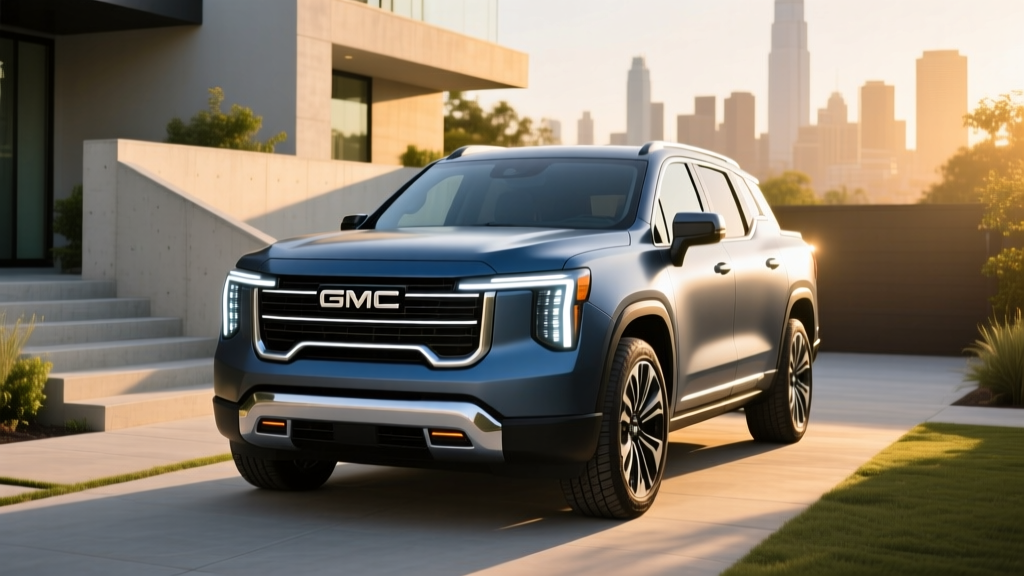
The 2026 GMC Sierra EV lineup spans three battery configurations delivering between 285 and 440 miles of EPA-estimated range, with pricing starting at $57,900 for the Elevation trim and climbing to $99,495 for the Denali Max Range. All models ride on GM's Ultium platform with NMC (nickel manganese cobalt) battery chemistry, support DC fast charging up to 350 kW on properly equipped Max Range variants, and offer up to 754 horsepower and 785 lb-ft of torque in the AT4 and Denali trims. If you have reliable Level 2 home charging access and your daily driving stays under 200 miles, the Sierra EV eliminates fuel stops for most owners while delivering truck capability — but if you regularly tow heavy loads in cold weather or lack home charging, a Silverado/Sierra gas or hybrid model remains more practical today.
2026 GMC Sierra EV Lineup: Trims, Range, and Pricing
For 2026, GMC offers the Sierra EV in four primary configurations. GM has progressively expanded availability following the 2024 Denali Edition 1 launch, and the 2026 model year represents the first full lineup with standard and extended battery packs across multiple trims. Here is what each variant delivers:
| Trim | Battery Pack | Est. Usable kWh | EPA Range | Horsepower | 0-60 mph | Base MSRP |
|---|---|---|---|---|---|---|
| Elevation (Standard Range) | Standard | ~100 kWh | 285 mi | 510 hp | ~5.5 sec | $57,900 |
| Elevation (Extended Range) | Extended | ~200 kWh | 390 mi | 510 hp | ~5.8 sec | $71,900 |
| AT4 (Extended Range) | Extended | ~200 kWh | 370 mi | 754 hp | ~4.3 sec | $82,900 |
| Denali (Max Range) | Max Range | ~200+ kWh | 440 mi | 754 hp | ~4.1 sec | $99,495 |
Sources: GMC Sierra EV official specs, fueleconomy.gov. EPA range figures are estimates; real-world results vary by driving style, temperature, and terrain.
Real-World Range Expectations
The EPA sticker is a starting point, not a guarantee. Based on testing of Ultium-platform vehicles and large electric trucks broadly, plan for the following adjustments:
- Highway driving (75 mph): Expect 15-20% less than EPA. A 390-mile Elevation Extended Range drops to roughly 310-330 miles at sustained interstate speed.
- Cold weather (below 30°F): Battery chemistry and cabin heating reduce range 20-30%. The Denali Max Range's 440-mile sticker may deliver 310-350 miles in freezing conditions.
- Towing (5,000+ lb trailer): Range can halve. Expect 140-200 miles from the Extended Range pack when towing near the Sierra EV's ~10,000-lb max capacity. Plan charging stops accordingly.
Charging Speed and Infrastructure: What to Expect
Charging is where electric truck ownership either works seamlessly or becomes a friction point. The Sierra EV supports three charging tiers, and understanding the difference between kW (charging power — how fast energy flows) and kWh (battery capacity — how much energy the pack holds) is essential for planning.
| Charging Level | Power (kW) | Miles Added per Hour | Typical Use Case | Time (10-80%) |
|---|---|---|---|---|
| Level 1 (120V household) | 1.4 kW | ~3-4 mi/hr | Emergency / overnight trickle | Not practical for full charge |
| Level 2 (240V home/work) | 11.5-19.2 kW | ~25-50 mi/hr | Daily home charging | 8-18 hours (varies by pack) |
| DC Fast Charge (Standard Range) | Up to 200 kW peak | ~600+ mi/hr (peak) | Road trips | ~30-35 min |
| DC Fast Charge (Max Range) | Up to 350 kW peak | ~900+ mi/hr (peak) | Road trips | ~25-30 min |
Charge curve reality: The Sierra EV will not sustain peak kW for the entire session. Like all lithium-ion packs, charge speed tapers significantly above 80% State of Charge (SoC) to protect battery health. A Max Range model hitting 350 kW at 10% SoC may drop to 150 kW by 60% and below 50 kW past 85%. The 10-80% time is the useful metric — plan around that, not the peak number.
Connector note: For 2026, GM has transitioned to the NACS (North American Charging Standard) connector on the Sierra EV, granting native access to Tesla Supercharger V3 and V4 stations via GM's approved adapter or built-in port. This significantly expands the fast-charging network beyond Electrify America and EVgo. Verify your specific build's connector with your dealer, as early-production 2024-2025 models shipped with CCS1.
Sierra EV vs. Gas Sierra: 5-Year Cost Comparison
The purchase price of the Sierra EV is substantially higher than a comparable gas Sierra 1500. But total cost of ownership (TCO) tells a more complete story when you factor in fuel, maintenance, and available tax incentives.
| Cost Factor (5 Years / 75,000 Miles) | 2026 Sierra EV Elevation Ext. Range ($71,900) | 2026 Sierra 1500 AT4 Gas (~$58,000) |
|---|---|---|
| Purchase Price (MSRP) | $71,900 | $58,000 |
| Federal Tax Credit (§30D, if eligible) | -$7,500 (see eligibility below) | $0 |
| Effective Purchase Price | $64,400 | $58,000 |
| Fuel / Electricity (75k mi) | $4,200 (home L2, $0.14/kWh avg) | $11,250 (19 MPG avg, $3.80/gal) |
| Maintenance (5 yr) | ~$1,500 (tires, cabin filter, fluid top-offs) | ~$4,500 (oil, filters, brakes, transmission) |
| Insurance (5 yr avg) | ~$12,500 (EV premium ~15-20% higher) | ~$10,500 |
| Estimated 5-Year Total | $82,600 | $84,250 |
Assumptions: 15,000 miles/year, home charging at national avg residential rate of $0.14/kWh, gas at $3.80/gallon, Sierra 1500 AT4 combined 19 MPG. Insurance estimates based on industry averages for full-size trucks. Your actual costs will vary by state, driving profile, and electricity rate. Sources: fueleconomy.gov, U.S. EIA.
Decision Framework: Should You Buy the Sierra EV?
Choose the 2026 Sierra EV if:
- You have a garage or driveway where a Level 2 (240V) charger can be installed
- Your daily driving is under 200 miles round-trip, with occasional longer trips tolerable with one charge stop
- You value instant torque, quiet operation, and minimal maintenance
- You can benefit from the §30D federal tax credit (see eligibility below)
- You do not regularly tow more than 5,000 lbs over long distances
Stick with a gas or hybrid Sierra/Silverado if:
- You lack reliable home or workplace charging access
- You frequently tow heavy trailers (7,000+ lbs) on long hauls
- You live in an area with limited DC fast-charging infrastructure and regularly drive 300+ miles between stops
- Upfront budget is a primary constraint and TCO savings over 5 years don't offset the higher purchase price
Federal Tax Credit Eligibility (§30D) for the Sierra EV
The federal Clean Vehicle Credit under IRS §30D can reduce your tax burden by up to $7,500 — but eligibility is not automatic. For 2026, the following rules apply:
- MSRP cap: Vans, SUVs, and pickup trucks must have an MSRP at or below $80,000. This means the Sierra EV Elevation (Standard and Extended Range) and potentially the AT4 qualify, but the Denali Max Range at $99,495 does NOT qualify.
- Buyer income limits: Modified adjusted gross income (MAGI) must not exceed $300,000 (joint filers), $225,000 (head of household), or $150,000 (single filers).
- Battery sourcing requirements: A portion of the credit ($3,750) depends on critical minerals sourcing, and another $3,750 on battery component manufacturing. GM's Ultium batteries are assembled in the U.S., but critical-mineral sourcing rules tighten annually. Verify the specific VIN's eligibility at fueleconomy.gov or consult a tax professional.
- Point-of-sale transfer: As of 2024, buyers can transfer the credit to the dealer at purchase, receiving the benefit as a down-payment reduction rather than waiting for a tax refund. The dealer must be IRS-registered.
Source: IRS Clean Vehicle Credit. Tax rules are subject to change; consult a qualified tax professional before making purchase decisions based on credit eligibility.
Real Ownership Considerations: Home Charging, Climate, and Daily Life
Beyond spec sheets, owning the Sierra EV day-to-day involves practical realities that spec sheets don't capture:
Home charging installation: A Level 2 home charger (recommended: 48-amp hardwired unit on a 60-amp circuit) costs between $800 and $2,500 installed, depending on your electrical panel's capacity and the distance from panel to charging location. If your home has a 100-amp service panel, you may need a panel upgrade ($1,500-$3,500 additional) to support a 48-amp EV circuit alongside existing loads. Budget $1,500-$4,000 total for a proper home charging setup, and always use a licensed electrician who pulls permits.
Cold-weather ownership: The Sierra EV's Ultium battery pack uses active liquid thermal management, which helps mitigate — but does not eliminate — cold-weather range loss. Expect 20-30% range reduction in sustained sub-freezing temperatures. Preconditioning the battery while plugged in (using the GMC app to warm the pack before departure) recovers some efficiency and improves DC fast-charge speeds in cold weather. If you live in northern climates, the Max Range pack provides a more comfortable buffer.
Driving patterns matter: Electric trucks shine in stop-and-go city and suburban driving where regenerative braking recovers energy. At sustained 80 mph highway speeds, aerodynamic drag on a full-size truck body consumes energy rapidly. If your commute is mostly highway, your real-world range will fall below EPA. If it's mixed or city-heavy, you may match or exceed EPA estimates.
Towing reality: The Sierra EV is rated to tow up to approximately 10,000 lbs (varies by trim and configuration). But towing a 7,000-lb travel trailer will cut range roughly in half. A 390-mile Elevation Extended Range becomes a 180-200-mile truck under load. For frequent long-distance towing, a diesel or gas truck with a 30+ gallon tank still offers superior range under load. For occasional light towing (boat, utility trailer under 4,000 lbs), the Sierra EV handles it with minimal range compromise.
Common Misconceptions About the Sierra EV
| Myth | Fact |
|---|---|
| "Electric trucks can't tow anything useful." | The Sierra EV tows up to ~10,000 lbs. The limitation isn't capability — it's range under load. Plan charging stops for long tows. |
| "The battery will need replacing in a few years." | GM warranties the Ultium battery for 8 years / 100,000 miles against defects and capacity loss below a specified threshold. Industry data shows modern NMC packs retain 85-90% capacity at 100,000 miles under normal use. |
| "Charging takes too long for road trips." | At a 350 kW DC fast charger, the Max Range Sierra EV adds roughly 100 miles in 10 minutes during peak charging. Total 10-80% takes 25-30 minutes — comparable to a gas stop with a meal break. |
| "The Sierra EV qualifies for the full $7,500 tax credit no matter what." | Only trims under the $80,000 MSRP cap qualify, and buyer income limits and battery-sourcing rules apply. The Denali Max Range at $99,495 is excluded from §30D. |
| "I can charge from any standard outlet quickly." | Level 1 (120V) adds only 3-4 miles per hour — roughly 40-50 miles overnight. For a truck with a 200 kWh pack, a full Level 1 charge would take 50+ hours. Level 2 (240V) is essential for practical daily ownership. |
Warranty, Service, and Long-Term Ownership
GMC backs the 2026 Sierra EV with the following coverage:
- Battery & electric propulsion components: 8 years / 100,000 miles (covers defects and excessive capacity degradation)
- Bumper-to-bumper limited warranty: 3 years / 36,000 miles
- Powertrain (non-electric components): 5 years / 60,000 miles
- Corrosion protection: 6 years / 100,000 miles
Maintenance costs are significantly lower than a gas truck. There are no oil changes, no transmission fluid services (the Sierra EV uses a single-speed reduction gear), no spark plugs, and no exhaust system. Brake wear is reduced thanks to regenerative braking, which handles most deceleration. Expect to spend primarily on tire rotations, cabin air filter replacement, windshield washer fluid, and eventual tire replacement (EVs tend to wear tires faster due to instant torque and higher vehicle weight — budget for new tires around 30,000-40,000 miles).
Frequently Asked Questions
What is the real-world range of the 2026 GMC Sierra EV?
The EPA rates the Sierra EV between 285 miles (Elevation Standard Range) and 440 miles (Denali Max Range). In real-world mixed driving, expect 80-90% of EPA. Highway-only driving at 75+ mph reduces range by 15-20%, and cold weather below freezing can reduce it by 20-30%. For the Extended Range Elevation (390 mi EPA), plan for 310-350 miles in typical conditions and as low as 270 miles in winter highway driving.
How long does it take to charge the Sierra EV at home?
On a Level 2 home charger at 19.2 kW (80-amp circuit), the Extended Range pack (~200 kWh usable) charges from empty to full in approximately 10-12 hours. On a more common 11.5 kW (48-amp) setup, expect 17-20 hours for a full charge. Most owners charge nightly, topping up 30-50% daily — a full charge is rarely needed if you charge regularly.
Does the 2026 Sierra EV qualify for the $7,500 federal tax credit?
It depends on the trim and your income. Trims with MSRP at or below $80,000 (Elevation Standard and Extended Range) are potentially eligible, provided the buyer meets income caps ($300k joint / $150k single) and the vehicle's battery meets critical-mineral and component sourcing requirements. The Denali Max Range at $99,495 exceeds the MSRP cap and does not qualify. Always verify current eligibility at fueleconomy.gov and consult a tax professional.
Can the Sierra EV use Tesla Superchargers?
Yes. For 2026, GM has adopted the NACS charging standard, and the Sierra EV can access Tesla Supercharger V3 and V4 stations either natively or via a GM-approved adapter. This adds over 15,000 Supercharger stalls to the available fast-charging network. Confirm your specific vehicle's connector configuration with your dealer.
How does the Sierra EV compare to the Ford F-150 Lightning and Rivian R1T?
The F-150 Lightning (starting ~$55,000, up to 320 miles EPA on Extended Range) is the closest competitor and offers a more accessible entry price. The Rivian R1T (starting ~$75,900, up to 410 miles EPA with Max pack) targets adventure-oriented buyers with a shorter bed and more car-like dynamics. The Sierra EV differentiates with its available 440-mile Max Range pack, Super Cruise hands-free driving capability, and GMC's premium positioning. Your choice depends on budget, range needs, and whether you prioritize work capability (Sierra/Lightning) or lifestyle versatility (R1T).
Is the Sierra EV good for off-road driving?
The AT4 trim includes off-road-oriented suspension tuning, underbody protection, and terrain driving modes. Electric powertrains offer excellent low-speed torque control for crawling. However, the Sierra EV's weight (estimated 8,500-9,500 lbs depending on configuration) and the risk of underbody battery damage on extreme trails mean it's suited for moderate off-road use — fire roads, forest trails, snow — rather than hardcore rock crawling. Approach and departure angles are competitive with gas trucks in the same segment.