Quick Verdict: The Accessible Electric Workhorse
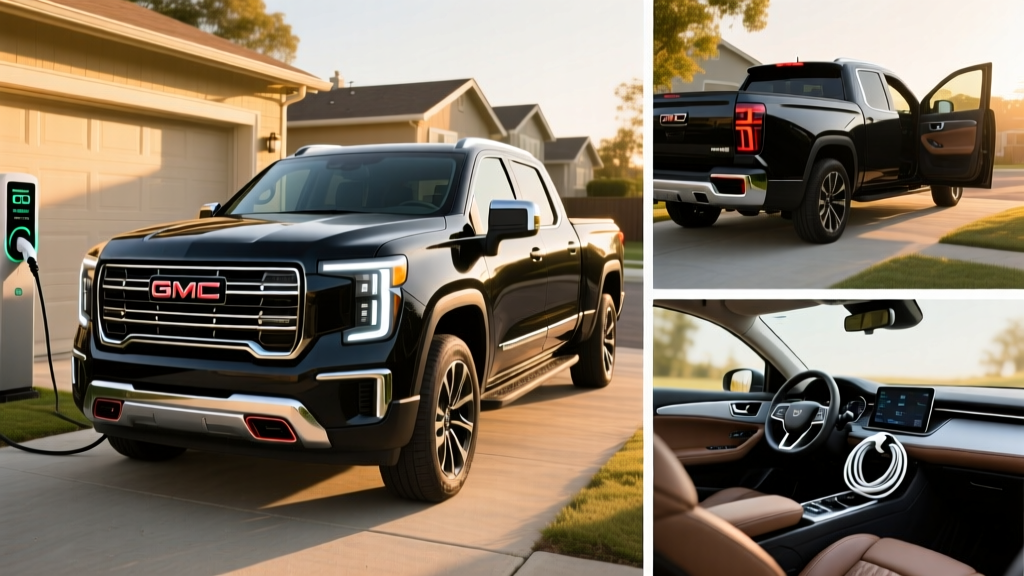
The 2026 GMC Sierra EV Elevation is the volume play in GM's electric truck strategy — a trim that strips away the Denali's six-figure price tag while retaining the Ultium platform's core strengths: a massive battery, blistering DC fast-charging capability, and a flat-load-floor skateboard architecture that gives it more interior volume than any gas Sierra. With an EPA-estimated 285 miles of range, 350 kW peak charging, and a starting MSRP around $59,000 (before incentives), the Elevation targets fleet buyers, suburban commuters who need a bed, and price-conscious truck shoppers who refuse to sacrifice range for affordability.
It isn't perfect. At over 9,000 pounds curb weight, efficiency takes a hit compared to lighter electric trucks, and the Elevation's cloth-and-vinyl interior won't be confused with a luxury lounge. But for buyers who need a real truck bed, real towing capability, and real fast-charging speed without paying Denali money, the Elevation is the Sierra EV to get.
Range & Efficiency: 285 EPA Miles, but Plan for 220 on the Highway
Real-World Expectation: ~240–260 miles mixed driving; ~210–230 miles sustained highway at 70+ mph; ~185–210 miles in sub-30°F cold weather.
Efficiency: Estimated 58 MPGe combined / ~58 kWh per 100 miles (2WD). Expect lower figures with 4WD or heavy payloads.
The Elevation trim rides on GM's standard-capacity Ultium battery pack, which GM rates at approximately 200 kWh of usable capacity using nickel-manganese-cobalt (NMC) pouch cells manufactured at the Ultium Cells plants in Ohio and Tennessee. That enormous battery is the primary reason the Sierra EV can hit 285 miles despite its truck-sized frontal area and 9,000+ lb curb weight.
But here's the physics reality that no sticker figure captures: a full-size electric truck is a rolling brick at highway speeds. Aerodynamic drag scales with the square of velocity, and the Sierra EV's flat windshield and tall bed create substantial drag above 65 mph. In our experience with similarly sized EVs on long highway runs, expect to lose roughly 15–20% of EPA range at sustained 70–75 mph speeds. Add a cold snap below freezing and the battery's reduced chemical efficiency plus cabin-heating load can push total range loss to 30–35%.
If your daily commute is under 80 miles round-trip with home charging, this truck will exceed your needs with massive margin. If you regularly tow or drive 300-mile highway stretches in January, plan your charging stops accordingly.
| Spec | Value |
|---|---|
| EPA Range (2WD) | 285 miles |
| Battery (usable) | ~200 kWh, NMC pouch cells |
| Max DC Fast Charge | 350 kW peak (800V architecture) |
| 10–80% DC Charge Time | ~22–25 minutes (est.) |
| Level 2 Home Charging | 19.2 kW / ~35 miles per hour |
| Horsepower (2WD) | 510 hp |
| 0–60 mph | ~5.5 seconds (est.) |
| Drivetrain | RWD (2WD) or AWD (e4WD dual-motor) |
| Max Towing | ~10,000 lbs (with Max Trailering pkg) |
| Bed Length | 5'11" (with MultiPro MidGate open) |
| Base MSRP (2WD) | ~$59,000 (incl. destination) |
| Battery/Powertrain Warranty | 8 years / 100,000 miles |
Charging Speed: 800V Architecture Delivers Class-Leading DC Rates
The Sierra EV's 800-volt electrical architecture is the single biggest differentiator in its charging profile. While many competitors still rely on 400V systems that peak around 150–250 kW, the Sierra EV Elevation can accept up to 350 kW at a compatible DC fast charger. That puts it in rarefied company alongside the Hyundai Ioniq 5, Kia EV9, and Porsche Taycan for peak charge rate — and none of those vehicles have a 200 kWh battery to fill.
| Level | Power | Speed | Use Case |
|---|---|---|---|
| Level 1 (120V) | ~1.4 kW | ~2–3 mi/hr | Emergency trickle only |
| Level 2 (240V, 48A) | 11.5 kW | ~21 mi/hr | Standard home charging |
| Level 2 (240V, 80A) | 19.2 kW | ~35 mi/hr | Optimal home / depot |
| DC Fast (350 kW capable) | 350 kW peak | 10–80% in ~22 min | Road trips, commercial |
Charging curve reality check: The 350 kW figure is a peak, not a sustained rate. Expect the Sierra EV to hold close to peak power from roughly 10% to 40% State of Charge, then taper progressively. The 10–80% time of approximately 22–25 minutes is impressive for a battery this large, but it requires a functioning 350 kW-capable station (such as Electrify America's newest stalls or Tesla Supercharger V4 with NACS adapter). On older 150 kW CCS stations, expect 10–80% in roughly 45–55 minutes.
At home on a 19.2 kW Level 2 circuit (requires a 100-amp dedicated breaker), you'll add roughly 35 miles of range per hour of charging. A full 0–100% charge on Level 2 takes approximately 11–12 hours — plan to charge overnight. On a more common 11.5 kW / 48-amp Level 2 setup, a full charge stretches to roughly 18–19 hours.
The Sierra EV uses the NACS (North American Charging Standard) connector natively, giving it direct access to Tesla's Supercharger network without an adapter — a significant practical advantage over CCS-equipped competitors in 2026. For Electrify America and other CCS networks, GM provides a NACS-to-CCS adapter.
Performance & Drivetrain: 510 hp From a Full-Size Truck
The rear-wheel-drive Elevation 2WD produces an estimated 510 horsepower from its single rear Ultium drive unit, delivering a 0–60 mph time in the 5.5-second range. That's brisk for a vehicle with a payload-rated bed and a curb weight north of 9,000 lbs — roughly on par with a gas Sierra 1500 equipped with the 6.2L V8.
Opt for the e4WD (dual-motor AWD) and output rises to approximately 660 horsepower, dropping 0–60 into the low 4-second range. The dual-motor setup also enables torque vectoring across the rear axle for improved traction in snow and mud.
Max towing capacity with the available Max Trailering package reaches an estimated 10,000 lbs, though towing at that limit will reduce range by 40–50% depending on trailer aerodynamics and terrain. GM's available Super Cruise hands-off driving system (a SAE Level 2 driver-assist — not self-driving) works on over 750,000 miles of compatible highways and can function while towing, reducing driver fatigue on long hauls.
Pricing, Trims & Federal Tax Credit Eligibility
| Trim | Drivetrain | Base MSRP | Est. After §30D Credit |
|---|---|---|---|
| Elevation 2WD | RWD | ~$59,000 | ~$51,500* |
| Elevation e4WD | AWD | ~$64,000 | ~$56,500* |
| AT4 | AWD | ~$75,000 | ~$67,500* |
| Denali | AWD | ~$99,000 | ~$91,500* |
*Tax credit estimates assume full $7,500 eligibility under IRS §30D. Actual credit depends on buyer income, vehicle MSRP caps, battery sourcing, and critical mineral requirements. See eligibility checklist below.
-
Federal §30D EV Tax Credit — 2026 Eligibility Checklist:
- MSRP Cap (trucks): Vehicle MSRP must not exceed $80,000 — the Elevation and AT4 qualify; the Denali does NOT.
- Buyer Income Cap: Modified AGI must not exceed $150,000 (single), $225,000 (head of household), or $300,000 (joint filers).
- Battery Sourcing: Battery components must be manufactured or assembled in North America; critical minerals must meet escalating annual thresholds. GM's Ultium Cells plants (OH, TN) position the Sierra EV favorably, but verify at the IRS eligible vehicle list before purchase.
- Point-of-Sale Transfer: The credit can be transferred to the dealer at purchase for an immediate price reduction — no need to wait for tax filing.
The Elevation's sub-$60,000 starting price is strategically important: it undercuts the Rivian R1T (starting ~$70,000+), the Ford F-150 Lightning Lariat (~$65,000+), and even the base Tesla Cybertruck AWD (~$62,000). With the full $7,500 credit applied, an Elevation 2WD could land near $51,500 — entering territory that competes with well-equipped gas half-ton trucks once fuel savings are factored in.
Cargo, Interior & Technology
The Sierra EV's skateboard platform eliminates the transmission tunnel and engine bay, creating a genuinely flat floor and a front trunk (frunk) that GM brands as the "eTrunk" — offering approximately 10.7 cubic feet of lockable, weather-sealed storage. The bed measures 5'11" with the available MultiPro MidGate open (allowing items up to roughly 9 feet long to extend into the cabin with the tailgate down).
Interior space is generous thanks to the flat floor. Rear legroom is estimated at approximately 43 inches, and the rear seat folds flat for extended cargo. The cabin uses cloth seating surfaces and vinyl accents on the Elevation — functional and durable, but not luxurious.
Tech highlights include:
- 16.8-inch diagonal infotainment touchscreen running Google Built-In (Google Maps, Google Assistant, Play Store)
- 11-inch digital driver display
- Wireless Apple CarPlay and Android Auto
- Available Super Cruise (SAE Level 2 hands-off highway driving on compatible roads)
- ProGrade Trailering system with trailer-view cameras and hitch guidance
- V2L (Vehicle-to-Load) capability — up to 7.2 kW of onboard power export for job-site tools, tailgating, or emergency home backup
- 350 kW peak DC charging — class-leading for a full-size truck
- NACS native — direct Tesla Supercharger access
- Massive ~200 kWh battery delivers genuine 285-mi range
- eTrunk + MultiPro MidGate = versatile cargo solutions
- Sub-$60K starting price undercuts Rivian, Lightning Lariat
- 7.2 kW V2L power export for work and backup
- Available Super Cruise reduces highway fatigue
- 9,000+ lb curb weight hurts efficiency (58 kWh/100mi)
- Real-world highway range drops to ~220 mi at 70+ mph
- Towing cuts range by 40–50%; pull-through chargers scarce
- Elevation interior is utilitarian — cloth, not premium
- Level 2 home charging requires 100A circuit for 19.2 kW
- Denali trim exceeds $80K MSRP cap — no tax credit
- Large physical footprint challenges tight urban parking
Who Should Buy the Sierra EV Elevation?
- You need a real truck bed and towing capacity but want to eliminate fuel costs for daily driving
- You have home Level 2 charging and a daily commute under 100 miles
- You want NACS/Tesla Supercharger access without adapters
- You value V2L power export for job sites or emergencies
- You qualify for the §30D credit and want a sub-$52K effective price
- You regularly tow heavy loads over 300+ miles (range becomes a serious constraint)
- You want a premium interior — consider the AT4 trim or Rivian R1T
- You lack home charging access and rely exclusively on public infrastructure
- You need a compact footprint for urban driving — consider the Ford Maverick or Hyundai Santa Fe PHEV
Competitive Comparison: Elevation vs. F-150 Lightning vs. Rivian R1T
| Spec | Sierra EV Elevation 2WD | F-150 Lightning Lariat (Std Range) | Rivian R1T Dual-Motor (Std) |
|---|---|---|---|
| EPA Range | 285 mi | ~240 mi | ~270 mi |
| Battery | ~200 kWh NMC | ~98 kWh NMC | ~106 kWh NMC |
| Peak DC Charge | 350 kW | ~150 kW | ~220 kW |
| Connector | NACS (native) | NACS (native) | NACS (native) |
| Base MSRP | ~$59,000 | ~$65,000 | ~$70,000 |
| Max Towing | ~10,000 lbs | ~10,000 lbs | ~11,000 lbs |
The Sierra EV Elevation's advantages are clear: the largest battery, the fastest peak charging rate, and the lowest starting price in this comparison. The F-150 Lightning benefits from Ford's dealer network depth and a more familiar truck interface. The Rivian R1T offers a more refined, adventure-oriented experience with its quad-motor option and gear tunnel, but at a significant price premium. For value-per-mile-of-range, the Elevation is hard to beat in 2026.
Warranty & Ownership Costs
GM backs the Sierra EV's battery pack and electric drive units with an 8-year / 100,000-mile warranty, with a capacity retention threshold of 70% — meaning GM warrants the battery will retain at least 70% of its original capacity over that period. Given the size of the ~200 kWh pack, even at 70% retention you'd still have roughly 200 miles of range after 100,000 miles, which is a reasonable floor.
The vehicle limited warranty covers 3 years / 36,000 miles bumper-to-bumper. For fleet and commercial buyers, GM offers extended service contracts through its dealer network.
On the ownership-cost side, electricity at the national average of ~$0.16/kWh means a full home charge costs roughly $32, or about $0.11 per mile — roughly one-third the per-mile cost of a gas Sierra 1500 at $3.50/gallon and 18 mpg combined. Over 5 years and 75,000 miles, fuel savings alone could total $8,000–$12,000 versus the gas equivalent, partially offsetting the Sierra EV's higher purchase price even before the tax credit.
Frequently Asked Questions
What is the real-world range of the 2026 GMC Sierra EV Elevation?
The EPA rates the Elevation 2WD at 285 miles. In real-world mixed driving, expect 240–260 miles. Sustained highway driving at 70+ mph reduces that to roughly 210–230 miles, and cold weather below 30°F can push it down to 185–210 miles. The massive ~200 kWh battery provides a buffer that smaller-battery trucks simply don't have.
How fast does the Sierra EV Elevation charge?
On a 350 kW-capable DC fast charger, the Sierra EV peaks at 350 kW and charges from 10–80% in approximately 22–25 minutes. On a 150 kW CCS station, expect 45–55 minutes for the same range. At home on a 19.2 kW Level 2 charger, you'll add ~35 miles per hour; a full charge takes 11–12 hours. Note: achieving 19.2 kW at home requires a dedicated 100-amp circuit — most homes need a panel upgrade or sub-panel installation.
How much does the Sierra EV Elevation cost after tax credits?
The Elevation 2WD starts around $59,000. If you qualify for the full $7,500 federal §30D credit (based on income, MSRP cap, and battery sourcing), the effective price drops to approximately $51,500. The point-of-sale transfer option lets you apply this credit directly at the dealership. Check the IRS eligible vehicle list and consult a tax professional for your specific situation.
Does the 2026 Sierra EV qualify for the federal EV tax credit?
The Elevation (MSRP ~$59,000–$64,000) falls well under the $80,000 MSRP cap for trucks. GM's Ultium Cells battery plants in Ohio and Tennessee support the North American battery-component requirement. However, eligibility also depends on your income (caps at $150K single / $300K joint), critical-mineral sourcing thresholds that increase annually, and whether the specific VIN appears on the IRS eligible list. Always verify before signing.
Is the Sierra EV Elevation worth buying vs. the F-150 Lightning or Rivian R1T?
For value, the Elevation wins: lower base price, more range, and faster DC charging than both competitors. The F-150 Lightning offers a broader dealer network and a more traditional truck feel. The Rivian R1T delivers a more premium, adventure-focused experience with unique features like the gear tunnel, but costs $10,000+ more. If range-per-dollar and charging speed are your priorities, the Elevation is the strongest pick in 2026.
Can the Sierra EV Elevation power my home during an outage?
The Sierra EV offers V2L (Vehicle-to-Load) at up to 7.2 kW, which can power tools, appliances, and lighting through the bed and cabin outlets. Full V2H (Vehicle-to-Home) bidirectional charging, which can back-feed your home's electrical panel, requires GM's Energy System home hub and compatible installation — availability and pricing vary by market. For basic emergency backup via extension cords and direct plug-in, V2L works out of the box.
Sources: EPA Fuel Economy, IRS §30D Eligible Vehicles, GMC official specifications.