Quick Verdict: The Off-Road Electric Truck That Actually Delivers
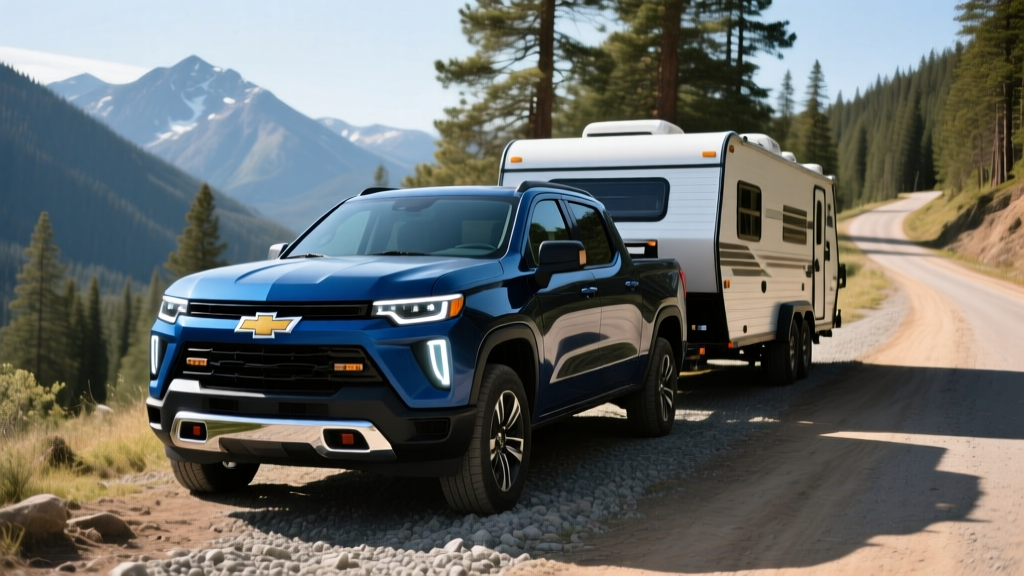
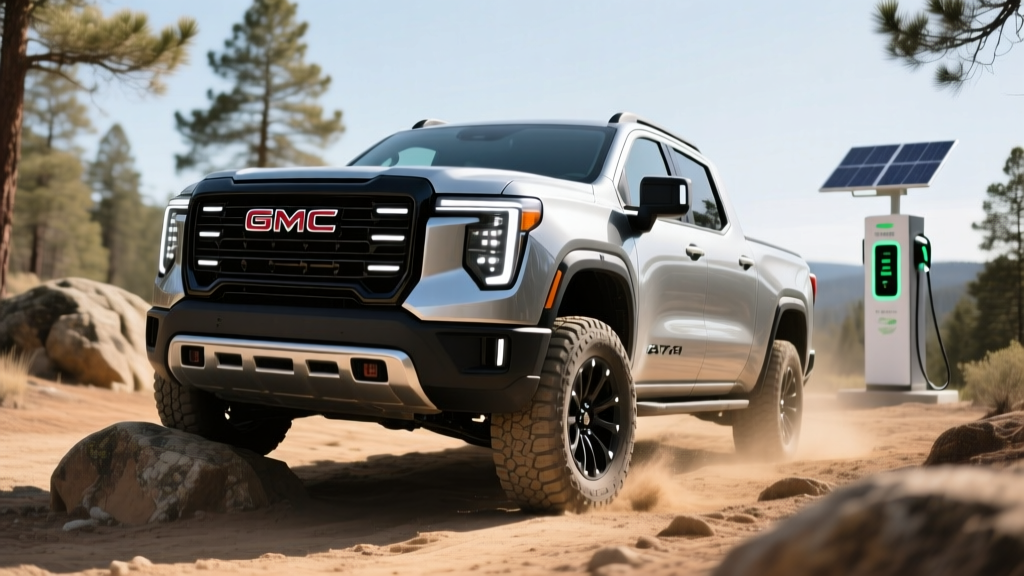
The 2026 GMC Sierra EV AT4 occupies a narrow but compelling lane: a body-on-frame-style electric pickup with genuine off-road credentials, a class-leading Ultium battery, and enough range to make cross-country towing plausible. With an EPA-estimated 390 miles on the Extended Range variant and peak DC fast-charging at 350 kW, GMC has engineered a truck that addresses the two biggest objections to electric pickups — range anxiety when loaded and agonizing charging stops. The AT4 trim specifically adds underbody skid plates, a terrain-select drive mode, and a 2-inch factory lift that separates it from the comfort-oriented Denali and the work-focused Elevation trims.
But the Sierra EV AT4 isn't cheap, and its sheer size — over 233 inches long and approaching 9,000 pounds at the top trim — makes it a handful in urban environments. If you need a daily-driver electric truck that can handle fire roads, tow a 5,000-pound trailer on weekends, and still charge from 10–80% in roughly 22 minutes, this is one of the most capable options on the market. If you mostly drive in the city and rarely leave pavement, you're paying a premium for hardware you won't use.
| Specification | AT4 Standard Range | AT4 Extended Range |
|---|---|---|
| EPA Range | ~320 miles | ~390 miles |
| Battery (usable) | ~200 kWh (NMC) | ~245 kWh (NMC) |
| Horsepower | 655 hp | 655 hp |
| Torque | 785 lb-ft | 785 lb-ft |
| 0–60 mph | ~4.4 sec | ~4.6 sec |
| Drivetrain | Dual-motor AWD (e4WD) | Dual-motor AWD (e4WD) |
| Max DC Fast Charge | 350 kW | 350 kW |
| 10–80% DC Charge | ~20 min | ~22 min |
| Level 2 Home Charging | 19.2 kW (~63 mi/hr) | 19.2 kW (~63 mi/hr) |
| Max Towing | 10,000 lbs | 10,000 lbs |
| Base MSRP | ~$75,000 | ~$85,000 |
| Battery Warranty | 8 yr / 100,000 mi | 8 yr / 100,000 mi |
Range and Efficiency: EPA Numbers vs. Real-World Expectations
The Extended Range AT4 carries one of the largest battery packs ever fitted to a production pickup — a roughly 245 kWh usable NMC (nickel manganese cobalt) Ultium module. GMC targets an EPA-estimated 390 miles, which, if certified at that figure, would make it one of the longest-range electric vehicles sold in the U.S. The Standard Range variant, with a ~200 kWh pack, targets approximately 320 miles EPA.
The EPA sticker is a starting point, not a guarantee. In mixed highway-and-city driving at 70–75 mph, expect the Extended Range AT4 to deliver roughly 320–345 miles before needing a charge — large trucks suffer significant aerodynamic drag at highway speeds. In cold weather (below 30°F), battery chemistry and cabin heating can reduce range by 15–25%, potentially dropping real-world winter range to 260–295 miles. Towing a 5,000-pound trailer at highway speed can cut range nearly in half — plan for 180–210 miles between stops when loaded. The Sierra EV's heat pump (standard on AT4) helps mitigate cold-weather losses compared to resistive heating systems.
Efficiency for a truck this heavy will never rival a sedan. Expect combined consumption in the range of 55–62 kWh/100 miles depending on driving style and conditions, translating to roughly 54–61 MPGe. That's thirstier than a Rivian R1T or a Tesla Cybertruck, but the AT4's larger battery compensates with sheer capacity. For comparison, the U.S. Department of Energy's fueleconomy.gov database tracks certified MPGe figures as they're released.
Charging Speed: 350 kW Peak and the Curve Reality
GMC equips the Sierra EV AT4 with 800-volt architecture, enabling peak DC fast-charging rates of up to 350 kW at compatible stations (such as Electrify America's newest 350-kW stalls or Tesla Supercharger V4 stations with NACS adapter). At that peak rate, the Extended Range battery can add roughly 100 miles of range in about 6 minutes.
| Charging Level | Power / Voltage | Miles of Range Added per Hour | Notes |
|---|---|---|---|
| Level 1 (120V) | ~1.4 kW | ~3–4 mi/hr | Emergency/trickle only; full charge takes days |
| Level 2 (240V, 48A) | 11.5 kW | ~38 mi/hr | Typical home wall connector on a 60A circuit |
| Level 2 (240V, 80A) | 19.2 kW | ~63 mi/hr | Requires 100A circuit; full overnight charge for Extended Range |
| DC Fast (peak) | 350 kW | ~1,000+ mi/hr (at peak) | 10–80% in ~20–22 min; tapers significantly above 80% |
The charging-curve caveat: Peak 350 kW is not sustained across the entire session. Like all NMC batteries, the Sierra EV's pack ramps up to peak charge rate between roughly 10–30% State of Charge, then progressively tapers. By 60% SoC, you'll likely see rates drop to 150–200 kW, and above 80%, charging slows dramatically to protect battery longevity (typically below 50 kW). A 10–80% session on a 350-kW charger should take approximately 20–22 minutes for the Extended Range pack. An 80–100% top-off can add another 30+ minutes — plan your road-trip stops to charge to 80% and move on.
For home charging, the Sierra EV's 19.2 kW onboard charger is among the fastest available in a production vehicle. On a properly wired 100-amp dedicated circuit with a hardwired Level 2 station, you can replenish the Extended Range pack from empty to full in roughly 13 hours. Most owners will plug in nightly and rarely need a full 0–100% session. Consult a licensed electrician — a 245 kWh battery demands serious home electrical infrastructure, and many homes will require a panel upgrade (typically $1,500–$3,500) to support 80A continuous charging.
The Sierra EV uses the NACS (North American Charging Standard) connector natively, giving it direct access to Tesla's Supercharger network — currently the largest and most reliable DC fast-charging network in North America. This is a significant advantage over CCS-equipped competitors that still require adapters for Supercharger access.
Performance: 655 HP, Dual-Motor AWD, and Off-Road Hardware
Every AT4 trim comes with GMC's e4WD dual-motor all-wheel-drive system producing 655 horsepower and 785 lb-ft of torque. The 0–60 mph sprint takes approximately 4.4–4.6 seconds depending on the battery pack — remarkable for a vehicle with a curb weight pushing 8,700–8,900 pounds. The instant torque delivery makes highway merging and passing effortless, and the low center of gravity (batteries are mounted in the chassis floor) keeps body roll surprisingly controlled for a lifted truck.
The AT4's off-road differentiation is more than cosmetic. Key hardware includes:
- 2-inch factory suspension lift with Multimatic DSSV (Dynamic Suspensions Spool Valve) dampers — the same technology used in the Colorado ZR2
- Underbody skid plates protecting the battery pack, front motor, and rear differential area
- Terrain Select drive modes including a dedicated Off-Road mode that modulates throttle response, regen braking, and traction control for loose surfaces
- 35-inch all-terrain tires on 18-inch wheels (with a full-size spare)
- Approach/departure/breakover angles improved over the standard Sierra EV, though exact figures depend on final trim configuration
The regenerative braking system offers multiple levels, including a one-pedal driving mode that can bring the truck to a complete stop without touching the brake pedal. On off-road descents, a low-speed regen mode acts similarly to hill-descent control, modulating speed without brake wear.
Interior, Tech, and Cargo: Built for Work and Screens
The Sierra EV's cabin is dominated by a portrait-oriented 16.8-inch infotainment touchscreen running GM's latest Ultifi software platform, paired with an 11-inch digital instrument cluster. Wireless Apple CarPlay and Android Auto are standard, along with a Wi-Fi hotspot and Google built-in (Maps, Assistant, Play Store). The AT4 trim features specific interior trim with contrast stitching, heated and ventilated front seats, and a heated steering wheel.
Driver-assistance technology includes GM's Super Cruise on mapped divided highways — a hands-off, eyes-on Level 2 system that remains one of the most capable in production. Super Cruise handles steering, acceleration, and braking on over 750,000 miles of compatible roads in the U.S. and Canada. The driver must remain attentive (monitored by a steering-column camera), and the system will not operate on unmapped or non-divided roads. For trailering, Super Cruise now supports hands-free driving while towing a compatible trailer — a genuine differentiator for frequent haulers.
GM Super Cruise is an SAE Level 2 driver-assistance system. Despite being "hands-free," you must keep your eyes on the road and be prepared to take over immediately. It does not handle construction zones, unmapped roads, severe weather, or complex urban intersections. It is not autonomous driving — that designation (Level 4) applies only to geofenced robotaxi services like Waymo.
Cargo capacity is substantial. The 5-foot-3-inch bed (shorter than a traditional full-size truck bed due to the midgate design) offers ~55 cubic feet of volume with the tailgate up. The MultiPro Midgate folds down to extend the load floor into the cabin, allowing items up to approximately 9 feet long to be carried with the tailgate closed — or nearly 11 feet with the tailgate down. The front trunk (frunk) provides roughly 10.7 cubic feet of lockable, weather-sealed storage with a power-operated tonneau-style cover, accessible from the exterior. The frunk also features a ProPower Onboard-style power outlet system (up to 7.2 kW exportable), enough to run power tools at a job site or appliances during an outage.
Passenger space is generous in the front and rear, with rear legroom in the ~43-inch range — comparable to a crew-cab Silverado. The flat floor (no transmission tunnel) makes the middle rear seat genuinely usable for an adult on shorter trips.
Pricing, Trims, and Federal Tax Credit Eligibility
The 2026 GMC Sierra EV AT4 is positioned as a premium off-road truck, and pricing reflects that. Based on GMC's announced trim structure and model-year adjustments:
| Trim | Base MSRP | As-Tested (Typical Options) | §30D Credit Eligibility |
|---|---|---|---|
| AT4 Standard Range | ~$75,000 | ~$80,000–$82,000 | Not eligible (MSRP exceeds $80,000 truck cap) |
| AT4 Extended Range | ~$85,000 | ~$92,000–$98,000 | Not eligible (MSRP exceeds $80,000 truck cap) |
Tax credit reality check: Under IRS §30D rules, new clean vehicle credits are capped at $80,000 MSRP for trucks, vans, and SUVs. The Sierra EV AT4 Extended Range, at an MSRP of approximately $85,000, exceeds this cap and does not qualify for the federal $7,500 new-vehicle credit. The Standard Range AT4 may land right at the threshold depending on how GMC structures destination charges and standard equipment — but options packages will quickly push it over. Buyers should verify the exact MSRP (before options, after destination) on the window sticker against the current IRS threshold.
Additionally, §30D credits carry buyer income limits (adjusted gross income: $300,000 joint / $225,000 head of household / $150,000 individual) and critical-mineral and battery-component sourcing requirements that change annually. The credit can now be transferred to the dealer at point of sale as a purchase-price reduction, but only if all eligibility criteria are met. Consult a tax professional before relying on credit eligibility for your purchase decision.
Warranty and Long-Term Ownership
GM backs the Sierra EV's Ultium battery pack and electric powertrain with an 8-year / 100,000-mile limited warranty, which covers defects and capacity loss below a specified threshold (typically 70% retained capacity). The bumper-to-bumper limited warranty runs 3 years / 36,000 miles.
For a battery of this size (~245 kWh usable on Extended Range), the long-term degradation trajectory matters. NMC chemistry in GM's Ultium platform uses a wireless battery-management system (wBMS) that monitors individual cell groups and balances them continuously, which should support longevity. Based on data from earlier Ultium vehicles and industry-wide NMC degradation curves, owners can reasonably expect 8–12% total capacity loss over 150,000 miles under normal use patterns. Avoiding habitual 100% charges and frequent DC fast-charging from very low SoC will help preserve capacity.
Replacement cost for a 245 kWh NMC pack is substantial — likely in the $25,000–$35,000 range out of warranty, based on current Ultium module pricing. That's a worst-case scenario most owners won't face, but it's a number worth knowing for long-term cost-of-ownership calculations.
How It Stacks Up: Sierra EV AT4 vs. Key Competitors
The electric off-road truck segment is small but growing. Here's how the AT4 compares:
| Attribute | GMC Sierra EV AT4 (Ext. Range) | Rivian R1T Tri-Motor | Tesla Cybertruck AWD |
|---|---|---|---|
| EPA Range | ~390 mi | ~328 mi (Max Pack) | ~340 mi |
| Battery | ~245 kWh NMC | ~149 kWh NMC | ~123 kWh (est.) |
| Peak DC Charge | 350 kW | 220 kW | 250 kW |
| 0–60 mph | ~4.6 sec | ~3.9 sec | ~4.1 sec |
| Max Towing | 10,000 lbs | 11,000 lbs | 7,500 lbs |
| Off-Road Hardware | Factory lift, skid plates, DSSV dampers | Air suspension, quad-motor torque vectoring | Air suspension, stainless exoskeleton |
| Charging Network | NACS (native Supercharger) | NACS (native Supercharger) | NACS (native Supercharger) |
| Starting MSRP | ~$85,000 | ~$99,900 | ~$79,990 |
- Choose the Sierra EV AT4 if: You prioritize maximum range above all else, need the largest battery for towing range, want GM's Super Cruise for highway commuting, and value traditional truck ergonomics and a physical frunk.
- Choose the Rivian R1T if: You want the most sophisticated off-road tech (quad-motor torque vectoring), value the Rivian adventure network and gear-tunnel storage, and don't mind paying a premium for a smaller but more agile truck.
- Choose the Cybertruck if: You want the lowest starting price in this comparison, prefer Tesla's software ecosystem, and don't mind the polarizing design and shorter bed length.
Pros and Cons
- Class-leading ~390-mile EPA range (Extended Range) reduces charging stops on road trips and when towing
- 350 kW peak DC fast-charging with NACS native Supercharger access
- Genuine off-road hardware: Multimatic DSSV dampers, skid plates, 35-inch tires
- Super Cruise with trailer support for hands-free highway driving
- 7.2 kW ProPower-style onboard power export for job sites or outages
- MultiPro Midgate extends bed length into the cabin for long cargo
- MSRP likely exceeds §30D federal tax credit cap — no $7,500 credit for most buyers
- Sheer size (233+ inches long, ~8,900 lbs) makes urban driving and parking challenging
- Towing range drops dramatically — expect ~200 miles or less with a heavy trailer
- 5-foot-3-inch bed is shorter than traditional full-size truck beds without midgate deployed
- Home charging at 19.2 kW requires a costly 100A circuit and likely a panel upgrade
- No single-motor/RWD option — AWD is standard, which adds weight and reduces efficiency for buyers who don't need it
Who Should Buy the 2026 GMC Sierra EV AT4?
This truck is built for a specific buyer: someone who needs a full-size pickup for work or recreation, regularly drives 200+ miles between charging opportunities, and ventures off pavement. The AT4's combination of range, off-road suspension, and power export makes it ideal for contractors who drive to remote job sites, outdoor enthusiasts towing boats or trailers to trailheads, and rural property owners who need both daily-driver comfort and back-road capability.
It's less suited for urban apartment dwellers (home charging is nearly mandatory given the massive battery), budget-conscious buyers (the tax credit likely won't apply), or anyone who doesn't need a full-size truck's footprint. If your daily commute is 20 miles and you never leave the pavement, the AT4's off-road hardware is dead weight — consider the Elevation or a smaller electric truck instead.
Frequently Asked Questions
What is the real-world range of the 2026 GMC Sierra EV AT4?
The Extended Range AT4 targets an EPA-estimated 390 miles. In real-world highway driving at 70–75 mph, expect roughly 320–345 miles. In cold weather below 30°F, that can drop to 260–295 miles. Towing a 5,000-pound trailer at highway speed will cut range to approximately 180–210 miles.
How fast does the Sierra EV AT4 charge at home and on the road?
On a 350-kW DC fast charger, the Extended Range battery charges from 10–80% in approximately 20–22 minutes, though the rate tapers significantly above 80%. At home on a 240V/80A Level 2 station (19.2 kW), the truck gains roughly 63 miles of range per hour, with a full charge taking about 13 hours for the Extended Range pack.
Does the 2026 GMC Sierra EV AT4 qualify for the federal EV tax credit?
Likely not. Under current IRS §30D rules, trucks must have an MSRP at or below $80,000 to qualify. The AT4 Extended Range starts around $85,000, exceeding the cap. The Standard Range AT4 may be close to the threshold, but options and destination charges could push it over. Buyer income limits and battery-sourcing requirements also apply. Verify eligibility with a tax professional before purchasing.
Is the Sierra EV AT4 worth buying over the Rivian R1T or Cybertruck?
If range is your top priority — especially for towing — the Sierra EV AT4's ~390-mile EPA estimate and 245 kWh battery give it a clear advantage. The Rivian R1T offers more sophisticated off-road technology and a smaller, more maneuverable footprint but at a higher price and shorter range. The Cybertruck undercuts on price but offers less range and towing capacity. Your decision should hinge on how you'll use the truck: long-distance towing favors the Sierra, technical trails favor the Rivian, and budget-conscious buyers should look at the Cybertruck.
Can the Sierra EV AT4 power my home or job site?
Yes. The AT4 includes up to 7.2 kW of exportable power through outlets in the bed and frunk. This is enough to run most power tools simultaneously, power a campsite, or provide emergency backup power to essential home circuits during an outage (with a proper transfer switch installed by an electrician). A fully charged Extended Range pack (~245 kWh) could power an average home's essential loads for multiple days.
What is the battery warranty on the Sierra EV AT4?
GM covers the Ultium battery pack and electric powertrain components for 8 years or 100,000 miles, whichever comes first. The warranty covers defects and excessive capacity degradation (typically defined as falling below 70% of original capacity). The bumper-to-bumper limited warranty is 3 years / 36,000 miles.