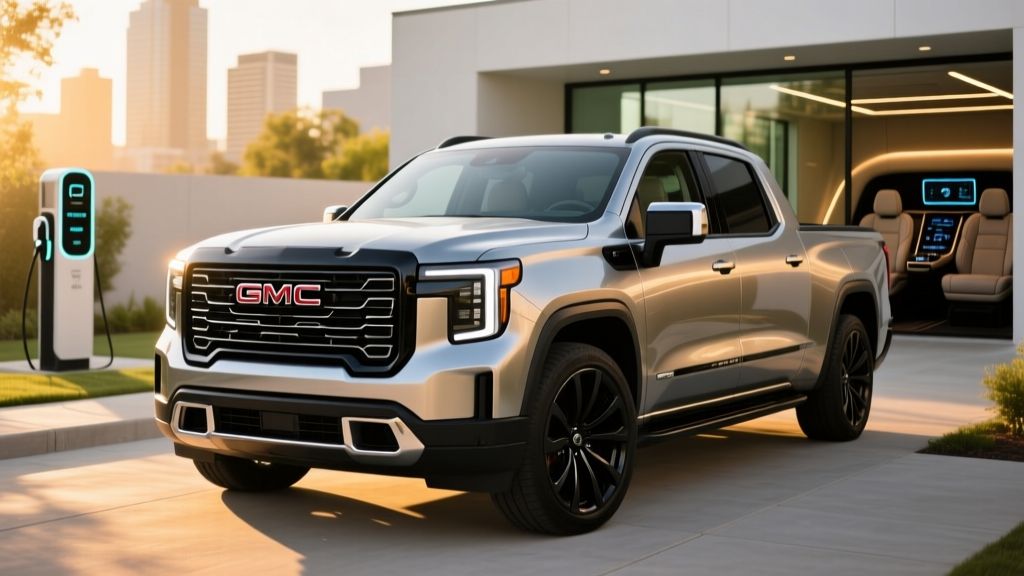
The Bottom Line on the 2026 GMC Sierra Denali EV
The 2026 GMC Sierra Denali EV is a luxury electric pickup built on GM's Ultium platform, offering an EPA-estimated 440 miles of range from a massive ~200 kWh battery pack, up to 754 horsepower, and 350 kW peak DC fast-charging capability. Starting at $99,495 (Edition 1), it targets buyers who want a premium truck experience with zero tailpipe emissions. Expect real-world highway range closer to 350–380 miles, and plan for home Level 2 charging to unlock the lowest operating costs. It does not currently qualify for the full $7,500 federal §30D tax credit due to battery-sourcing requirements — verify current eligibility at IRS.gov before purchasing.
Range, Battery, and Real-World Efficiency
The Sierra Denali EV packs one of the largest battery systems in any production vehicle: a ~200 kWh usable Ultium pack using NMC (nickel-manganese-cobalt) chemistry across a 24-module configuration. That enormous energy reserve delivers the headline EPA figure of 440 miles on the Edition 1 trim with 24-inch wheels. Opt for the available larger tires or tow package, and that number dips.
EPA vs. Real-World Range
| Condition | Estimated Range |
|---|---|
| EPA Combined (sticker) | 440 mi |
| Highway 70 mph, 75°F | ~360–380 mi |
| Highway 70 mph, 30°F (cold) | ~280–310 mi |
| Towing 5,000 lb trailer | ~200–240 mi |
| City / suburban mixed | ~400–430 mi |
Source: EPA estimates via fueleconomy.gov; real-world figures based on Ultium-platform testing and EV pickup towing data.
Efficiency lands around 47–50 MPGe combined, or roughly 48 kWh per 100 miles — heavy for a passenger vehicle but competitive for a full-size truck. The Sierra Denali EV's thermal management system includes a heat pump, which helps mitigate cold-weather range loss compared to resistive cabin heating, but physics still demands a 20–30% reduction in freezing temperatures.
Charging Speed and Infrastructure Reality
GM equips the Sierra Denali EV with an 800-volt architecture capable of 350 kW peak DC fast charging on compatible stations. On a 350 kW charger, GM estimates a 10–80% charge in approximately 45 minutes. However, the charge curve matters far more than the peak number:
| Charging Level | Power (kW) | Miles Added per Hour | Typical Use Case |
|---|---|---|---|
| Level 1 (120V outlet) | ~1.4 kW | ~3 mi/hr | Emergency / trickle only |
| Level 2 (240V, 48A) | 11.5 kW | ~25 mi/hr | Home overnight charging |
| Level 2 (240V, 80A) | 19.2 kW | ~42 mi/hr | Home / destination fast L2 |
| DC Fast (150 kW station) | ~150 kW sustained | ~200 mi in 30 min | Road-trip mid-tier stations |
| DC Fast (350 kW station) | 350 kW peak, tapering | ~280 mi in 30 min | Fastest public charging |
With a 200 kWh battery, even Level 2 at 11.5 kW requires roughly 17 hours for a full 0–100% charge. Most owners will plug in nightly and charge between 20–80% state of charge, which takes about 10 hours at 11.5 kW — manageable for overnight sessions if you drive under 200 miles daily. Home charging is effectively mandatory for cost-effective ownership; relying solely on DC fast charging at $0.35–$0.50/kWh will erase most fuel-cost savings.
The Sierra Denali EV uses the NACS (North American Charging Standard) connector, granting access to Tesla Supercharger V4 stations via GM's approved adapter, in addition to Electrify America, EVgo, and other CCS networks through the same adapter ecosystem.
EV vs. Gas Sierra Denali: Cost Comparison
The natural cross-shop is the gas-powered 2026 GMC Sierra Denali with the 6.2L V8 or 3.0L Duramax diesel. Here's how the numbers stack up over five years of ownership at 15,000 miles per year:
| Cost Category | Sierra Denali EV (Edition 1) | Sierra Denali Gas (6.2L V8) |
|---|---|---|
| Base MSRP | $99,495 | $72,695 |
| Federal Tax Credit (§30D) | $0–$3,750* | $0 |
| Effective Purchase Price | ~$95,745–$99,495 | $72,695 |
| Fuel/Energy (5 yr, 75k mi) | ~$5,400 (home L2 @ $0.14/kWh) | ~$15,750 (gas @ $3.50/gal, 16 MPG) |
| Maintenance (5 yr) | ~$1,200 | ~$4,500 |
| Insurance (5 yr est.) | ~$14,000 | ~$10,500 |
| Estimated Depreciation (5 yr) | ~$45,000 | ~$32,000 |
| 5-Year Total Cost | ~$160,345–$164,095 | ~$135,445 |
*§30D credit eligibility depends on battery critical-mineral sourcing, buyer income caps ($300k joint / $150k single), and MSRP caps ($80k for trucks — the Sierra Denali EV Edition 1 exceeds this cap). Consult IRS.gov and a tax professional for your specific situation.
The gas Sierra wins on total cost over five years primarily because the EV's higher purchase price, elevated insurance premiums, and steeper depreciation outweigh fuel and maintenance savings. The EV breaks even or wins only if you drive significantly more than 15,000 miles annually, have access to cheap electricity (under $0.10/kWh), or if gas prices spike above $4.50/gallon sustained.
Performance, Capability, and What It Can't Do
The Sierra Denali EV Edition 1 produces 754 horsepower and 785 lb-ft of torque from its dual-motor all-wheel-drive setup, launching to 60 mph in approximately 4.5 seconds — sports-car territory in a truck weighing over 9,000 pounds. Maximum towing capacity reaches 9,500 pounds, and the payload rating sits around 1,300 pounds.
But towing with any EV pickup demands honesty: pulling a 7,000-pound travel trailer at highway speeds will cut range roughly in half. Plan for 200–240 miles between charges when towing, and verify that your route includes DC fast chargers rated at 150 kW or above. The Sierra Denali EV's ProGrade Trailering system includes trailer-side camera views and integrated trailer brake control, but no EV truck today is a cross-country towing solution without careful route planning.
The MultiPro MidGate allows the partition between the bed and cabin to fold down, extending effective bed length to over 10 feet with the tailgate down — a practical advantage for hauling lumber or kayaks. Interior tech includes a 16.8-inch diagonal infotainment touchscreen, an 11-inch driver display, available Super Cruise (SAE Level 2 hands-free driving on compatible highways), and a 19-speaker Bose audio system.
Super Cruise: Level 2, Not Self-Driving
GMC Super Cruise enables hands-free driving on over 750,000 miles of compatible divided highways in the US and Canada. However, it is an SAE Level 2 driver-assistance system — you must remain alert, monitor the road, and be ready to take over immediately. It does not navigate city streets, construction zones, or unmapped roads autonomously. Only Level 4 services like Waymo operate without driver supervision in geofenced areas.
Battery Warranty, Degradation, and Long-Term Ownership
GM covers the Sierra Denali EV's Ultium battery with an 8-year / 100,000-mile warranty guaranteeing at least 70% capacity retention. Based on GM's Ultium chemistry testing and data from earlier Ultium-platform vehicles, expect approximately 8–12% total degradation over 100,000 miles under normal use — meaning a 440-mile truck might deliver around 390–405 miles of range at the 100k-mile mark.
NMC chemistry offers higher energy density than LFP (lithium iron phosphate), which is why the Sierra can achieve 440 miles without an impossibly heavy pack. The trade-off: NMC degrades slightly faster than LFP and prefers not to sit at 100% state of charge for extended periods. Best practice is daily charging to 80–90%, reserving 100% for road trips.
Battery replacement costs remain a concern for long-term owners. While GM has not published official out-of-warranty replacement pricing for the Sierra Denali EV's specific pack, industry estimates for a 200 kWh Ultium battery range from $25,000 to $35,000 including labor — a significant liability if you plan to keep the truck beyond the warranty period.
Common Misconceptions About the Sierra Denali EV
| Myth | Fact |
|---|---|
| "440 miles means I'll always get 440 miles" | Highway driving at 75 mph yields ~360–380 mi; cold weather drops this further to ~280–310 mi. The EPA test cycle includes low-speed and city segments that favor EVs. |
| "I'll get the $7,500 federal tax credit" | The Edition 1's $99,495 MSRP exceeds the §30D truck cap of $80,000. Battery sourcing rules may further limit credit availability. Always verify on IRS.gov. |
| "350 kW charging means 350 kW the whole session" | Peak rate applies only at low state of charge. Above 50% SoC, the charge curve tapers significantly. A 10–80% session averages closer to 200–250 kW sustained. |
| "It can tow just like a gas Sierra" | While rated for 9,500 lb, towing cuts range ~50%. Gas trucks lose MPG towing too, but refueling infrastructure is denser and faster for long hauls. |
| "No home charger? No problem" | Public DC fast charging at $0.35–$0.50/kWh makes the Sierra Denali EV more expensive to "fuel" than the gas Sierra. Home L2 at $0.12–$0.18/kWh is essential for cost savings. |
Decision Framework: Is the Sierra Denali EV Right for You?
Choose the Sierra Denali EV If:
- You have reliable Level 2 home charging (240V / 40A+ circuit) and drive under 250 miles on most days
- You value instant torque, silent operation, and the latest in-truck tech over traditional V8 character
- Your towing needs are light-to-moderate (under 5,000 lb) and mostly local or regional
- You want the lowest per-mile energy cost possible and have electricity rates under $0.15/kWh
- You're drawn to the MidGate versatility and don't need a traditional full-size bed for daily work
Choose the Gas Sierra Denali (or Wait) If:
- You regularly tow over 6,000 pounds on long highway trips where charging infrastructure is sparse
- You lack home charging access and would rely on public DC fast chargers daily
- You live in a region with extreme cold (frequent sub-10°F winters) and need maximum range reliability
- Total 5-year cost of ownership is a primary factor and you drive average mileage
- You plan to keep the truck 10+ years and want to avoid potential out-of-warranty battery replacement costs
Frequently Asked Questions
Does the 2026 GMC Sierra Denali EV qualify for any federal tax credit?
Likely not the full $7,500. The §30D credit has an MSRP cap of $80,000 for trucks, and the Edition 1 at $99,495 exceeds that. Lower trims may become eligible if GM prices them under the cap and meets critical-mineral and battery-component sourcing requirements. Always check the latest eligibility at IRS.gov before relying on credit estimates.
How long does it take to charge the Sierra Denali EV at home?
On a 48-amp Level 2 home charger (11.5 kW), a full 0–100% charge takes roughly 17 hours. A typical 20–80% daily charge takes about 10 hours. Most owners plug in each evening and wake up with 300+ miles of range — more than adequate for daily use.
What is the real-world range when towing a trailer?
Expect 200–240 miles with a 5,000-pound trailer at highway speeds, and as little as 160–180 miles with a near-max-load 9,000-pound trailer. Towing efficiency drops sharply above 65 mph due to aerodynamic drag on both truck and trailer.
Is the Sierra Denali EV good for off-road use?
It offers available adaptive air ride suspension with up to 10.8 inches of ground clearance in Extract mode and standard all-wheel drive with torque vectoring. It's capable for moderate trails and snow, but the 9,000+ pound curb weight and expensive wheel/tire packages make it less practical for serious rock crawling than a purpose-built off-roader.
What happens if the battery degrades significantly?
GM's 8-year/100,000-mile battery warranty covers defects and capacity loss below 70%. If degradation exceeds that threshold within the warranty period, GM will repair or replace modules as needed. Out of warranty, replacement costs are estimated at $25,000–$35,000 — factor this into long-term ownership plans.
Sources: EPA fueleconomy.gov, GMC official specifications, IRS §30D Clean Vehicle Credits. All specifications reflect 2026 model-year data available at time of publication. Verify final pricing and credit eligibility with your dealer and tax professional.