The 2026 GMC Sierra Denali EV at a Glance
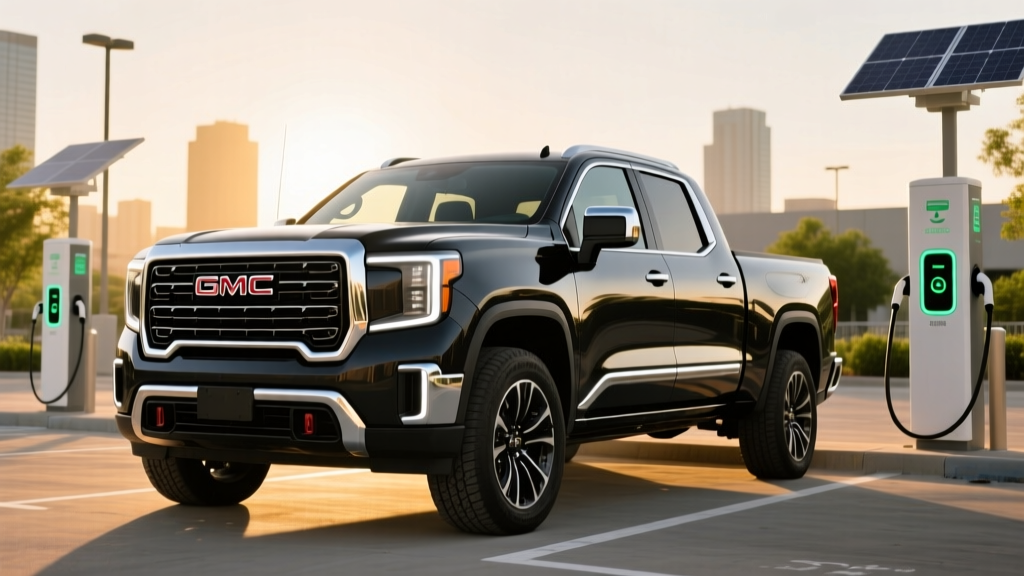
The 2026 GMC Sierra Denali EV is a full-size luxury electric pickup built on GM's Ultium platform, offering an EPA-estimated 440 miles of range (Edition 1 / Denali Ultimate with the 200+ kWh battery), up to 754 horsepower, and a peak DC fast-charge rate of 350 kW. Pricing starts around $99,495 for the Denali trim, placing it firmly in premium truck territory. It's designed for buyers who want maximum range, flagship tech, and daily-drivable electric utility — but home Level 2 charging access is practically a requirement given the massive battery. If you're comparing it to a gas Sierra Denali, the EV costs roughly $18,000–$22,000 more upfront but can save $2,500–$4,000 in fuel and maintenance over five years depending on your electricity rate and mileage.
Range, Battery, and Real-World Expectations
The 2026 Sierra Denali EV uses GM's Ultium platform with a large-format NMC (nickel manganese cobalt) lithium-ion battery pack. The Denali trim is available with the extended-range pack, which GM rates at over 200 kWh of usable capacity — one of the largest battery packs in any production passenger vehicle. That capacity is what enables the headline 440-mile EPA range figure, though it also contributes to the truck's substantial curb weight (estimated north of 9,000 lbs).
EPA Range vs. Real-World Range
EPA Estimate: 440 miles (Denali, 24-inch wheels; 460 miles on 22-inch wheels where equipped)
Real-World Expectation: Plan for 350–380 miles in mixed highway driving at 70–75 mph. In cold weather (below 32°F), expect a 15–25% reduction, bringing usable range to roughly 280–330 miles. Towing will dramatically cut range — expect 180–230 miles when pulling a 7,000+ lb trailer at highway speeds. These figures are consistent with testing of the Chevrolet Silverado EV on the same platform, per fueleconomy.gov.
| Spec | Value |
|---|---|
| EPA Range (Denali, 24" wheels) | 440 miles |
| Battery Chemistry | NMC (Ultium platform) |
| Battery Capacity (usable, est.) | ~200+ kWh |
| Peak DC Fast Charge Rate | 350 kW |
| 10–80% DC Fast Charge (est.) | ~35–40 minutes |
| Level 2 AC Charging (max) | 19.2 kW |
| Horsepower (Denali Ultimate) | 754 hp |
| 0–60 mph (est.) | ~4.5 seconds |
| Max Towing Capacity | 10,000 lbs (est.) |
| Base MSRP (Denali) | $99,495 |
| Battery/Powertrain Warranty | 8 years / 100,000 miles |
The 440-mile EPA figure is remarkable for a truck, but it's essential to understand the physics at play. Large battery packs are heavy, and that weight hurts efficiency at sustained highway speeds and especially when towing. The Sierra Denali EV's efficiency is roughly 47–50 MPGe combined according to EPA data, which translates to about 2.0–2.1 kWh per mile. That's substantially less efficient per mile than a sedan like the Tesla Model 3 (~4.0 mi/kWh) but typical for a full-size electric truck.
Charging: Speeds, Infrastructure, and Home Setup
With a 200+ kWh battery, charging logistics are the single most important ownership factor for the Sierra Denali EV. Here's what each charging level looks like in practice:
| Level | Power (kW) | Miles Added per Hour | Full Charge Time (0–100%) |
|---|---|---|---|
| Level 1 (120V standard outlet) | ~1.4 kW | ~3–4 miles | ~60+ hours |
| Level 2 (240V, 48A home charger) | 11.5 kW | ~23–25 miles | ~18–20 hours |
| Level 2 (240V, 80A / 19.2 kW max) | 19.2 kW | ~38–40 miles | ~11–12 hours |
| DC Fast Charge (peak 350 kW) | 350 kW (peak) | ~700 miles/hr (peak) | 10–80% in ~35–40 min |
Home charging reality: Level 1 is effectively useless for daily use with a battery this large. A Level 2 home charger is a practical necessity. The Sierra Denali EV supports up to 19.2 kW AC charging, but most home installations use a 48-amp circuit (11.5 kW), which adds about 24 miles per hour of charging. For a typical daily commute of 40–60 miles, overnight charging at 11.5 kW is more than adequate — you'll replenish your daily use in 2–3 hours.
Home installation cost: Expect to pay $1,200–$2,500 for a professional Level 2 installation if your electrical panel has capacity for a 60-amp breaker. If your home has an older 100-amp panel, a panel upgrade to 200 amps can add $2,000–$4,000. Always consult a licensed electrician for a site assessment.
DC fast charging: The 350 kW peak rate is achievable at compatible stations (e.g., Electrify America 350 kW chargers). However, peak rate is not sustained rate. The charge curve on Ultium batteries typically holds strong from 10–50% SoC, then tapers significantly above 80%. In practice, expect a 10–80% session to take 35–40 minutes at a 350 kW station, and 45–55 minutes at a 150 kW station. Preconditioning the battery (via the navigation system routing to a charger) is critical for achieving peak rates.
Cost Comparison: Sierra Denali EV vs. Gas Sierra Denali
The most common question from truck buyers: does the electric version save money? Here's a five-year cost comparison assuming 15,000 miles/year, $3.50/gallon gas, and $0.14/kWh electricity (national average residential rate).
| Cost Category | Sierra Denali EV | Gas Sierra Denali 4WD |
|---|---|---|
| Base MSRP | $99,495 | $72,895 |
| Fuel/Energy (60k mi) | $12,600 (14 kWh/mi × $0.14) | $21,000 (16 mpg × $3.50/gal) |
| Maintenance (5 yr) | ~$1,800 | ~$4,500 |
| Insurance (5 yr est.) | ~$14,500 | ~$11,200 |
| Federal Tax Credit (§30D) | Up to $7,500* | $0 |
| Estimated 5-Year Total | ~$128,395 – $7,500 = ~$120,895 | ~$109,595 |
*The §30D federal tax credit has strict eligibility rules: buyer income caps ($300K joint / $150K single), MSRP caps ($80K for trucks — which the Denali EV exceeds at $99,495), and critical-mineral/battery-component sourcing requirements. As of the 2026 tax year, the Sierra Denali EV's MSRP likely disqualifies it from the federal credit. Consult a tax professional and verify current IRS rules before assuming eligibility.
The bottom line: The EV saves roughly $8,400–$11,000 in fuel and maintenance over five years. But the higher purchase price (roughly $26,600 more) and likely ineligibility for the federal tax credit mean the gas Sierra Denali remains cheaper on a pure total-cost basis. The EV makes financial sense if you prioritize lower running costs, home charging convenience, instant torque, and the tech-forward experience — not pure cost parity.
EV vs. Gas: What Changes in Daily Life
| Factor | Sierra Denali EV | Gas Sierra Denali |
|---|---|---|
| "Refueling" Routine | Plug in at home overnight; wake up "full" | Gas station 1–2x per week |
| Cold-Weather Impact | 15–25% range loss; cabin heating draws from battery | Minimal range impact; engine waste heat warms cabin |
| Towing Range | 180–230 mi (heavy trailer) | 350–420 mi |
| Performance | Instant torque; 754 hp; ~4.5s 0–60 | 420 hp (6.2L V8); ~5.8s 0–60 |
| Maintenance | No oil changes, no transmission fluid, fewer brake jobs (regen) | Regular oil, transmission, brake service |
| Frunk / Storage | Yes — front trunk (eFrunk) | No |
| Off-Grid Power | ProPower-style V2L/V2H potential (verify trim) | Generator required |
The daily experience is where the EV shines. If you have home charging, you'll rarely visit a "fueling" station. The instant torque and near-silent acceleration transform a heavy truck into something that feels sporty. Regenerative braking means less wear on friction brakes — many EV owners report original brake pads lasting 100,000+ miles.
However, towing is the Achilles' heel. If you regularly tow a large trailer more than 150 miles, the gas Sierra Denali remains the more practical choice. DC fast-charging infrastructure for trucks (with pull-through lanes) is still limited in many regions, and charging a 200+ kWh battery on the road adds significant trip time.
Common Misconceptions About the Sierra Denali EV
| Myth | Fact |
|---|---|
| "The battery will need replacing in 5 years." | GM warrants the Ultium battery for 8 years/100,000 miles against defects and excessive degradation (typically below 70% capacity). Industry data from Recurrent Auto shows modern NMC packs retain 85–92% capacity at 100K miles. |
| "You can charge it on a regular outlet." | Technically yes, at ~1.4 kW (Level 1), but a full charge would take 60+ hours. Level 2 home charging is a practical requirement. |
| "It qualifies for the full $7,500 tax credit." | The §30D credit has an $80,000 MSRP cap for trucks/vans/SUVs. At ~$99,495, the Sierra Denali EV likely exceeds this cap. Always verify current IRS eligibility rules. |
| "440 miles means I'll always get 440 miles." | EPA range is a lab estimate. Highway driving at 75 mph, cold weather, and towing significantly reduce real-world range. Plan for 350–380 mi highway, 280–330 mi in winter. |
| "Electric trucks can't tow." | They can tow — and torque is excellent. But towing cuts range roughly in half. The issue isn't capability; it's range while towing. |
Who Should Buy the 2026 Sierra Denali EV?
Decision Framework: Is This Truck For You?
Buy the Sierra Denali EV if:
- You have (or can install) Level 2 home charging — ideally a 48A or 80A circuit
- Your daily driving is under 150 miles round-trip, with occasional longer road trips
- You rarely tow more than 150 miles one-way without a planned charging stop
- You value instant torque, quiet operation, and a tech-forward cabin
- You want to reduce fuel and maintenance costs and don't mind the higher upfront price
- You live in a moderate or warm climate (cold-weather range loss is less punishing with a 440-mi battery)
Stick with the gas Sierra Denali (or consider a hybrid) if:
- You regularly tow heavy trailers over long distances (200+ miles)
- You live in an apartment or lack access to reliable home or workplace charging
- Your budget is tightly constrained and the $26,000+ price premium is a dealbreaker
- You frequently drive in extreme cold (below 0°F) where range loss compounds
- You need maximum payload capacity — the EV's battery weight reduces payload vs. gas models
What First-Time EV Buyers Need to Know
If the Sierra Denali EV is your first electric vehicle, here are the ownership realities no brochure will emphasize:
1. Home charging is non-negotiable for a battery this large. Before purchasing, get an electrical assessment. A 200-amp panel with available capacity is ideal. Factor in $1,200–$4,000+ for installation and potential panel upgrades.
2. Learn to read the charge curve. The 350 kW peak only applies at low states of charge (roughly 10–40%). Above 80%, charging slows dramatically to protect the battery. Plan road-trip stops to charge from 10–80%, not 0–100%.
3. Preconditioning matters. Use the truck's navigation to route to DC fast chargers — this triggers battery preconditioning, warming the pack to optimal temperature for faster charging. Without it, you may arrive at a charger and only pull 50–80 kW instead of 250+.
4. Insurance costs more. EV insurance premiums are typically 15–30% higher than comparable gas vehicles due to higher repair costs and specialized parts. Get a quote before committing.
5. Tire wear is accelerated. The Sierra Denali EV's 9,000+ lb curb weight and instant torque wear tires faster than gas trucks. Budget for premium tire replacements every 25,000–35,000 miles.
Frequently Asked Questions
Does the 2026 GMC Sierra Denali EV qualify for the $7,500 federal tax credit?
Likely not. The IRS §30D credit caps eligible truck MSRP at $80,000. The Sierra Denali EV starts around $99,495, which exceeds this threshold. Additionally, the credit requires meeting critical-mineral and battery-component sourcing rules, plus buyer income limits ($300,000 joint / $150,000 single modified AGI). Always verify with a tax professional and the latest IRS guidance.
How long does it take to charge the Sierra Denali EV at home?
With a 48-amp Level 2 charger (11.5 kW), a full charge from empty takes roughly 18–20 hours. In practice, you'll rarely charge from 0% — topping up from 30% to 80% takes about 8–9 hours overnight. An 80-amp charger (19.2 kW) cuts that to roughly 5–6 hours for the same session.
What's the real-world range when towing?
Expect 180–230 miles when towing a 7,000–10,000 lb trailer at highway speeds. Aerodynamic drag and weight dramatically increase energy consumption. For comparison, the gas Sierra Denali with the 6.2L V8 achieves roughly 350–420 miles of towing range on its 24-gallon tank. If long-distance towing is a regular need, the gas model remains more practical.
How does the Sierra Denali EV compare to the Ford F-150 Lightning and Rivian R1T?
The Sierra Denali EV offers significantly more range (440 mi vs. the Lightning's ~320 mi extended range and the R1T's ~352 mi Max Pack). However, it's also heavier, more expensive, and larger. The F-150 Lightning starts around $55,000 and is more accessible for mainstream buyers. The Rivian R1T is more compact and off-road capable but has less range and cargo space. The Sierra Denali EV targets buyers who want maximum range and luxury in a full-size truck — a niche, but one it fills well.
Will the battery last the life of the truck?
Modern NMC Ultium batteries are designed for long life. GM's warranty covers 8 years/100,000 miles with a capacity retention threshold (typically 70% or above). Real-world data from Recurrent Auto shows most modern EV batteries retain 85–92% capacity at 100,000 miles. With proper care (avoiding frequent 100% charges, minimizing DC fast charging in extreme heat), the battery should outlast 200,000 miles with acceptable degradation.
What's the NACS vs. CCS situation for the Sierra Denali EV?
For the 2026 model year, GM has transitioned to the NACS (North American Charging Standard) connector across its EV lineup, giving the Sierra Denali EV native access to Tesla Superchargers (now open to non-Tesla EVs) as well as the broader NACS-equipped charging network. This is a significant advantage over CCS-equipped vehicles, as the Supercharger network remains the most reliable DC fast-charging infrastructure in North America.