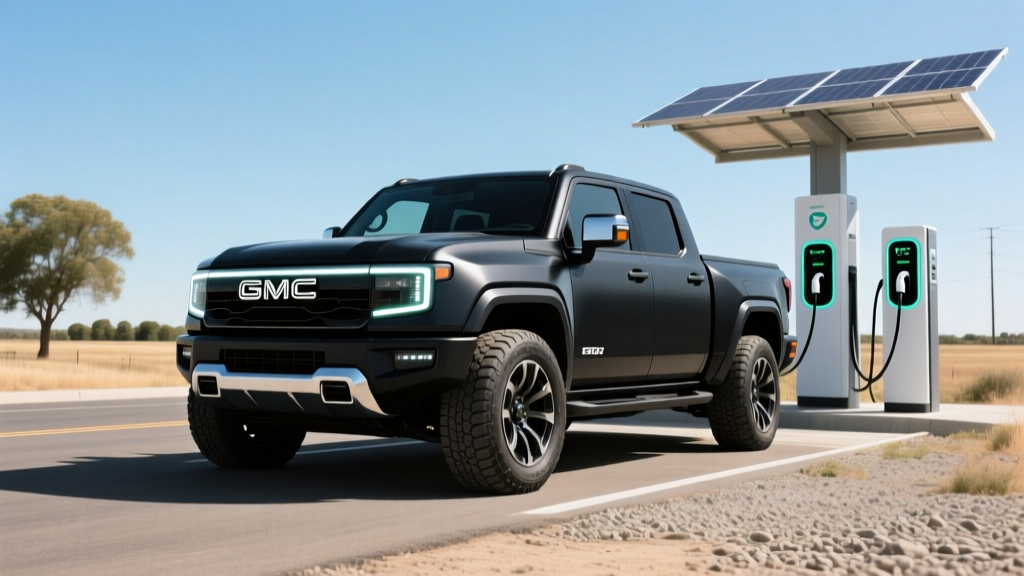
The GMC Hummer EV Pickup is an exercise in excess: a 9,000-pound electric supertruck that can crab-walk diagonally, hit 60 mph in three seconds, and tow 7,500 pounds—all while emitting nothing from its tailpipe. For 2026, GMC has streamlined the lineup and introduced incremental software and efficiency updates, but the core proposition remains the same. If you want the most physically imposing EV on the road with genuine off-road capability and a battery larger than some home solar installations, the Hummer EV has no direct rival. But its sheer mass creates real trade-offs in efficiency, charging logistics, and everyday practicality that buyers must weigh carefully.
Quick Verdict: Who Should Buy the 2026 Hummer EV Pickup?
The 2026 GMC Hummer EV Pickup is built for a narrow but enthusiastic buyer: someone who wants a head-turning electric truck with serious off-road chops, supercar-level acceleration, and enough range to make road trips feasible. It is not ideal for budget-conscious commuters, garage-challenged urban dwellers (it's over 18 feet long), or anyone prioritizing efficiency over presence. If you need a daily-driver work truck with maximum payload, a lighter EV like the Ford F-150 Lightning or Rivian R1T serves better. But for show-stopping performance and capability, nothing else matches it.
Range, Battery & Real-World Efficiency
Real-World Expectation: ~260–290 miles highway at 70 mph; ~210–240 miles in sub-30°F cold weather; ~240–260 miles when towing a 5,000-lb trailer.
Why the gap: The Hummer EV's 9,046-lb curb weight and 0.56 coefficient of drag demand enormous energy at sustained highway speeds. Cold weather increases battery internal resistance and cabin heating load, further reducing range.
| Specification | Detail |
|---|---|
| Battery Chemistry | NMC (Nickel Manganese Cobalt) — GM Ultium platform |
| Total Battery Capacity | ~246 kWh (24 modules, double-stacked) |
| Usable Capacity | ~212 kWh (estimated, with top/bottom buffer) |
| EPA Range | 329 miles (2EV trim) |
| EPA Efficiency | 47 MPGe combined / 72 kWh per 100 miles |
| Drivetrain | AWD — Tri-motor (1 front, 2 rear) |
| Battery/Powertrain Warranty | 8 years / 100,000 miles (min 70% capacity retention) |
The Ultium battery pack is a marvel of engineering—two layers of 12 modules stacked vertically—but it's also the reason the Hummer EV weighs as much as two Mazda Miatas. GM uses NMC chemistry for its higher energy density versus LFP, which is essential given the truck's mass. The 72 kWh/100mi efficiency figure means you'll spend significantly more per mile on electricity than a lighter EV like the Tesla Cybertruck (~48 kWh/100mi) or Rivian R1T (~52 kWh/100mi).
Charging Speed: DC Fast, Level 2 & Home Setup
Charging a 246 kWh battery is a logistical reality every Hummer EV owner must plan for. The truck supports up to 350 kW peak DC fast charging on 800-volt architecture, but as with all EVs, peak rate is not sustained rate.
| Level | Power | Speed | Notes |
|---|---|---|---|
| Level 1 (120V) | 1.4 kW | ~2 mi/hr | Emergency only; 100+ hours for full charge |
| Level 2 (240V, 48A) | 11.5 kW | ~16 mi/hr | Overnight: ~20 hrs for 10–100% |
| Level 2 (240V, 80A) | 19.2 kW | ~27 mi/hr | Requires upgraded home charger & 100A circuit |
| DC Fast (peak) | 350 kW | ~10–80% in 38 min | Tapers significantly above 80% SoC |
| DC Fast (sustained avg) | ~200 kW avg | ~100 mi in 30 min | Real-world road-trip expectation |
Charge curve reality check: The Hummer EV hits its 350 kW peak only at low state of charge (roughly 10–25% SoC) on a compatible 800V station like an Electrify America 350 kW pedestal. By 50% SoC, the rate drops to ~200 kW, and above 80% it slows dramatically to protect the battery. A typical 10–80% session takes about 38 minutes under optimal conditions—longer than lighter EVs because there's simply so much energy to push into the pack.
Home charging reality: With the standard 11.5 kW onboard charger and a 48-amp Level 2 wall connector (like the ChargePoint Home Flex or Emporia V2), expect to add roughly 16 miles of range per hour. A full recharge from 10% takes roughly 20 hours. Most owners will charge nightly, topping up 40–60 miles of daily driving in 3–4 hours. A 200-amp electrical panel is typically sufficient, but if you're also running other high-draw appliances, consult a licensed electrician about potential panel upgrades.
Performance: 1,000 HP and a 3-Second 0–60
| Metric | 2EV (Standard) | 3X (Tri-Motor) |
|---|---|---|
| Horsepower | 625 hp | 1,000 hp (Watts to Freedom mode) |
| Torque | 7,400 lb-ft (wheel) | 12,000 lb-ft (wheel) |
| 0–60 mph | ~4.5 seconds | ~3.0 seconds |
| Top Speed | 106 mph | 106 mph |
| Towing Capacity | 7,500 lbs | 7,500 lbs |
| Payload | ~1,300 lbs | ~1,300 lbs |
The 3X trim's Watts to Freedom (WTF) mode is an experience unlike anything else in a pickup: the truck lowers its air suspension, haptic feedback pulses through the seat, a soundtrack builds through the speakers, and then 1,000 horsepower launches 9,000 pounds to 60 mph in roughly three seconds. It's absurd and magnificent. The dual-motor 2EV still delivers 625 hp and a sub-5-second sprint—more than enough for any real-world scenario.
Towing is competent at 7,500 lbs but trails the Ford F-150 Lightning (10,000 lbs with max tow package) and Rivian R1T (11,000 lbs). Expect towing to cut range roughly in half—a 5,000-lb trailer on a flat highway at 65 mph will yield approximately 160–180 miles of range.
Interior, Cargo & Technology
The Hummer EV seats five in a crew-cab configuration with generous rear legroom—approximately 42.5 inches front and 40.8 inches rear, based on the GM T1XX platform. The interior is upscale but not quite luxury-tier: durable materials suited to an adventure vehicle rather than the premium leather-and-wood ambiance of a Rivian or Cadillac.
Cargo dimensions:
- Bed length: 5 feet (with MultiPro tailgate)
- Bed volume: ~42 cu ft
- Front trunk (frunk): ~11.5 cu ft with power-operated eTrunk lid
- Total cargo: ~53.5 cu ft (bed + frunk combined)
The 5-foot bed is shorter than a standard full-size truck, which limits utility for contractors or anyone hauling 4x8 sheets of plywood. The eTrunk is a standout feature—power-operated, lockable, and large enough for groceries or gear you want secured and weather-protected.
Infotainment & driver assists:
- 13.4-inch diagonal center touchscreen with Google Built-In (Google Maps, Assistant, Play Store)
- 12.3-inch digital instrument cluster
- Available 12-camera UltraVision system (underbody cameras for off-road trail viewing)
- Super Cruise (SAE Level 2) hands-free driving on 750,000+ miles of mapped roads
- Available 4-Wheel Steer with CrabWalk mode (diagonal movement)
- Adaptive Air Ride suspension with Extract Mode (raises 6 inches for obstacle clearance)
Pricing, Trims & Federal Tax Credit
| Trim | Base MSRP | Est. As-Tested* | §30D Credit Eligible? |
|---|---|---|---|
| 2EV | ~$100,395 | ~$108,000–$115,000 | Up to $7,500 (if eligible) |
| 3X | ~$120,395 | ~$130,000–$140,000 | Up to $7,500 (if eligible) |
*As-tested includes destination charge, common options packages. Prices are estimates based on 2025 model-year trajectory; GMC may adjust for 2026.
Federal Tax Credit Eligibility (§30D)
The Hummer EV Pickup qualifies as a truck under IRS §30D rules, meaning the MSRP cap is $80,000 for vans/SUVs and $80,000 for pickup trucks. However, the Hummer EV's MSRP exceeds this cap, which disqualifies it from the new-vehicle §30D credit.
- MSRP cap (trucks): $80,000 — Hummer EV exceeds this ❌
- Buyer income cap (new): $150K single / $300K joint — moot due to MSRP
- Battery sourcing: Must meet critical-mineral and battery-component thresholds — moot
- Point-of-sale transfer: Available for eligible vehicles — not applicable here
- Used §25E credit: Possible if purchased used under $25,000, income under $75K/$150K
How It Compares: Hummer EV vs. Rivals
| Spec | GMC Hummer EV 3X | Rivian R1T Tri Motor | Ford F-150 Lightning Platinum | Tesla Cybertruck AWD |
|---|---|---|---|---|
| EPA Range | 329 mi | ~328 mi | 320 mi | 318 mi |
| 0–60 mph | 3.0 sec | ~2.9 sec | 4.5 sec | 4.1 sec |
| Max Tow | 7,500 lbs | 11,000 lbs | 10,000 lbs | 11,000 lbs |
| Peak DC Charge | 350 kW | 220 kW | 150 kW | 250 kW |
| Bed Length | 5 ft | 4.5 ft | 5.5 ft | 6 ft |
| Base MSRP | ~$100,395 | ~$99,900 | ~$98,874 | ~$79,990 |
| Curb Weight | ~9,046 lbs | ~7,100 lbs | ~6,500 lbs | ~6,800 lbs |
Sources: fueleconomy.gov, manufacturer specifications. Verify current pricing with dealers.
Pros, Cons & Ownership Reality
Pros
- Unmatched presence and road presence — nothing looks like it
- 3.0-second 0–60 in 3X is supercar-quick
- 329-mile EPA range is genuine for road trips
- 350 kW peak DC charging is best-in-class for pickups
- CrabWalk and 4-wheel steer are legitimately useful off-road
- Super Cruise for hands-free highway driving
- Massive Ultium battery provides a large usable buffer against degradation
- eTrunk adds secure, weather-proof front storage
Cons
- Over $100,000 starting; no federal tax credit (MSRP cap)
- 9,046-lb weight crushes efficiency (72 kWh/100mi)
- 5-foot bed limits utility vs. conventional trucks
- ~1,300-lb payload is low for a full-size pickup
- 7,500-lb tow rating trails F-150 Lightning and R1T
- 20+ hour Level 2 home charge from empty
- Extremely wide (86.7 in) — challenging in parking garages and drive-throughs
- Tire replacement costs are significant (35-inch or 37-inch Goodyear Wranglers)
Ownership cost reality: At 72 kWh/100mi and a national average electricity rate of ~$0.17/kWh, fueling the Hummer EV costs roughly $0.12/mile at home. On public DC fast chargers ($0.40–$0.60/kWh), that jumps to $0.29–$0.43/mile. Compare that to a gas F-150 at 20 mpg and $3.50/gal: ~$0.18/mile. Home charging is cheaper; frequent public fast charging may actually cost more than gas. Insurance premiums for six-figure EVs typically run 20–40% higher than comparable gas trucks.
Frequently Asked Questions
What is the real-world range of the 2026 GMC Hummer EV Pickup?
The EPA rates the Hummer EV 2EV at 329 miles. In real-world highway driving at 70 mph, expect 260–290 miles. In cold weather (below 30°F), that drops to approximately 210–240 miles due to battery resistance and cabin heating demands. Towing a mid-weight trailer will cut range to roughly 160–180 miles.
How fast does the Hummer EV charge at home and on the road?
At home on a 48-amp Level 2 charger (11.5 kW), the Hummer EV adds about 16 miles of range per hour, requiring roughly 20 hours for a full 10–100% charge. On a 350 kW DC fast charger, a 10–80% session takes approximately 38 minutes under optimal conditions, though the charge curve tapers significantly above 80% SoC.
Does the 2026 Hummer EV qualify for the federal EV tax credit?
No. Under IRS §30D rules, new electric pickups must have an MSRP at or below $80,000 to qualify for the up-to-$7,500 credit. The Hummer EV starts above $100,000, exceeding this cap. A used Hummer EV purchased under $25,000 may qualify for the §25E used-EV credit (up to $4,000) if buyer income requirements are met. Always verify at IRS.gov.
Is the Hummer EV worth buying vs. the Rivian R1T or F-150 Lightning?
It depends on your priorities. If you want maximum towing (11,000 lbs), a longer bed, or a more refined interior, the Rivian R1T is the better all-around truck. If you need a work truck with a practical bed and lower cost, the F-150 Lightning wins. The Hummer EV is the right pick if you value unmatched presence, CrabWalk/4-wheel-steer off-road capability, 3.0-second acceleration, and the longest-range battery in a pickup—accepting the efficiency and price trade-offs.
How long will the Hummer EV battery last?
GM warrants the Ultium battery for 8 years or 100,000 miles against defects and capacity loss below 70% of original capacity. Given the massive 246 kWh pack, even 15% degradation over 10 years would still leave ~280 miles of EPA-rated range. NMC chemistry typically retains 85–90% capacity after 150,000 miles with proper care (avoiding frequent 100% charges and extreme heat exposure).
Can the Hummer EV's CrabWalk actually be used on the street?
CrabWalk (4-wheel steer with rear wheels turning up to 10 degrees in the same direction as the fronts) is functional at low speeds on-road for tight maneuvering, but it's primarily designed for off-road obstacle avoidance. It's not a gimmick—it meaningfully reduces the turning radius and lets the truck navigate narrow trails diagonally.
Decision Framework: Is the Hummer EV Right for You?
Choose the Hummer EV if: You want the most distinctive, highest-performance electric pickup with genuine off-road innovation, 300+ miles of range, and don't mind the $100K+ price, lower efficiency, and short bed.
Choose the Rivian R1T if: You need higher towing capacity, a more refined interior, a gear tunnel for extra storage, and a slightly lower starting price with better efficiency.
Choose the F-150 Lightning if: You want a proven work truck with a practical bed, 10,000-lb towing, lower pricing, and don't need supercar acceleration.
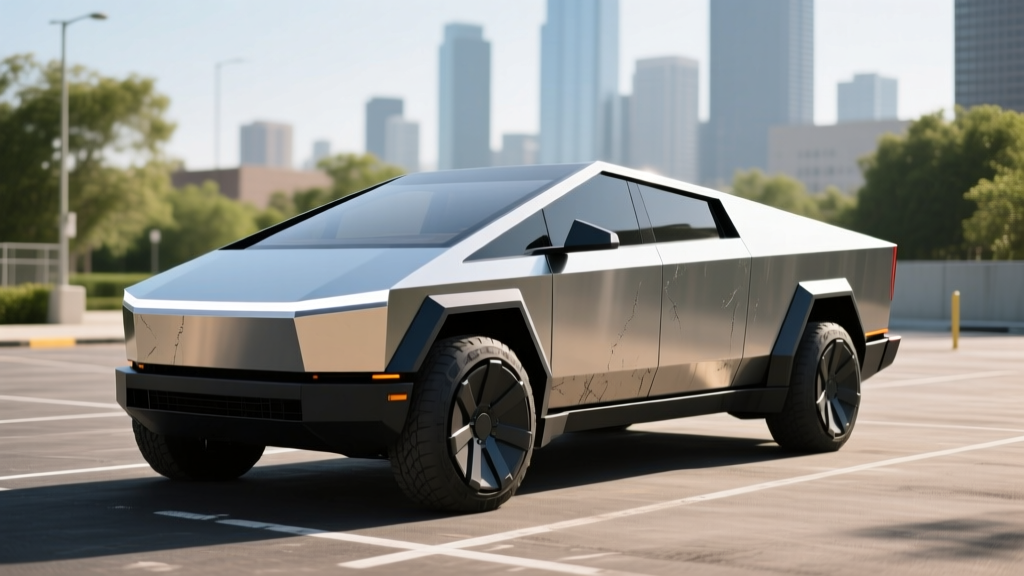
Choose the Tesla Cybertruck if: You want the longest bed, stainless-steel durability, a lower entry price (~$80K), and access to the Supercharger network (now available to all brands via NACS adapter).