Quick Verdict: The Carbon Fiber Edition Adds Show, Not Substance
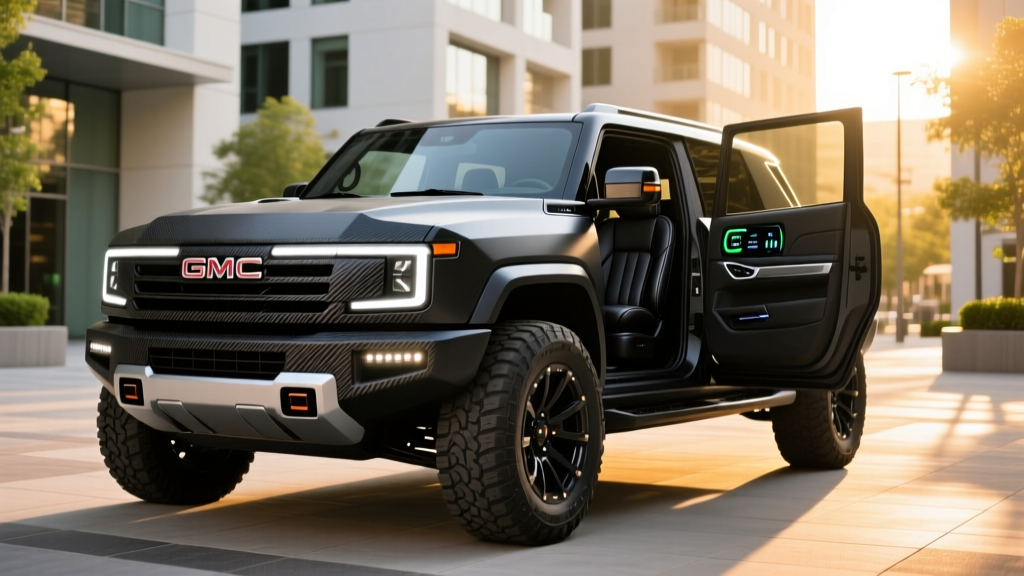
The 2026 GMC Hummer EV Carbon Fiber Edition is a $10,000 appearance package layered onto the already-extreme Edition 1 pickup. You get exposed carbon fiber accents across the interior and exterior, unique 22-inch wheels, and special badging — but the powertrain, battery, and charging hardware remain identical to the standard tri-motor Edition 1. If you're drawn to the Hummer EV's 1,000-horseparty party trick and 8,700-pound towing capacity, the Carbon Fiber Edition is the most visually aggressive way to get it. If you need efficient daily transportation, this 9,000-pound truck will punish you at every DC fast charger and grocery-store parking lot.
For 2026, GMC has made the Carbon Fiber Edition available on both the pickup and SUV body styles, though availability remains limited to allocation-based ordering through participating dealers. Production slots are tight, and most buyers report 3–6 month wait times from order to delivery.
Range, Battery, and Real-World Efficiency
Real-World Expectation: ~240–270 miles at sustained highway speeds (70–75 mph); ~190–220 miles in sub-30°F cold weather with cabin heat. The Hummer EV's 9,000+ lb curb weight and brick-like aerodynamics crush highway efficiency.
The 2026 Hummer EV Edition 1 uses a massive 246 kWh total capacity (approximately 212 kWh usable) Ultium battery pack built on GM's BTX1 platform. The pack uses NMC (nickel manganese cobalt) chemistry in a double-stacked pouch-cell configuration — necessary to achieve the energy density required for a vehicle this heavy. LFP chemistry, while cheaper and more cycle-durable, lacks the energy density to move a Hummer EV any meaningful distance.
Efficiency is predictably poor. The EPA rates the tri-motor pickup at 47 MPGe combined, which translates to roughly 72 kWh per 100 miles. For context, a Ford F-150 Lightning Extended Range uses about 48 kWh/100 mi, and a Tesla Model S uses around 28 kWh/100 mi. You're moving 9,000+ pounds of truck with the frontal area of a garden shed — physics is not your friend here.
| Spec | Value |
|---|---|
| EPA Range | 329 miles |
| Battery (total / usable) | 246 kWh / ~212 kWh |
| Chemistry | NMC (pouch cells, double-stacked) |
| Efficiency | 47 MPGe / ~72 kWh/100 mi |
| Horsepower | 1,000 hp (Watts to Freedom mode) |
| Torque | 1,200 lb-ft |
| 0–60 mph | ~3.0 seconds |
| Drivetrain | Tri-motor AWD (1 front, 2 rear) |
| Towing Capacity | 8,700 lbs |
| Curb Weight | ~9,063 lbs |
| Base MSRP | ~$150,395 (incl. destination) |
Charging Speed: DC Fast, Level 2, and the 246 kWh Problem
Charging a 246 kWh battery is an exercise in patience, even with the Hummer EV's 800-volt architecture. Here's what the numbers look like in practice:
| Level | Power | Miles Added/Hour | Time (10–80%) |
|---|---|---|---|
| Level 1 (120V, 12A) | ~1.4 kW | ~2 mi/hr | ~100+ hours (impractical) |
| Level 2 (240V, 48A) | 11.5 kW | ~16 mi/hr | ~18–20 hours |
| Level 2 (240V, 80A) | 19.2 kW | ~27 mi/hr | ~11–13 hours |
| DC Fast Charge | 350 kW peak | ~100 mi in 12 min | ~35 minutes (10–80%) |
The 350 kW peak DC fast-charge rate is legitimate — the Hummer EV's 800V architecture allows it to accept charging speeds that rival the Porsche Taycan. However, peak rate is not sustained rate. The charge curve tapers significantly above 60% state of charge, and thermal management of a 246 kWh pack means you'll see peak speeds only in the 10–40% SoC window under ideal conditions. Expect an average sustained rate closer to 200–230 kW across a full 10–80% session, yielding the ~35-minute time.
At home on a standard 48-amp Level 2 circuit (the most common residential installation), you're adding roughly 16 miles of range per hour. A full depletion-to-80% charge takes nearly 20 hours. If you install an 80-amp circuit (requiring a 100-amp breaker and likely a panel upgrade), you can cut that to about 12 hours — still an overnight-plus affair for a fully drained pack.
Practical charging tip: With a battery this large, most owners will rarely charge above 80% at home unless a road trip is planned the next morning. Daily driving of 40–60 miles consumes only ~15–20% of the pack, making nightly top-ups unnecessary. GMC recommends setting a daily charge limit of 80% to preserve long-term NMC battery health.
Performance, Drivetrain, and the Watts to Freedom Trick
The tri-motor powertrain produces 1,000 horsepower and 1,200 lb-ft of torque when Watts to Freedom (WTF) mode is activated. This mode lowers the air suspension, preconditions the battery for maximum discharge, and enables a launch-control-style 0–60 mph run in approximately 3.0 seconds. It's a bar-bet party trick that never fails to shock passengers — a 9,000-pound truck outrunning a C8 Corvette off the line.
Outside of WTF mode, the Hummer EV drives like the heavy luxury truck it is. Throttle response is immediate (as with all EVs), but the steering is vague, body roll is substantial, and the sheer width of the vehicle (over 96 inches including mirrors) makes narrow lanes and parking garages genuinely stressful. The rear-wheel steering system (up to 10 degrees) helps shrink the turning circle and enables the CrabWalk diagonal-drive feature, which is more useful on trails than on pavement.
The air suspension offers 5.8 inches of travel, with an Extract mode that raises the ride height by nearly 6 inches for off-road obstacles. Approach, departure, and breakover angles are competitive with purpose-built off-road trucks, and the underbody armor (steel skid plates) is genuinely robust.
Interior, Cargo, and the Carbon Fiber Treatment
The Carbon Fiber Edition's defining feature is its extensive use of exposed carbon fiber across the dashboard, center console, door panels, and seat backs. It's a dramatic visual upgrade over the standard Edition 1's already-premium interior, though the carbon fiber is a laminate overlay rather than structural weave — don't expect weight savings.
The 13.4-inch infotainment touchscreen runs GM's latest Ultifi-based software with wireless Apple CarPlay and Android Auto, Google Built-In (Maps, Assistant, Play Store), and a 12.3-inch digital instrument cluster. The system is responsive but can be menu-heavy — adjusting climate or suspension settings often requires more taps than physical controls would.
Cargo capacity for the pickup variant:
- Bed length: 5 feet (with Infinity Roof panels removed, longer items can extend into the cabin pass-through)
- Bed volume: ~37 cu ft (to top of bed sides)
- Front trunk (e-trunk): ~7.0 cu ft (lockable, drainable, useful for wet gear or charging cables)
- Rear-seat legroom: ~38.9 inches (generous for a crew-cab truck)
The Infinity Roof features removable transparent panels that stow in a front-trunk bag. It's a clever feature but the panels are heavy, and reinstallation requires two people to avoid scratching the seals. The SUV variant (also available in Carbon Fiber Edition for 2026) offers a full-size cargo area behind the second row at approximately 81.8 cu ft with seats folded.
Pricing, Tax Credit Eligibility, and Total Cost
| Item | Amount |
|---|---|
| Base MSRP (Edition 1 + Carbon Fiber Pkg, pickup) | ~$150,395 |
| Destination charge | $1,995 |
| Typical as-tested (with dealer accessories) | $155,000–$162,000 |
| Federal §30D tax credit eligibility | $0 — exceeds MSRP cap |
| Estimated 5-year insurance (national avg.) | $18,000–$24,000 |
Federal tax credit reality: The Hummer EV does not qualify for the IRS §30D federal EV tax credit. The credit has an MSRP cap of $80,000 for pickups, vans, and SUVs. At $150,000+, the Hummer EV is nearly double the threshold. There is no workaround — neither the point-of-sale transfer nor the used-EV credit (§25E, capped at $25,000 MSRP) applies here.
Buyer income caps (§30D limits of $300,000 joint / $150,000 single MAGI) are irrelevant in this case since the vehicle itself fails the MSRP test. Some states offer additional incentives for EVs regardless of price — check your state's energy office for details, but don't count on it for a six-figure truck.
Insurance premiums are steep. The Hummer EV's repair costs (specialized Ultium battery, air suspension, rear-steering hardware, and carbon fiber body panels) push annual premiums well above comparable ICE trucks. Budget $3,500–$4,500/year depending on your driving record and location.
Warranty and Battery Longevity
GM backs the Hummer EV with the following warranty coverage:
- Battery pack: 8 years / 100,000 miles (whichever comes first), warrantied against capacity loss below 60% of original capacity — though GM states most Ultium packs are designed to retain 70%+ at 150,000 miles under normal use
- Powertrain (motors, inverters, reduction gears): 8 years / 100,000 miles
- Bumper-to-bumper: 3 years / 36,000 miles
- Corrosion: 6 years / 100,000 miles
NMC chemistry in a pack this large benefits from GM's active liquid thermal management system, which keeps cells within an optimal temperature window during charging, discharging, and while parked in extreme heat or cold. Degradation data on Ultium packs is still early (the platform launched in 2022), but GM's published testing indicates less than 10% capacity loss over 200,000 miles under normal cycling. The 60% warranty floor is conservative — most owners will never approach it.
Driver Assistance and Safety Tech
The Hummer EV comes equipped with Super Cruise — GM's Level 2 hands-free driver-assistance system that operates on over 750,000 miles of mapped divided highways in the US and Canada. Super Cruise uses a driver-attention camera to monitor eye gaze and allows true hands-off driving on compatible roads, though the driver must remain alert and ready to resume control.
Standard ADAS features include automatic emergency braking with pedestrian detection, lane-keep assist, adaptive cruise control, blind-spot monitoring with trailer coverage, rear cross-traffic alert, and a high-resolution surround-view camera system (essential given the Hummer EV's size). The NHTSA had not published a full crash-test rating for the Hummer EV as of early 2026, largely due to the vehicle's weight exceeding some standard test-equipment limits.
Pros, Cons, and Who Should Buy
Pros
- 1,000 hp / 3.0-sec 0–60 is unmatched in the truck segment
- 329-mile EPA range despite enormous weight
- 350 kW DC fast-charging (800V architecture)
- Genuine off-road capability (Extract mode, skid plates, CrabWalk)
- Super Cruise hands-free highway driving
- Carbon Fiber Edition's visual exclusivity and build quality
- 8,700-lb towing capacity with integrated trailer brake controller
Cons
- $150,000+ price with zero federal tax credit eligibility
- 72 kWh/100 mi efficiency makes charging expensive ($0.13–$0.48/kWh depending on utility)
- 9,063-lb curb weight accelerates tire wear (expect 20,000–25,000 mi on OEM rubber)
- 96+ inch width makes parking structures and drive-throughs impractical
- 20+ hour Level 2 home charge from empty is inconvenient for heavy-use days
- Carbon fiber package is cosmetic only — no performance or weight benefit
- Limited dealer allocation creates long wait times and potential markups
Who Should Buy the Carbon Fiber Edition
Choose this truck if: You want the most powerful, most visually distinctive electric truck on the road, you have a garage with 240V/80A charging capability, you tow or off-road regularly, and the $150K+ price is within budget without relying on tax incentives.
Look elsewhere if: You prioritize efficiency, you need a daily commuter that's easy to park, you're counting on the $7,500 federal credit, or you want a truck that can fully recharge overnight on a standard Level 2 circuit. Consider the Ford F-150 Lightning Platinum (~$96,000, 320 mi range, far easier to live with daily) or the Rivian R1T Quad-Motor (~$99,000, 352 mi range, more practical size) as alternatives.
Frequently Asked Questions
What is the real-world range of the 2026 Hummer EV Carbon Fiber Edition?
The EPA rates it at 329 miles. In real-world highway driving at 70–75 mph, expect 240–270 miles. In cold weather (below 30°F), that drops to roughly 190–220 miles due to cabin heating demand and reduced battery efficiency. The massive 212 kWh usable pack provides a buffer that smaller-battery EVs lack, but the Hummer's aerodynamic profile and weight work against it at speed.
How fast does the Hummer EV charge at home and on the road?
On DC fast chargers, it peaks at 350 kW and can add 100 miles in about 12 minutes, with a full 10–80% session taking roughly 35 minutes. At home on a 48-amp Level 2 charger (most common), expect ~16 miles of range per hour and a full charge in about 20 hours. An 80-amp home circuit cuts that to ~12 hours. The 800V architecture is what enables the impressive DC speeds.
Does the 2026 Hummer EV qualify for the federal EV tax credit?
No. The IRS §30D credit has an MSRP cap of $80,000 for trucks and SUVs. The Hummer EV Carbon Fiber Edition at ~$150,000 far exceeds this limit. Buyer income limits and battery-sourcing requirements are irrelevant here — the vehicle fails the price test outright. No federal purchase incentive is available.
Is the Carbon Fiber Edition worth the premium over a standard Edition 1?
That depends on how much you value exclusivity and aesthetics. The Carbon Fiber package adds approximately $10,000 to the Edition 1 price and delivers cosmetic upgrades only — no additional range, power, or capability. If the visual drama of exposed carbon fiber interior trim and unique 22-inch wheels justifies the cost to you, it's a compelling package. If you're spec-driven, the standard Edition 1 delivers identical performance for less.
How does the Hummer EV compare to the Rivian R1T and F-150 Lightning?
The Hummer EV is in a class of its own for sheer power and presence, but it's also the least practical daily driver of the three. The Rivian R1T Quad-Motor (1,025 hp, ~$99K) is faster, lighter, more efficient, and fits in a normal parking space. The F-150 Lightning Platinum (~$96K, 320 mi range) is the most practical and affordable. The Hummer EV wins on wow factor, off-road hardware, and the Carbon Fiber Edition's bespoke aesthetic — but it costs 50% more to buy and operate.
What does it cost to charge a Hummer EV at home?
At the US average residential electricity rate of ~$0.17/kWh, a full 212 kWh usable charge costs roughly $36. If you drive 12,000 miles per year at 72 kWh/100 mi, your annual electricity cost is approximately $1,469. For comparison, a gas-powered GMC Sierra Denali at 16 MPG combined and $3.40/gallon would cost about $2,550/year in fuel. The EV saves ~$1,080/year in energy — but that saving takes decades to offset the Hummer EV's purchase premium over an ICE truck.