Quick Verdict: Luxury EV With Substance, Not Just Style
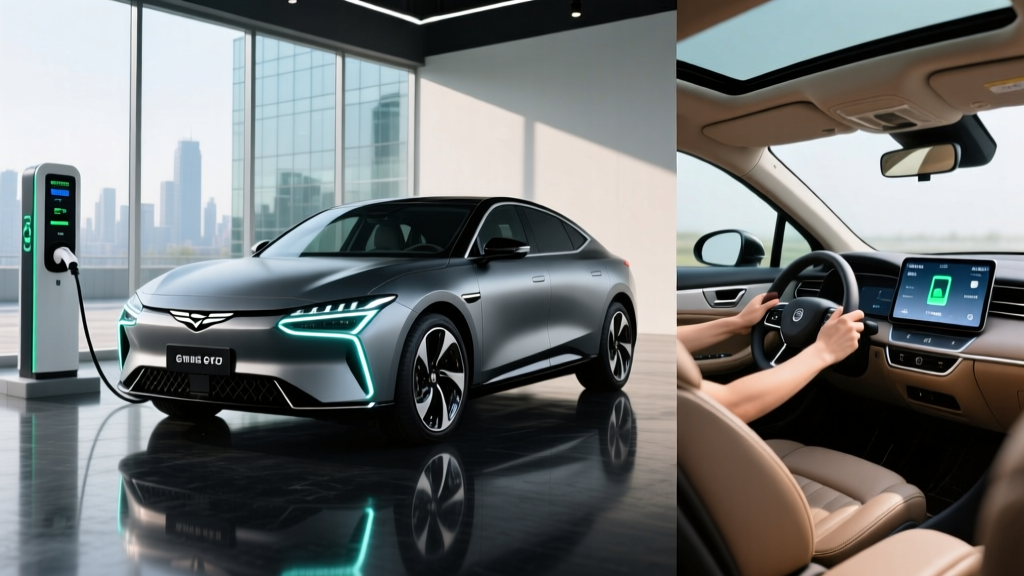
The 2026 Genesis GV60 occupies a rare space in the luxury electric crossover segment: it pairs the E-GMP platform's proven 800-volt architecture with an interior that punches well above its price point. After spending time with the updated model, the GV60 remains a compelling alternative to the Tesla Model Y, BMW iX, and its corporate cousin, the Hyundai Ioniq 5 — especially for buyers who value cabin materials and ride refinement over maximum range.
For 2026, Genesis has streamlined the powertrain lineup and introduced subtle infotainment updates, but the core formula holds: a 77.4 kWh NMC battery, available rear-wheel or all-wheel drive, and DC fast-charging that still ranks among the quickest in the segment. The big question for most shoppers is whether it qualifies for the federal EV tax credit under current IRS §30D rules — more on that below.
Range, Efficiency, and the Real-World Gap
The 2026 GV60 comes in three trims, each with different range implications. The Standard Design RWD leads the pack on paper, while the dual-motor Performance variant trades some efficiency for all-weather traction and significantly more power.
| Trim | Drivetrain | EPA Range | MPGe (City/Hwy/Combined) | kWh/100 mi |
|---|---|---|---|---|
| Standard Design RWD | Rear-Wheel Drive | 264 mi | 125 / 104 / 115 | 29 |
| Advanced AWD | Dual-Motor AWD | 248 mi | 110 / 90 / 100 | 33 |
| Performance AWD | Dual-Motor AWD | 235 mi | 97 / 82 / 90 | 37 |
Efficiency is respectable but not class-leading. The RWD model's 29 kWh/100 mi trails the Hyundai Ioniq 5 RWD (28 kWh/100 mi) and Tesla Model Y RWD (~27 kWh/100 mi), but the difference translates to only a few extra dollars per month in electricity for most drivers. Per fueleconomy.gov, the GV60's combined efficiency is competitive with the Audi Q4 e-tron and slightly behind the BMW iX xDrive50.
Battery, Charging Speed, and the 800-Volt Advantage
Under the floor sits a 77.4 kWh usable battery pack using NMC (nickel manganese cobalt) chemistry. Genesis has not switched to LFP for the GV60, which means the pack offers higher energy density but requires the typical 20-80% daily charge recommendation for long-term health — unlike LFP packs that tolerate regular 100% charges.
The headline feature remains the E-GMP platform's 800-volt architecture, which enables DC fast-charging speeds that most competitors can't match without a similarly high-voltage system.
| Charging Type | Rate | Speed / Time | Notes |
|---|---|---|---|
| Level 1 (120V household) | 1.4 kW | ~4 mi/hr added | Emergency/trickle only; full charge in ~55+ hours |
| Level 2 (240V home) | 10.9 kW | ~32 mi/hr added | Full 0-100% in ~7.5 hours; requires 48A circuit |
| DC Fast Charge (peak) | 240 kW | 10-80% in ~18 minutes | Requires 350 kW charger; peak sustained to ~55% SoC |
| DC Fast Charge (50 kW station) | 50 kW | 10-80% in ~65 minutes | Common at older public stations |
The charging curve deserves explanation because peak kW numbers can mislead. At a 350 kW Electrify America or Ionity station with a preconditioned battery, the GV60 ramps quickly to around 230-240 kW and holds that rate to roughly 55% State of Charge. After that, the curve tapers progressively — dropping to ~150 kW by 70% SoC and ~80 kW by 85%. This means the 10-80% time of approximately 18 minutes is achievable under good conditions, but 10-90% will take closer to 28-30 minutes.
For home charging, the 10.9 kW onboard charger is a strong point. With a properly installed Level 2 wall connector on a 60-amp circuit (48 amps continuous), you'll add roughly 32 miles of range per hour of charging. A full overnight charge from 20% to 80% takes under 5 hours — easily handled while you sleep. The GV60 ships with a NACS (North American Charging Standard) port for 2026, granting native access to Tesla Superchargers with NACS connectors, plus a CCS1 adapter for legacy Electrify America and ChargePoint stations.
Performance: Quick When You Need It, Refined Always
The 2026 GV60 offers three distinct powertrain personalities depending on trim:
- Standard Design RWD: 168 kW (225 hp), 258 lb-ft torque, single rear motor. 0-60 mph in approximately 7.3 seconds.
- Advanced AWD: 234 kW (314 hp), 446 lb-ft torque, dual-motor. 0-60 mph in approximately 5.1 seconds.
- Performance AWD: 360 kW (483 hp) with Boost Mode engaged, 516 lb-ft torque. 0-60 mph in approximately 3.9 seconds.
The Performance model's Boost Mode — activated via a dedicated button on the steering wheel — unlocks maximum output for short bursts. In normal driving, it produces roughly 429 hp. The difference is meaningful: 3.9 seconds to 60 mph puts it in Porsche Cayenne EV territory, though the GV60 is tuned more for confident highway merging than track laps.
Ride quality is where the GV60 separates itself from the Ioniq 5. The adaptive damping system on Advanced and Performance trims soaks up broken pavement with composure that feels closer to a Mercedes EQB than a Hyundai. Road noise is well-managed at highway speeds, aided by acoustic laminated glass on all trims. The steering is precise but deliberately light — this is a luxury cruiser, not a sport sedan.
Interior, Cargo, and Technology
The GV60's cabin is its strongest selling point. The crystal sphere shifter (which rotates when the vehicle starts) is a conversation piece, but the real luxury is in the materials: Nappa leather on Advanced and Performance trims, real aluminum trim, and a floating center console that creates genuine storage space below.
For 2026, Genesis has updated the infotainment to a 12.3-inch digital cluster paired with a 12.3-inch touchscreen running the latest Genesis Connected Services software. Wireless Apple CarPlay and Android Auto are standard. The head-up display with augmented-reality navigation overlays is available on Advanced and standard on Performance.
| Measurement | Specification |
|---|---|
| Front headroom | 39.6 inches |
| Rear headroom | 38.4 inches |
| Front legroom | 41.9 inches |
| Rear legroom | 37.6 inches |
| Cargo volume (rear seats up) | 24.0 cu ft |
| Cargo volume (rear seats folded) | 54.7 cu ft |
| Frunk (front trunk) | 0.7 cu ft (cable storage only) |
Cargo space is adequate but not exceptional. The 24.0 cu ft behind the rear seats is competitive with the BMW iX (behind its second row) but falls short of the Tesla Model Y's 30.2 cu ft. The frunk is essentially a cable cubby — don't plan on storing much up front.
On the driver-assistance front, the GV60 includes Genesis Active Safety Control as standard: adaptive cruise control with stop-and-go, lane-keeping assist, blind-spot monitoring, and rear cross-traffic collision avoidance. Highway Driving Assist II (available on Advanced, standard on Performance) adds lane-centering and navigation-based speed adjustment. This is an SAE Level 2 system — meaning the driver must remain fully engaged and hands-on (or eyes-on, depending on configuration). It is not autonomous driving.
Pricing, Trims, and Federal Tax Credit Eligibility
The 2026 GV60 pricing structure has been simplified to three trims. All prices below include the $1,195 destination charge.
| Trim | MSRP (incl. destination) | §30D Credit Eligibility | Effective Price (if eligible) |
|---|---|---|---|
| Standard Design RWD | $53,350 | Up to $7,500 (subject to sourcing/income rules) | ~$45,850 |
| Advanced AWD | $62,350 | Up to $7,500 (subject to sourcing/income rules) | ~$54,850 |
| Performance AWD | $70,550 | Up to $7,500 (subject to sourcing/income rules) | ~$63,050 |
Federal tax credit eligibility for the GV60 in 2026 depends on several factors under IRS §30D. Here is the checklist buyers must evaluate:
- MSRP cap: The GV60 qualifies as an SUV under IRS classification, so the MSRP cap is $80,000. All three trims fall under this limit.
- Buyer income cap: Modified adjusted gross income (MAGI) must not exceed $300,000 (joint filers), $225,000 (head of household), or $150,000 (single filers) in the year of delivery or the prior year.
- Battery sourcing requirements: For 2026, the full $7,500 credit requires both critical-mineral and battery-component sourcing thresholds to be met. The GV60's battery is manufactured in the U.S. (via the Hyundai Motor Group Metaplant in Georgia), but critical-mineral sourcing for NMC cathodes may only satisfy the $3,750 component of the credit depending on the specific battery batch. Verify the VIN-specific eligibility on the DOE/IRS qualifying vehicle list before purchasing.
- Point-of-sale transfer: For 2026, eligible buyers can transfer the credit to the dealer at purchase, reducing the out-of-pocket cost immediately rather than waiting to claim it on a tax return.
- One vehicle per VIN, one credit per taxpayer per year: You cannot claim the §30D credit more than once per year regardless of how many EVs you buy.
The critical takeaway: do not assume the full $7,500 credit applies. The battery-sourcing rules have tightened annually, and the GV60 may qualify for $3,750 or $7,500 depending on the specific vehicle's battery supply chain. Always confirm with your dealer and a tax professional before finalizing a purchase.
Warranty, Ownership Costs, and Long-Term Outlook
Genesis backs the GV60 with one of the strongest warranty packages in the luxury segment:
- New vehicle limited warranty: 5 years / 60,000 miles
- Powertrain warranty: 10 years / 100,000 miles (includes electric motors and reduction gear)
- Battery warranty: 10 years / 100,000 miles (covers capacity loss below 70% State of Health)
- Complimentary maintenance: 3 years / 36,000 miles (includes tire rotation, cabin filter, multi-point inspection)
- Genesis Connected Services: 3 years of remote services included
The 70% capacity retention threshold on the battery warranty is industry-standard but worth noting — it means Genesis will only replace or repair the pack if it degrades below 70% of original capacity within the warranty period. Based on NMC degradation data from the broader E-GMP fleet (Ioniq 5, EV6), most owners report 5-8% capacity loss over the first 100,000 miles, well within the warranty buffer.
Insurance costs for the GV60 tend to run 10-15% higher than a comparably priced gas-powered luxury SUV, consistent with the EV segment broadly. Expect annual premiums in the $2,200-$2,800 range depending on your state, driving record, and coverage level.
Pros, Cons, and Who Should Buy
- 800V architecture delivers 10-80% in ~18 minutes at compatible chargers
- Premium interior materials rival vehicles costing $15-20K more
- Standard heat pump reduces cold-weather range loss
- 10-year/100,000-mile battery and powertrain warranty
- NACS port native for 2026 — no adapter needed at Tesla Superchargers
- Performance AWD hits 0-60 in 3.9 seconds
- EPA range tops out at 264 miles — below Tesla Model Y and Hyundai Ioniq 5 Long Range
- Cargo space (24.0 cu ft) trails key competitors
- Tiny frunk — essentially cable storage only
- NMC battery means 20-80% daily charge recommendation for longevity
- Full $7,500 tax credit not guaranteed due to battery-sourcing rules
- No third-row or tow rating above 2,000 lbs
- Choose the GV60 if: You want a luxury EV crossover under $65K with a genuinely premium interior, fast 800V charging, and don't need more than 250 miles of real-world range for your daily driving. It's ideal for two-person households or small families who prioritize ride comfort and materials over maximum cargo space.
- Look elsewhere if: You regularly drive 300+ miles between charging stops (consider the Tesla Model Y Long Range or Hyundai Ioniq 5), need maximum cargo capacity (Model Y or Kia EV9), or require the full $7,500 tax credit with certainty (check the DOE list for VIN-specific eligibility).
Frequently Asked Questions
What is the real-world range of the 2026 Genesis GV60?
In mixed driving at moderate temperatures, expect roughly 220-240 miles from the Advanced AWD (EPA-rated 248 mi). Highway driving at 75 mph reduces this to approximately 210-225 miles. In cold weather below 30°F, plan for 175-200 miles. The RWD trim will deliver 10-15 miles more in each scenario.
How fast does the GV60 charge at home and on the road?
At home on a Level 2 (240V, 48A) charger, the GV60 adds approximately 32 miles of range per hour, with a full charge taking about 7.5 hours. On a 350 kW DC fast charger, it peaks at 240 kW and charges from 10-80% in roughly 18 minutes under good conditions with a preconditioned battery.
Does the 2026 GV60 qualify for the $7,500 federal EV tax credit?
It depends. All trims fall under the $80,000 SUV MSRP cap, and income-eligible buyers can claim the credit. However, the battery critical-mineral and component sourcing requirements for 2026 mean the GV60 may qualify for the full $7,500 or only $3,750. Check the VIN on the DOE's qualifying vehicle list and consult a tax professional before purchase.
Is the GV60 worth buying over the Tesla Model Y or BMW iX?
The GV60 trades range and cargo space for interior luxury, ride comfort, and a competitive price. If you value a quiet, well-appointed cabin and don't need 300+ miles of range, it's a strong choice. The Model Y wins on range, Supercharger network convenience, and cargo space. The BMW iX offers more rear-seat room and a longer wheelbase but starts significantly higher in price.
What's the biggest drawback of owning the GV60?
Range and cargo practicality. With a real-world highway range around 215-225 miles (AWD trims) and 24 cu ft of cargo space, the GV60 requires more trip planning on long road trips than a Model Y Long Range. The small frunk also limits cable and accessory storage.
Does the GV60 have a NACS or CCS charging port for 2026?
The 2026 GV60 comes with a native NACS (North American Charging Standard) port, giving direct access to Tesla Supercharger stations equipped with NACS connectors. For legacy CCS1 stations, an adapter is included.