Quick Verdict: The Entry-Level Lightning Gets It Right
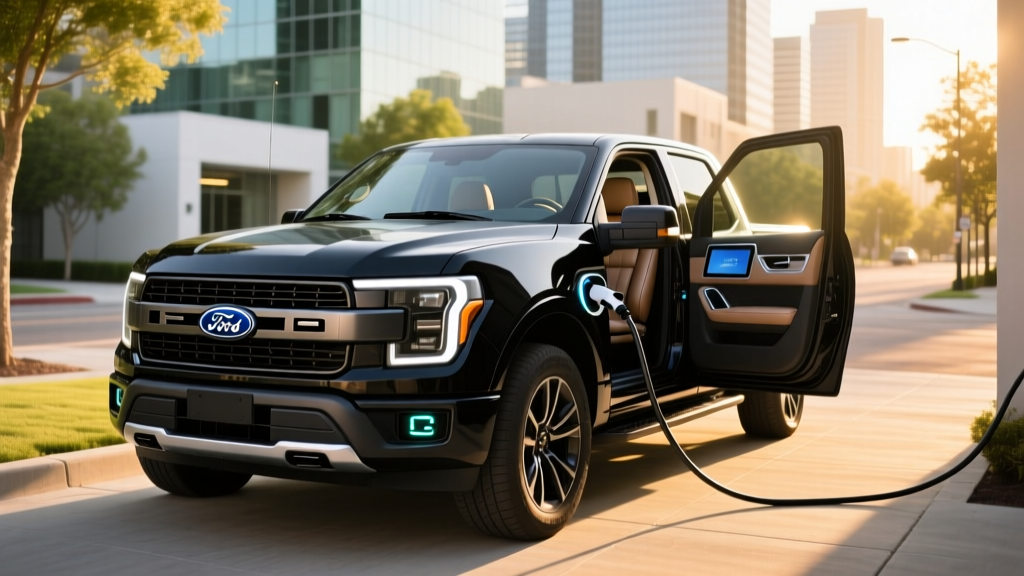
The 2026 Ford F-150 Lightning STX occupies a strategic position in Ford's electric truck lineup. Sitting above the fleet-oriented Pro trim but below the Lariat and Platinum, the STX targets buyers who want a full-size electric pickup without paying for features they won't use. With a Standard Range battery delivering an EPA-estimated 240 miles, dual-motor all-wheel drive, and a starting MSRP of $54,995 (before destination), the STX undercuts many competitors while retaining the Lightning's core strengths: a spacious cabin, useful payload, Pro Power Onboard, and a refined ride that defies its solid rear axle.
But the STX isn't for everyone. Its Standard Range battery means frequent road-trippers will spend more time at chargers, and the cloth-trimmed interior reflects its price positioning. For daily commuters, light-duty work trucks, and suburban families who can charge at home, the STX makes a compelling case. For those who regularly tow or drive 300+ miles between stops, stepping up to the Extended Range Lariat is the smarter play.
Range, Battery, and Real-World Efficiency
Real-World Expectation: 200–220 miles on the highway at 70 mph; 170–190 miles in sub-freezing temperatures; up to 245 miles in stop-and-go city driving with regen.
The 2026 F-150 Lightning STX uses Ford's Standard Range battery pack with a usable capacity of approximately 98 kWh. Ford has not publicly disclosed the exact cell chemistry for the 2026 model year, though previous Standard Range Lightning packs have used nickel-manganese-cobalt (NMC) pouch cells supplied by SK On. NMC chemistry offers higher energy density than lithium iron phosphate (LFP), which keeps pack weight manageable, but it typically requires more careful state-of-charge management — Ford recommends daily charging to 80–90% and reserving 100% for trips.
The EPA rates the STX at 240 miles combined. In practice, expect variation. Highway driving at sustained speeds above 65 mph pushes consumption to roughly 48–52 kWh/100 mi, dropping effective range to the 200-mile mark. Cold weather (below 32°F) compounds this: battery preconditioning helps, but cabin heating and reduced regen efficiency can shave 15–25% off range. City driving, where regenerative braking recaptures energy, often yields results at or slightly above the EPA sticker.
Efficiency lands around 70 MPGe combined (approximately 48 kWh/100 mi), which is typical for a full-size electric truck. For comparison, the Rivian R1T Dual-Motor rates at 73 MPGe, while the Chevrolet Silverado EV 3WT posts a similar figure. The aerodynamic penalty of a large pickup bed is unavoidable at highway speeds.
Charging Speed: DC Fast and Home Level 2
Charging speed is where the Standard Range Lightning shows its age relative to newer 800-volt architectures. The STX accepts a peak DC fast-charge rate of approximately 150 kW on a compatible CCS connector (or NACS with Ford's adapter, as Ford transitioned to the Tesla North American Charging Standard for 2025+ models). On a 150 kW or higher station, a 10–80% charge takes roughly 38–41 minutes.
| Charging Level | Power / Rate | Time or Miles Added |
|---|---|---|
| Level 1 (120V household) | ~1.4 kW | ~3 miles per hour |
| Level 2 (240V, 48A) | ~11.5 kW | ~23 miles per hour; full charge in ~10 hours |
| Level 2 (240V, 80A – Ford Charge Station Pro) | ~19.2 kW | ~38 miles per hour; full charge in ~6 hours |
| DC Fast Charge (CCS/NACS) | Peak ~150 kW | 10–80% in ~38–41 minutes |
The charge curve matters. The Lightning holds near-peak power up to roughly 55% state of charge, then tapers progressively. Charging from 80–100% on DC is painfully slow — plan your road-trip stops around 10–80% increments. Ford's battery thermal management system includes active liquid cooling and preconditioning: when you navigate to a charger in the truck's infotainment system, the pack warms or cools itself to accept maximum charge rate upon arrival. Skip preconditioning and you may see peak rates cut in half on a cold day.
For home charging, the STX comes with a Ford Mobile Power Cord that handles Level 1 (120V) and, with a 240V outlet adapter, Level 2 at up to 30A (~7.2 kW). Most buyers will want to install a dedicated Level 2 wall connector. A 48-amp hardwired unit on a 60-amp circuit delivers about 23 miles of range per hour — enough to replenish a full day's driving overnight. Ford's optional 80-amp Charge Station Pro requires a 100-amp circuit and a panel that can support it; budget $800–$2,500 for professional installation depending on your home's electrical capacity, according to typical electrician estimates.
Performance, Drivetrain, and Towing
| Specification | Value |
|---|---|
| Drivetrain | Dual-motor AWD |
| Horsepower | 563 hp (combined) |
| Torque | 775 lb-ft |
| 0–60 mph | ~4.0 seconds |
| Battery (usable) | ~98 kWh, NMC |
| EPA Range | 240 miles |
| MPGe (combined) | ~70 MPGe |
| Max Towing | 7,700 lbs (with Max Trailer Tow Pkg) |
| Payload | ~2,235 lbs |
| Bed Length | 5.5 ft |
With 563 horsepower and 775 lb-ft of instant torque, the STX is quick by any measure — let alone for a 6,500-pound truck. The 0–60 mph sprint takes approximately 4.0 seconds, making it faster than most V8-powered F-150s. Dual electric motors provide standard all-wheel drive with torque vectoring, and the low center of gravity (battery pack under the floor) gives the Lightning surprisingly composed handling for a live-axle pickup.
Towing capacity for the STX with the Standard Range battery tops out at 7,700 pounds when equipped with the Max Trailer Tow Package. That's adequate for a boat, small camper, or utility trailer, but it falls well short of the Extended Range Lightning's 10,000-pound rating — and far behind the gas F-150's 14,000-pound max. Towing also devastates range: expect 100–130 miles of effective range when pulling 5,000+ pounds at highway speeds. If towing is a regular need, the Lightning is not yet the right tool unless your routes are short or charger-equipped.
The STX rides on the same independent rear suspension as higher trims (a first for the F-150), and the result is a noticeably smoother unloaded ride than the gas F-150's leaf-spring setup. Road noise is well-managed, and the regenerative braking system offers adjustable intensity, including a one-pedal driving mode that can bring the truck to a complete stop without touching the brake pedal.
Interior, Cargo, and Technology
The STX interior is functional rather than luxurious. Cloth-trimmed seats, a leather-wrapped steering wheel, and Ford's 12-inch touchscreen (running SYNC 4) are standard. The screen handles navigation, wireless Apple CarPlay and Android Auto, and vehicle settings. A 12-inch digital instrument cluster replaces traditional gauges. Higher trims gain the vertical 15.5-inch screen from the Mustang Mach-E, but the STX's horizontal layout is intuitive and easier to read at a glance while driving.
Space is generous. The SuperCrew cab provides seating for five adults with 43.9 inches of front legroom and 40.4 inches in the rear — identical to the gas F-150 SuperCrew. Behind the rear seats, you get 52.8 cubic feet of cabin cargo volume. The 5.5-foot bed offers 52.8 cubic feet of volume, and the front trunk (frunk) is a standout: 14.1 cubic feet of lockable, drainable, weatherproof storage with 400 pounds of payload capacity. It's large enough for two carry-on suitcases or a week's worth of groceries, and the power-open lid makes it genuinely useful.
Pro Power Onboard is standard on the STX in its 2.0 kW configuration, providing two 120V outlets in the bed for running power tools, tailgate appliances, or campsite equipment. The optional 9.6 kW version (available on higher trims) can power a job site or serve as a home backup generator when paired with Ford's Intelligent Backup Power system and a compatible home transfer switch — though this option is not available on the STX trim for 2026.
Driver-assistance technology includes Ford Co-Pilot360 2.0: automatic emergency braking with pedestrian detection, blind-spot monitoring with trailer coverage, lane-keeping assist, rear cross-traffic alert, and adaptive cruise control with stop-and-go. Ford's BlueCruise hands-free highway driving system is available as part of an optional technology package on the STX — a $2,100 add-on that enables hands-free operation on over 130,000 miles of pre-mapped divided highways. BlueCruise is an SAE Level 2 system: you must remain attentive, and the cabin camera monitors your eyes. It is not autonomous driving.
Pricing, Trims, and Federal Tax Credit
| Item | Amount |
|---|---|
| STX Base MSRP | $54,995 |
| Destination Charge | $2,095 |
| Total Before Options | $57,090 |
| Federal §30D Tax Credit (if eligible) | Up to $7,500 |
| Effective Price After Max Credit | ~$49,590 |
The 2026 F-150 Lightning STX starts at $54,995 before the $2,095 destination charge. Popular options include the Equipment Group 302A package (adds heated front seats, remote start, and LED box lighting for roughly $2,500), the BlueCruise technology package, and the Max Trailer Tow Package. A well-equipped STX typically lands between $58,000 and $62,000 out the door.
Federal tax credit eligibility requires careful attention. Under IRS §30D rules, the F-150 Lightning qualifies as a light-duty truck, so the MSRP cap is $80,000 (the STX clears this easily). However, buyer income caps apply: modified adjusted gross income cannot exceed $150,000 for single filers, $225,000 for head of household, or $300,000 for joint filers. Additionally, the battery must meet critical-mineral and battery-component sourcing requirements that have tightened annually. As of 2026, vehicles with battery components from a "foreign entity of concern" (FEOC) are disqualified. Ford sources SK On cells manufactured in Georgia, which has historically satisfied domestic-component requirements, but critical-mineral sourcing rules are subject to annual updates. Always verify current eligibility on the fueleconomy.gov tax credit page and consult IRS guidance on new clean vehicle credits before purchasing. The credit can now be transferred to the dealer at point of sale, reducing your purchase price directly rather than waiting for a tax refund.
Warranty and Ownership Costs
Ford backs the Lightning's battery pack and electric drive components with an 8-year/100,000-mile warranty, with a capacity-retention threshold of 70%. If the battery degrades below 70% of its original capacity within that period, Ford will repair or replace it. The bumper-to-bumper limited warranty covers 3 years/36,000 miles, and the powertrain warranty extends to 5 years/60,000 miles.
Ownership costs compare favorably to gas F-150s. Electricity at the national average of $0.16/kWh costs roughly $0.077 per mile, versus $0.17 per mile for a gas F-150 at 20 MPG combined and $3.40/gallon. Over five years and 75,000 miles, fuel savings alone can exceed $7,000. Maintenance is minimal — no oil changes, no transmission fluid, no spark plugs — though tire replacement costs are higher due to the Lightning's weight (expect 30,000–40,000 miles from the stock all-season tires). Insurance premiums run 10–20% higher than an equivalent gas F-150, per industry data, so factor that into your budget.
- Dual-motor AWD with 563 hp and a 4.0-second 0–60
- Massive 14.1 cu ft frunk with 400-lb payload capacity
- Pro Power Onboard (2.0 kW) standard for job-site or campsite use
- Independent rear suspension delivers a refined, car-like ride
- Under $55K starting MSRP — most affordable AWD electric truck
- Ford BlueCruise available as an option on the STX trim
- 240-mile EPA range limits road-trip practicality without planning
- DC fast charging peaks at ~150 kW — slower than 800V competitors
- Towing range drops to 100–130 miles under heavy loads
- 9.6 kW Pro Power Onboard not available on the STX trim
- Cloth seats and smaller 12-inch screen feel basic at this price
- 5.5-foot bed is shorter than many gas F-150 configurations
Who Should Buy the 2026 F-150 Lightning STX?
- You commute 50–100 miles daily and can charge at home overnight
- You want AWD performance and truck utility without paying $70K+
- You use your truck for light job-site power needs (2.0 kW is sufficient)
- You value the frunk and rear-seat space for family hauling
- You regularly drive 200+ miles between charges or tow over 5,000 lbs
- You want the 15.5-inch vertical screen, leather, and 9.6 kW Pro Power
- Road trips are frequent and charger planning feels like a burden
The STX's sweet spot is the suburban or exurban owner who uses the truck daily for commuting, school runs, and weekend projects — and who can plug in at home every night. It's a remarkably capable daily driver that happens to be a truck, and its price point makes it the most accessible dual-motor electric pickup on the market. Just go in with realistic expectations about range and charging speed, and the STX delivers.
2026 F-150 Lightning STX FAQ
What is the real-world range of the 2026 F-150 Lightning STX?
The EPA rates it at 240 miles combined. Expect 200–220 miles on the highway, 170–190 miles in freezing weather, and up to 245 miles in city driving with regenerative braking.
How fast does the Lightning STX charge?
On a DC fast charger, it peaks at approximately 150 kW and charges from 10–80% in about 38–41 minutes. On a 48-amp Level 2 home charger, it adds roughly 23 miles of range per hour, fully recharging overnight in about 10 hours.
Does the 2026 F-150 Lightning STX qualify for the federal EV tax credit?
It can, but eligibility depends on your income (caps of $150K single / $300K joint), the truck's MSRP (under the $80K truck cap — the STX qualifies), and battery-component sourcing rules that update annually. Verify on fueleconomy.gov before purchasing. The credit can be applied at the point of sale as an instant discount.
How much does the STX cost after tax credits?
With the full $7,500 federal credit applied, the effective price drops from approximately $57,090 (with destination) to around $49,590. State and local incentives may reduce the cost further — check your state's energy office for details.
Is the F-150 Lightning STX worth buying vs. the Rivian R1T or Silverado EV?
The STX undercuts the Rivian R1T Dual-Motor (starting around $70K+) by over $15,000 and offers more interior and bed space. The Silverado EV 3WT targets fleet buyers with a different bed configuration. If you want the best value in a full-size electric truck and don't need 320+ miles of range, the STX is hard to beat. If range and DC charging speed are top priorities, the Rivian or an Extended Range Lightning Lariat may serve you better.
Can the Lightning STX tow a camper or boat?
Yes, with a maximum tow rating of 7,700 pounds (when equipped with the Max Trailer Tow Package). However, towing significantly reduces range — expect 100–130 miles under heavy load at highway speeds. Plan routes around DC fast chargers if towing longer distances.
Is Ford BlueCruise self-driving?
No. BlueCruise is an SAE Level 2 driver-assistance system. It enables hands-free driving on pre-mapped divided highways, but you must remain attentive and the cabin camera monitors your eyes. It does not handle construction zones, unmapped roads, or complex urban driving without driver input.