2026 Ford F-150 Lightning: The Electric Truck That Started It All
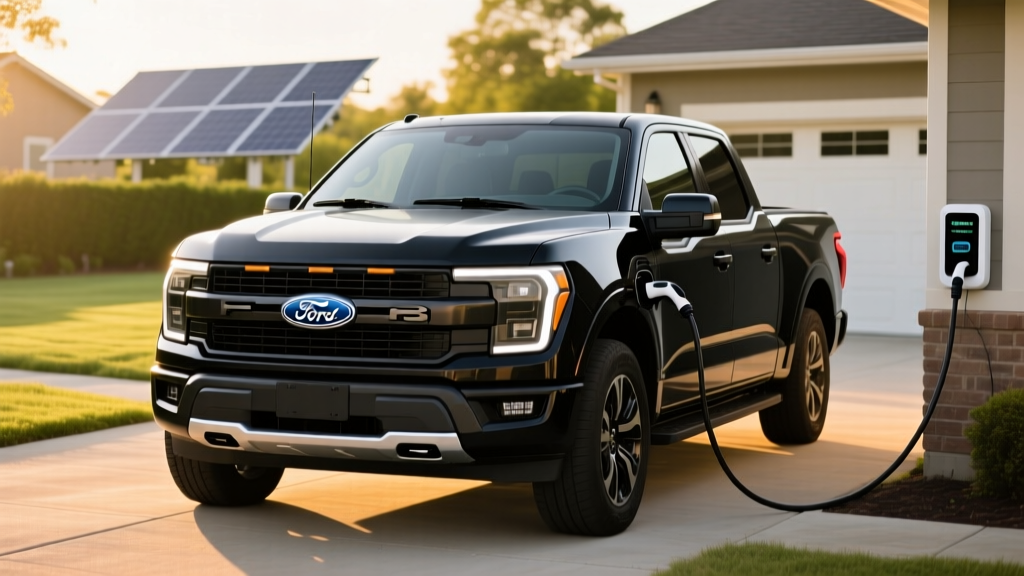
The Ford F-150 Lightning proved that a full-size electric pickup could work for mainstream buyers — not just early adopters. Now in its fourth model year, the 2026 F-150 Lightning carries forward with two battery options, standard dual-motor AWD, and a starting price that undercuts several gas-powered F-150 trims once you factor in fuel savings. If you've been searching for a "93 ford f150 lightning" — likely hunting for the classic 1993 SVT Lightning sport truck — you've landed on its electric spiritual successor. The 2026 Lightning trades supercharged V8 rumble for 580 lb-ft of instant torque, a Mega Power Frunk, and the ability to power your home during an outage.
Below is everything you need to decide whether the 2026 F-150 Lightning fits your driveway, your budget, and your daily routine — with real numbers, not marketing gloss.
Range, Battery, and Real-World Efficiency
Ford offers the 2026 Lightning with two lithium-ion NMC (nickel manganese cobalt) battery packs. The Standard Range pack delivers an EPA-estimated 240 miles, while the Extended Range pack pushes that to 320 miles on the XLT and Lariat trims. The Platinum trim with the Extended Range pack rates at 300 miles due to heavier equipment and larger wheels.
| Spec | Standard Range | Extended Range |
|---|---|---|
| Usable Battery Capacity | ~98 kWh | ~131 kWh |
| Chemistry | NMC | NMC |
| EPA Range | 240 mi | 320 mi (XLT/Lariat) / 300 mi (Platinum) |
| MPGe (Combined) | 76 MPGe | 70 MPGe |
| Efficiency (kWh/100 mi) | 44 kWh | 48 kWh |
For efficiency context, the Lightning consumes roughly 44-48 kWh per 100 miles. That translates to about $0.06-$0.08 per mile when charging at home on a national-average electricity rate of $0.16/kWh — roughly a third of what a gas F-150 costs per mile at $3.40/gallon and 19 MPG combined. Source: fueleconomy.gov.
Charging Speed: DC Fast Charge and Home Level 2
Charging speed remains one of the Lightning's practical strengths — and one area where Ford made meaningful upgrades for the 2025-2026 model years. The Extended Range pack supports up to 150 kW peak DC fast charging, while the Standard Range pack peaks at approximately 120 kW.
| Charging Level | Standard Range | Extended Range |
|---|---|---|
| Level 1 (120V, 12A) | ~2 mi/hr (1.4 kW) | ~2 mi/hr (1.4 kW) |
| Level 2 (240V, 48A) | ~19 mi/hr (11.5 kW) | ~19 mi/hr (11.5 kW) |
| Level 2 (240V, 80A — Ford Charge Station Pro) | ~30 mi/hr (19.2 kW) | ~30 mi/hr (19.2 kW) |
| DC Fast Charge (Peak) | 120 kW | 150 kW |
| DC 10-80% Time | ~44 min | ~41 min |
A critical nuance: peak kW is not sustained kW. The Extended Range pack hits 150 kW only between roughly 15-35% state of charge, then tapers progressively. From 60-80%, you'll see closer to 60-80 kW. This is normal lithium-ion charge-curve behavior, but it means a "41-minute" 10-80% session isn't 41 minutes at full speed — it's an average across the taper. Preconditioning the battery (via navigation to a charger) is essential to hit peak rates, especially in cool weather.
At home, the 80A Ford Charge Station Pro adds about 30 miles of range per hour of charging — enough to fully replenish the Extended Range pack overnight in roughly 10-11 hours. Most owners will need a 100-amp dedicated circuit for the 80A station; budget $800-$2,000 for professional installation depending on panel proximity and local code. The standard 48A mobile charger works on a NEMA 14-50 outlet and adds about 19 miles per hour.
Performance, Drivetrain, and Towing
Every 2026 F-150 Lightning comes with standard dual-motor all-wheel drive. There's no rear-wheel-drive option. Output varies by battery:
- Standard Range: 452 hp / 775 lb-ft torque
- Extended Range: 580 hp / 775 lb-ft torque
The Extended Range model hits 0-60 mph in approximately 3.8 seconds — making it one of the quickest four-door trucks on the market. The Standard Range version runs the sprint in about 4.5 seconds. Both figures are remarkable for a vehicle with a curb weight over 6,000 pounds.
| Spec | Standard Range | Extended Range |
|---|---|---|
| Horsepower | 452 hp | 580 hp |
| Torque | 775 lb-ft | 775 lb-ft |
| 0-60 mph | ~4.5 sec | ~3.8 sec |
| Drivetrain | Dual-Motor AWD | Dual-Motor AWD |
| Max Towing (w/ Max Tow Pkg) | 7,700 lbs | 10,000 lbs |
| Max Payload | ~2,235 lbs | ~1,800 lbs |
Towing is where real-world range meets physics. The Extended Range Lightning with the Max Trailer Tow Package is rated for 10,000 pounds, but pulling that load at highway speed will cut range roughly in half — expect 130-160 miles between charges with a heavy trailer. Ford's onboard scales and Smart Hitch help manage payload and tongue weight, and the Pro Power Onboard system (standard 2.4 kW, available 9.6 kW) turns the Lightning into a mobile generator for job sites or campsites.
Pricing, Trims, and Federal Tax Credit Eligibility
The 2026 F-150 Lightning lineup spans four trims. Pricing below reflects MSRP before destination charges:
| Trim | Battery | MSRP | §30D Credit Eligible? | Effective Price (if eligible) |
|---|---|---|---|---|
| Pro | Standard Range | $54,995 | Yes (up to $7,500) | ~$47,495 |
| XLT | Standard Range | $59,995 | Yes (up to $7,500) | ~$52,495 |
| XLT | Extended Range | $69,995 | Yes (up to $7,500) | ~$62,495 |
| Lariat | Extended Range | $77,995 | Yes (up to $7,500) | ~$70,495 |
| Platinum | Extended Range | $96,874 | MSRP cap issue* | $96,874 |
*Under IRS §30D rules, the federal EV tax credit for trucks (pickup classification) has an MSRP cap of $80,000. The Platinum trim exceeds this cap and does not qualify. All trims below $80,000 MSRP are potentially eligible, subject to buyer income limits and battery-component/critical-mineral sourcing requirements. Source: IRS §30D guidance.
- Truck MSRP must be ≤ $80,000 (Platinum excluded)
- Buyer AGI must not exceed $150K (single) / $300K (joint) / $225K (head of household)
- Vehicle must meet critical-mineral and battery-component sourcing thresholds (phased annually — verify current-year percentages on IRS.gov)
- Credit can now be transferred to the dealer at point of sale for an instant price reduction, or claimed on your tax return
- Consult a tax professional for your specific situation — eligibility depends on your individual tax liability and sourcing compliance
Interior, Cargo, and Technology
The Lightning's cabin mirrors the gas F-150's layout, which means generous space and familiar controls. The 12-inch touchscreen (15.5-inch portrait screen on Lariat and Platinum) runs Ford's SYNC 4A system with wireless Apple CarPlay and Android Auto, natural-language voice commands, and over-the-air updates via Ford Power-Up.
| Dimension | SuperCrew Cab |
|---|---|
| Front Legroom | 43.9 in |
| Rear Legroom | 43.6 in |
| Front Headroom | 40.8 in |
| Rear Headroom | 40.4 in |
| Bed Volume (5.5 ft box) | 52.8 cu ft |
| Mega Power Frunk | 14.1 cu ft (400 lbs payload) |
| Frunk Power Outlets | 4x 120V, 1x USB-C, 1x USB-A |
The Mega Power Frunk — a 14.1-cubic-foot front trunk where the engine bay used to be — remains the Lightning's party trick. It's lockable, weather-sealed, drainable, and loaded with power outlets. Owners use it as a mobile workstation, cooler, or secure gear locker. It's genuinely more useful than any bed-extender or tonneau cover.
Driver assistance comes via Ford Co-Pilot360 2.5, which includes adaptive cruise control with stop-and-go, lane centering, evasive steering assist, and intersection assist. BlueCruise (hands-free highway driving on pre-mapped divided highways) is available on Lariat and Platinum trims with a subscription after the initial trial period. Note: BlueCruise is an SAE Level 2 system — you must remain attentive, and the cabin camera monitors your eyes. This is not autonomous driving.
Warranty and Battery Longevity
Ford backs the Lightning's high-voltage battery and electric powertrain components with an 8-year/100,000-mile warranty. The warranty covers defects and excessive capacity loss — specifically, if the battery drops below 70% of its original capacity within the warranty period, Ford will repair or replace it. The basic vehicle warranty is 3 years/36,000 miles, with a 5-year/60,000-mile powertrain warranty covering non-HV components.
Long-term degradation data from 2022-2024 Lightning owners suggests roughly 5-8% capacity loss over the first 60,000 miles under normal use — consistent with modern NMC packs. DC fast charging exclusively (without occasional Level 2 top-ups) may accelerate degradation slightly. Ford's battery management system includes active liquid cooling/heating, which helps preserve cell health across temperature extremes.
Pros, Cons, and the Verdict
- Mega Power Frunk is genuinely useful — 14.1 cu ft with power outlets
- Pro Power Onboard (up to 9.6 kW) powers tools, appliances, even home backup
- 3.8-second 0-60 in Extended Range — sports-car quick for a full-size truck
- 320-mile EPA range (Extended) covers most daily needs and moderate road trips
- Comfortable, spacious SuperCrew cabin with strong tech
- Federal §30D tax credit eligibility on trims under $80K MSRP
- BlueCruise hands-free driving on approved highways
- Heavy towing cuts range dramatically (100-150 mi with max trailer)
- DC fast charging peaks at 150 kW — slower than Rivian R1T or Silverado EV
- Platinum trim exceeds $80K MSRP cap — no federal tax credit
- Extended Range battery adds ~$10,000 and 400+ lbs of curb weight
- Cold-weather range loss of 20-30% is significant in northern climates
- Bed is limited to 5.5 feet — no 6.5 or 8-foot option
- Choose the Lightning if: You need a full-size truck for daily commuting, weekend projects, and occasional towing under 7,000 lbs — and you have home charging access. The XLT Extended Range at ~$62,495 (after credit) is the value sweet spot.
- Look elsewhere if: You regularly tow over 8,000 lbs on long highway stretches (consider a diesel or the Rivian R1T Quad-Motor for faster charging), or you need a longer bed. If you can't charge at home, the public-charging dependency makes truck ownership frustrating.
How It Stacks Up Against Competitors
The Lightning competes directly with the Rivian R1T, Chevrolet Silverado EV, and indirectly with the Tesla Cybertruck. The Rivian R1T offers faster DC charging (up to 200+ kW on the latest pack), a more car-like unibody platform, and superior off-road capability — but starts higher and lacks the Lightning's work-truck credibility and dealer network. The Silverado EV (4WT and RST trims) offers a longer 440-mile range option and a larger bed with the Multi-Flex Midgate, but its pricing pushes well above $90K for the RST. The Cybertruck remains polarizing, with limited production and a stainless-steel exoskeleton that isn't for everyone.
The Lightning's advantage is familiarity: it drives, looks, and works like an F-150. For fleet buyers, contractors, and traditional truck owners making their first EV purchase, that familiarity matters. Ford's 600+ dealer network also provides service access that Rivian and Tesla can't match in rural areas.
Frequently Asked Questions
What is the real-world range of the 2026 Ford F-150 Lightning?
The Extended Range model rates at 320 miles EPA, but expect 260-280 miles in real-world highway driving, and as low as 190-220 miles in sub-freezing cold weather. The Standard Range model delivers roughly 200-215 miles on the highway. Towing a heavy trailer can drop range to 100-150 miles.
How fast does the F-150 Lightning charge at home and on the road?
On a DC fast charger, the Extended Range pack peaks at 150 kW and charges from 10-80% in approximately 41 minutes. At home on a 48A Level 2 outlet, expect about 19 miles of range per hour. With the optional 80A Ford Charge Station Pro, that jumps to ~30 miles per hour — a full overnight charge in roughly 10-11 hours.
Does the 2026 F-150 Lightning qualify for the $7,500 federal EV tax credit?
Most trims qualify, but eligibility depends on three factors: the truck's MSRP must be ≤ $80,000 (excluding the Platinum), your adjusted gross income must fall under IRS limits ($300K joint / $150K single), and the battery must meet critical-mineral and component sourcing thresholds that tighten annually. Check IRS §30D guidance and consult a tax professional before relying on the credit. The credit can be transferred at point of sale for an instant discount.
Is the F-150 Lightning worth buying over the Rivian R1T or Silverado EV?
If you prioritize work-truck utility, a familiar dealer network, Pro Power Onboard, and the Mega Power Frunk — and your budget sits in the $55K-$70K range after credits — the Lightning XLT or Lariat is hard to beat. The Rivian R1T is a better driver's truck with faster charging and off-road chops but costs more. The Silverado EV offers a bigger bed and longer range option at a premium. Test-drive all three and match to your use case.
What are the biggest drawbacks of the Lightning?
Heavy towing decimates range (plan for 100-150 mi with a max-weight trailer). DC fast charging at 150 kW is adequate but trails competitors now hitting 200-350 kW. The 5.5-foot bed is shorter than many gas F-150 configurations. Cold-weather range loss is meaningful in northern states. And the Platinum trim's $96K+ price excludes it from the federal tax credit.
Can the Lightning power my home during an outage?
Yes, with the available Ford Intelligent Backup Power system (requires the 80A Charge Station Pro and a home transfer switch installed by a licensed electrician). The Extended Range battery holds ~131 kWh — enough to power an average home for roughly three days during an outage. This is a genuine differentiator for storm-prone areas.
Specs and pricing reflect Ford's published 2026 model-year data at time of writing. Tax credit rules under IRS §30D are subject to annual sourcing-requirement changes. Verify current eligibility at irs.gov and confirm vehicle specs at ford.com before purchasing.