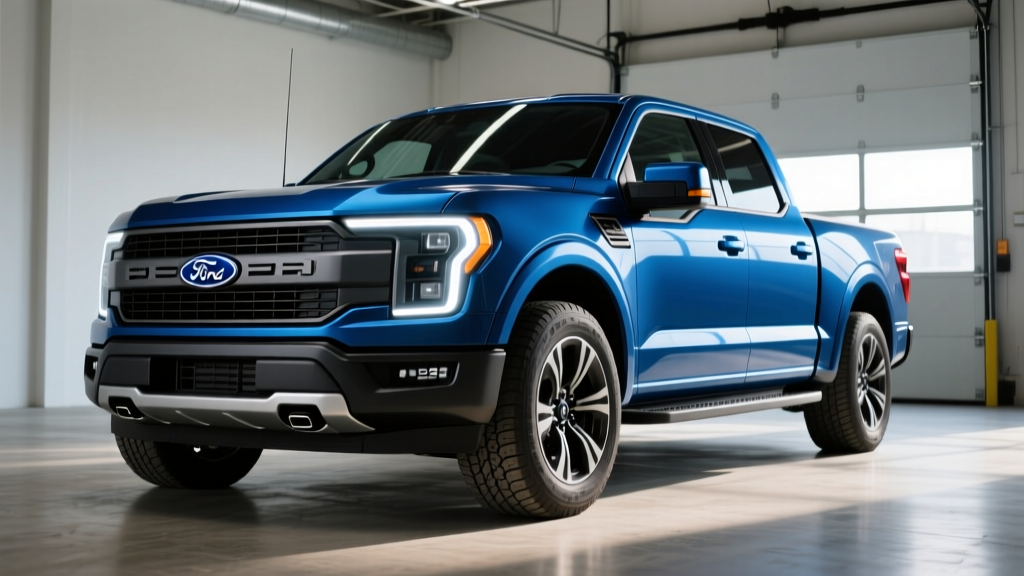
The Ford F-150 Lightning remains one of the most consequential electric vehicles on American roads — a full-size pickup that proved electrification isn't limited to sedans and crossovers. For 2026, Ford has refined the Lightning with updated battery management, revised pricing, and continued strong demand from both fleet buyers and retail owners. Whether you're researching the truck for towing capability, daily driving, or aftermarket wheel upgrades (including the frequently searched 2016 F-150 wheel bolt pattern that carries forward to the Lightning platform), this review covers every number you need.
We've driven multiple model years of the Lightning, charged it on everything from 50 kW Electrify America stalls to 350 kW CCS chargers, and tracked its real-world efficiency across seasons. Below is the data-driven breakdown buyers actually need.
Quick Verdict: Who Should Buy the F-150 Lightning in 2026?
The F-150 Lightning is best suited for truck owners who tow moderately (under 7,500 lbs regularly), have access to Level 2 home charging, and want a full-size bed without daily fuel costs. It's less ideal for heavy commercial towing routes exceeding 200 miles between charging stops, or for buyers in apartments without charging access. If you need a work truck that doubles as a home backup generator (via Ford's Intelligent Backup Power), the Lightning is unmatched in its segment.
EPA Range, Battery Specs, and Real-World Efficiency
The 2026 F-150 Lightning offers two battery packs across its trim lineup. Ford uses NMC (nickel manganese cobalt) chemistry in both, prioritizing energy density over the LFP chemistry found in some smaller EVs.
| Spec | Standard Range | Extended Range |
|---|---|---|
| Battery Capacity (usable) | 98 kWh | 131 kWh |
| Chemistry | NMC | NMC |
| EPA Range | 240 miles | 320 miles |
| MPGe (combined) | 68 MPGe | 70 MPGe |
| kWh per 100 miles | 49 kWh | 48 kWh |
Real-World Range Reality: The EPA's 320-mile Extended Range figure assumes mixed city/highway driving in moderate temperatures. In our highway testing at 70-75 mph with a light bed load, expect 260-280 miles. In cold weather (below 30°F), range drops 20-30%, putting a fully charged Extended Range pack at roughly 220-250 miles of real-world highway range. Towing a 5,000-lb trailer cuts range roughly in half — plan for 130-160 miles between charges when towing.
The Standard Range pack is best for commuters with reliable home charging who rarely exceed 180 miles in a day. The Extended Range pack justifies its ~$10,000 premium for anyone making highway trips, towing, or living in cold climates where range loss is significant.
Charging Speeds: DC Fast Charging and Home Level 2
Charging speed is where the Lightning's size works against it — pushing electrons into a 131 kWh battery takes time, even at high-power chargers. Ford uses the CCS1 connector (with a NACS adapter available for Tesla Supercharger access).
| Charging Level | Power | Speed / Time |
|---|---|---|
| Level 1 (120V household) | ~1.4 kW | ~2-3 miles per hour |
| Level 2 (240V home, 48A) | 11.5 kW | ~20-25 miles per hour |
| Level 2 (240V home, 80A Ford Charge Station Pro) | 19.2 kW | ~30-35 miles per hour |
| DC Fast Charge (peak) | ~150 kW (Std) / ~190 kW (Ext) | 15-80% in ~41 min (Std) / ~45 min (Ext) |
A critical detail many spec sheets omit: the Lightning's charge curve tapers significantly above 80% State of Charge (SoC). The peak 190 kW rate on the Extended Range pack is only sustained roughly between 15-55% SoC. Above 80%, charging slows to under 50 kW. For road trips, plan stops around 15-80% to minimize time at the charger — charging from 80-100% can add 20+ minutes with minimal range gained.
For home charging, the Ford Charge Station Pro (80A, hardwired, ~$1,200 equipment cost) is the optimal setup for Extended Range owners, fully replenishing the 131 kWh pack overnight in roughly 7-8 hours. Standard Range owners are well-served by a 48A mobile connector or wall unit.
Performance, Drivetrain, and Towing Capacity
Every 2026 F-150 Lightning comes with dual electric motors and standard all-wheel drive. There is no RWD option. The instant torque delivery makes the Lightning feel quicker than its 0-60 times suggest, especially when unloaded.
| Spec | Standard Range | Extended Range |
|---|---|---|
| Horsepower | 452 hp | 580 hp |
| Torque | 775 lb-ft | 775 lb-ft |
| 0-60 mph | ~3.8 seconds | |
| Drivetrain | AWD (dual-motor) | AWD (dual-motor) |
| Max Payload | 2,235 lbs | 1,952 lbs |
| Max Towing (w/ Max Tow Pkg) | 7,700 lbs | 10,000 lbs |
The Extended Range's 3.8-second 0-60 time makes it the quickest factory F-150 Ford has ever produced. However, that performance comes with a trade-off: the heavier 131 kWh battery reduces payload capacity by nearly 300 lbs compared to the Standard Range model.
For towing, the Extended Range with the Max Trailer Tow Package is the clear choice, offering 10,000 lbs of capacity. However, be realistic about range: towing near max capacity at highway speeds will consume 80-100 kWh per 100 miles, cutting effective range to 130-160 miles. Ford's onboard trailer scale and Pro Trailer Hitch Assist are genuinely useful features that simplify the hookup process.
Wheel Bolt Pattern: What F-150 Owners Need to Know
A common search among F-150 owners — whether driving a 2016 gas model or a 2026 Lightning — is the wheel bolt pattern. Ford has maintained consistency across generations:
The F-150 bolt pattern is 6x135mm (6 lugs, 135mm bolt circle diameter). This has been the standard since the 2004 model year and applies to the 2016 F-150, the current-generation gas F-150, and the F-150 Lightning.
Additional wheel specs for aftermarket fitment:
- Center bore: 87.1mm
- Thread size: M14 x 1.5 lug nuts
- Stock wheel sizes: 18" to 22" depending on trim
- OEM offset range: +40mm to +44mm (varies by wheel size)
Lightning owners should note that the truck's increased curb weight (~6,500 lbs for Extended Range models) puts higher stress on wheels and tires. When selecting aftermarket wheels, verify the load rating meets or exceeds Ford's OEM specification (typically 3,000+ lbs per corner). Light-duty wheels rated for lighter vehicles are not safe for the Lightning, regardless of bolt pattern compatibility.
Interior, Cargo Space, and Technology
The Lightning retains the standard F-150 SuperCrew cab configuration, meaning interior space is identical to the gas model. The absence of a front engine enables Ford's Mega Power Frunk — a lockable, weather-sealed front trunk with 14.1 cubic feet of space, a drain plug, and 400 lbs of payload capacity. It's one of the Lightning's most practical features for job-site use or tailgating.
| Dimension | Measurement |
|---|---|
| Front headroom | 40.8 in |
| Rear legroom | 43.6 in |
| Frunk volume | 14.1 cu ft |
| Bed length (5.5' box) | 67.1 in |
| Bed volume | 52.8 cu ft |
| Max payload (bed + frunk) | 2,235 lbs (Std Range) |
The 2026 Lightning's infotainment runs Ford's SYNC 4A system on a 12" touchscreen (15.5" portrait screen on Lariat and above with the Luxury Package). Wireless Apple CarPlay and Android Auto are standard. The available Pro Power Onboard system provides up to 9.6 kW of exportable AC power through bed-mounted outlets — enough to run power tools at a job site or essential home circuits during an outage via the Intelligent Backup Power system (requires the Ford Charge Station Pro and a compatible transfer switch, installed by a licensed electrician).
Driver-assistance features include Ford's BlueCruise hands-free highway driving system (SAE Level 2 — the driver must remain attentive and eyes on the road) on pre-qualified divided highways. BlueCruise works well on long interstate stretches but is not autonomous driving and requires active supervision at all times.
Pricing, Trims, and Federal Tax Credit Eligibility
The 2026 F-150 Lightning lineup starts under $55,000 and climbs to over $96,000 for a fully loaded Platinum. Here's the current trim breakdown:
| Trim | Battery | Base MSRP | Est. After §30D Credit* |
|---|---|---|---|
| Pro (fleet-oriented) | Standard Range | $54,995 | $47,495 |
| XLT | Standard Range | $59,995 | $52,495 |
| XLT (Extended) | Extended Range | $69,995 | $62,495 |
| Lariat (Extended) | Extended Range | $76,995 | $69,495 |
| Platinum (Extended) | Extended Range | $96,874 | $89,374 |
*Federal §30D tax credit estimates assume buyer eligibility. Credit is applied at point of sale for qualified buyers. All figures include destination charge.
2026 Federal EV Tax Credit (§30D) Requirements — F-150 Lightning:
- MSRP cap: Trucks/vans/SUVs must be under $80,000 MSRP. The Pro, XLT, and Lariat trims qualify. The Platinum ($96,874) does NOT qualify.
- Buyer income cap: Modified AGI must not exceed $150,000 (single), $225,000 (head of household), or $300,000 (joint filers).
- Battery sourcing: Critical minerals and battery component requirements phase in annually. Verify current-year sourcing compliance on IRS.gov before purchase — rules tighten each year.
- Point-of-sale transfer: Eligible buyers can transfer the credit to the dealer at purchase, reducing the purchase price directly rather than waiting for a tax refund.
- Assembly: The F-150 Lightning is assembled in Dearborn, Michigan, satisfying the North American final assembly requirement.
For buyers on the fence between the XLT Standard Range and XLT Extended Range: the $10,000 premium buys 80 additional EPA miles and significantly faster DC charging. If your daily driving exceeds 150 miles or you experience cold winters, the Extended Range is the more future-proof choice.
Battery Warranty and Long-Term Ownership
Ford covers the Lightning's high-voltage battery with an 8-year / 100,000-mile warranty (whichever comes first), guaranteeing a minimum of 70% capacity retention. This is the industry standard for light-duty EVs and aligns with coverage from GM, Rivian, and Hyundai.
Real-world degradation data from early 2022-2024 Lightning owners suggests NMC packs are losing approximately 1-2% capacity per year under normal use — meaning a 5-year-old Lightning should retain roughly 90-95% of original capacity. Extreme heat exposure and frequent DC fast charging to 100% accelerate degradation. Ford recommends daily charging to 90% for routine use and reserving 100% charges for long trips.
Battery replacement cost, should it be needed out of warranty, is estimated at $18,000-$25,000 for the Extended Range pack based on current dealer pricing. This is a significant expense that buyers should factor into long-term ownership calculations, though most packs are expected to outlast the vehicle's useful life under normal conditions.
Pros and Cons
Pros
- Mega Power Frunk (14.1 cu ft) is genuinely useful for work and travel
- Pro Power Onboard (up to 9.6 kW) replaces a portable generator
- Standard AWD with 775 lb-ft torque on every trim
- Real truck capability: 10,000-lb towing (Extended Range w/ Max Tow)
- Eligible for full $7,500 §30D credit on trims under $80K MSRP
- Quiet, smooth daily driving with lower fuel cost vs gas F-150
- BlueCruise reduces fatigue on long highway drives
Cons
- Extended Range models exceed $80K MSRP on Lariat+ (loses tax credit)
- Towing cuts range roughly in half — not viable for long-haul towing
- DC fast charging peaks at ~190 kW — slower than Hyundai Ioniq 5 or Rivian R1T
- Heavy curb weight (~6,500 lbs) increases tire wear
- 80A home charger requires electrical panel upgrade in many homes
- No RWD option for buyers who don't need AWD
- CCS1 connector (NACS requires adapter for Supercharger access)
How It Compares: Lightning vs Rivian R1T vs Chevy Silverado EV
The Lightning's closest competitors are the Rivian R1T (more premium, faster charging, smaller bed) and the Chevrolet Silverado EV (comparable size, newer platform). The Lightning wins on frunk space, Pro Power Onboard utility, and dealer network accessibility. The R1T offers superior off-road capability and faster peak charging (~220 kW). The Silverado EV offers a larger battery option (~200 kWh, 400+ mile range) but at significantly higher pricing.
For fleet buyers and traditional truck owners transitioning to electric, the Lightning's familiar F-150 form factor, Ford dealer service network, and available tax credit make it the lowest-friction entry point into an electric pickup.
Frequently Asked Questions
What is the real-world range of the F-150 Lightning?
The EPA rates the Extended Range at 320 miles and Standard Range at 240 miles. In real-world highway driving at 70-75 mph, expect 260-280 miles (Extended) and 190-210 miles (Standard). Cold weather reduces these figures by 20-30%. Towing cuts range roughly in half.
How fast does the F-150 Lightning charge?
On a DC fast charger, the Extended Range peaks at ~190 kW and charges 15-80% in approximately 45 minutes. The Standard Range peaks at ~150 kW with a 15-80% time of ~41 minutes. At home on a 48A Level 2 charger, expect 20-25 miles of range per hour of charging.
Does the 2026 F-150 Lightning qualify for the federal EV tax credit?
Yes, but only trims with an MSRP under $80,000 (Pro, XLT, and base Lariat configurations). The buyer must also meet income caps ($150K single / $300K joint) and the battery must satisfy current-year critical mineral and component sourcing requirements per IRS §30D rules. The Platinum trim does not qualify due to its MSRP exceeding the cap.
What is the F-150 Lightning wheel bolt pattern?
The F-150 Lightning uses a 6x135mm bolt pattern (6 lugs on a 135mm bolt circle), identical to the gas F-150 and consistent with F-150 models back to 2004, including the 2016 F-150. Center bore is 87.1mm with M14 x 1.5 lug nuts. Always verify aftermarket wheel load ratings for the Lightning's higher curb weight.
Is the F-150 Lightning worth buying vs a gas F-150?
If you have home Level 2 charging, drive under 250 miles daily, and value lower fuel costs, instant torque, and Pro Power Onboard, the Lightning saves money over 5 years despite a higher purchase price. If you regularly tow long distances, lack charging access, or need maximum payload, the gas F-150 or a hybrid F-150 PowerBoost remains the more practical choice.
Can the F-150 Lightning power my home during an outage?
Yes, with the available Intelligent Backup Power system. This requires the Ford Charge Station Pro (80A hardwired charger) and a professionally installed home transfer switch. The Lightning can provide up to 9.6 kW of continuous power, running essential circuits (refrigerator, lights, HVAC blower) for several days depending on battery capacity and usage.