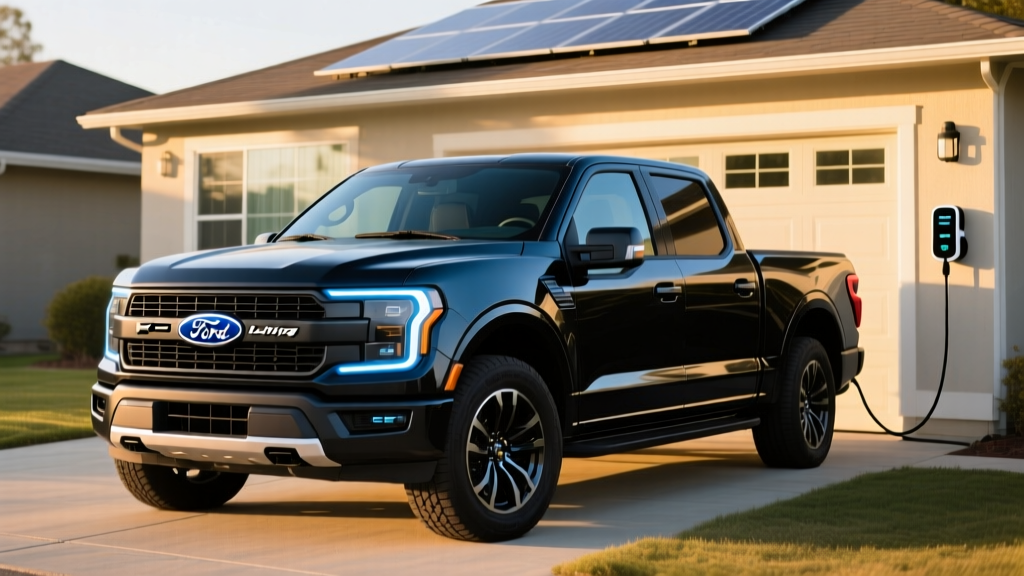
The Ford F-150 Lightning remains one of the most capable electric trucks on the market heading into the 2026 model year, but buyer questions persist. How far does it really go on a charge? Can you actually tow with it? Does it still qualify for the $7,500 federal tax credit? We've compiled the answers every prospective Lightning owner needs, backed by EPA data, Ford specifications, and real-world driving observations.
2026 F-150 Lightning Core Specs at a Glance
| Spec | Standard Range | Extended Range |
|---|---|---|
| EPA Range | 240 miles | 320 miles |
| Battery Capacity (usable) | 98 kWh | 131 kWh |
| Battery Chemistry | NMC (Nickel Manganese Cobalt) | NMC |
| Horsepower | 452 hp | 580 hp |
| Torque | 775 lb-ft | 775 lb-ft |
| 0–60 mph | ~3.8 sec | |
| Drivetrain | Dual-motor AWD | Dual-motor AWD |
| Max DC Fast Charge | 150 kW | 150 kW |
| 10–80% DCFC Time | ~36 min | ~41 min |
| Level 2 Home Charge Rate | 11.3 kW (30 mi/hr) | 19.2 kW (47 mi/hr) w/ 80A charger |
| MPGe (combined) | 78 MPGe | 70 MPGe |
| Efficiency | 43 kWh/100 mi | 48 kWh/100 mi |
| Max Towing (properly equipped) | 7,700 lbs | 10,000 lbs |
| Max Payload | 2,235 lbs | 1,800 lbs |
| Base MSRP (Pro trim) | ~$54,995 | ~$69,995 (Lariat ER) |
| Battery Warranty | 8 years / 100,000 miles (70% capacity retention) | |
Sources: fueleconomy.gov, Ford F-150 Lightning Official Page
What Is the Real-World Range of the F-150 Lightning?
EPA Sticker: 240 mi (Standard Range) / 320 mi (Extended Range)
Real-World Highway (70 mph, moderate temps): ~200 mi (SR) / ~260–275 mi (ER)
Cold Weather (below 30°F, highway): ~160–180 mi (SR) / ~210–230 mi (ER)
Towing (5,000 lb trailer, flat terrain): Expect range to drop 40–55%
The Lightning's EPA numbers assume a mix of city and highway driving at moderate temperatures. In practice, the truck's large frontal area and 6,500+ lb curb weight penalize it at sustained highway speeds. On a 70-mph interstate run in 65°F weather, expect the Extended Range model to deliver roughly 260–275 miles before needing a charge — about 15% below the sticker.
Cold weather compounds this. Below freezing, the battery must spend energy warming itself (the Lightning uses a resistive heater paired with a heat pump on newer model years), and cabin heating draws additional power. Plan for 25–35% range loss in winter conditions depending on your climate.
Towing is where reality bites hardest. Pulling a 5,000-pound enclosed trailer at highway speed can cut range nearly in half. If your route involves mountain passes, expect even steeper drops. This isn't unique to the Lightning — every electric truck faces this physics problem — but it means a 320-mile sticker becomes a ~150-mile practical towing range.
How Fast Does the F-150 Lightning Charge?
| Charging Level | Power | Miles Added per Hour | Notes |
|---|---|---|---|
| Level 1 (120V household) | ~1.4 kW | ~2–3 mi/hr | Emergency/trickle only |
| Level 2 (240V, 32A mobile) | 7.7 kW | ~20 mi/hr | Included Ford Mobile Charger |
| Level 2 (240V, 48A wall unit) | 11.3 kW | ~30 mi/hr | SR battery; ~10 hr full charge |
| Level 2 (240V, 80A Ford Charge Station Pro) | 19.2 kW | ~47 mi/hr | ER battery; ~8 hr full charge; requires 100A circuit |
| DC Fast Charge (peak) | 150 kW | ~200+ mi/hr (at peak) | 10–80% in 36–41 min |
The Lightning's DC fast-charging peak of 150 kW puts it behind competitors like the Rivian R1T (which supports up to 200+ kW) and the GMC Sierra EV (350 kW capable). At a 150 kW CCS station, the Extended Range battery's massive 131 kWh pack means you'll spend roughly 41 minutes going from 10% to 80%. The charge curve tapers significantly above 80% — adding that final 20% can take nearly as long as the first 70%.
For home charging, the 80-amp Ford Charge Station Pro is the gold standard for Extended Range owners, adding about 47 miles of range per hour. However, this requires a dedicated 100-amp circuit, which means many homes will need a panel upgrade. Budget $1,500–$3,000+ for professional installation, and potentially $2,000–$5,000 more if your electrical panel needs upgrading from 100A to 200A service.
Pro tip: Always precondition the battery before arriving at a DC fast charger. The Lightning's navigation system does this automatically when you route to a charger, warming the pack to optimal temperature for faster charge acceptance. Skip this step in cold weather and your peak charge rate may drop to 80–100 kW.
Does the 2026 F-150 Lightning Qualify for the Federal EV Tax Credit?
- Vehicle MSRP cap: Trucks/vans/SUVs must be ≤$80,000 MSRP. Most Lightning trims qualify, but a fully loaded Platinum Extended Range may exceed the cap — verify exact MSRP with your dealer.
- Buyer income cap: AGI must not exceed $150,000 (single), $225,000 (head of household), or $300,000 (married filing jointly).
- Battery sourcing: Critical minerals and battery components must meet escalating domestic-sourcing thresholds. Ford sources NMC cells from SK On (with some U.S.-assembled packs), but eligibility can change by production batch. Confirm VIN-specific eligibility at fueleconomy.gov.
- Point-of-sale transfer: As of 2024+, you can transfer the credit to the dealer for an immediate price reduction at purchase rather than waiting for tax filing.
- Final assembly: Must occur in North America. The Lightning is built in Dearborn, Michigan — this requirement is met.
Source: IRS.gov — Clean Vehicle Credits
The F-150 Lightning has historically qualified for up to $7,500 under §30D, but eligibility is VIN-specific and can shift as battery supply chains evolve. Before committing to a purchase, enter the exact VIN on fueleconomy.gov to confirm. If you exceed the income thresholds, you won't qualify regardless of the vehicle.
| Trim | Battery | MSRP (est.) | Est. After $7,500 Credit |
|---|---|---|---|
| Pro | Standard Range | $54,995 | $47,495 |
| XLT | Standard Range | $59,995 | $52,495 |
| XLT | Extended Range | $69,995 | $62,495 |
| Lariat | Extended Range | $74,995 | $67,495 |
| Platinum | Extended Range | $82,995 | May exceed MSRP cap* |
*Platinum trim MSRP may exceed the $80,000 truck cap. Verify with dealer before assuming credit eligibility.
What Are the Biggest Pros and Cons?
- Massive 8.6 cu ft front trunk (frunk) — lockable, weatherproof, with drain plug
- Pro Power Onboard: up to 9.6 kW of vehicle-to-load (V2L) export — runs job-site tools, tailgate setups, or home backup circuits
- Quiet, smooth dual-motor AWD with instant torque; 3.8-sec 0–60 on Extended Range
- Spacious SuperCrew cabin with 43.6 inches of rear legroom
- SYNC 4 with 15.5-inch vertical touchscreen on upper trims; wireless Apple CarPlay/Android Auto
- BlueCruise hands-free highway driving on approved divided highways (SAE Level 2)
- 10,000-lb max towing (ER) — competitive for electric trucks
- Built in USA (Dearborn, MI) — strong §30D credit positioning
- 150 kW DC fast-charging peak is slow for a 131 kWh battery — 41 min 10–80%
- Highway range drops significantly — ~260 mi real-world on ER, not 320 mi
- Towing cuts range 40–55%; long-distance trailer hauling requires careful planning
- Curb weight over 6,500 lbs impacts tire wear and efficiency
- Extended Range models push close to or above the $80,000 tax-credit MSRP cap
- Regenerative braking is modest — no true one-pedal driving mode compared to some competitors
- No NACS (Tesla Supercharger) port from factory — requires adapter for Supercharger access
F-150 Lightning vs. Key Competitors: Is It Worth Buying?
The Lightning competes primarily with the Rivian R1T, GMC Sierra EV, and the Chevrolet Silverado EV. Here's how the decision breaks down:
| Attribute | Ford F-150 Lightning ER | Rivian R1T (Dual Max) | GMC Sierra EV (4WT) |
|---|---|---|---|
| EPA Range | 320 mi | ~352 mi | ~390 mi (est.) |
| Peak DCFC | 150 kW | 200+ kW | 350 kW |
| 0–60 mph | 3.8 sec | ~3.0 sec | ~4.5 sec |
| Max Towing | 10,000 lbs | 11,000 lbs | 10,000+ lbs |
| Starting MSRP | ~$54,995 | ~$69,900 | ~$60,000 (est.) |
| Bed Length | 5.5 ft | 4.5 ft (+ Gear Tunnel) | 5.5 ft |
| Frunk Volume | 14.1 cu ft | 11.1 cu ft | ~10.7 cu ft |
| Native NACS Port | No (adapter) | Yes | Yes |
| Federal Tax Credit | Likely eligible (verify VIN) | Likely eligible | Likely eligible |
- Choose the F-150 Lightning if: You want the most affordable entry point into an electric full-size truck, value the massive frunk and Pro Power Onboard for work/play, prefer a traditional truck driving feel, and primarily drive within 200 miles of home or a reliable Level 2 charger.
- Choose the Rivian R1T if: You prioritize faster DC charging, more range, adventure-oriented features (Gear Tunnel, camp kitchen), and want native NACS for Supercharger access without adapters.
- Choose the GMC Sierra EV if: You need maximum range, fastest 350 kW DC charging capability, and prefer GM's Ultium platform — but are willing to wait for broader trim availability.
Who Is the F-150 Lightning Best Suited For?
The Lightning excels in specific use cases:
- Home-charging commuters: If you can install a Level 2 charger and your daily round trip is under 150 miles, the Lightning is an outstanding daily driver. The SR battery refills overnight easily, and you'll spend roughly $0.04–0.06 per mile on electricity (varies by local utility rates) versus $0.15–0.20 per mile in a gas F-150.
- Job-site workers and contractors: Pro Power Onboard (up to 9.6 kW export) turns the Lightning into a mobile generator. Run saws, compressors, and lighting without a separate gas generator. The frunk holds tools securely and out of sight.
- Families who tow occasionally: Weekend boat or camper towing within a ~100-mile radius is feasible. Just plan charging carefully for longer trips.
- Home backup power users: With Ford's Intelligent Backup Power system (requires the 80A Charge Station Pro and a home transfer switch), the Lightning can supply up to 9.6 kW to your home during an outage — enough to run essentials for roughly 3 days.
The Lightning is less ideal for frequent long-distance towing, apartment dwellers without home charging access, or buyers in extreme cold climates who need maximum winter range.
Tech, Interior, and Driver Assistance
Inside, the Lightning carries forward Ford's SYNC 4 infotainment system. The available 15.5-inch vertical touchscreen (standard on Lariat and above) handles navigation, media, and vehicle settings. Wireless Apple CarPlay and Android Auto are standard across trims. Over-the-air updates continue to refine the system post-purchase.
Ford's BlueCruise hands-free driving system is available on pre-qualified divided highways (over 130,000 miles of mapped roads in the U.S. and Canada). This is an SAE Level 2 driver-assistance system — the driver must remain attentive and keep eyes on the road at all times. A driver-facing camera monitors engagement. BlueCruise is impressive for reducing highway fatigue, but it is not autonomous driving.
BlueCruise (SAE Level 2) requires continuous driver supervision. It does NOT handle construction zones, unmapped roads, severe weather, or complex urban intersections. You are legally and operationally responsible for the vehicle at all times.
Cargo dimensions: the 5.5-foot bed offers 52.8 cu ft of volume. The front trunk (frunk) provides 14.1 cu ft (400 lbs capacity) — large enough for two carry-on bags and then some. Rear-seat legroom in the SuperCrew configuration is 43.6 inches, matching the gas F-150 SuperCrew.
Frequently Asked Questions
How long will the F-150 Lightning battery last?
Ford warranties the battery for 8 years or 100,000 miles, whichever comes first, guaranteeing at least 70% of original capacity retention. Real-world data from early 2022–2024 Lightning owners suggests NMC degradation of roughly 5–8% over the first 50,000 miles under normal use. Many owners can expect the pack to remain functional well beyond 150,000 miles, though with reduced range.
Can I use Tesla Superchargers with the F-150 Lightning?
Yes, but with a caveat. The Lightning uses a CCS1 port. Ford provides a NACS-to-CCS adapter (or one can be purchased) that enables access to Tesla Superchargers equipped with a Magic Dock or those opened to non-Tesla vehicles. Charging speed is limited to the Lightning's 150 kW peak regardless of the Supercharger's higher capability.
What does it cost to charge the Lightning at home?
At the U.S. average residential electricity rate of ~$0.16/kWh, fully charging the Extended Range 131 kWh battery costs roughly $21. That's for ~260 real-world highway miles — approximately $0.08 per mile. Compare that to a gas F-150 getting 19 MPG combined at $3.30/gallon: ~$0.17 per mile. Home charging saves roughly 50% per mile, though public DC fast charging at $0.35–0.50/kWh narrows that gap considerably.
Is the F-150 Lightning good in snow and cold weather?
The dual-motor AWD system provides excellent traction, and the truck's weight helps with stability. However, expect 25–35% range loss below freezing due to battery chemistry limitations and cabin heating demands. The available heat pump (on newer model years) helps but doesn't eliminate cold-weather range penalty. Preconditioning while plugged in is essential for preserving range in winter.
What is the F-150 Lightning's insurance cost?
Insurance premiums for the Lightning tend to run 15–25% higher than a comparable gas F-150, reflecting the vehicle's higher replacement cost and specialized repair requirements. Expect annual premiums in the $1,800–$2,800 range depending on your location, driving record, and coverage level. Get quotes from multiple insurers — some offer EV-specific discounts.
Does the Lightning support vehicle-to-home (V2H) power?
Yes. With the available Ford Intelligent Backup Power system — which requires the 80A Charge Station Pro and a professionally installed home transfer switch — the Extended Range Lightning can power your home during an outage at up to 9.6 kW. Ford estimates roughly 3 days of essential home power from a full charge.
Should I get the Standard Range or Extended Range battery?
If you have reliable home Level 2 charging and your daily driving stays under 150 miles round-trip, the Standard Range saves $10,000–$15,000 and charges faster overnight. Choose Extended Range if you regularly drive 200+ miles between charges, tow frequently, or live in a cold climate where winter range loss will eat into the Standard Range's already-modest 240-mile EPA figure.