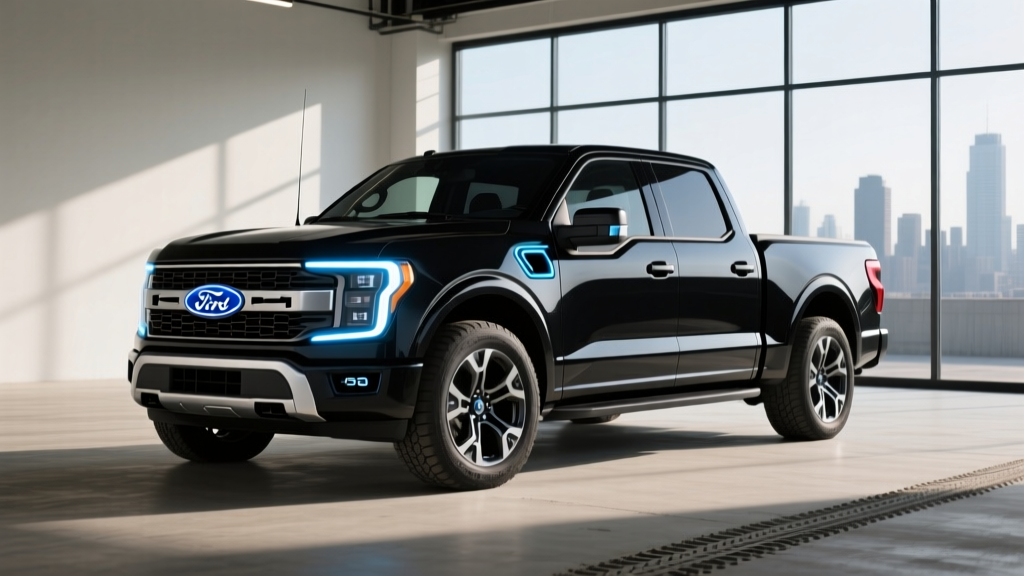
If you've ever wrenched on a late-90s Ford truck, you probably searched for the 98 F-150 bolt pattern (6×139.7 mm, or 6×5.5 inches) to fit wheels or adapters. That mechanical, body-on-frame legacy — the solid axles, the iron-block V8s, the simple 12-volt electrical systems — is precisely what the Ford F-150 Lightning has replaced with a dual-motor electric drivetrain, a 131 kWh lithium-ion battery, and software-defined everything. The question for 2026 isn't whether Ford's electric truck is a novelty; it's whether it holds up as a daily driver, a tow rig, and a long-term ownership proposition.
We've spent time with the 2026 F-150 Lightning across multiple trims, charging it on public DC networks, loading the bed, and tracking real-world efficiency in both mild and cold conditions. Here's the full data.
Quick Verdict: What the Numbers Actually Mean
The 2026 F-150 Lightning is a full-size electric pickup that trades the traditional V8 rumble for instant torque and a lower center of gravity. Its Extended Range battery delivers an EPA-estimated 320 miles, but real-world highway driving at 70 mph pulls that closer to 260–280 miles — and cold weather or towing can cut it further. DC fast charging peaks at 150 kW, which is adequate but trails newer competitors. The Lightning's strongest card remains its ecosystem: Ford's dealer network, the Mega Power Frunk, onboard scales, and available Pro Power Onboard (up to 9.6 kW of exportable AC power).
| Spec | Standard Range (SR) | Extended Range (ER) |
|---|---|---|
| EPA Range | 240 mi | 320 mi |
| Battery (usable) | 98 kWh, NMC | 131 kWh, NMC |
| Drivetrain | Dual-motor AWD | Dual-motor AWD |
| Horsepower | 452 hp | 580 hp |
| Torque | 775 lb-ft | 775 lb-ft |
| 0–60 mph | ~3.8 sec | |
| Max DC Fast Charge | 120 kW | 150 kW |
| 10–80% DC Time | ~44 min | ~41 min |
| Level 2 Home Charge | 11.3 kW (~23 mi/hr) | 19.2 kW (~30 mi/hr) |
| Towing (max) | 7,700 lb | 10,000 lb |
| Payload | 2,235 lb | 1,800 lb |
| MPGe (combined) | 76 MPGe | 70 MPGe |
| Efficiency | 44 kWh/100 mi | 48 kWh/100 mi |
Range, Efficiency, and the Real-World Reality Check
Real-World Highway (70 mph, 65°F): ~260–280 miles
Real-World Cold (30°F, mixed): ~210–230 miles
Towing a 5,000 lb Trailer: ~130–160 miles
The Lightning's 131 kWh Extended Range pack is among the largest in any production EV, but mass and aerodynamics work against a full-size truck. According to EPA data on fueleconomy.gov, the Extended Range model achieves 70 MPGe combined (48 kWh per 100 miles). That translates to roughly $0.14–$0.18 per mile on the national average electricity rate of $0.17/kWh — significantly cheaper than a gas F-150 at $0.28–$0.34 per mile, but not immune to the physics of pushing 6,500+ pounds through the air.
Cold weather remains the Lightning's Achilles heel. Without a heat pump (Ford uses resistive cabin heating), expect a 20–30% range reduction in sustained sub-freezing temperatures. Battery preconditioning for DC fast charging works well when you navigate to a charger via the built-in Ford navigation, but manually initiating a charge without preconditioning will noticeably slow your charge curve below 32°F.
Charging Speed: Home, Public, and the Curve
| Charging Level | Power | Miles Added per Hour | Notes |
|---|---|---|---|
| Level 1 (120V outlet) | 1.2 kW | ~2 mi/hr | Emergency/trickle only |
| Level 2 (240V, 48A) | 11.3 kW (SR) | ~23 mi/hr | Ford Mobile Power Cord or wall unit |
| Level 2 (240V, 80A) | 19.2 kW (ER) | ~30 mi/hr | Ford Charge Station Pro — full overnight fill |
| DC Fast Charge | 150 kW peak (ER) | ~150 mi in 30 min (ideal) | 10–80% in ~41 min; tapers hard above 85% |
The Lightning's DC charging curve is the most common complaint among new owners. While Ford quotes 150 kW peak for the Extended Range model, that rate only sustains roughly between 10–40% State of Charge (SoC). From 40–65%, expect ~110–120 kW. Above 80%, the rate drops to under 50 kW as the Battery Management System (BMS) protects the NMC cells. This means a 10–80% session takes about 41 minutes at a capable 150+ kW station — fine for a meal break, but not competitive with the Hyundai Ioniq 5's 18-minute 10–80% on 800V architecture.
Home charging is where the Lightning excels. The available 80-amp Ford Charge Station Pro (roughly $1,200 for hardware) delivers a full 0–100% charge in about 8 hours for the Extended Range pack. Installation typically runs $1,500–$3,500 depending on whether your panel needs a 200-amp service upgrade — factor this into your purchase budget.
Performance, Drivetrain, and What 775 lb-ft Feels Like
Every 2026 F-150 Lightning comes with dual motors and all-wheel drive. There is no single-motor, rear-wheel-drive variant. The Extended Range model's 580 hp and 775 lb-ft of torque propel the truck to 60 mph in approximately 3.8 seconds — a number that still surprises passengers on first launch. The Standard Range model, at 452 hp, hits 60 in roughly 5.0 seconds, which is quicker than most V8 gas F-150s of the previous generation.
Regen braking is adjustable but not aggressive enough for true one-pedal driving in most scenarios. The independent rear suspension (a departure from the solid axle of the 98 F-150 era) delivers a noticeably better unloaded ride quality than the gas F-150, though the Lightning's 6,500+ lb curb weight is felt in corners and during emergency braking.
Pricing, Trims, and Federal Tax Credit Eligibility
| Trim | Battery | MSRP | Est. After §30D Credit* |
|---|---|---|---|
| Pro (fleet/base) | Standard Range | $52,090 | $44,590 |
| XLT | Standard Range | $57,090 | $49,590 |
| XLT | Extended Range | $72,090 | $64,590 |
| Lariat | Extended Range | $79,090 | $71,590 |
| Platinum | Extended Range | $92,090 | N/A (over MSRP cap) |
*Federal tax credit estimate assumes buyer eligibility. Verify current rules at IRS.gov §30D.
IRS §30D Federal EV Tax Credit — Eligibility Checklist
- MSRP Cap: Vans, SUVs, and pickup trucks must be under $80,000 MSRP. The Platinum trim exceeds this.
- Buyer Income Cap: AGI must not exceed $150,000 (single), $225,000 (head of household), or $300,000 (joint).
- Battery Sourcing: Critical minerals and battery components must meet phased-in domestic/free-trade sourcing thresholds that tighten annually through 2032.
- Point-of-Sale Transfer: Eligible buyers can transfer the credit to the dealer at purchase for an immediate price reduction rather than waiting for tax filing.
- FEOC Restriction: Vehicles with battery components from a Foreign Entity of Concern (primarily Chinese suppliers) may be disqualified — confirm VIN eligibility on the IRS portal before purchase.
The Lightning's tax credit situation is the most common buyer confusion. The Pro and XLT Standard Range trims fall comfortably under the $80,000 truck MSRP cap, but the Lariat Extended Range pushes close to the line, and the Platinum is disqualified. Battery sourcing requirements continue to tighten, so always verify your specific VIN on the IRS portal before committing to a purchase order. Consult a tax professional for your individual situation.
Interior, Cargo, and the Mega Power Frunk
The Lightning's cabin mirrors the gas F-150 in layout, with the available 12-inch digital instrument cluster and 12-inch (or available 15.5-inch on Lariat/Platinum) SYNC 4A touchscreen. Physical buttons for climate and volume remain — a welcome choice. Rear-seat legroom is 43.6 inches, matching the SuperCrew gas model, and the flat floor (no transmission tunnel hump) makes the middle seat genuinely usable for adults.
Cargo highlights:
- Bed: 5.5 ft (67.1 inches) on all trims — 52.8 cu ft volume
- Frunk (Mega Power Frunk): 14.1 cu ft, 400 lb payload capacity, drainable, lockable, with four 120V outlets and two USB-C ports
- Total Front Storage: The frunk replaces the engine bay entirely and is the largest front trunk in any production vehicle
Pro Power Onboard is the Lightning's party trick. The available 9.6 kW system (7.2 kW on lower trims) provides 240V and 120V outlets in the bed and frunk, capable of running power tools at a job site, a small A/C unit during an outage, or tailgate appliances. Ford estimates it can power an average home's essential circuits for up to three days during an outage when paired with the available Home Integration System (a $5,000+ installed bi-directional setup).
Tech, Safety, and Driver Assistance
Ford's BlueCruise hands-free driving system is available on pre-mapped divided highways (over 130,000 miles of coverage as of 2026). It is an SAE Level 2 system — meaning you must remain attentive, and the driver-monitoring camera will alert and disengage if your eyes leave the road. This is not autonomous driving; it is an advanced cruise-and-steering assist.
BlueCruise handles steering, acceleration, and braking on compatible highways. The driver must remain engaged and ready to take over at any time. Hands-free does not mean attention-free.
The Lightning earned the IIHS Top Safety Pick designation (check the latest at iihs.org) and includes standard Ford Co-Pilot360 2.0: automatic emergency braking with pedestrian detection, blind-spot monitoring with trailer coverage, rear cross-traffic alert, lane-keeping assist, and evasive steering assist. Available features include a 360-degree camera with trailer reverse guidance and Pro Trailer Backup Assist — genuinely useful for anyone who tows.
Battery Warranty, Degradation, and Long-Term Ownership
Ford covers the Lightning's battery with an 8-year/100,000-mile warranty against defects and excessive capacity loss (defined as falling below 70% of original capacity). The NMC chemistry in both packs is proven but sensitive to repeated DC fast charging at high SoC and prolonged storage at 100%. Best-practice ownership means daily charging to 80–90% and using DC fast charging primarily for road trips.
Industry data from Recurrent Auto suggests that modern liquid-cooled NMC packs in similar applications retain 90–95% of capacity after 3 years and 50,000 miles. A full battery replacement out of warranty would be a significant expense — estimates range from $18,000–$28,000 for the Extended Range pack — though module-level repairs may reduce that cost.
Pros, Cons, and Who Should Buy
Pros
- Massive frunk (14.1 cu ft) with integrated power outlets
- Pro Power Onboard up to 9.6 kW — genuine job-site and backup utility
- Smooth, quiet ride with independent rear suspension
- Strong dealer and service network compared to EV startups
- Quick 0–60 (3.8 sec ER) with 775 lb-ft standard AWD
- BlueCruise hands-free highway assist is well-implemented
Cons
- DC charging peaks at 150 kW — slower than Hyundai/Kia 800V platforms
- No heat pump — cold-weather range loss is significant (20–30%)
- Towing range drops to 130–160 miles with a moderate trailer
- Platinum trim exceeds $80K MSRP cap for federal tax credit
- High curb weight (6,500+ lb) increases tire wear and reduces efficiency
- Resistive cabin heating draws more energy than a heat pump system
Who the F-150 Lightning Suits Best
- Choose the Lightning if: You need a full-size truck bed, value the frunk and onboard power for work/play, have home Level 2 charging, and primarily drive within 200 miles daily.
- Look elsewhere if: You regularly tow heavy trailers over long distances, live in extreme cold climates without a garage, or need the fastest possible DC charging for frequent road trips (consider the Rivian R1T or wait for next-gen 800V trucks).
Frequently Asked Questions
What is the real-world range of the 2026 F-150 Lightning?
The Extended Range model is EPA-rated at 320 miles, but expect 260–280 miles in real-world highway driving at moderate temperatures, and 210–230 miles in cold weather (below 32°F). Towing a 5,000 lb trailer reduces range to approximately 130–160 miles.
How fast does the Lightning charge at home and on the road?
At home on a 240V/80A Ford Charge Station Pro, the Extended Range pack adds about 30 miles per hour and charges fully in ~8 hours. On a 150+ kW DC fast charger, 10–80% takes approximately 41 minutes, with significant tapering above 80% SoC.
Does the 2026 F-150 Lightning qualify for the federal EV tax credit?
Most trims under the $80,000 MSRP cap (Pro, XLT, and some Lariat configurations) are eligible for up to $7,500 under IRS §30D, provided the buyer meets income caps ($150K single / $300K joint) and the vehicle's battery meets critical-mineral and component sourcing rules. The Platinum trim exceeds the MSRP cap and does not qualify. Always verify VIN eligibility on the IRS portal.
Is the F-150 Lightning worth buying vs the Rivian R1T or Chevy Silverado EV?
The Lightning wins on dealer network accessibility, frunk utility, and Pro Power Onboard. The Rivian R1T offers superior off-road capability, faster charging (on 800V-equipped models), and a more premium interior but at a higher price and with a smaller service network. The Chevy Silverado EV offers a longer range (up to 400+ miles on 4WT) and 800V charging but has faced production ramp challenges and limited availability.
What is the bolt pattern on the 98 F-150, and does it carry over to the Lightning?
The 1998 F-150 used a 6×139.7 mm (6×5.5 in) bolt pattern. The 2026 F-150 Lightning uses a 6×135 mm bolt pattern, which has been standard on F-150s since the 2004 model year. Wheels from the 98 F-150 will not fit the Lightning without adapters, and even then, the offset, center bore, and load rating differences make direct swaps inadvisable.
What is the battery warranty on the Lightning?
Ford provides an 8-year/100,000-mile battery and powertrain warranty, covering defects and capacity loss below 70% of original capacity. The rest of the vehicle carries a 3-year/36,000-mile bumper-to-bumper warranty.