Quick Answer: Is the 2026 Ford Explorer EV Right for You?
The 2026 Ford Explorer EV is a three-row electric SUV built on Volkswagen's MEB platform, offering an EPA-estimated range of up to 315 miles (RWD Extended Range), peak DC fast charging at 185 kW (10–80% in approximately 25 minutes), and a starting MSRP around $48,000. It qualifies as a strong family hauler for buyers with home Level 2 charging access who drive under 250 miles daily. However, its real-world highway range drops to roughly 260–280 miles, and cold-weather performance may reduce that further by 15–25%. Federal §30D tax credit eligibility is uncertain due to battery sourcing requirements — check current IRS rules before purchasing.
The 2026 Ford Explorer EV represents Ford's entry into the midsize electric SUV segment, competing directly with the Kia EV9, Hyundai Ioniq 9, and Tesla Model X. Unlike the gas-powered Explorer that's been a family staple for decades, this EV version is built on VW's dedicated electric MEB architecture — a result of the Ford-Volkswagen partnership. Here's everything you need to know about range, charging, costs, and whether it makes sense for your household.
Range, Battery, and Efficiency: What the Numbers Actually Mean
| Specification | RWD Standard Range | RWD Extended Range | AWD Extended Range |
|---|---|---|---|
| EPA Range | ~250 mi | ~315 mi | ~290 mi |
| Battery (usable) | 77 kWh (NMC) | 91 kWh (NMC) | 91 kWh (NMC) |
| Efficiency (MPGe) | ~95 MPGe combined | ~97 MPGe combined | ~92 MPGe combined |
| Horsepower | 282 hp | 282 hp | 335 hp |
| 0–60 mph | ~7.5 sec | ~7.5 sec | ~6.0 sec |
| Base MSRP | ~$48,000 | ~$52,500 | ~$56,000 |
Real-World Range Expectations
The EPA sticker says 315 miles for the Extended Range RWD, but real-world conditions tell a different story. Expect approximately 260–280 miles on highway road trips at 70–75 mph. In cold weather (below 40°F), range can drop 15–25%, putting winter highway range closer to 220–240 miles. City driving with regenerative braking is more efficient and may approach or even exceed the EPA figure. The battery uses NMC (nickel manganese cobalt) chemistry, which offers higher energy density than LFP but is more sensitive to extreme temperatures and long-term high-state-of-charge storage.
According to fueleconomy.gov, efficiency ratings for MEB-platform vehicles typically range from 2.5–3.0 kWh per mile in mixed driving. The Explorer EV's thermal management system includes a heat pump (standard on Extended Range trims), which helps preserve range in cold climates — a critical feature if you live north of the 37th parallel.
Charging Speed and Infrastructure: Home and Public
| Charging Level | Power (kW) | Miles Added per Hour | Use Case |
|---|---|---|---|
| Level 1 (120V) | 1.4 kW | ~4 mi/hr | Emergency top-ups only |
| Level 2 (240V, 48A) | 11.5 kW | ~33 mi/hr | Overnight home charging (recommended) |
| DC Fast Charging | Peak 185 kW | ~180 mi in 15 min | Road trips; 10–80% in ~25 min |
The Explorer EV uses the CCS1 connector standard (not NACS), meaning it's compatible with Electrify America, EVgo, and most non-Tesla DC fast charging networks. Peak charging rate is 185 kW on the Extended Range battery, but like all EVs, it doesn't sustain that rate. The charge curve tapers significantly above 80% state of charge (SoC) — a 10–80% session takes about 25 minutes, but 80–100% can add another 20–30 minutes. For road trips, plan to charge to 80% and move on.
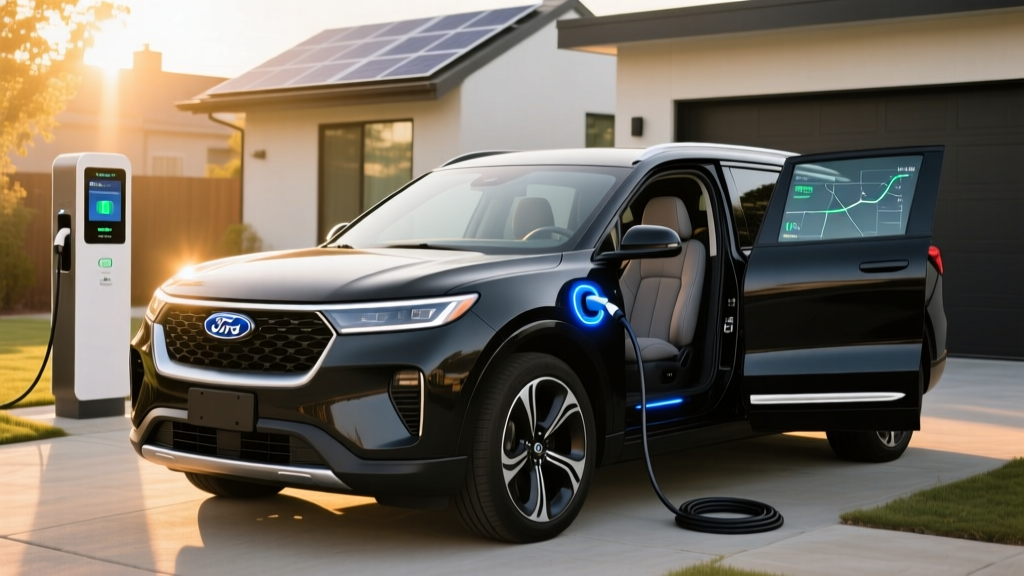
For home charging, a Level 2 wallbox (such as the Ford Charge Station Pro or a third-party unit like ChargePoint Home Flex) on a 60-amp circuit delivers 11.5 kW, adding roughly 33 miles of range per hour. A full 10–100% charge on the 91 kWh Extended Range battery takes approximately 9–10 hours overnight. Installation costs for a Level 2 home charger typically range from $800 to $2,500 depending on panel capacity and wiring distance — factor this into your purchase budget. If your home has a 100-amp electrical panel, you may need a $1,500–$3,000 panel upgrade to 200 amps to support Level 2 charging safely.
EV vs Gas Explorer: Cost Comparison Over 5 Years
How does the electric Explorer stack up against its gas-powered sibling? Let's compare the 2026 Explorer EV (AWD Extended Range, ~$56,000 MSRP) against the 2026 Explorer XLT AWD (gas, ~$46,000 MSRP) over a 5-year, 75,000-mile ownership period.
| Cost Category | 2026 Explorer EV (AWD) | 2026 Explorer Gas (AWD) |
|---|---|---|
| Purchase Price (MSRP) | $56,000 | $46,000 |
| Federal Tax Credit (§30D) | Up to $7,500* | $0 |
| Effective Purchase Price | ~$48,500 | $46,000 |
| Fuel/Energy (75,000 mi) | $4,500 (home L2 @ $0.14/kWh) | $9,400 (gas @ $3.50/gal, 22 MPG) |
| Maintenance (5 yr) | ~$1,200 | ~$3,500 |
| Insurance (5 yr avg) | ~$9,500 | ~$7,800 |
| Estimated Depreciation | ~$22,000 | ~$18,000 |
| Total 5-Year Cost | ~$85,700 | ~$84,700 |
*Federal §30D tax credit eligibility depends on battery component sourcing, critical mineral requirements, buyer income caps ($150K single / $300K joint), and MSRP caps ($80K for SUVs). As of 2026, many EVs with non-North American battery sourcing do not qualify for the full $7,500. Check the latest IRS guidance before assuming credit eligibility. The Explorer EV's MEB-platform battery is currently manufactured in Europe, which may limit or eliminate credit qualification.
The EV wins decisively on fuel and maintenance savings — approximately $7,200 less over five years. However, higher insurance premiums (EVs typically cost 15–25% more to insure due to repair costs and battery replacement risk) and steeper depreciation partially offset those gains. The breakeven point depends heavily on your electricity rate, annual mileage, and whether you qualify for the tax credit.
Real-World Ownership Considerations
Home Charging Access Is Non-Negotiable
If you cannot install a Level 2 charger at home or lack reliable access to workplace charging, the Explorer EV becomes significantly less practical. Public DC fast charging costs roughly $0.35–$0.50 per kWh (versus $0.12–$0.18 for residential electricity), which erases much of the fuel-cost advantage. More critically, relying on public infrastructure means spending 25–40 minutes charging 2–3 times per week instead of 30 seconds plugging in at home overnight. For apartment dwellers without charging access, a PHEV or HEV may be a more practical choice.
Climate and Driving Patterns
The Explorer EV's NMC battery and heat pump handle moderate cold reasonably well, but if you live in Minnesota, Montana, or northern New England, plan for 20–25% range loss in sub-freezing temperatures. Highway-heavy commutes above 250 miles round-trip will also test the Extended Range model's limits, especially in winter. If your daily driving exceeds 200 miles consistently, consider whether DC fast charging infrastructure exists along your route — charging deserts remain a reality in rural parts of the Mountain West, Great Plains, and rural South.
Towing and Cargo
The Explorer EV offers a maximum towing capacity of approximately 3,500 pounds (with the factory tow package) — significantly less than the gas Explorer's 5,600-pound rating. If you regularly tow a boat, camper, or trailer, the gas or hybrid Explorer remains the better tool. Cargo volume behind the third row is competitive at roughly 18 cubic feet, expanding to approximately 85 cubic feet with both rear rows folded.
Common Misconceptions About the Explorer EV
| Myth | Fact |
|---|---|
| "It's just an electric version of the gas Explorer" | The EV is built on VW's MEB platform, not Ford's gas Explorer architecture. It shares no body panels, powertrain, or chassis components with the ICE Explorer. |
| "315 miles of range means I can drive 315 miles before charging" | EPA range assumes mixed driving at moderate speeds. Highway driving at 75 mph yields ~260–280 real miles; cold weather reduces this further. Plan road trips around 200–220 mile charging segments for comfort. |
| "I'll save $7,500 on taxes" | The §30D credit has strict battery sourcing, income, and MSRP requirements. The Explorer EV's European-sourced MEB battery may not qualify. Always verify on IRS.gov before purchasing. |
| "Fast charging damages the battery" | Occasional DC fast charging is fine. Ford's battery management system limits charge rates and manages thermal conditions. Long-term degradation is driven more by consistently charging to 100% and storing at high SoC than by fast charging itself. |
| "It charges as fast as a Tesla" | The Explorer EV peaks at 185 kW, while the Tesla Model Y can sustain 250 kW on V3 Superchargers (10–80% in ~15 min). The Explorer's 25-minute 10–80% time is competitive with most non-Tesla EVs but not class-leading. |
Decision Framework: Should You Buy the 2026 Ford Explorer EV?
Choose the 2026 Ford Explorer EV If:
- You have home Level 2 charging access (or can install it)
- Your daily driving is under 200 miles round-trip
- You want a three-row electric SUV and prefer traditional automaker dealership service over Tesla's direct model
- You value BlueCruise hands-free highway driving (SAE Level 2 — driver must remain attentive)
- You live in a moderate climate or can accept 20% winter range loss
- You don't need to tow more than 3,500 pounds regularly
Choose the Gas or Hybrid Explorer Instead If:
- You lack home or workplace charging access
- You regularly tow above 3,500 pounds
- Your daily commute exceeds 250 miles in areas with sparse DC fast charging
- You live in extreme cold climates and cannot accept range variability
- You want maximum tax credit certainty (the hybrid Explorer qualifies for fewer credits but has no sourcing restrictions)
Consider the Kia EV9 or Hyundai Ioniq 9 If:
- You want faster DC charging (both peak at 210+ kW on 800V architecture)
- You prefer NACS compatibility for Tesla Supercharger access (via adapter or native port)
- You want more aggressive pricing or stronger federal tax credit eligibility
Battery Warranty and Long-Term Ownership
Ford covers the Explorer EV's high-voltage battery with an 8-year/100,000-mile warranty against defects and excessive capacity loss (typically defined as falling below 70% state of health). NMC batteries in liquid-cooled systems like the MEB platform generally retain 85–92% capacity after 100,000 miles based on data from VW ID.4 and ID. Buzz owners. Battery replacement cost, should it be needed out of warranty, is estimated at $12,000–$18,000 for the 91 kWh pack — a significant expense, though rarely needed within the first decade of ownership.
For long-term battery health, Ford recommends charging to 80% for daily use and reserving 100% charges for road trips. The vehicle's infotainment system allows you to set a charge limit and scheduled departure preconditioning, which warms or cools the battery while plugged in — preserving range and reducing wear.
Frequently Asked Questions
Does the 2026 Ford Explorer EV qualify for the $7,500 federal tax credit?
Uncertain. The §30D credit requires battery components and critical minerals to meet North American sourcing thresholds. The Explorer EV's MEB battery is manufactured in Europe, which likely disqualifies it from the full credit as of 2026. Some partial credit may apply depending on final assembly location and mineral sourcing. Check the IRS clean vehicle credit page for the current eligibility list, and consult a tax professional for your specific situation.
Can I charge the Explorer EV at Tesla Superchargers?
Not natively. The Explorer EV uses the CCS1 connector, while Tesla Superchargers use the NACS (North American Charging Standard) plug. Ford has not announced a NACS adapter program for the Explorer EV as of early 2026. You'll rely on Electrify America, EVgo, ChargePoint, and other CCS-compatible networks for public fast charging.
How long does it take to charge at home?
On a Level 2 home charger (11.5 kW, 48 amps), a full 10–100% charge on the 91 kWh Extended Range battery takes approximately 9–10 hours. For daily use, charging from 20–80% takes about 5 hours — easily accomplished overnight. Level 1 (120V) charging adds only about 4 miles per hour and is impractical as a primary charging method for a vehicle this size.
Is BlueCruise self-driving?
No. Ford BlueCruise is an SAE Level 2 driver-assistance system that allows hands-free driving on pre-mapped divided highways (over 130,000 miles of qualified roads in the US and Canada). However, the driver must remain attentive, keep eyes on the road (monitored by an interior camera), and be ready to take over at any time. It does not navigate city streets, construction zones, or unmapped roads autonomously. Only Level 4 robotaxi services like Waymo operate without a human driver.
What's the real cost per mile to drive the Explorer EV?
At the US average residential electricity rate of $0.16/kWh and an efficiency of 2.8 kWh/mile, the Explorer EV costs approximately $0.045 per mile to fuel at home. Compare that to the gas Explorer at $3.50/gallon and 22 MPG combined, which costs about $0.16 per mile. That's a savings of roughly $0.11 per mile, or $825 per year at 7,500 miles of annual driving. Public DC fast charging at $0.40/kWh raises the EV cost to about $0.11 per mile — still cheaper than gas but the gap narrows considerably.
Note: All specifications, pricing, and tax credit information reflect 2026 model-year data available at time of publication. Federal and state incentives change frequently. Always verify current eligibility on fueleconomy.gov and irs.gov before making a purchase decision.