Quick Answer: Should You Buy a 2026 Electric Vehicle?
A 2026 electric vehicle makes financial sense if you have access to home or workplace Level 2 charging, drive under 250 miles daily, and qualify for the federal §30D tax credit (up to $7,500 with income, MSRP, and battery-sourcing requirements). Expect to pay $30,000–$55,000 before incentives for mainstream models offering 250–340 miles of EPA range. Real-world highway range typically runs 15–25% below the EPA sticker, and cold climates can cut range by an additional 20–30%. Charging at home costs roughly $0.04–$0.06 per mile versus $0.12–$0.16 per mile for gasoline, but public DC fast charging can cost $0.30–$0.50 per mile — sometimes more than gas.
The Real Cost of Owning a 2026 Electric Vehicle
The sticker price is only the beginning. A complete ownership picture requires looking at five cost categories over a typical five-year, 75,000-mile ownership period.
| Cost Category | 2026 EV (e.g., Tesla Model 3 RWD) | Gas Sedan (e.g., Toyota Camry LE) |
|---|---|---|
| Purchase Price (after incentives) | ~$31,500* | ~$29,000 |
| Fuel / Energy | $2,250 (home L2 @ $0.13/kWh) | $7,500 (30 MPG @ $3.00/gal) |
| Maintenance | $1,800 | $4,200 |
| Insurance (5-yr total) | $9,500 | $7,200 |
| Depreciation (est.) | $14,000 | $11,500 |
| 5-Year Total | ~$59,050 | ~$59,400 |
*Assumes point-of-sale transfer of the $7,500 federal credit. Eligibility depends on income caps, MSRP limits, and battery-sourcing requirements per IRS §30D rules. Consult a tax professional.
Key takeaways from this comparison:
- Energy savings are real but depend on home charging. If you rely primarily on public DC fast chargers at $0.35–$0.48/kWh, your 5-year fuel cost jumps to $5,500–$7,000, erasing most of the advantage.
- Maintenance is genuinely lower. No oil changes, no spark plugs, no transmission fluid. Brake pads last far longer thanks to regenerative braking. Expect tire rotations and cabin filter replacements as primary service items.
- Insurance costs 20–35% more. EVs carry higher repair costs due to battery-pack proximity and specialized body-shop requirements. Get quotes before purchasing.
- Depreciation has been volatile. Late-2023 and 2024 price wars hammered used EV values. By 2026, depreciation has stabilized somewhat but remains higher than top gas sedans for most brands.
2026 EV vs Gas vs Hybrid: Which Powertrain Fits You?
Not every buyer benefits equally from full electrification. Here is how the three main powertrains compare on the metrics that matter.
| Metric | BEV (Battery Electric) | PHEV (Plug-In Hybrid) | Gas / HEV |
|---|---|---|---|
| EPA Range (total) | 270–340 mi | 30–45 mi electric + 400+ mi gas | 400–550 mi |
| Energy/Fuel Cost per Mile | $0.04–$0.06 (home) | $0.04 electric / $0.12 gas | $0.12–$0.16 |
| Home Charging Needed? | Essential | Recommended | No |
| Tailpipe Emissions | None | Low (electric mode) | Standard |
| Federal Tax Credit | Up to $7,500 | Up to $7,500 (if eligible) | None |
| Cold-Weather Penalty | 20–30% range loss | Minimal (gas backup) | Minimal |
| Road-Trip Refuel Time | 20–35 min (DC fast) | 5 min (gas) | 5 min |
A battery electric vehicle (BEV) is the right choice if you have reliable home charging, your daily commute is under 150 miles round-trip, and you want to minimize operating costs. A plug-in hybrid (PHEV) — like the 2026 Toyota RAV4 Prime with 42 miles of electric range — is the pragmatic bridge if you lack home charging or frequently drive 300+ miles in rural areas with sparse charging infrastructure. A conventional hybrid (HEV) like the Camry Hybrid at 52 MPG combined remains the lowest-friction option for apartment dwellers without charging access.
What 2026 EV Range Numbers Actually Mean
EPA range estimates are standardized laboratory tests. They are useful for comparing vehicles but do not reflect how you actually drive. Here is what to expect in practice.
EPA Sticker vs Real-World Range: The Honest Gap
Example: 2026 Hyundai Ioniq 6 SE Long Range
- EPA rated range: 361 miles
- Real-world highway (70–75 mph, 70°F): ~285–305 miles
- Real-world highway (32°F, heater on): ~220–250 miles
- Real-world highway (10°F, cabin heat): ~185–215 miles
- City / suburban mixed driving: ~310–340 miles
Source: fueleconomy.gov and independent real-world testing.
Three factors drive the gap between EPA and real-world range:
- Speed: Aerodynamic drag increases with the square of velocity. Driving 75 mph instead of 65 mph can reduce range by 15–20%. The EPA test cycle includes moderate speeds that most highway drivers exceed.
- Temperature: Lithium-ion batteries operate most efficiently between 68–80°F. Below 40°F, the battery management system consumes energy to warm the pack, and cabin heating draws 2–5 kW continuously. Vehicles equipped with a heat pump — standard on most 2026 Hyundai, Kia, and Tesla models — reduce this penalty by 30–40% compared to resistive heating.
- Terrain and payload: Mountain passes, heavy cargo, and roof-mounted bike racks all reduce efficiency. Expect 10–15% range loss with a loaded roof rack at highway speeds.
Charging at Home, at Work, and on the Road
Understanding charging is the single most important factor in EV satisfaction. Here is the breakdown by level.
| Level | Power (kW) | Miles Added per Hour | Typical Cost | Best For |
|---|---|---|---|---|
| Level 1 (120V outlet) | 1.0–1.4 kW | 3–5 mi/hr | ~$0.13/kWh (home rate) | PHEVs, overnight top-ups |
| Level 2 (240V home) | 7.2–11.5 kW | 25–44 mi/hr | ~$0.10–$0.16/kWh | Daily BEV charging |
| DC Fast Charge | 50–350 kW | 150–800+ mi/hr (peak) | $0.30–$0.55/kWh | Road trips |
Home Level 2 Installation: What It Really Costs
Most 2026 BEV owners install a 240-volt Level 2 home charger — typically a 48-amp hardwired unit on a 60-amp circuit. Here is what to budget:
| Item | Cost Range |
|---|---|
| Level 2 charger hardware (48A, Wi-Fi enabled) | $350–$700 |
| Electrician labor (run 60A circuit, mount unit) | $600–$2,000 |
| Electrical panel upgrade (100A → 200A, if needed) | $1,500–$3,500 |
| Permit and inspection | $100–$400 |
| Total (no panel upgrade) | $1,050–$3,100 |
| Total (with panel upgrade) | $2,550–$6,600 |
Critical note: If your home has a 100-amp electrical panel and you already run electric dryer, oven, and A/C, you may need a panel upgrade to safely add a 60-amp EV circuit. A licensed electrician must perform a load calculation — never skip this step. Some utilities offer rebates of $250–$1,000 for panel upgrades tied to EV adoption; check with your local provider.
Public DC Fast Charging: The Charge Curve Reality
Automakers advertise peak charge rates — for example, "250 kW peak" on a 2026 Tesla Model 3 Long Range. But a battery does not accept peak power for the entire session. The charge curve tapers significantly as the battery fills:
- 10–30% SoC: Near peak rate (e.g., 220–250 kW)
- 30–60% SoC: Moderate taper (e.g., 150–180 kW)
- 60–80% SoC: Significant taper (e.g., 80–110 kW)
- 80–100% SoC: Slow trickle (e.g., 20–40 kW)
This is why the industry standard metric is 10–80% charge time, not peak kW. A 2026 Hyundai Ioniq 5 with its 800-volt architecture can charge 10–80% in approximately 18 minutes on a 350 kW charger, while a 400-volt architecture vehicle at 150 kW peak may take 30–35 minutes for the same session. Always precondition your battery before a fast-charge stop — most EVs do this automatically when you navigate to a charger — to reach peak charge rate faster.
Federal Tax Credits and Incentives: 2026 Rules
The federal §30D clean vehicle credit remains available in 2026, but qualification has narrowed significantly since the Inflation Reduction Act took effect. Do not assume every EV qualifies for the full $7,500.
§30D Tax Credit Eligibility Checklist (2026)
- Income caps: Modified AGI ≤ $150,000 (single) / ≤ $300,000 (married filing jointly) / ≤ $225,000 (head of household)
- MSRP caps: ≤ $55,000 for sedans / ≤ $80,000 for SUVs, vans, and pickups
- Battery sourcing: Increasing percentages of critical minerals and battery components must be sourced from the US or FTA partners — thresholds tighten annually through 2032
- FEOC restriction: Vehicles with battery components from a "foreign entity of concern" (primarily Chinese manufacturers) are disqualified
- Point-of-sale transfer: You can transfer the credit to the dealer at purchase for an immediate price reduction, or claim it on your tax return
- Final assembly: Vehicle must undergo final assembly in North America
Verify eligibility at fueleconomy.gov and confirm with your tax professional. Credit availability changes as manufacturers hit sourcing thresholds.
Many states layer additional incentives on top — for example, Colorado offers up to $5,000, and some utilities provide $500–$1,500 rebates for home charger installation. Check your state energy office and local utility for current programs.
Common EV Misconceptions — Addressed with Data
| Myth | Fact |
|---|---|
| "EV batteries need replacing every 5 years" | Modern NMC and LFP packs are warrantied for 8 years / 100,000 miles at ≥70% capacity. Real-world degradation data shows most packs retain 85–92% capacity at 100,000 miles. Full replacement costs $8,000–$18,000 but is rarely needed within the warranty period. |
| "EVs are worse for the environment because of electricity generation" | Per the Union of Concerned Scientists, driving an EV produces fewer lifetime emissions than a gas car in every US grid region — even coal-heavy grids. As the grid decarbonizes, an EV purchased today gets cleaner over time. |
| "You can't take an EV on a road trip" | The US now has over 70,000 public charging ports including 40,000+ DC fast chargers. With route planning via apps like A Better Routeplanner, 500-mile trips are routine with one 20–30 minute stop. |
| "EVs are slow and boring to drive" | Electric motors deliver instant torque. A 2026 Tesla Model 3 Performance hits 0–60 in 2.9 seconds. Even mainstream models like the Hyundai Ioniq 5 (5.1 sec) outpace most gas counterparts off the line. |
| "Charging takes too long" | Home charging happens while you sleep — zero active time. DC fast charging adds 150–200 miles in 15–20 minutes on 800V platforms. Most owners charge at home 95% of the time. |
Decision Framework: Which 2026 Electrified Vehicle Is Right for You?
If / Then Buyer's Guide
- If you have a garage or driveway with 240V access and drive under 200 miles daily → Buy a BEV. Models like the 2026 Tesla Model 3 ($38,990 base, 341 mi EPA), Hyundai Ioniq 5 ($42,900, 303 mi), or Chevrolet Equinox EV ($33,600, 319 mi) offer the lowest operating costs.
- If you lack home charging but want to reduce fuel costs → Buy a PHEV. The 2026 Toyota RAV4 Prime (42 mi electric, 38 MPG combined gas) or Chrysler Pacifica Hybrid (32 mi electric) let you plug in at work or public chargers when convenient and burn gas when not.
- If you live in an apartment without charging access and drive 300+ miles weekly → Buy an HEV. The 2026 Toyota Camry Hybrid (52 MPG combined, ~$29,000) requires zero behavior change and still cuts fuel costs by 40%.
- If you live in a cold climate (sustained sub-30°F winters) and have no garage → Strongly consider a PHEV or HEV. Cold weather range loss on a BEV parked outdoors can be severe, and cabin heating demands are high. A heat pump helps but does not eliminate the penalty.
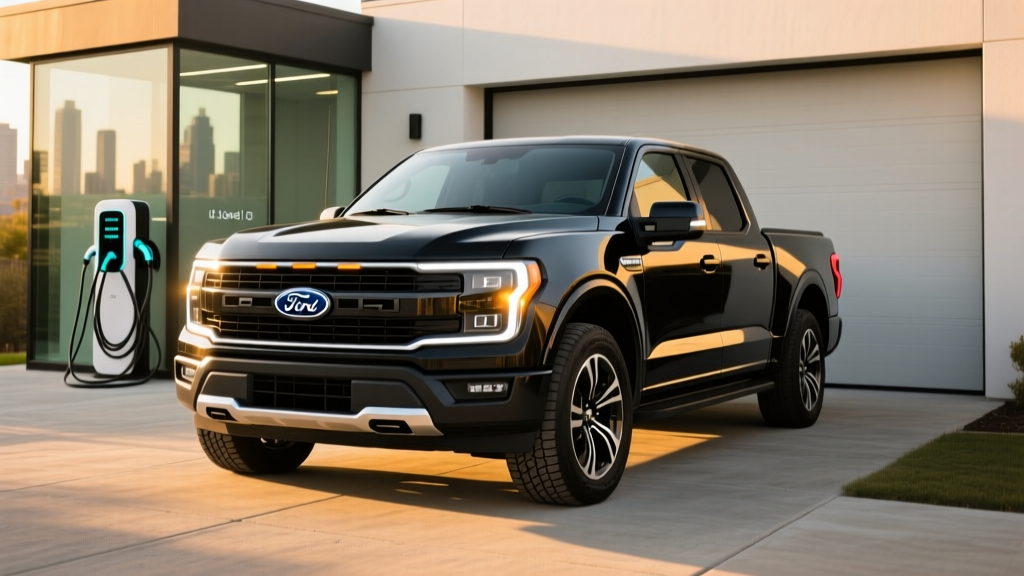
- If you tow regularly (5,000+ lbs) → PHEV or HEV are more practical. Towing with a BEV like the Ford F-150 Lightning cuts range by 40–55%, turning a 320-mile truck into a 150-mile truck under load.
- If you want the lowest total cost of ownership and qualify for the tax credit → BEV wins on 5-year math for most drivers covering 10,000–15,000 miles annually with home charging.
What First-Time EV Buyers Must Know Before Signing
- Get an insurance quote before you buy. EV insurance premiums run 20–35% higher than equivalent gas vehicles. The difference can be $400–$900/year depending on the model and your driving record.
- Test the charging situation at your home. Check your electrical panel amperage (100A vs 200A), measure the distance from the panel to your parking spot, and get at least two electrician quotes before committing to a vehicle.
- Download charging apps before you buy. PlugShare, ChargePoint, EVgo, and Electrify America apps show you exactly which chargers are near your home, workplace, and common routes. If your area has sparse DC fast-charging coverage, factor that into your powertrain decision.
- Understand the connector situation. As of 2026, the NACS (Tesla-style) connector has become the dominant standard, with most automakers adopting it. CCS1 is still present on many 2024–2025 models and public chargers. CHAdeMO is effectively discontinued. Adapters are available but add cost and friction.
- Check battery chemistry. LFP (lithium iron phosphate) batteries — used in base-model Tesla Model 3 and some 2026 Hyundai/Kia trims — can be charged to 100% daily without degradation concerns and offer longer cycle life, but sacrifice 10–15% energy density (less range for the same pack size) and perform worse in extreme cold. NMC/NCA packs offer more range but should typically be charged to 80% for daily use.
- Read the battery warranty carefully. Federal law mandates a minimum 8-year/100,000-mile warranty on EV batteries, but the capacity-retention threshold varies: most manufacturers guarantee ≥70% capacity, while some guarantee only ≥65%. This matters if you plan to keep the vehicle past 100,000 miles.
Frequently Asked Questions
How long does a 2026 EV battery actually last?
Based on data from vehicles now reaching 150,000+ miles, modern lithium-ion packs typically retain 80–88% of original capacity at 100,000 miles and 72–82% at 150,000 miles. LFP chemistry packs show slower degradation curves. Battery replacement is rarely needed during the 8-year/100,000-mile warranty period, but if required, costs range from $8,000 for a compact sedan pack to $18,000+ for a large SUV or truck pack.
Is a 2026 EV cheaper than a gas car over 5 years?
For most drivers with home charging access who drive 10,000–15,000 miles per year and qualify for the federal tax credit, yes — a mainstream BEV breaks even or saves $1,000–$4,000 over five years compared to a comparable gas vehicle, primarily through fuel and maintenance savings. Without the tax credit or without home charging, the math often favors a hybrid.
Can I charge a 2026 EV on a regular 120V outlet?
Yes, but slowly. Level 1 charging at 120V adds roughly 3–5 miles of range per hour. For a PHEV with a 35-mile battery, an overnight charge is sufficient. For a BEV with a 300-mile battery, a full Level 1 charge takes 60–80 hours — impractical for daily use. Level 1 works as a supplement or for low-mileage drivers who can top up over multiple nights.
What happens if I run out of charge on the road?
Unlike a gas car where a tow to the nearest station gets you going in 10 minutes, a depleted EV requires either a flatbed tow to a charger or a mobile charging service (available in some metro areas). Plan road trips with 15–20% range buffer and use route-planning apps. Modern EV navigation systems automatically route through chargers and precondition the battery for faster charging upon arrival.
Do EVs hold their resale value?
EV resale values experienced significant turbulence in 2023–2024 due to aggressive price cuts and rapid model turnover. As of 2026, depreciation has stabilized for popular models from Tesla, Hyundai, and Toyota, but remains steeper than segment-leading gas vehicles. Expect 40–55% depreciation over 5 years for mainstream BEVs versus 35–45% for top-selling gas sedans and SUVs. Leasing can mitigate this risk.