The Quick Answer: Is the 2026 Electric Escalade Worth It?
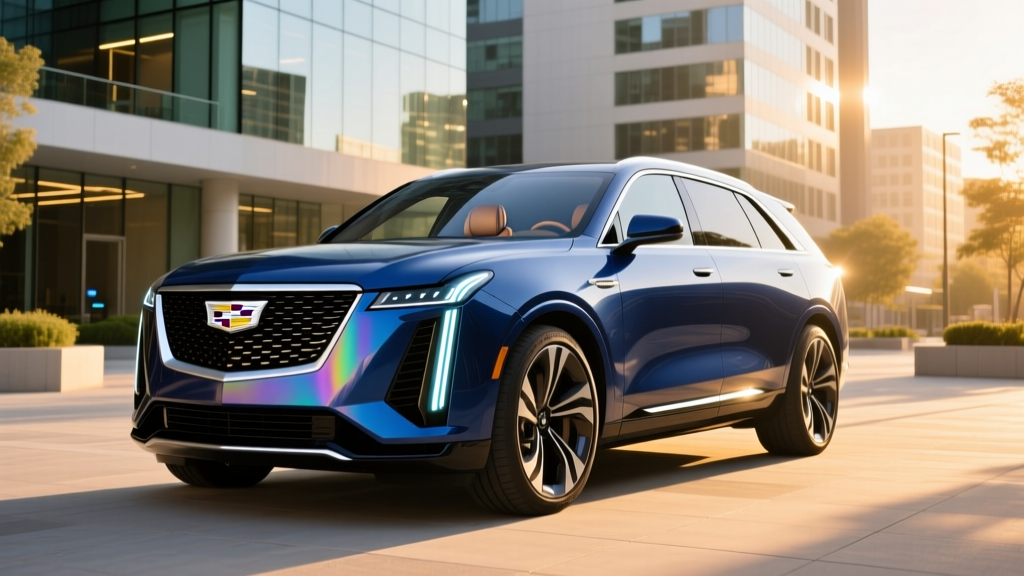
The 2026 Cadillac Escalade IQ is GM's all-electric flagship SUV, built on the Ultium platform with a massive 200+ kWh battery delivering an EPA-estimated 460 miles of range (rear-wheel-drive variant) and up to 750 horsepower in AWD trims. Pricing starts at approximately $129,990 before destination, placing it well above the $80,000 MSRP cap for the federal §30D tax credit — meaning no $7,500 incentive applies. Compared to the gas Escalade, the IQ eliminates fuel stops and reduces maintenance costs, but demands a significant upfront premium and reliable Level 2 home charging to make ownership practical. If you have home charging access, drive under 400 miles between stops, and want a silent, torque-rich luxury hauler, the IQ delivers. If you frequently tow heavy loads or road-trip through charging deserts, the gas Escalade remains the safer bet.
2026 Escalade IQ: Core Specifications
Cadillac positions the Escalade IQ as a no-compromise electric luxury SUV. Here are the numbers that matter for purchase and ownership decisions.
| Specification | Escalade IQ Luxury (RWD) | Escalade IQ Sport AWD |
|---|---|---|
| EPA Range (est.) | 460 miles | 430 miles |
| Battery Capacity (usable) | ~200 kWh (NMC, Ultium) | ~200 kWh (NMC, Ultium) |
| Horsepower | 680 HP | 750 HP |
| 0–60 mph | ~4.5 sec | ~3.8 sec |
| Peak DC Fast Charge | 350 kW | 350 kW |
| 10–80% DC Charge Time | ~32 min (est.) | ~32 min (est.) |
| Level 2 Charge Rate | 19.2 kW (AC) | 19.2 kW (AC) |
| Connector | NACS (native Tesla Supercharger access) | NACS (native) |
| Towing Capacity | 8,000 lbs (est.) | 8,000 lbs (est.) |
| Base MSRP | $129,990 | $149,990 |
| Federal Tax Credit (§30D) | Not eligible (MSRP cap $80K) | Not eligible (MSRP cap $80K) |
| Battery/Powertrain Warranty | 8 yr / 100,000 mi | 8 yr / 100,000 mi |
Real-World Range Reality: The EPA-estimated 460 miles applies to the RWD variant under mixed driving. Expect ~370–400 miles in real-world highway driving at 70–75 mph, and potentially ~320–350 miles in sub-freezing temperatures (EV batteries lose 15–30% range in cold weather due to increased internal resistance and cabin heating demands). The AWD Sport variant will see slightly lower real-world figures. On the plus side, 350 kW DC fast charging with the NACS connector means access to Tesla Supercharger V4 stalls — adding roughly 200 miles in about 15 minutes when the battery is preconditioned.
Escalade IQ vs. Gas Escalade: Cost and Capability Comparison
The most common buyer question: does going electric in a full-size luxury SUV actually save money or add convenience? Let's compare the 2026 Escalade IQ against the current gas-powered Escalade (6.2L V8, 420 HP) over a 5-year ownership period.
| Factor | 2026 Escalade IQ (Electric) | 2025 Escalade Premium Luxury (Gas V8) |
|---|---|---|
| Starting MSRP | $129,990 | $105,395 |
| Federal Tax Credit | $0 (exceeds $80K MSRP cap) | $0 |
| Fuel/Energy Cost (15K mi/yr) | ~$1,050/yr (home charging at $0.14/kWh) | ~$3,600/yr ($3.80/gal, 16 MPG combined) |
| 5-Year Fuel/Energy Total | ~$5,250 | ~$18,000 |
| Annual Maintenance | ~$300/yr (no oil, fewer moving parts) | ~$900/yr (oil, filters, spark plugs, brakes) |
| 5-Year Maintenance Total | ~$1,500 | ~$4,500 |
| Insurance (est. annual) | ~$3,800/yr | ~$3,200/yr |
| 5-Year Total Operating Cost | ~$25,750 | ~$38,500 |
| Estimated Depreciation (5 yr) | ~$65,000 (50%) | ~$52,000 (49%) |
| 5-Year Total Cost of Ownership | ~$160,740 | ~$148,395 |
The verdict: The Escalade IQ saves roughly $2,550/year in fuel and maintenance combined, but the $24,595 higher purchase price and steeper depreciation mean it does not break even over five years. Buyers choosing the IQ are paying a premium for the driving experience — silent acceleration, instant torque, zero tailpipe emissions, and the latest tech — not for financial savings. If pure economics drive your decision, the gas Escalade wins on TCO at this price point. Source: fueleconomy.gov for gas Escalade MPG data; electricity costs based on EIA national residential averages.
Charging the Escalade IQ: What You Need at Home
A 200+ kWh battery is enormous. Charging it is the single most important ownership variable, and you cannot rely on a standard 120V outlet.
| Charging Level | Power | Miles Added Per Hour | Full Charge Time (0–100%) |
|---|---|---|---|
| Level 1 (120V household) | 1.4 kW | ~3 mi/hr | ~140+ hours (impractical) |
| Level 2 (240V, 48A circuit) | 11.5 kW | ~25 mi/hr | ~18 hours |
| Level 2 (240V, 80A circuit) | 19.2 kW | ~42 mi/hr | ~11 hours |
| DC Fast Charge (350 kW peak) | 350 kW | ~800+ mi/hr (peak) | 10–80% in ~32 min |
Home charging recommendation: Install a hardwired Level 2 charger on a dedicated 80-amp circuit to take full advantage of the Escalade IQ's 19.2 kW onboard charger. This is the only practical way to wake up to a full battery daily. Expect $1,500–$3,500 for a professional Level 2 installation (charger unit + electrician + permit), or $4,000–$8,000+ if your home's electrical panel needs an upgrade from 100A to 200A service.
Public charging reality: With native NACS, the Escalade IQ accesses Tesla Supercharger V4 stalls (which support up to 350 kW for non-Tesla vehicles) as well as Electrify America, EVgo, and other networks via adapters. However, a 200 kWh battery means even at 350 kW peak, the charge curve tapers significantly above 80% State of Charge. Plan road-trip stops around 10–80% charges (~32 minutes) rather than attempting full charges, which can take 60+ minutes due to taper.
Real-World Ownership: Who Should Buy the Escalade IQ?
Decision Framework: Is the Escalade IQ Right for You?
Choose the Escalade IQ if:
- You have a garage or dedicated parking with access to a 240V circuit for Level 2 home charging
- Your daily driving is under 200 miles round-trip (covers most commutes with massive buffer)
- You value silent, vibration-free luxury and instant torque over traditional V8 sound
- You live in a region with reliable public DC fast-charging infrastructure (urban/suburban corridors)
- You want the latest in GM's Super Cruise hands-free driving (Level 2 ADAS — driver must remain attentive)
- Environmental impact matters to you, and your local grid has meaningful renewable energy share
Stick with the gas Escalade if:
- You lack reliable home charging access (apartment/condo without EV infrastructure)
- You regularly tow over 7,000 lbs on long trips (towing cuts EV range by 30–50%)
- You frequently drive in remote areas with sparse charging infrastructure
- The $25,000+ price premium over the gas model doesn't fit your budget
- You live in extreme cold climates (below 0°F regularly) and cannot garage the vehicle
Climate and Driving Pattern Considerations
The Escalade IQ's Ultium battery uses NMC (nickel-manganese-cobalt) chemistry, which offers high energy density but is more sensitive to cold-weather performance loss than LFP chemistry. In testing, large NMC-pack EVs typically lose 20–30% of range at 20°F compared to EPA estimates, primarily from cabin heating and increased battery impedance. The IQ includes a heat pump and battery preconditioning system to mitigate this, but buyers in Minnesota, Montana, or New England should plan around ~320 miles of usable winter range rather than the 460-mile sticker.
For highway-heavy drivers, aerodynamic drag at 75+ mph reduces efficiency in any EV. Expect real-world highway range of ~370–400 miles in the RWD variant during summer months. City and suburban driving with regenerative braking will actually exceed EPA estimates in some conditions.
Common Misconceptions About the Electric Escalade
| Myth | Fact |
|---|---|
| "The battery will need replacing in a few years and cost $30,000." | GM's Ultium battery warranty covers 8 years/100,000 miles against degradation below 70% capacity. Modern NMC packs are projected to retain 85–90% capacity at 150,000 miles based on degradation data from similar GM Ultium vehicles. Full replacement, if ever needed, would likely cost $18,000–$25,000 but is rare within the vehicle's useful life. |
| "It qualifies for the $7,500 federal tax credit." | It does not. Under current IRS §30D rules, SUVs must have an MSRP at or below $80,000 to qualify. The Escalade IQ starts at $129,990 — well above the cap. No federal purchase incentive applies. Check IRS.gov for current rules and any state-level incentives. |
| "It can charge at 350 kW the entire session." | No EV sustains peak charge rate. The 350 kW figure is a peak achievable between ~10–40% State of Charge under ideal thermal conditions. Above 80%, charging slows dramatically to protect battery health. A realistic 10–80% session takes ~32 minutes, with average power closer to 200–220 kW. |
| "Electric means zero maintenance." | EVs eliminate oil changes, spark plugs, and transmission fluid, but still require tire rotations (EVs wear tires faster due to weight and torque), brake fluid checks, cabin air filters, coolant top-offs, and windshield washer fluid. Budget ~$300/year, not zero. |
| "Super Cruise means it drives itself." | GM's Super Cruise is a Level 2 driver-assistance system per SAE classification. It handles steering, acceleration, and braking on mapped highways, but the driver must remain attentive and ready to take over at any moment. It is not autonomous driving. |
First-Time EV Buyer Checklist for the Escalade IQ
If this is your first electric vehicle, here's what to prepare before taking delivery:
- Confirm home charging feasibility: Have a licensed electrician assess your panel capacity. A 200 kWh battery demands Level 2 charging — budget for a potential panel upgrade if your home has 100A service.
- Install your Level 2 charger before delivery: Lead times for electricians can be 4–8 weeks. Don't take delivery without a charging solution.
- Download and set up charging apps: Tesla (for Supercharger access via NACS), PlugShare, and your utility's time-of-use rate program. Charging during off-peak hours can cut your energy cost by 40–60%.
- Understand your electricity rate: At $0.14/kWh national average, a full charge costs roughly $28. With time-of-use rates and overnight charging, you may pay $16–$20 per full charge.
- Plan for insurance: EV insurance premiums are typically 15–25% higher than comparable gas vehicles due to higher repair costs and vehicle value. Get quotes before purchasing.
- Learn preconditioning: Use the Cadillac app to precondition the battery before DC fast charging — this warms the pack for optimal charge speed and can shave 5–10 minutes off your session.
Frequently Asked Questions
Can the 2026 Escalade IQ tow a boat or trailer?
Yes, with an estimated 8,000-lb towing capacity. However, towing significantly impacts range — expect a 30–50% reduction depending on trailer weight and aerodynamics. A 4,000-lb boat trailer could reduce range from 460 miles to roughly 250–300 miles. Plan charging stops accordingly and use DC fast chargers along your route.
How does the Escalade IQ compare to the Tesla Model X or Rivian R1S?
The Escalade IQ is larger, more luxurious, and more expensive than both. The Model X starts around $80,000 and qualifies for the tax credit in certain trims, but offers less interior space and a less traditional luxury experience. The Rivian R1S (starting ~$83,000) is more adventure-oriented with better off-road capability but less rear-seat luxury. The IQ competes more directly with ultra-premium options and offers Super Cruise as a differentiator for highway commuting. It also provides native NACS access to the Tesla Supercharger network without adapters.
What happens if the battery degrades significantly?
GM's Ultium battery warranty guarantees at least 70% capacity retention over 8 years or 100,000 miles (whichever comes first). Based on data from earlier Ultium-platform vehicles and industry-wide NMC degradation curves, most owners will see 85–90% capacity at 100,000 miles — meaning roughly 390–414 miles of range from the original 460. If degradation exceeds the warranty threshold, GM will repair or replace modules to restore capacity above 70%.
Is the Escalade IQ eligible for any state or local incentives?
Federal incentives are off the table due to the MSRP cap, but some states offer their own EV rebates or HOV lane access regardless of price. California's Clean Fuel Rebate, Colorado's state tax credit, and various utility company rebates may apply. These vary by jurisdiction and change frequently — check your state's energy office or AFDC.energy.gov for current programs in your area.
How long does a full home charge take overnight?
With a properly installed 80A Level 2 circuit delivering 19.2 kW, a full 0–100% charge takes approximately 11 hours. In practice, most owners arrive home with 30–50% battery remaining, meaning an overnight charge of 6–8 hours restores a full battery by morning. This is more than sufficient for daily use.