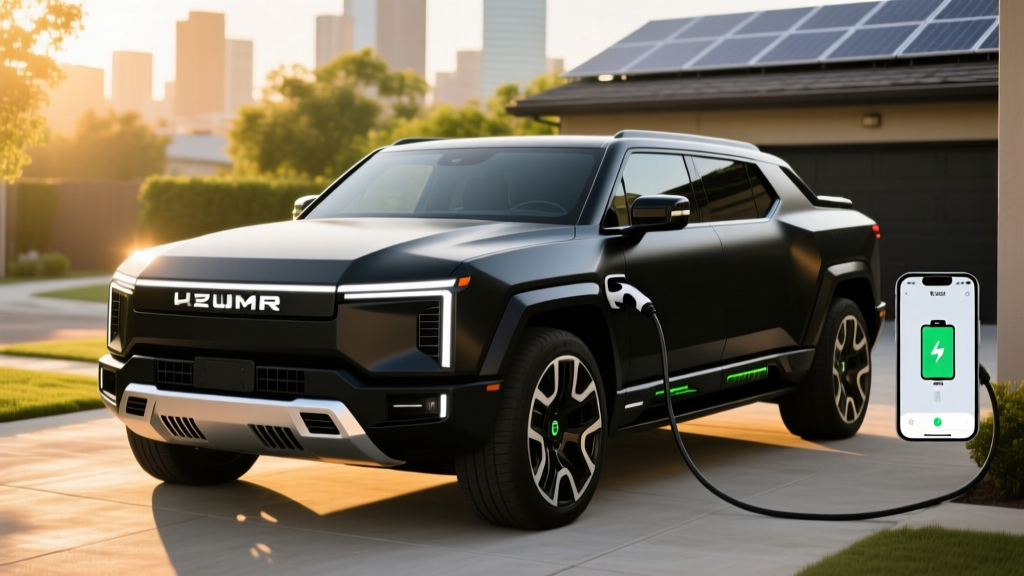
Quick Answer: Is the 2026 Electric Hummer Worth It?
The 2026 GMC Hummer EV delivers up to 314 miles of EPA-estimated range, 1,000 horsepower, and 350 kW DC fast charging — but starts at roughly $99,000 before incentives. It's a compelling electric supertruck for buyers with home Level 2 charging, towing needs, and a taste for excess. However, real-world highway range drops to approximately 240–270 miles, and the massive 212 kWh battery means long charge sessions even at peak speeds. If you're cross-shopping it against a gas Hummer H2 (which averaged 10–13 MPG), the EV saves roughly $3,000–$4,500 annually in fuel at 15,000 miles/year. If you lack home charging access or live in an apartment, the public-charging dependence makes ownership significantly harder.
2026 Hummer EV Specs at a Glance
| Specification | 2026 GMC Hummer EV Pickup (3X) | 2026 GMC Hummer EV SUV (3X) |
|---|---|---|
| EPA Range | 314 miles | 314 miles |
| Real-World Range (highway/cold) | ~240–270 miles | ~240–270 miles |
| Battery (usable) | 212 kWh (NMC) | 212 kWh (NMC) |
| Peak DC Fast Charge | 350 kW | 350 kW |
| 10–80% Charge Time | ~35 minutes | ~35 minutes |
| Level 2 Charge Rate | 11.5 kW | 11.5 kW |
| Horsepower | 1,000 hp (Watts to Freedom) | 1,000 hp (Watts to Freedom) |
| 0–60 mph | ~3.0 seconds | ~3.5 seconds |
| Towing Capacity | 7,500 lbs | 7,500 lbs |
| Starting MSRP | ~$99,995 | ~$101,395 |
| Federal Tax Credit (§30D) | Up to $7,500 (eligibility varies) | Up to $7,500 (eligibility varies) |
| Battery/Powertrain Warranty | 8 years / 100,000 miles | 8 years / 100,000 miles |
Real-World Range: What the EPA Sticker Doesn't Tell You
The 314-mile EPA figure assumes a mix of city and highway driving at moderate temperatures. The Hummer EV's sheer weight (over 9,000 lbs curb weight for the pickup) and aerodynamic profile of a brick wall mean efficiency suffers badly at sustained highway speeds.
Expect the following real-world range from the 2026 Hummer EV:
- Ideal conditions (city/mixed, 65°F): 290–310 miles
- Highway cruise (75 mph, flat terrain): 250–270 miles
- Cold weather (20°F, heater on): 200–240 miles (25–35% reduction)
- Towing a 5,000-lb trailer: 140–180 miles
The 212 kWh Ultium battery (NMC chemistry) is one of the largest in any production vehicle. That capacity gives it range despite poor efficiency (~47 MPGe combined per fueleconomy.gov), but it also means charging from empty takes a long time even at high power.
Charging the Hummer EV: Home and Public Realities
Charging a 212 kWh battery is fundamentally different from charging a 75 kWh Tesla Model Y. Here's what the numbers look like across charging levels:
| Charging Level | Power (kW) | Miles Added per Hour | 0–100% Time (Approx.) |
|---|---|---|---|
| Level 1 (120V household) | ~1.4 kW | ~2 miles/hr | ~150 hours (impractical) |
| Level 2 (240V, 48A home charger) | 11.5 kW | ~17 miles/hr | ~18–20 hours |
| DC Fast (350 kW peak) | 350 kW (peak) | ~52 miles/10 min | 10–80% in ~35 min |
Charging curve reality: The Hummer EV does not sustain 350 kW for the entire session. Peak rate is achievable roughly between 10–30% State of Charge (SoC), after which the curve tapers. Expect an average rate of ~200–250 kW through the 10–80% window. Above 80%, charging slows dramatically to protect the battery — the final 20% can take as long as the first 70%.
Home charging is nearly mandatory. Level 1 charging adds only 2 miles per hour — useless for a vehicle that can consume 2+ kWh per mile. A Level 2 home installation (240V, 60A circuit, 48A continuous) is essential. Installation typically costs $1,200–$3,000 depending on panel capacity and run length. If your home has a 100A electrical panel, you may need a $2,000–$4,000 panel upgrade to 200A to support the charger alongside existing loads.
Cost Breakdown: Hummer EV vs. Gas Hummer H2
The original Hummer H2 (2003–2009) returned roughly 10–13 MPG combined. Let's compare the 5-year operating costs of the 2026 Hummer EV against a hypothetical gas truck achieving 14 MPG combined at $3.50/gallon.
| Cost Category (5 Years / 75,000 Miles) | 2026 Hummer EV | Gas Truck (14 MPG) |
|---|---|---|
| Purchase Price (base MSRP) | $99,995 | $65,000 (est. comparable) |
| Federal Tax Credit (§30D) | Up to –$7,500* | $0 |
| Fuel / Electricity | $5,400 (home charging at $0.16/kWh) | $18,750 |
| Maintenance | $2,500 (tires, cabin filter, fluid top-offs) | $5,500 (oil, filters, brakes, transmission) |
| Insurance (est. annual avg) | $15,000 ($3,000/yr) | $9,000 ($1,800/yr) |
| Estimated 5-Year Total Cost | ~$115,395 | ~$98,250 |
*§30D federal tax credit eligibility depends on buyer income caps ($150K single / $300K joint), MSRP caps (trucks: $80K — the Hummer EV exceeds this, making the NEW vehicle credit unlikely; however, a point-of-sale transfer or used-EV credit under §25E may apply in specific scenarios). Always verify current-year rules at IRS.gov and consult a tax professional.
Key takeaway: The Hummer EV saves approximately $13,000–$14,000 in fuel and maintenance over 5 years, but the $35,000+ purchase price premium and higher insurance premiums mean the total cost of ownership remains higher than a comparable gas truck. You're paying for performance, presence, and technology — not pure economics.
Myths vs. Facts: Common Hummer EV Misconceptions
| Myth | Fact |
|---|---|
| "It gets 314 miles no matter how you drive it." | 314 miles is the EPA combined estimate. Highway driving at 75+ mph yields ~250–270 miles; cold weather drops it further. |
| "It charges as fast as a Tesla." | The Hummer peaks at 350 kW, but its massive 212 kWh battery means total charge time is longer than smaller-battery EVs even at similar peak rates. |
| "The $7,500 tax credit applies automatically." | The Hummer EV's MSRP exceeds the §30D truck cap of $80,000. Federal new-vehicle credit eligibility is unlikely; state incentives may apply. |
| "It's self-driving with Super Cruise." | Super Cruise is an SAE Level 2 driver-assist system. You must remain attentive and keep hands available. It works only on mapped divided highways. |
| "I can charge it on a regular outlet." | Level 1 (120V) adds ~2 miles/hour. A full charge would take over 6 days. Level 2 home installation is effectively required. |
| "The battery will need replacing in 5 years." | GM warrants the Ultium battery for 8 years/100,000 miles against degradation below 60% capacity. Real-world data suggests NMC packs retain ~85–90% capacity at 100K miles. |
Super Cruise and Driver Assistance: What It Can and Cannot Do
SAE Level 2 — NOT Self-Driving. The 2026 Hummer EV's Super Cruise is a hands-free-capable Level 2 driver-assist system. It controls steering, acceleration, and braking on pre-mapped limited-access highways (~400,000+ miles of compatible roads in North America). The driver must remain alert, and the system monitors attention via a steering-column camera. It does not handle construction zones, unmapped roads, or complex urban environments. This is fundamentally different from a Level 4 robotaxi like Waymo, which operates without a human driver in defined service areas.
Super Cruise limitations to know before you buy:
- Does not work on surface streets, rural roads, or unmapped highways
- Requires an active OnStar subscription after the initial trial period (~$25/month)
- Will disengage in heavy rain, snow, or when lane markings are obscured
- Does not automatically navigate interchanges or roundabouts
- Driver remains legally responsible for the vehicle at all times
Who Should (and Shouldn't) Buy the 2026 Hummer EV
Buy the 2026 Hummer EV if:
- You have access to Level 2 home charging (garage or driveway with a 240V circuit)
- You want a full-size electric truck with genuine off-road capability (Extract Mode, 4-Wheel Steer, underbody armor)
- You regularly drive on Super Cruise-compatible highways and value hands-free cruising
- You're upgrading from a gas supertruck (H2, Raptor, TRX) and want dramatically lower fuel costs
- You can absorb the $100K+ purchase price without financial strain
Skip the 2026 Hummer EV if:
- You live in an apartment or lack reliable home charging access
- Your daily commute is under 30 miles and you don't need a full-size truck (a smaller EV like the Ford F-150 Lightning or Rivian R1T costs $40K–$70K less)
- You frequently tow heavy trailers over long distances (towing cuts range to 140–180 miles)
- You live in a region with sparse DC fast-charging infrastructure (the 212 kWh battery makes public-only charging painfully slow)
- You're buying primarily for the federal tax credit — the MSRP cap likely disqualifies it
First-Time EV Buyer Checklist for the Hummer EV
If the 2026 Hummer EV is your first electric vehicle, here's what you need to prepare:
- Electrical panel assessment: Hire a licensed electrician to evaluate whether your panel can support a 60A dedicated circuit. Budget $1,200–$3,000 for installation, more if a panel upgrade is needed.
- Understand kW vs. kWh: The Hummer has a 212 kWh battery (energy capacity, like a gas tank size). It charges at up to 350 kW (power, like pump flow rate). These are not interchangeable.
- Plan for cold-weather range loss: If you live in the northern U.S., budget 25–35% range reduction in winter. Preconditioning the battery while plugged in helps preserve range and improves charging speed.
- Download charging apps before delivery: Install EVgo, Electrify America, and ChargePoint apps. The Hummer EV uses the CCS1 connector (with NACS adapter availability expanding for Tesla Supercharger access in 2025–2026).
- Insurance quotes: Get quotes before purchase. High-performance EVs with $100K+ MSRPs typically carry premiums 40–70% higher than average vehicles.
- Tire budget: The Hummer EV wears through its 35-inch tires faster than a gas truck due to instant torque and extreme weight. Budget $2,000–$3,000 for a replacement set every 25,000–35,000 miles.
Frequently Asked Questions
Does the 2026 Hummer EV qualify for the $7,500 federal tax credit?
Likely not under the new-vehicle §30D credit. The IRS caps eligible trucks at $80,000 MSRP, and the Hummer EV starts near $99,995. However, some buyers may qualify for state-level incentives, and a used Hummer EV (purchased from a dealer for $25,000+ below original MSRP) could potentially qualify for the §25E used clean vehicle credit of up to $4,000. Always check current rules at IRS.gov and consult a tax professional.
How long does it take to charge the Hummer EV at home?
On a Level 2 home charger (11.5 kW), a full 0–100% charge takes approximately 18–20 hours. In practice, most owners charge from 20–80% overnight (roughly 10–12 hours), which is sufficient for daily use. The enormous 212 kWh battery makes this one of the slowest home-charging EVs on the market.
What's the real cost per mile to drive the Hummer EV?
At the U.S. average residential electricity rate of ~$0.16/kWh and the Hummer's consumption of ~47 kWh/100 miles (approximately 2.1 kWh/mile), your cost is roughly $0.34 per mile when charging at home. Public DC fast charging at $0.40–$0.50/kWh pushes that to $0.84–$1.05 per mile. Compare this to a 14 MPG gas truck at $3.50/gallon: $0.25/mile. Home-charging the Hummer costs slightly more per mile than fueling an efficient gas truck, but dramatically less than a gas Hummer H2 at $0.27–$0.35/mile.
Can the Hummer EV tow a boat or camper?
Yes, with a 7,500-lb towing capacity. However, towing severely impacts range. Expect 140–180 miles of range when towing a 5,000-lb load at highway speeds. Plan charging stops accordingly — you'll need DC fast chargers every 120–150 miles on road trips with a trailer.
Is the Hummer EV reliable?
Long-term reliability data for the Hummer EV is still limited (the model launched for the 2022 model year). GM's Ultium platform is shared with the Chevrolet Silverado EV and Cadillac Escalade IQ. Early owner reports cite software glitches and build-quality inconsistencies. The 8-year/100,000-mile battery and powertrain warranty provides a safety net, but out-of-warranty repairs on a vehicle this complex could be expensive. Check NHTSA.gov for any active recalls before purchasing.
Does Super Cruise require a subscription?
The Hummer EV comes with an initial Super Cruise trial period (typically 3 years). After that, continued use requires an active OnStar Super Cruise plan, currently around $25/month or $250/year. Factor this into your ownership budget.