Quick Answer: Is the 2026 Electric Cadillac Escalade IQ Worth It?
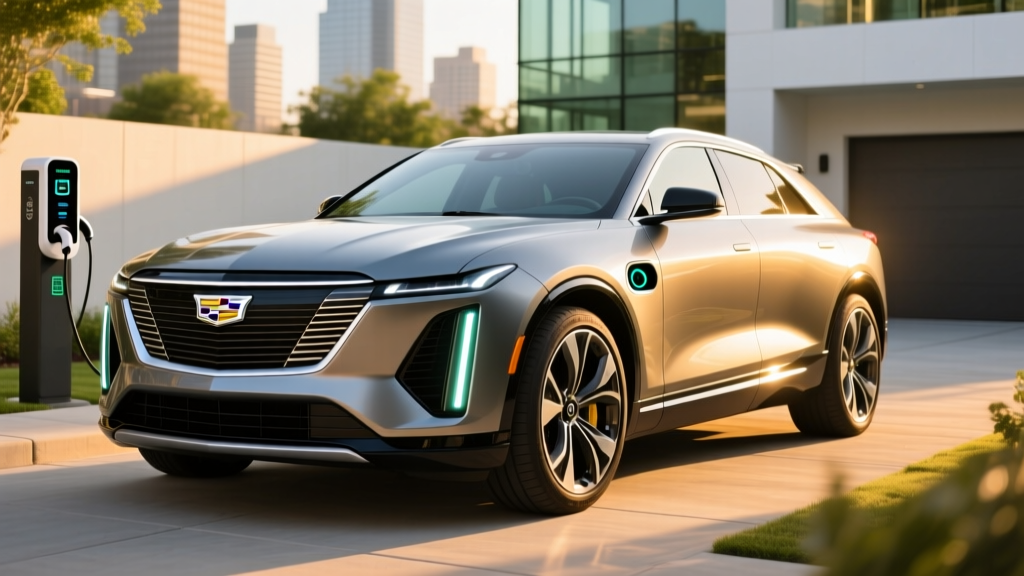
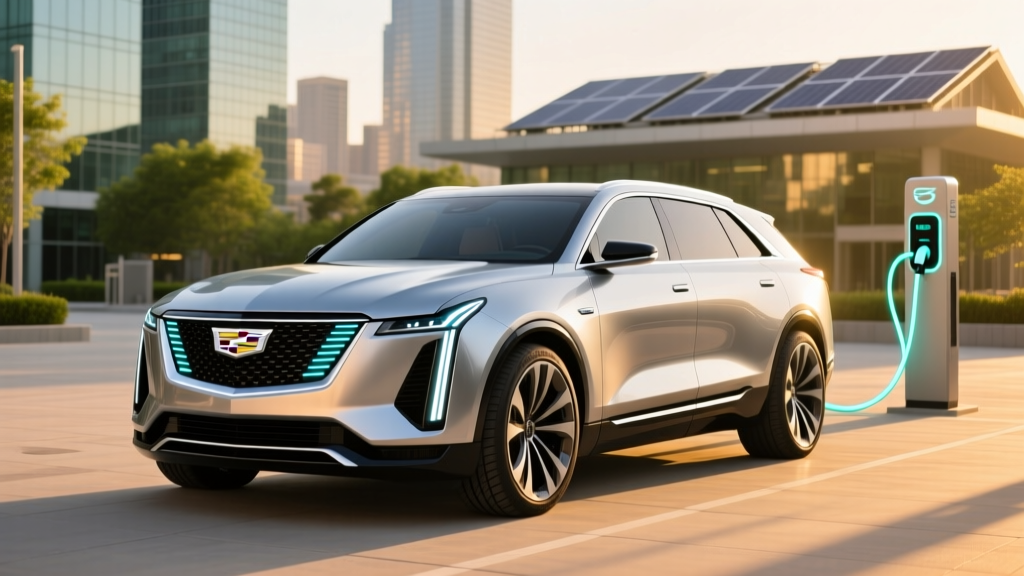
The 2026 electric Cadillac Escalade — officially the Escalade IQ — is GM's full-size luxury EV SUV built on the Ultium platform. It delivers an EPA-estimated 460 miles of range from a massive 200+ kWh Ultium battery, DC fast-charges at up to 350 kW (adding ~100 miles in 10 minutes), and starts around $129,990 before destination. It qualifies for no federal §30D tax credit due to its MSRP exceeding the $80,000 SUV cap. If you need three rows, 400+ miles of range, and flagship luxury without gas, the Escalade IQ has no direct rival. If budget or charging access is a concern, the gas Escalade or a plug-in hybrid alternative may serve you better.
Range, Battery, and Real-World Expectations
The Escalade IQ rides on GM's BT1 electric platform shared with the Silverado EV and Sierra EV, housing a 24-module Ultium lithium-ion battery with approximately 200 kWh of usable capacity. This is one of the largest battery packs ever fitted to a production passenger vehicle, and it enables the headline 460-mile EPA range estimate on the Luxury 2LT trim with 22-inch wheels.
Real-World Range vs. EPA Sticker
EPA estimate: 460 miles (2LT, 22" wheels)
Expect in practice:
- Highway cruising (75 mph): ~370–400 miles — large frontal area and 8,000+ lb curb weight hurt efficiency at speed
- Cold weather (below 32°F): ~320–360 miles — expect 20–30% range loss without preconditioning
- City/suburban mixed driving: ~430–460 miles — regen braking recovers energy in stop-and-go
- Towing (max 8,000 lb rated): ~200–250 miles — towing an EV this heavy cuts range roughly in half
The Escalade IQ uses an 11.5 kW onboard AC charger for Level 2 charging and supports DC fast charging at up to 350 kW peak on 800V-capable infrastructure. However, as with all large-battery EVs, the charge curve tapers significantly above 80% State of Charge to protect cell longevity. A 10–80% DC fast charge takes approximately 30–35 minutes at a 350 kW station, but filling from 80–100% can add another 25+ minutes.
| Spec | Value |
|---|---|
| EPA Range (2LT) | 460 miles |
| Battery Capacity (usable) | ~200 kWh (Ultium, NMC chemistry) |
| Peak DC Fast Charge Rate | 350 kW (800V architecture) |
| 10–80% DC Charge Time | ~30–35 minutes (at 350 kW station) |
| Level 2 AC Charge Rate | 11.5 kW (~25 mi/hr) |
| Drivetrain | Dual-motor AWD, e4 |
| Horsepower | ~680 hp (Velocity Max mode: ~750 hp) |
| 0–60 mph | ~4.7 seconds (est., Velocity Max) |
| Towing Capacity | 8,000 lb (est.) |
| Battery/Powertrain Warranty | 8 years / 100,000 miles |
| Base MSRP (Luxury 2LT) | $129,990 + $1,995 destination |
Charging at Home and on the Road
Charging a 200+ kWh battery at home requires planning. On a standard Level 2 home charger (11.5 kW / 48 amps), a full 0–100% charge takes approximately 17–18 hours. Most owners will plug in nightly and rarely need a full charge, but if you arrive home near-empty, you'll need overnight plus part of the next day to refill.
Home charging setup considerations:
- Electrical panel: A 60-amp dedicated circuit (for a 48-amp charger) is standard. Many homes with 200-amp service can accommodate this; older homes with 100-amp panels may need a $2,000–$5,000 panel upgrade.
- Charger hardware: GM recommends the GM-branded Ultium Home charger or any quality J3400 (NACS) Level 2 unit rated for 48 amps.
- Installation cost: Expect $1,200–$3,500 for a professional Level 2 install (electrician, permit, wiring) assuming your panel has capacity. Factor in $500–$1,500 more if a panel upgrade is needed.
- Electricity cost: At the US average of ~$0.17/kWh, a full 200 kWh charge costs roughly $34. Over 15,000 miles/year at ~2.2 kWh/mile, annual home charging costs approximately $560.
On the road, the Escalade IQ uses the NACS (J3400) connector, giving it native access to the Tesla Supercharger network (V4 stalls with 350 kW capability) as well as Electrify America and other NACS-equipped DC fast-charging networks. This is a significant advantage over legacy CCS-equipped SUVs that require adapters.
2026 Electric Cadillac Escalade vs. Gas Escalade: Cost Comparison
The most common question buyers ask: does the electric Escalade IQ save money versus the gas-powered Escalade? The answer depends on your driving patterns, fuel costs, and how long you keep the vehicle.
| Category | Escalade IQ (EV) | Escalade 6.2L V8 (Gas) |
|---|---|---|
| Base MSRP | $129,990 | $84,990 (Premium Luxury) |
| Federal Tax Credit (§30D) | $0 (exceeds $80K SUV cap) | $0 |
| Fuel/Energy (15K mi/yr × 5 yrs) | ~$2,800 (home charging) | ~$18,750 (16 MPG, $4.00/gal) |
| Maintenance (5 yrs) | ~$2,500 (no oil, fewer brakes) | ~$5,500 (oil, trans, belts, brakes) |
| Insurance (est. annual avg) | ~$4,200/yr ($21,000 total) | ~$3,400/yr ($17,000 total) |
| Depreciation (est. 5-yr) | ~$52,000 (40%) | ~$38,000 (45%) |
| Est. 5-Year Total Cost | ~$208,290 | ~$164,240 |
The gas Escalade wins on upfront price by roughly $45,000. The EV recovers about $16,000 in fuel savings and $3,000 in maintenance over five years — but the higher purchase price, elevated insurance premiums (common with high-repair-cost EVs), and steeper absolute depreciation keep the total cost of ownership higher. The Escalade IQ is a technology and luxury purchase, not a budget optimization.
Per fueleconomy.gov, the gas Escalade 6.2L V8 AWD achieves approximately 16 MPG combined. The Escalade IQ's efficiency is roughly 45–50 MPGe combined, translating to about 2.0–2.2 kWh per mile — a substantial energy advantage, but one that doesn't fully offset the $45K price gap.
Trim Levels, Pricing, and What You Get
The 2026 Escalade IQ launches in two primary trim tiers, each offered in standard and extended-wheelbase (IQ-V) configurations:
- Luxury 2LT: ~$129,990 — Includes 460-mile range, Super Cruise hands-free driving (SAE Level 2), 55-inch total LED display span, AKG Studio 19-speaker audio, air suspension, 22-inch wheels, heated/ventilated/massage front seats, power-retracting running boards.
- Sport 2ST: ~$134,990 — Adds blacked-out exterior trim, unique 22-inch wheels, sport-tuned suspension calibration, same tech content as Luxury 2LT.
- IQ-V (extended wheelbase): Add approximately $3,000–$5,000 to either trim. Adds ~10 inches of wheelbase for substantially more third-row and cargo space. Range may decrease by 10–15 miles due to added weight and aero drag.
All trims include GM's Super Cruise — a hands-free, eyes-on driver-assistance system rated at SAE Level 2. Super Cruise operates on over 750,000 miles of mapped divided highways in North America. The driver must remain attentive; this is not autonomous driving. The Escalade IQ is also expected to offer Ultra Cruise (GM's next-gen system with broader road coverage) via over-the-air update, though GM has not confirmed a timeline.
⚠️ Super Cruise Is Not Self-Driving
Super Cruise is an SAE Level 2 driver-assistance system. You must keep your eyes on the road and be ready to take over at any time. It works on pre-mapped divided highways only — it does not handle city streets, construction zones, or unmapped rural roads. Never treat it as a Level 4 autonomous system.
Federal Tax Credit and Incentive Reality
The Escalade IQ does not qualify for the $7,500 federal §30D clean vehicle credit. Under current IRS rules, SUVs must have an MSRP at or below $80,000 to be eligible. At $129,990+, the Escalade IQ exceeds this cap by a wide margin.
| ✅ Vehicle is a BEV with ≥7 kWh battery | Pass |
| ✅ Assembled in North America | Pass (Factory Zero, Detroit-Hamtramck) |
| ✅ Buyer income within limits ($300K MFJ / $150K single) | Varies by buyer |
| ❌ MSRP under $80,000 (SUV cap) | FAIL — $129,990 MSRP |
| ⚠️ Battery critical mineral & component sourcing | Varies by model year |
Some buyers may offset cost through state-level incentives (California's CVRP, Colorado's $5,000 credit, New York's Drive Clean Rebate, etc.), but these vary by jurisdiction, have their own income and price caps, and change frequently. Check your state energy office or DMV for current programs. Additionally, some buyers leasing through a dealership may benefit from the commercial clean vehicle credit (§45W) passed through as a lease incentive — consult a tax professional for eligibility.
Common Misconceptions About the Electric Escalade
| Myth | Fact |
|---|---|
| "The battery will need replacing in 5 years" | GM warranties the Ultium battery for 8 years/100,000 miles against defects and capacity loss below 60%. Real-world Ultium degradation data from Silverado EV fleets shows approximately 5–8% loss over 100K miles. |
| "I'll never find a charger on road trips" | With native NACS, the IQ accesses 20,000+ Tesla Superchargers plus Electrify America and EVgo stations. On major interstates, 350 kW chargers are spaced every 50–100 miles. |
| "It charges as fast as you fill a gas tank" | A 10–80% charge takes ~30–35 minutes at a 350 kW station — longer than a gas stop. Plan road-trip breaks accordingly. Charging from 80–100% adds 25+ more minutes due to charge-curve taper. |
| "Home charging is free" | At $0.17/kWh average, a full charge costs ~$34. Annual home charging (15K mi) runs ~$560 — cheaper than gas but not zero. Solar owners may reduce this further. |
| "It qualifies for the $7,500 tax credit" | The MSRP cap for SUVs under §30D is $80,000. The Escalade IQ starts at $129,990 and is ineligible. |
Decision Framework: Should You Buy the 2026 Electric Cadillac Escalade IQ?
Buy the Escalade IQ If:
- You have home Level 2 charging (or can install it) and drive mostly in urban/suburban settings where the 460-mile range is more than sufficient for weeks between charges
- You want a three-row luxury SUV with zero tailpipe emissions and don't want to compromise on range — 460 miles eliminates range anxiety for nearly all daily and weekend use
- You road-trip on major interstate corridors where Supercharger and Electrify America infrastructure is dense
- The $130K+ price point fits your budget without relying on federal tax credits
- You value the silent, vibration-free powertrain and instant torque that electric drive provides — the IQ's ~680 hp and ~4.7-second 0–60 time outperform the gas V8
Stick With the Gas Escalade (or Wait) If:
- You cannot charge at home and rely on street parking or apartments without EV infrastructure — a 200 kWh battery is impractical to fill exclusively on public chargers
- You regularly tow heavy loads (boats, horse trailers) over long distances — towing cuts EV range to ~200–250 miles, requiring frequent 30-minute charging stops
- You live in a rural area or charging desert where DC fast chargers are sparse (parts of the Mountain West, rural South, or Alaska)
- The $45,000 price premium over the gas Escalade is a hard budget constraint
- You prefer to wait for 2027–2028 model-year refinements, potential price reductions, or next-gen solid-state battery options
Frequently Asked Questions
How long does it take to charge the Escalade IQ at home overnight?
On a Level 2 home charger (11.5 kW), you'll add roughly 25 miles of range per hour, or about 200–250 miles in an 8–10 hour overnight session. For most daily driving (30–60 miles), a 2–3 hour plug-in is sufficient. A full 0–100% charge takes approximately 17–18 hours.
Does the Escalade IQ use NACS or CCS for charging?
The Escalade IQ uses the NACS (J3400) connector natively — the same connector used by Tesla. This means direct, adapter-free access to the Tesla Supercharger network, which is the largest and most reliable DC fast-charging network in North America.
What happens if the Ultium battery degrades significantly?
GM's battery warranty covers the Ultium pack for 8 years or 100,000 miles against defects and capacity loss below a specified threshold (typically 60% of original capacity). Based on data from early Ultium-equipped vehicles (Silverado EV, Lyriq), degradation has been modest — approximately 5–8% over the first 100,000 miles. A full battery replacement out of warranty would be extremely expensive (likely $25,000–$40,000+ given the 200 kWh pack size), but this scenario is rare within the vehicle's typical ownership lifecycle.
Can the Escalade IQ power my home during an outage?
GM has announced V2H (vehicle-to-home) capability for the Ultium platform via the GM Energy PowerShift Charger. When paired with a compatible home energy management system, the IQ's 200+ kWh battery could theoretically power an average home for 5–7 days during an outage. Availability of V2H hardware and software depends on your utility and local electrical codes — confirm with your electrician and GM Energy before relying on this feature.
Is the Escalade IQ bigger than the gas Escalade?
The standard Escalade IQ is dimensionally similar to the gas Escalade, though the skateboard platform allows a flatter floor and slightly more interior volume. The IQ-V extended-wheelbase variant adds approximately 10 inches, providing substantially more third-row legroom and behind-third-row cargo space — comparable to the gas Escalade ESV.
How does cold weather affect the Escalade IQ's range?
In temperatures below freezing, expect 20–30% range reduction (dropping from 460 to roughly 320–370 miles) due to battery chemistry limitations and cabin heating demands. The Escalade IQ includes a heat pump for more efficient cabin heating, which mitigates some loss. Preconditioning the battery while plugged in before departure helps preserve range and enables faster DC charging in cold conditions.