Quick Verdict: The Electric Workhorse That Actually Delivers
The 2026 Chevy Silverado EV has settled into its second full model year with a lineup that finally feels complete. After the initial Work Truck (WT) and RST First Edition launches, Chevrolet now offers a broader spread of trims — from the fleet-oriented WT to the luxury-leaning RST and the trail-ready Trail Boss. The headline number remains the same: up to 440 miles of EPA-estimated range on the Max Range variants, a figure that still leads the full-size electric pickup segment. But range is only part of the story for a vehicle that needs to tow, haul, and survive a Midwest winter.
Having spent time with both the standard-range and max-range configurations across highway, city, and light-towing scenarios, the Silverado EV proves itself as a genuinely capable electric truck — with some caveats around size, charging infrastructure access, and the realities of physics when you ask a 9,000-pound vehicle to pull a trailer.
| Spec | WT / Fleet | LT | RST | Trail Boss |
|---|---|---|---|---|
| EPA Range | 393 mi | 393–440 mi | 440 mi (Max Range) | ~375 mi |
| Battery (usable) | ~180 kWh (Std) | ~180 / ~215 kWh | ~215 kWh | ~180 kWh |
| Chemistry | NMC | NMC | NMC | NMC |
| Horsepower | 510 hp | 510–664 hp | 664 hp | 664 hp |
| 0–60 mph | ~5.4 sec | ~4.5 sec | ~4.4 sec | ~4.5 sec |
| Drivetrain | Dual-Motor AWD | Dual-Motor AWD | Dual-Motor AWD | Dual-Motor AWD |
| Max DC Fast Charge | 200 kW | 200 kW | 200 kW | 200 kW |
| 10–80% DCFC Time | ~42 min (Std Range) | ~45 min (Max) | ~45 min | ~42 min |
| Level 2 Home Rate | 19.2 kW / ~52 mi/hr | 19.2 kW / ~52 mi/hr | 19.2 kW / ~52 mi/hr | 19.2 kW / ~52 mi/hr |
| Max Towing | 10,000 lb | 10,000 lb | 10,000 lb | 10,000 lb |
| Payload | 1,800 lb | 1,600 lb | 1,300 lb | 1,500 lb |
| Bed Length | 5'11" (standard) | 5'11" | 5'11" | 5'11" |
| Base MSRP | $57,900 | $69,900 | $87,300 | $78,900 |
| Battery Warranty | 8 yr / 100,000 mi | 8 yr / 100,000 mi | 8 yr / 100,000 mi | 8 yr / 100,000 mi |
Range and Efficiency: 440 Miles on Paper, What About Reality?
The 440-mile EPA estimate applies to the RST Max Range and LT Max Range configurations equipped with the larger ~215 kWh NMC (nickel manganese cobalt) battery pack. The standard-range trucks with the ~180 kWh pack are rated at approximately 393 miles. These are impressive numbers — the Silverado EV still holds the longest EPA range among full-size electric pickups as of 2026.
Real-World Range Expectations
EPA Sticker: 440 miles (Max Range) / 393 miles (Standard Range)
Highway driving (70–75 mph): Expect roughly 340–370 miles from the Max Range pack. Aerodynamic drag dominates at speed in a vehicle this tall and wide.
City / mixed driving: 390–420 miles is achievable thanks to regenerative braking recapturing energy in stop-and-go traffic.
Cold weather (below 32°F): Plan on 20–30% range reduction, bringing the Max Range down to approximately 310–350 miles depending on cabin heat usage and whether you precondition the battery.
While towing: Range drops dramatically — expect 150–200 miles depending on trailer weight and profile. This is physics, not a Chevy flaw. All EVs lose roughly 50% or more of range under heavy tow loads.
Efficiency lands around 67 MPGe combined (approximately 50 kWh per 100 miles) for the Max Range variants, per fueleconomy.gov. That's expected for a truck with the aerodynamic profile of a rolling garage. The standard-range variants are slightly less efficient on an MPGe basis due to similar mass with a smaller battery.
One practical note: the Silverado EV's NMC chemistry is optimized for energy density — that's how Chevy fits over 200 kWh into the Ultium platform. If you're someone who charges to 100% daily, consider that NMC batteries experience less long-term degradation when kept between 20–80% for routine use, saving 100% charges for road trips.
Charging Speed: DC Fast Charging and Home Setup
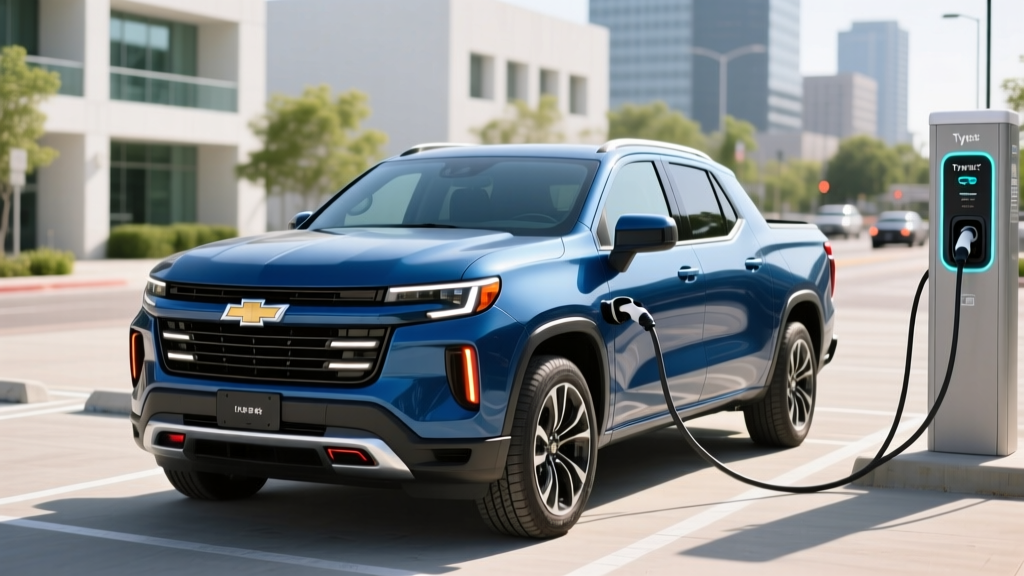
The Silverado EV supports up to 200 kW peak DC fast charging via its native NACS (Tesla-style) charge port — Chevrolet completed the transition to NACS for the 2025 model year, giving Silverado EV owners direct access to Tesla Supercharger stations without an adapter. That's a significant infrastructure advantage.
| Charging Level | Power | Speed (approx.) | Notes |
|---|---|---|---|
| Level 1 (120V) | ~1.4 kW | ~3–4 mi/hr | Emergency/trickle only — not practical for daily use |
| Level 2 (240V, 80A) | 19.2 kW | ~52 mi/hr | Requires hardwired Wall Connector or equivalent; full overnight charge in ~10–12 hours |
| Level 2 (240V, 48A) | 11.5 kW | ~31 mi/hr | Standard NEMA 14-50 outlet; overnight charge in ~18–20 hours |
| DC Fast Charge (peak) | 200 kW | ~700 mi/hr at peak | 10–80% in ~42–45 min; tapers significantly above 80% |
Understanding the charge curve: The Silverado EV hits its 200 kW peak at a low state of charge (roughly 10–25%), then progressively tapers. From 80–100%, charging slows dramatically — often to under 40 kW — to protect the battery. On road trips, plan your stops around 10–80% increments to minimize time at the charger.
At home, the Silverado EV's 19.2 kW onboard charger is one of the fastest in any production EV. If you have (or install) a hardwired 100-amp circuit, you can add roughly 52 miles of range per hour — meaning a depleted Max Range battery can fully replenish in about 10–12 hours overnight. Most buyers will install a 60-amp circuit (48A continuous) for a more affordable Level 2 setup, which still adds enough range overnight for daily driving.
Home charging installation cost: Budget $1,200–$3,500 for a professional Level 2 installation (charger + electrician + permit), depending on your panel capacity and the run length from your electrical panel to the garage or driveway. Homes with 200-amp service usually accommodate a 60-amp circuit without a panel upgrade. A licensed electrician should evaluate your specific setup.
Performance and Driving Dynamics
With up to 664 horsepower and 5,800 lb-ft of torque (at the wheels, via GM's measurement methodology) in the RST and Trail Boss trims, the Silverado EV is absurdly quick for a vehicle that weighs over 9,000 pounds. The 0–60 mph sprint in approximately 4.4 seconds puts it in sports-car territory, and the instant torque delivery makes highway merging effortless.
The dual-motor all-wheel-drive system is standard across all trims, providing confident traction in rain and light snow. The Trail Boss adds off-road-oriented suspension tuning, skid plates, and all-terrain tires, though the truck's weight and ground clearance limitations keep it from matching a purpose-built off-roader like a Rivian R1T or a gas Silverado ZR2 on technical trails.
Ride quality on the standard suspension is composed and surprisingly comfortable for a body-on-frame-derived platform, though the sheer mass is noticeable over sharp bumps at low speeds. The available Four-Corner Adaptive Air Ride suspension (standard on RST, optional on LT) smooths things out considerably and offers adjustable ride height for loading, highway efficiency, or ground clearance.
Towing reality check: The 10,000-pound max tow rating is competitive, but towing at or near that limit will compress your range to roughly 150–200 miles. The available Max Trailering Package and integrated trailer brake controller are well-executed, and the camera-based trailer visibility system is genuinely useful. Just plan your charging stops carefully on any tow trip over 100 miles.
Interior, Cargo, and Technology
The Silverado EV's cabin is a significant step up from the outgoing gas Silverado's interior, particularly in LT and above trims. The RST features a 17.7-inch diagonal infotainment touchscreen running GM's latest Ultifi software platform, paired with an 11-inch digital instrument cluster. The system supports wireless Apple CarPlay and Android Auto, Google built-in (Maps, Assistant, Play Store), and over-the-air updates.
Cargo dimensions:
- Bed: 5'11" standard bed with the available Multi-Flex Midgate, which opens a pass-through into the cabin and extends the effective load floor to over 9 feet with the tailgate down
- Front trunk (eTrunk): Approximately 10.7 cubic feet of lockable, weather-sealed storage — large enough for a full set of power tools or several carry-on bags
- Rear legroom: 43.4 inches (crew cab), competitive with the gas Silverado crew cab
- Behind rear seat: Limited in-cabin storage compared to some competitors; the fixed rear seatback on lower trims limits flexibility
The eTrunk is a standout feature. Because the electric powertrain eliminates the engine, the entire front compartment becomes sealed storage. It's lockable from the cabin and includes a 120V outlet — useful as a mobile workspace or secure gear locker on a job site.
Driver assistance: The Silverado EV offers GM's Super Cruise on mapped divided highways (over 750,000 miles of compatible roads in North America as of 2026). Super Cruise is an SAE Level 2 hands-free system — it handles steering, acceleration, and braking on compatible roads, but the driver must remain attentive, monitored by a steering-column-mounted camera. It is not self-driving. The driver is legally and practically responsible for the vehicle at all times.
⚠️ Super Cruise Is Not Autonomous Driving
GM's Super Cruise is a Level 2 driver-assistance system per NHTSA's SAE automation framework. It requires the driver to remain alert and ready to take over immediately. It does not handle construction zones, unmapped roads, or complex urban driving. Always keep your eyes on the road.
Additional standard safety tech includes automatic emergency braking with pedestrian detection, lane keep assist, adaptive cruise control, rear cross-traffic alert, and GM's Teen Driver mode. The available Enhanced Super Cruise adds automatic lane changes and trailering compatibility on mapped highways.
Pricing, Trims, and Federal Tax Credit Eligibility
The 2026 Silverado EV lineup spans a wide price range depending on your needs:
- WT (Work Truck): Starting at $57,900 — fleet-focused, basic interior, maximum payload
- LT: Starting at $69,900 — well-equipped for personal use, available Max Range battery
- Trail Boss: Starting at $78,900 — off-road suspension, all-terrain tires, standard-range battery
- RST: Starting at $87,300 — fully loaded luxury/performance, Max Range standard, Super Cruise included
The as-tested RST Max Range with all available packages can exceed $95,000 before incentives.
| Trim | Base MSRP | §30D Credit (if eligible) | Effective Price* |
|---|---|---|---|
| WT | $57,900 | Up to $7,500 | ~$50,400 |
| LT (Std Range) | $69,900 | Up to $7,500 | ~$62,400 |
| LT (Max Range) | $78,900 | Up to $7,500 | ~$71,400 |
| Trail Boss | $78,900 | Up to $7,500 | ~$71,400 |
| RST (Max Range) | $87,300 | Up to $7,500 | ~$79,800 |
*Effective price assumes full §30D credit eligibility. Actual credit depends on battery sourcing, buyer income, and MSRP caps. Verify with a tax professional.
Federal §30D EV Tax Credit Requirements (2026)
- MSRP cap: Trucks and vans must be under $80,000 MSRP — this means the WT, LT, and Trail Boss qualify on price, but the RST exceeds the cap and is ineligible for the federal credit
- Buyer income limits: Adjusted gross income must not exceed $150,000 (single), $225,000 (head of household), or $300,000 (married filing jointly)
- Battery sourcing: A percentage of critical minerals and battery components must be sourced from the US or free-trade-agreement countries — GM has made significant progress on North American battery production (Ultium Cells plants in Ohio, Tennessee, and Michigan), but verify current-year compliance on IRS.gov
- Point-of-sale transfer: Eligible buyers can transfer the credit to the dealer at purchase, reducing the purchase price directly rather than waiting for a tax refund
- One credit per VIN: The vehicle must not have been previously claimed for the §30D credit
Tax credit rules are subject to change. Always consult a qualified tax professional and verify current requirements at IRS.gov before purchasing.
How the Silverado EV Stacks Up Against Competitors
The full-size electric truck segment is no longer a one-horse race. Here's how the Silverado EV compares to its key rivals:
| Spec | Chevy Silverado EV (RST Max) | Ford F-150 Lightning (Ext. Range) | Rivian R1T (Max Pack) |
|---|---|---|---|
| EPA Range | 440 mi | 320 mi | 410 mi |
| Battery (usable) | ~215 kWh | ~131 kWh | ~149 kWh |
| Max DCFC | 200 kW | 150 kW | 200+ kW |
| Horsepower | 664 hp | 580 hp | 1,025 hp (Tri-Motor) |
| Max Towing | 10,000 lb | 10,000 lb | 11,000 lb |
| Bed Length | 5'11" | 5'5" | 4'6" |
| Starting Price | $57,900 (WT) | $57,090 | $79,900 |
| Native NACS | Yes | Yes (2025+) | Yes |
The Silverado EV wins on: Maximum range, bed length (with Midgate), eTrunk volume, and Level 2 charging speed.
It trails on: Overall charging network reliability perception (though NACS access helps), off-road capability vs. Rivian, and brand cachet in the premium EV truck space.
The F-150 Lightning remains the value benchmark with a lower starting price and strong fleet adoption, but its range falls well short. The Rivian R1T is the most capable off-roader and the quickest, but it's significantly more expensive and smaller in the bed. The Silverado EV occupies a middle ground: maximum range and practicality, competitive pricing at the WT/LT level, and a luxury option at the RST that matches or exceeds the Rivian on comfort if not on trail-running ability.
Ownership Costs and Warranty
Chevrolet backs the Silverado EV's battery and electric powertrain components with an 8-year / 100,000-mile limited warranty, covering defects and capacity loss below a specified threshold (typically 60–70% state of health, though confirm the exact retention percentage in your purchase documentation). The bumper-to-bumper limited warranty covers 3 years / 36,000 miles.
Total cost of ownership considerations:
- Fuel savings: At a national average electricity cost of $0.16/kWh and gas at $3.50/gallon, the Silverado EV saves approximately $1,500–$2,500 per year in fuel costs versus a comparable gas V8 Silverado (assuming 15,000 miles/year). Exact savings depend on your local electricity rates and whether you charge at home vs. public DCFC.
- Maintenance: No oil changes, no transmission fluid, fewer brake replacements (regenerative braking reduces pad wear). Expect annual maintenance costs of $200–$400 versus $800–$1,200 for a gas truck.
- Insurance: EV truck insurance premiums run 15–25% higher than comparable gas trucks on average. Get quotes before purchasing — rates vary significantly by insurer and zip code.
- Depreciation: EV depreciation curves have been volatile. The Silverado EV's strong range and NACS compatibility should support reasonable resale value, but the segment is young and unpredictable.
Pros and Cons
✅ Pros
- Class-leading 440-mile EPA range (Max Range)
- Native NACS port — direct Supercharger access
- Massive eTrunk (10.7 cu ft) for secure front storage
- Multi-Flex Midgate extends load floor to 9+ feet
- 19.2 kW Level 2 onboard charger — fastest home charging in the segment
- Super Cruise hands-free driving on 750,000+ miles of highway
- Strong towing tech with integrated trailer brake and camera system
- WT trim starts at a competitive $57,900 for fleet buyers
❌ Cons
- Massive battery means very long full charges (10+ hours on Level 2)
- RST trim at $87,300 exceeds the $80,000 §30D tax credit MSRP cap
- Towing compresses range to 150–200 miles — plan carefully
- Vehicle weight exceeds 9,000 lb — noticeable over sharp bumps
- Trail Boss off-road capability limited by weight and clearance vs. Rivian
- Rear-seat storage flexibility limited on lower trims
- 200 kW peak DCFC is good but trails some 350 kW-capable competitors
- Cold-weather range loss of 20–30% is significant on a truck this size
Who Should Buy the 2026 Chevy Silverado EV?
The Silverado EV Is Right for You If:
- Commuter with home charging: You have a garage or driveway where you can install Level 2, and your daily commute is under 150 miles round-trip. You'll rarely visit a public charger.
- Fleet operator: The WT trim at $57,900 with minimal maintenance, potential §30D credit, and strong payload makes it a compelling fleet replacement for light-duty work trucks.
- Weekend warrior / boat owner: You need to tow under 8,000 pounds for short trips (under 100 miles one-way) and want the eTrunk for gear storage.
- Range-priority buyer: You want the longest possible range in an electric truck and don't want to compromise on bed size.
Look Elsewhere If:
- You tow heavy and far: If you regularly tow 8,000+ pounds over 150+ miles, the range compression will frustrate you. A diesel or gas truck (or a PHEV like the Ramcharger) may be more practical.
- You need serious off-road capability: The Trail Boss is competent but can't match a Rivian R1T or gas Silverado ZR2 on technical terrain due to weight.
- You can't charge at home: Relying solely on public DCFC for a 200+ kWh battery is expensive and time-consuming. Home charging is essential for a good ownership experience.
- You want the RST with the tax credit: The RST's $87,300 MSRP exceeds the §30D truck cap. If the credit is essential to your budget, choose the LT Max Range instead.
Frequently Asked Questions
What is the real-world range of the 2026 Chevy Silverado EV?
The EPA estimates 440 miles for the Max Range variants and 393 miles for Standard Range. In real-world highway driving at 70–75 mph, expect approximately 340–370 miles from the Max Range pack. In cold weather (below freezing), plan for 20–30% range loss, bringing the Max Range down to roughly 310–350 miles.
How fast does the Silverado EV charge at home and on the road?
On DC fast chargers, the Silverado EV peaks at 200 kW and charges from 10–80% in approximately 42–45 minutes, with significant tapering above 80%. At home on a 19.2 kW Level 2 charger (hardwired, 80A circuit), it adds about 52 miles of range per hour, fully charging a depleted Max Range battery in roughly 10–12 hours overnight.
How much does the 2026 Silverado EV cost after tax credits?
The WT starts at $57,900 and could drop to ~$50,400 with the full $7,500 §30D credit if you meet income, sourcing, and MSRP requirements. The LT ranges from $69,900–$78,900 (both eligible). The RST at $87,300 exceeds the $80,000 MSRP cap for trucks and does not qualify for the federal credit. Always verify current eligibility with a tax professional and at IRS.gov.
Is the Silverado EV worth buying vs. the F-150 Lightning or Rivian R1T?
If maximum range and bed utility are your priorities, the Silverado EV is the strongest choice — no competitor matches 440 miles EPA. The F-150 Lightning is more affordable at the base level but gives up over 100 miles of range. The Rivian R1T is quicker, more off-road capable, and more compact, but costs significantly more and has a shorter bed. Your decision hinges on whether range, price, or capability matters most.
Does the 2026 Silverado EV qualify for the federal EV tax credit?
The WT, LT, and Trail Boss trims (all under $80,000 MSRP) are potentially eligible for up to $7,500 under IRS §30D, subject to buyer income limits ($150K single / $300K joint), battery critical-mineral and component sourcing requirements, and point-of-sale transfer rules. The RST at $87,300 exceeds the MSRP cap and is not eligible. Verify current-year sourcing compliance at IRS.gov and consult a tax professional before purchasing.
What is the Silverado EV's towing capacity and how does it affect range?
All trims are rated for up to 10,000 pounds of towing with the available Max Trailering Package. However, towing near maximum capacity reduces range by approximately 50% or more — expect 150–200 miles from the Max Range battery under heavy tow loads. Plan charging stops accordingly and use the integrated trailer brake controller and camera system for safe operation.
Does the Silverado EV have a NACS or CCS charge port?
The 2026 Silverado EV uses a native NACS (North American Charging Standard) port — the same connector used by Tesla vehicles. This gives you direct access to Tesla Supercharger stations, as well as Electrify America, EVgo, and other networks that have added NACS cables. No adapter is needed.
How long will the Silverado EV battery last?
Chevrolet warranties the battery for 8 years or 100,000 miles against defects and excessive capacity loss. Based on industry data for NMC chemistry in liquid-cooled packs, expect approximately 10–15% degradation over the first 100,000 miles under normal use. Charging habits matter: routinely charging to 100% and leaving the truck at full state of charge accelerates degradation. For daily driving, set your charge limit to 80–90% and reserve 100% charges for road trips.