Quick Verdict: The Sporty Affordable EV Crossover
The 2026 Chevy Equinox EV RS sits at a rare intersection in the electric vehicle market: a sub-$45,000 crossover with over 300 miles of EPA-estimated range, sporty styling, and a usable back seat. The RS trim specifically adds blacked-out exterior accents, 21-inch wheels, a panoramic sunroof, and a dual-motor AWD powertrain that pushes 288 horsepower. For buyers who want the practicality of the Equinox nameplate without the gasoline, the RS delivers a compelling package — though its charging speed and real-world highway range warrant a closer look before you sign.
Chevy has positioned the Equinox EV on the Ultium platform alongside the Blazer EV, but at a significantly lower entry price. The RS trim tops the range for those who want all-wheel drive and visual distinction. Below, we break down every number that matters — from battery chemistry to cold-weather range loss — so you can decide if this is the right EV for your driveway.
Range, Battery, and Efficiency: Beyond the EPA Sticker
Real-World Expectation: ~245–265 miles in mixed driving; ~220–240 miles sustained highway at 70+ mph; ~200–220 miles in sub-freezing temperatures
The 2026 Equinox EV RS uses an 85 kWh usable lithium-ion battery pack built on GM's Ultium architecture. The pack uses NMC (nickel-manganese-cobalt) chemistry, which offers higher energy density than LFP alternatives — important for fitting this much capacity into a compact crossover footprint. However, NMC cells are more sensitive to repeated 100% charging and extreme heat, so daily charging to 80% is recommended for longevity.
The RS with AWD carries an EPA rating of 285 miles. The front-wheel-drive LT and RS trims push higher — up to 319 miles on the LT 3 — because they shed the weight and drag of the rear motor. Efficiency for the RS AWD comes in at approximately 97 MPGe combined, or about 35 kWh per 100 miles, according to fueleconomy.gov.
In real-world driving, expect to see the full EPA number in moderate city and suburban conditions between 40–65°F. Highway driving at 75+ mph drops range by 15–20% due to aerodynamic drag — a reality for every EV, but especially noticeable in crossovers with the Equinox's upright profile. Cold weather (below 32°F) compounds this with battery resistance and cabin heating demands, shaving another 10–20% depending on severity. If your commute includes 60+ miles of highway in winter, plan around roughly 200 miles of usable range between charges.
| Spec | Value |
|---|---|
| Battery Capacity (usable) | 85 kWh |
| Chemistry | NMC (Ultium platform) |
| EPA Range (RS AWD) | 285 miles |
| EPA Range (RS FWD) | 315 miles |
| MPGe (AWD Combined) | ~97 MPGe |
| Energy Consumption | ~35 kWh/100 mi |
Charging Speed: DC Fast Charging and Home Level 2
Charging speed is where the Equinox EV RS shows its budget-oriented engineering. The maximum DC fast-charge rate peaks at approximately 150 kW — adequate, but noticeably behind rivals like the Hyundai Ioniq 5 (which sustains over 230 kW on its 800V architecture). On a 150 kW charger, the Equinox RS will add roughly 70 miles of range in 10 minutes, and a 10–80% session takes approximately 42 minutes.
The charge curve tapers significantly above 80% state of charge, as is typical for NMC packs. If you're road-tripping and need to charge past 80%, expect that final 20% to take nearly as long as the first 60%. Plan your stops to arrive at low SoC and leave at 80% for the fastest turnaround.
| Charging Level | Power / Rate | Speed |
|---|---|---|
| Level 1 (120V household) | ~1.4 kW | ~4 miles per hour |
| Level 2 (240V home/public) | 11.5 kW (48A) | ~34 miles per hour |
| DC Fast Charge (peak) | 150 kW | 10–80% in ~42 min |
| DC Fast — 10 min add | — | ~70 miles |
For home charging, the Equinox EV accepts up to 11.5 kW on Level 2 via its onboard charger. That translates to roughly 34 miles of range added per hour, meaning a full overnight charge (10 hours on a 48-amp Level 2 circuit) replenishes the battery completely. Most owners will need a 60-amp dedicated circuit installed by a licensed electrician — budget $800–$2,000 for a professional Level 2 installation depending on your panel capacity and run length. If your home has a 100-amp main panel, a panel upgrade to 200 amps could add $1,500–$3,000 to that total.
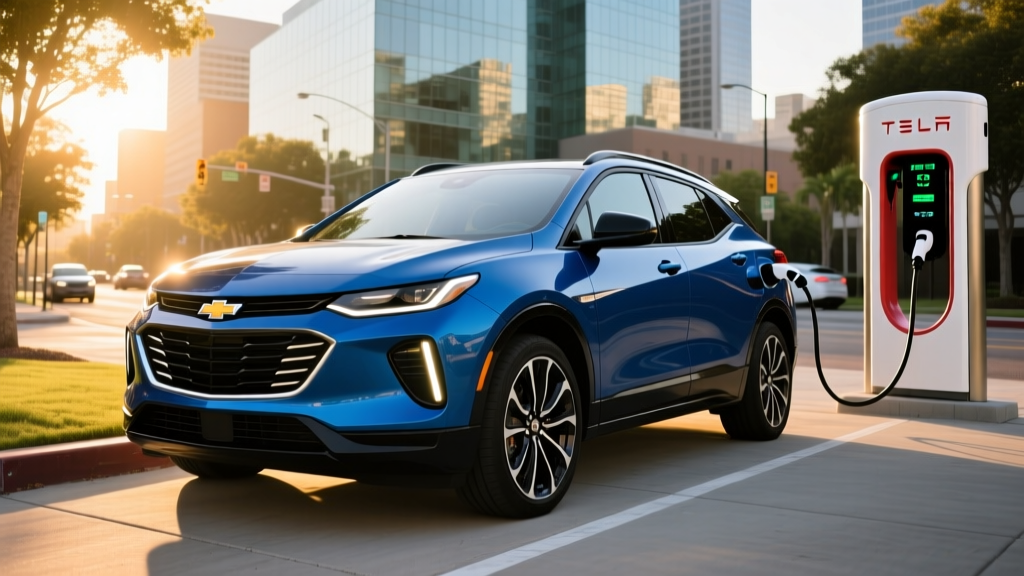
The Equinox EV uses the CCS1 connector for DC fast charging. GM has committed to transitioning to NACS (Tesla's connector) for future models, and 2026 Equinox EVs may include a NACS port or adapter depending on production timing — verify with your dealer at purchase. Access to Tesla Superchargers via adapter is available for GM EVs as of 2024, expanding the usable fast-charging network significantly.
Performance and Driving Dynamics
The RS AWD pairs dual electric motors for a combined output of 288 horsepower and 355 lb-ft of torque. That's enough for a 0–60 mph time of approximately 7.5 seconds — brisk for a family crossover but not in the same league as performance-oriented EVs. The instant torque delivery makes the Equinox RS feel quicker in city driving than the 0–60 number suggests, with confident highway merging and passing.
The front-wheel-drive RS produces 213 hp and 236 lb-ft from its single rear-mounted motor (GM's Ultium platform uses a rear-biased motor layout even in FWD configurations). The 0–60 time stretches to roughly 8.8 seconds for FWD.
Ride quality is composed, with the heavy battery pack mounted low giving the Equinox EV a planted feel through corners. The RS's 21-inch wheels look aggressive but transmit more road imperfections than the smaller wheels on LT trims — a trade-off worth considering if your roads are rough. Regenerative braking offers multiple levels selectable via steering-wheel paddles, including a one-pedal driving mode that can bring the vehicle to a complete stop without touching the brake pedal.
| Spec | RS AWD | RS FWD |
|---|---|---|
| Horsepower | 288 hp | 213 hp |
| Torque | 355 lb-ft | 236 lb-ft |
| 0–60 mph | ~7.5 sec | ~8.8 sec |
| Drivetrain | Dual-motor AWD | Single-motor RWD-biased |
| Towing Capacity | ~1,500 lbs (estimated) | ~1,500 lbs (estimated) |
Interior, Cargo, and Technology
The Equinox EV's cabin is dominated by a 17.7-inch diagonal infotainment touchscreen — one of the largest in the compact crossover segment — paired with an 11-inch digital driver display. The Google Built-In infotainment system includes native Google Maps navigation, Google Assistant voice control, and access to the Play Store for apps. Wireless Apple CarPlay and Android Auto are standard.
Passenger space is competitive for the class. Front legroom measures approximately 41.3 inches, with rear legroom at roughly 37.8 inches — enough for adults on longer trips without complaint. Cargo volume behind the second row sits at approximately 26.4 cubic feet, expanding to about 57.2 cubic feet with the rear seats folded flat. Unlike some EV competitors, the Equinox EV does not offer a front trunk (frunk), as the Ultium platform's electronics occupy that space.
The RS trim adds several premium touches: a fixed panoramic sunroof, heated front and rear seats, a heated steering wheel, ventilated front seats, a Bose premium audio system, and unique RS interior stitching and badging. Wireless phone charging and a 360-degree camera system round out the package.
On the driver-assistance front, Chevy Safety Assist comes standard and includes automatic emergency braking, forward collision alert, lane keep assist, following distance indicator, and IntelliBeam automatic high beams. Available Super Cruise — GM's hands-free highway driving system — is offered on the Equinox EV for the first time, enabling hands-off driving on over 750,000 miles of compatible highways in the US and Canada. Note: Super Cruise is an SAE Level 2 system, meaning the driver must remain attentive and eyes on the road at all times, monitored by an infrared camera on the steering column.
Pricing, Trims, and Federal Tax Credit Eligibility
The 2026 Chevy Equinox EV RS AWD starts at an MSRP of approximately $43,400 (including destination). The FWD RS starts around $41,900. Adding Super Cruise, premium paint, and other options can push a fully loaded RS AWD past $48,000.
| Trim | Base MSRP | Est. After §30D Credit | Est. After Point-of-Sale |
|---|---|---|---|
| RS FWD | ~$41,900 | ~$34,400 | ~$34,400 at dealer |
| RS AWD | ~$43,400 | ~$35,900 | ~$35,900 at dealer |
| RS AWD (loaded) | ~$48,000 | ~$40,500 | ~$40,500 at dealer |
The Equinox EV is expected to qualify for the full $7,500 federal tax credit under IRS §30D, thanks to GM's North American battery sourcing and final assembly in the US. However, eligibility depends on several buyer-specific factors, per IRS guidelines:
- Income caps: Modified adjusted gross income must not exceed $150,000 (single), $225,000 (head of household), or $300,000 (joint filers)
- MSRP cap: The vehicle MSRP must not exceed $80,000 for SUVs — the Equinox EV clears this easily
- Battery sourcing: Critical minerals and battery components must meet phased-in percentages from US or free-trade-agreement partners; GM has indicated the Equinox EV meets current thresholds
- Point-of-sale transfer: As of 2024, buyers can transfer the credit to the dealer for an upfront price reduction rather than waiting to claim it on their tax return
Always confirm eligibility with your tax professional before purchase, as sourcing requirements tighten annually and individual tax situations vary.
Warranty and Long-Term Ownership
GM backs the Equinox EV with a competitive warranty package:
- Battery & Propulsion: 8 years / 100,000 miles (whichever comes first), covering capacity loss below approximately 60% of original capacity
- Limited Vehicle Warranty: 3 years / 36,000 miles bumper-to-bumper
- Powertrain Warranty: 5 years / 60,000 miles
- Roadside Assistance: 5 years / 60,000 miles
Ultium battery replacement costs remain high — estimated at $15,000–$22,000 out of warranty for a pack of this size — but GM's 8-year/100,000-mile coverage aligns with industry standards and should provide peace of mind through the typical ownership period. Real-world degradation data for the Ultium platform is still emerging, but early reports from Bolt EV owners (previous-generation GM batteries) suggest 5–8% capacity loss over 100,000 miles with proper charging habits.
Pros, Cons, and Who Should Buy
Pros
- 315+ mile EPA range (FWD) at an accessible price point
- Massive 17.7-inch infotainment screen with Google Built-In
- Available Super Cruise hands-free highway driving
- Qualifies for full $7,500 federal tax credit
- Spacious rear seat and competitive cargo volume
- One-pedal driving with adjustable regen
Cons
- 150 kW DC fast-charge peak is slower than key rivals
- No front trunk (frunk)
- 21-inch RS wheels reduce ride comfort on rough roads
- AWD range drops to 285 miles EPA
- Real-world highway and cold-weather range loss is significant
- Towing capacity limited to ~1,500 lbs
Best for: Daily commuters and small families who can charge at home, drive under 150 miles round-trip most days, and want a well-equipped EV crossover without crossing $50,000. The RS AWD makes particular sense for buyers in snowy climates who need all-wheel drive and appreciate the sport-tuned styling.
Look elsewhere if: You regularly road-trip 400+ miles and need the fastest possible DC charging (consider the Ioniq 5 or Tesla Model Y), you need serious towing capacity (check the Rivian R1S or Ford F-150 Lightning), or you prioritize a frunk for gear storage.
Frequently Asked Questions
What is the real-world range of the 2026 Chevy Equinox EV RS?
The EPA rates the RS AWD at 285 miles and the FWD at 315 miles. In real-world mixed driving, expect 245–265 miles from the AWD model. Sustained highway driving at 75 mph drops this to roughly 220–240 miles, and sub-freezing temperatures can reduce range to 200–220 miles depending on cabin heating use and battery preconditioning.
How fast does the Equinox EV RS charge?
On a DC fast charger, it peaks at 150 kW, delivering a 10–80% charge in approximately 42 minutes and adding about 70 miles in 10 minutes. At home on a 240V Level 2 charger (11.5 kW), it adds roughly 34 miles per hour, fully recharging overnight in about 9–10 hours.
How much does the 2026 Equinox EV RS cost after tax credits?
The RS AWD starts at approximately $43,400 MSRP. With the full $7,500 federal tax credit applied at point of sale, the effective price drops to roughly $35,900. Eligibility depends on your income, the vehicle's battery sourcing compliance, and MSRP caps — confirm with your tax advisor.
Does the 2026 Equinox EV qualify for the federal EV tax credit?
GM has indicated the Equinox EV qualifies for the full $7,500 under §30D, meeting both critical-mineral and battery-component sourcing thresholds. The vehicle's MSRP is well under the $80,000 SUV cap. Buyer income limits still apply: $150K single / $300K joint filers. Check the latest IRS clean vehicle credit page for current rules.
Is the Equinox EV RS worth buying vs. competitors?
Against the Hyundai Ioniq 5, the Equinox RS trades faster DC charging and a frunk for a lower starting price, more cargo space, and Super Cruise availability. Against the Tesla Model Y, it offers a more traditional dealership experience and a physical infotainment layout some prefer, but the Model Y's Supercharger network access (though now available to GM via adapter) and slightly longer range remain advantages. Against the Ford Mustang Mach-E, the Equinox undercuts on price while offering comparable interior space. For value-focused buyers who charge at home and don't road-trip weekly, the Equinox EV RS is one of the strongest choices in the segment.
Does the Equinox EV have Super Cruise?
Yes, Super Cruise is available on the 2026 Equinox EV RS. It is an SAE Level 2 hands-free driving system that works on pre-mapped divided highways. The driver must remain attentive — an infrared camera monitors eye gaze, and the system will alert and disengage if attention lapses. It is not autonomous or self-driving.