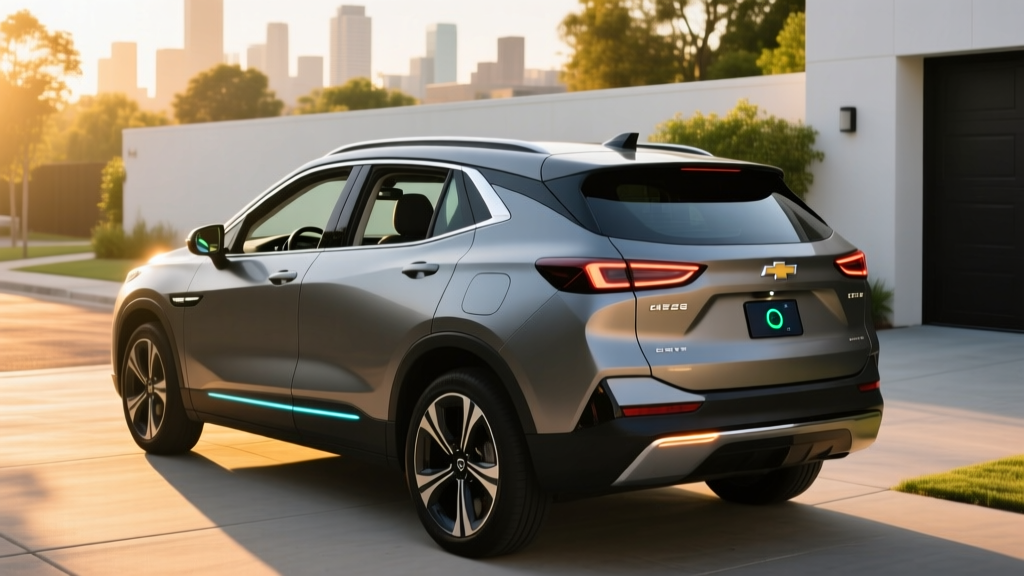
Quick Verdict: Is the 2026 Chevy Equinox EV Worth It?
The 2026 Chevy Equinox EV delivers up to 315 miles of EPA-estimated range starting at $33,600 (before incentives), making it one of the most affordable long-range electric crossovers on the market. Real-world highway range lands closer to 260–280 miles, and cold-weather driving can reduce that by 20–30%. With DC fast charging peaking at 150 kW (10–80% in ~30 minutes) and eligibility for the full $7,500 federal tax credit under current §30D rules, effective pricing can drop below $27,000 for qualifying buyers. It's a strong choice for buyers who need practical range and crossover utility without paying premium EV prices — provided you have reliable Level 2 home charging access.
2026 Equinox EV Specs: Range, Battery, and Charging at a Glance
| Spec | LT (FWD) | RS / Launch Edition (FWD) | RS (AWD) |
|---|---|---|---|
| EPA Range | 315 mi | 315 mi | 285 mi |
| Battery (usable) | ~85 kWh (NMC) | ~85 kWh (NMC) | ~85 kWh (NMC) |
| Horsepower | 213 hp | 213 hp | 288 hp |
| 0–60 mph | ~8.0 sec | ~8.0 sec | ~6.3 sec |
| Max DC Fast Charge | 150 kW | 150 kW | 150 kW |
| 10–80% DC Time | ~30 min | ~30 min | ~30 min |
| Level 2 (240V) Rate | 11.5 kW | 11.5 kW | 11.5 kW |
| MPGe (combined) | ~98 MPGe | ~98 MPGe | ~91 MPGe |
| Starting MSRP | $33,600 | $41,900 | $43,400 |
| Battery Warranty | 8 yr / 100k mi | 8 yr / 100k mi | 8 yr / 100k mi |
The Equinox EV rides on GM's Ultium platform, sharing its BEV3 architecture with the Blazer EV and Cadillac Lyriq. The ~85 kWh NMC (nickel-manganese-cobalt) battery pack prioritizes energy density over the LFP chemistry found in some competitors like the base Tesla Model Y. That means slightly more range per pound but a more conservative charging protocol — GM recommends daily charging to 80% for longevity and only pushing to 100% before road trips.
Real-World Range vs. EPA Sticker
EPA: 315 miles (FWD trims)
Expect in practice:
- Mixed suburban/highway (65–70 mph, 70°F): ~275–290 miles
- Sustained 75+ mph highway: ~250–270 miles
- Cold weather (below 32°F, highway): ~210–240 miles
- Hot weather with aggressive A/C: ~265–285 miles
The Ultium pack's thermal management system helps mitigate extreme temperature losses, and preconditioning the battery before DC fast charging (via the navigation system's routing) is essential for hitting peak 150 kW charge rates. Skip preconditioning on a cold morning and you may see peak rates closer to 80–100 kW until the pack warms.
Charging the 2026 Equinox EV: What You'll Actually Experience
| Charging Level | Power | Miles Added per Hour | Best For |
|---|---|---|---|
| Level 1 (120V outlet) | ~1.4 kW | ~4–5 mi/hr | Overnight top-ups, emergencies |
| Level 2 (240V, 48A) | 11.5 kW | ~35–38 mi/hr | Daily home charging (full charge ~9 hrs) |
| DC Fast Charge | Up to 150 kW | ~180 mi in 30 min | Road trips, rapid top-ups |
Home charging reality: A full Level 2 installation (240V, 50-amp circuit with a 48-amp charger) typically costs $800–$2,000 including equipment and electrician labor, assuming your electrical panel has capacity. Homes with older 100-amp panels may need a $1,500–$3,000 panel upgrade to support both EV charging and existing loads. Factor this into your first-year budget.
DC fast charging curve: The Equinox EV peaks at 150 kW but doesn't sustain it. Expect peak rates between 10–40% State of Charge (SoC), tapering to ~100 kW by 60%, and dropping sharply above 80%. This is normal lithium-ion behavior — the battery management system restricts current to protect cell longevity. For road trips, plan stops around the 20–80% window for the fastest charging experience. Charging from 80–100% on DC can take nearly as long as 10–80%.
The 2026 Equinox EV ships with the NACS (North American Charging Standard) connector, granting native access to Tesla Supercharger stations via GM's integration with the Tesla network. This significantly expands the public fast-charging footprint compared to CCS-only vehicles. According to Chevrolet's official EV page, Equinox EV owners can access over 17,000 Supercharger stalls nationwide.
2026 Equinox EV vs. Gas Equinox: The Real Cost Comparison
The gas-powered 2026 Chevy Equinox starts around $30,000 and gets an EPA-estimated 26 MPG combined (24 city / 29 highway with the 1.5L turbo). Let's break down what five years of ownership actually looks like side by side.
| Cost Factor (5 Years / 75,000 mi) | 2026 Equinox EV (LT FWD) | 2026 Equinox Gas (LT AWD) |
|---|---|---|
| Purchase Price (MSRP) | $33,600 | $30,000 |
| Federal Tax Credit (§30D) | −$7,500* | $0 |
| Effective Purchase Price | $26,100 | $30,000 |
| Fuel / Electricity (75k mi) | $3,200 (home L2, $0.14/kWh avg) | $8,650 (26 MPG, $3.00/gal) |
| Maintenance (5 yr) | $600 (tire rotations, cabin filter, wipers) | $3,200 (oil, filters, brakes, spark plugs) |
| Insurance (5 yr est.) | $8,500 | $7,000 |
| Estimated Depreciation | $11,000 | $13,500 |
| 5-Year Total Cost of Ownership | $27,400 | $32,350 |
*Tax credit eligibility depends on buyer income caps ($150k single / $300k joint), vehicle MSRP caps ($80k for SUVs), and battery critical-mineral sourcing requirements under current IRS §30D rules. Always verify with a tax professional before relying on the credit. Point-of-sale transfer is available, reducing your dealer price directly.
Key takeaway: The EV wins on total cost by roughly $4,950 over five years, but only if you qualify for the full federal credit and charge primarily at home. If you rely exclusively on public DC fast charging at $0.35–$0.50/kWh, your fuel cost jumps to $7,000–$9,500 over 75,000 miles — erasing much of the savings advantage. Insurance also runs 15–25% higher on the EV due to repair-cost data and battery-replacement exposure.
Federal Tax Credit & Incentives: What Applies in 2026
§30D New Clean Vehicle Credit — 2026 Requirements
- Credit amount: Up to $7,500 ($3,750 for critical minerals + $3,750 for battery components)
- Buyer income cap: AGI ≤ $150,000 (single) / $225,000 (head of household) / $300,000 (joint)
- Vehicle MSRP cap: ≤ $80,000 for SUVs, vans, and trucks
- Battery sourcing: Increasing percentages of critical minerals and battery components must be sourced from the US or FTA partners — these thresholds tighten annually
- Point-of-sale transfer: You can transfer the credit to the dealer at purchase, reducing your out-of-pocket cost immediately (dealer receives the credit from IRS)
- Assembly: Vehicle must undergo final assembly in North America
The 2026 Equinox EV is assembled at GM's Factory ZERO in Michigan, satisfying the North American assembly requirement. However, the critical-mineral and battery-component sourcing thresholds for 2026 are stricter than in prior years. GM has been working to onshore supply chains, and the Equinox EV has qualified for the full $7,500 in recent model years — but always verify the current year's eligibility on fueleconomy.gov before purchasing, as eligibility can change mid-year based on sourcing audits.
Many states offer additional rebates or HOV-lane access. California's CVRP, Colorado's state credit, and various utility-company rebates can stack on top of the federal credit. Check your state's energy office and local utility for specifics — these vary widely by jurisdiction.
Common EV Misconceptions — Fact-Checked for Equinox Buyers
| Myth | Fact |
|---|---|
| "EV batteries need replacing every 5 years" | GM warrants the Ultium battery for 8 years/100,000 miles against degradation below 60% capacity. Most NMC packs retain 85–90% capacity at 100k miles based on industry data. Replacement, if ever needed, runs $12,000–$18,000 out of warranty. |
| "The Equinox EV can't handle road trips" | With 315 miles EPA and NACS access to the Supercharger network, a 500-mile trip requires one 25–30 minute stop. Comparable to a gas-car bathroom-and-snack break. |
| "I'll save money even if I only use public chargers" | Public DC fast charging at $0.40/kWh costs roughly $0.055/mile vs. $0.115/mile for gas at $3.00/gal and 26 MPG. You save, but the margin shrinks to ~50% vs. the 70%+ savings possible with home Level 2 at $0.14/kWh. |
| "EVs are worse in winter" | Range drops 20–30% in sub-freezing temperatures due to battery chemistry and cabin heating demands. The Equinox EV's heat pump (standard on most trims) recovers waste heat more efficiently than resistive heating, reducing winter penalty compared to older EVs. Preconditioning while plugged in also preserves range. |
| "Level 1 (wall outlet) charging is enough" | At ~4 miles of range per hour, Level 1 adds ~48 miles overnight (12 hrs). Fine if you drive under 40 miles daily and can top up. For most owners, Level 2 (adding ~35 miles/hr) is essential to reliably wake up with a full battery. |
Decision Framework: Is the 2026 Equinox EV Right for You?
Choose the 2026 Equinox EV if:
- You have Level 2 home charging access (garage or driveway with 240V circuit) — this unlocks the lowest per-mile cost and daily convenience
- Your daily commute is under 80 miles round-trip — you'll rarely need public charging and will charge mostly overnight
- You qualify for the §30D federal tax credit — the $7,500 point-of-sale reduction makes this one of the cheapest 300+ mile EVs available
- You want crossover practicality — 26.4 cu ft of cargo space behind the rear seats, competitive with gas compact SUVs
- You take 2–4 road trips per year — 315-mile range plus Supercharger access makes highway travel manageable with minimal planning
Stick with the gas Equinox or consider a PHEV if:
- You live in an apartment or lack home charging — exclusive reliance on public DC fast charging erodes cost savings and adds time/friction
- You regularly drive in extreme cold (below 0°F) with 200+ mile daily needs — winter range loss could push you uncomfortably close to the limit between charges
- Your household income exceeds §30D caps — without the $7,500 credit, the EV's price premium takes 6–7 years to recoup through fuel/maintenance savings alone
- You frequently tow — the Equinox EV is not rated for significant towing; the gas Equinox can tow up to 1,500 lbs
- You want AWD for heavy snow and don't want the range trade-off — the AWD Equinox EV drops to 285 miles EPA; consider the gas AWD or a PHEV alternative
What First-Time EV Buyers Should Know Before Purchase Day
1. Install your Level 2 charger before the car arrives. Order a UL-listed 48-amp charger (ChargePoint Home Flex, Emporia Vue, or GM's own Dual Level Charge Cord with 240V adapter) and schedule an electrician 2–4 weeks before delivery. Ask for a load calculation on your panel — a 200-amp service is ideal, but many 100-amp panels can accommodate a 32-amp charger with smart load management.
2. Understand your electricity rate. The national average residential rate is ~$0.16/kWh in 2026 (EIA data), but rates vary from $0.10/kWh in parts of the South to $0.30+/kWh in California. Time-of-use plans can drop overnight rates to $0.06–$0.10/kWh — schedule your charging for off-peak hours via the MyChevrolet app.
3. Budget for higher insurance. EV insurance averages 15–25% more than equivalent gas vehicles. Get quotes from GEICO, Progressive, and State Farm before committing — some insurers now offer specific EV discounts.
4. Learn the regen braking settings. The Equinox EV offers adjustable regenerative braking, including a one-pedal driving mode that can bring the car to a full stop without touching the brake pedal. It takes 1–2 weeks to build muscle memory but dramatically reduces brake wear (expect brake pads to last 100,000+ miles).
5. Download the right apps. Beyond MyChevrolet for vehicle controls, install PlugShare or A Better Routeplanner for trip planning, and your charging-network apps (Tesla, Electrify America, EVgo) for seamless public charging. The built-in Google-based infotainment system also integrates charging-station navigation.
Frequently Asked Questions
Does the 2026 Equinox EV qualify for the full $7,500 federal tax credit?
As of early 2026, the Equinox EV has qualified for the full $7,500 under §30D, meeting North American assembly, MSRP, and battery-sourcing requirements. However, sourcing thresholds tighten annually, and eligibility can change. Verify on fueleconomy.gov and consult a tax professional before relying on the credit. Point-of-sale transfer at the dealer is available if you qualify.
How long does it take to fully charge the Equinox EV at home?
From near-empty to 100% on a Level 2 (240V, 48-amp) home charger: approximately 9 hours. Most owners charge between 20–80% daily, which takes about 4.5 hours — easily accomplished overnight. GM recommends 80% daily charge for long-term battery health.
Can I use Tesla Superchargers with the 2026 Equinox EV?
Yes. The 2026 Equinox EV comes equipped with the NACS charge port natively, meaning you can plug directly into Tesla Supercharger stalls without an adapter. Access is integrated through the MyChevrolet app for activation and payment.
What happens if the battery degrades significantly?
GM's battery warranty covers the Ultium pack for 8 years or 100,000 miles against capacity loss below 60% of original. Real-world data from Ultium vehicles suggests most packs retain 88–92% capacity at 100k miles under normal use. If out-of-warranty replacement is ever needed, expect $12,000–$18,000 for the pack plus labor — though this cost is expected to decline as battery manufacturing scales.
Is the Equinox EV good for cold climates?
It's competent but not immune to physics. Expect 20–30% range loss below freezing due to battery chemistry limitations and cabin heating load. The standard heat pump helps. Preconditioning the cabin and battery while still plugged in (via the app's scheduled departure feature) recovers much of this loss by warming the pack before you drive. For extreme-cold buyers in Minnesota or Montana who regularly need 250+ miles in winter, the reduced range is a legitimate planning consideration.
How does the Equinox EV compare to the Tesla Model Y?
The Model Y starts higher (~$44,990 for Long Range AWD in 2026) but offers 320+ miles of range, faster DC charging (up to 250 kW), and a more mature software ecosystem. The Equinox EV undercuts it by $10,000+ on FWD trims and now shares Supercharger access. If budget and value are priorities, the Equinox wins on price-per-mile-of-range. If performance, charging speed, and tech polish matter more, the Model Y retains advantages.