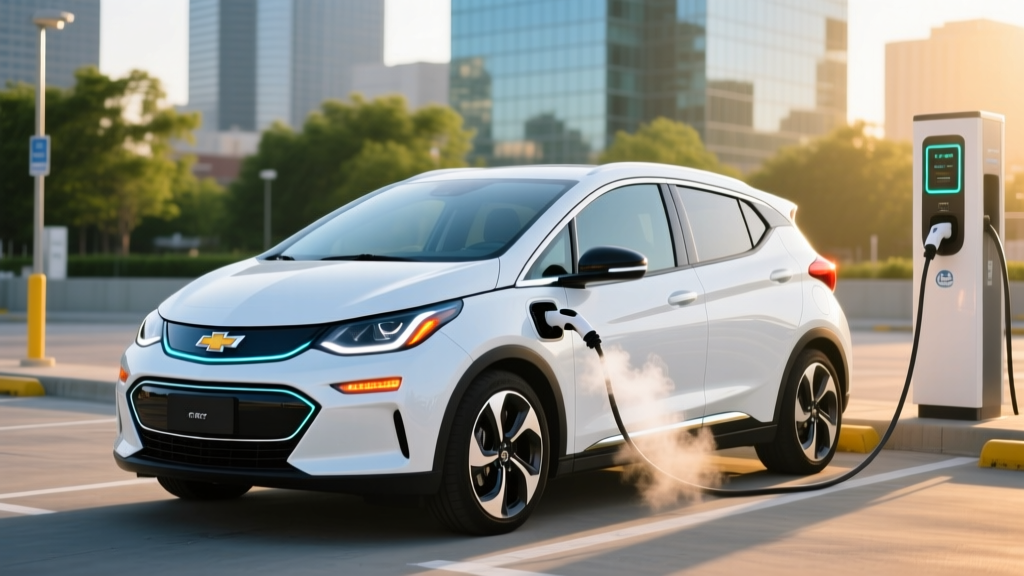
The next-generation Chevy Bolt returns for 2026 on GM's Ultium platform, replacing the outgoing Bolt EV/EUV with a larger battery, faster charging, and a modernized interior. The headline remains affordability: Chevrolet has positioned the 2026 Bolt as one of the least expensive new EVs in the U.S. market, undercutting rivals like the Nissan Leaf, Hyundai Kona Electric, and even the base Tesla Model 3. But does the 2026 Chevy Bolt price deliver enough range, charging speed, and tech to compete in an increasingly crowded segment? We spent time with the specs, cross-referenced EPA data, and mapped out the real-world ownership picture so you can decide.
2026 Chevy Bolt Price and Trim Breakdown
Chevrolet offers the 2026 Bolt in two trims, keeping the lineup simple. Both share the same 65 kWh (usable) Ultium LFP battery pack and front-wheel-drive powertrain.
| Trim | Base MSRP | Destination | Total Before Credit | Est. After §30D Credit |
|---|---|---|---|---|
| LT | $26,995 | $1,395 | $28,390 | ~$20,890* |
| RS | $29,495 | $1,395 | $30,890 | ~$23,390* |
*Estimated after-tax-credit pricing assumes full §30D eligibility. See tax credit section below for income, MSRP, and sourcing requirements.
The RS trim adds sport-tuned suspension, a blacked-out exterior package, 18-inch alloy wheels, a heated steering wheel, and a Bose premium audio system. Both trims come standard with an 11.3-inch diagonal infotainment touchscreen, wireless Apple CarPlay and Android Auto, a digital instrument cluster, and GM's Super Cruise readiness (subscription required for hands-free highway driving on compatible roads).
Federal Tax Credit Eligibility (§30D)
- MSRP cap: The Bolt qualifies — MSRP must be ≤ $55,000 for sedans/hatchbacks (per IRS §30D rules).
- Buyer income cap: Modified AGI ≤ $150,000 (single), ≤ $225,000 (head of household), ≤ $300,000 (joint).
- Battery sourcing: Critical minerals and battery component requirements phase in annually. GM sources Ultium cells from the LG Energy Solution joint venture (Ultium Cells LLC) with U.S. manufacturing, but exact 2026 critical-mineral compliance should be verified at purchase via the DOE/IRS eligible vehicle list.
- Point-of-sale transfer: Buyers can elect to transfer the credit to the dealer at purchase, reducing the out-of-pocket price immediately — no need to wait for a tax refund.
Range, Efficiency, and Real-World Expectations
The 2026 Bolt carries a 65 kWh usable Ultium battery using LFP (lithium iron phosphate) chemistry. LFP cells offer longer cycle life, lower degradation, and no cobalt or nickel — but trade off some energy density versus NMC. Chevrolet leverages this by pricing the Bolt aggressively while offering competitive range.
| Metric | LT (17" wheels) | RS (18" wheels) |
|---|---|---|
| EPA Range | 255 miles | 243 miles |
| Combined MPGe | 120 MPGe | 115 MPGe |
| Efficiency (kWh/100 mi) | 28 kWh/100 mi | 29 kWh/100 mi |
Source: fueleconomy.gov
Real-World Range: What to Actually Expect
EPA sticker: 255 miles (LT) / 243 miles (RS)
Real-world highway (70-75 mph, moderate temps): ~215–230 miles. The Bolt's aerodynamic profile is hatchback-typical, and sustained highway speeds reduce efficiency to roughly 3.3–3.5 mi/kWh.
Real-world city/commute (stop-and-go with regen): ~245–260 miles. Regenerative braking recovers meaningful energy in urban driving, often pushing real-world city range close to or slightly above the EPA combined figure.
Cold weather (below 32°F): Expect a 20–30% reduction, bringing usable range to ~165–195 miles. LFP chemistry is slightly more susceptible to cold-induced resistance than NMC. Preconditioning the battery while plugged in mitigates some of this loss.
For daily commutes under 60 miles round-trip with home charging, the Bolt's real-world range is more than adequate. Road trippers should plan stops every 180–200 miles in warm weather and every 150–170 miles in winter, factoring in the charging curve taper above 80% SoC.
Charging Speed: DC Fast, Level 2, and Level 1
The single biggest upgrade over the previous-generation Bolt is charging speed. The old Bolt's notoriously slow 55 kW DC fast charging has been replaced by a much more competitive Ultium architecture.
| Charging Level | Connector | Max Rate | Speed / Time |
|---|---|---|---|
| Level 1 (120V household) | J1772 / NACS adapter | 1.4 kW | ~4 mi/hr added |
| Level 2 (240V home/public) | J1772 / NACS | 11.5 kW | ~38 mi/hr; 0–100% in ~6.5 hrs |
| DC Fast Charge | CCS1 / NACS (adapter) | 85 kW peak | 10–80% in ~32 min |
Charging curve reality: The Bolt peaks at 85 kW between roughly 10–40% SoC, then tapers progressively — holding ~65 kW through 60%, dropping to ~45 kW by 75%, and slowing to under 20 kW above 85%. This means a 10–80% session takes about 32 minutes at a capable 150+ kW station, but charging from 80–100% adds another 40+ minutes. For road trips, plan to charge in the 10–80% sweet spot and skip topping off.
The 11.5 kW onboard charger is a standout in this price class. Most competitors in the $25K–$35K range offer 7.2–10.5 kW Level 2 charging. At 11.5 kW, a fully depleted Bolt recovers overnight on a standard 48-amp Level 2 home charger — critical for owners without access to DC fast charging.
Connector note: The 2026 Bolt ships with a NACS (Tesla-style) charge port, reflecting GM's transition to the North American Charging Standard. A CCS1 adapter is available for access to Electrify America and other legacy CCS networks. Tesla Supercharger access is native.
Performance and Drivetrain
| Spec | Value |
|---|---|
| Motor Type | Single permanent-magnet front motor |
| Drivetrain | FWD |
| Horsepower | 200 hp |
| Torque | 236 lb-ft |
| 0–60 mph | 6.8 seconds (manufacturer est.) |
| Top Speed | ~93 mph (electronically limited) |
The 200-hp single-motor setup is adequate for merging and passing, and the instant 236 lb-ft of torque gives the Bolt a punchy feel around town. It is not a performance EV — the 6.8-second 0–60 time trails the Hyundai Kona Electric (6.5 sec) and significantly trails the Tesla Model 3 RWD (5.8 sec). FWD means no AWD option; buyers in heavy snow regions should consider winter tires rather than expecting all-weather traction from the drivetrain alone.
One-pedal driving with aggressive regen is standard and well-tuned, allowing most commuters to drive without touching the brake pedal in stop-and-go traffic. The brake pedal feel remains somewhat soft at the regen-to-friction handoff — a common GM calibration trait — but is predictable once acclimated.
Interior Space, Cargo, and Practicality
The 2026 Bolt rides on a slightly stretched version of GM's BEV3 platform, yielding meaningful interior gains over the discontinued Bolt EV.
| Dimension | Measurement |
|---|---|
| Front Legroom | 42.1 inches |
| Rear Legroom | 37.4 inches |
| Front Headroom | 39.7 inches |
| Rear Headroom | 37.8 inches |
| Cargo (behind rear seats) | 22.3 cu ft |
| Cargo (rear seats folded) | 54.7 cu ft |
| Wheelbase | 104.5 inches |
| Curb Weight | ~3,550 lbs |
For a subcompact hatchback, the Bolt's rear legroom is genuinely usable for adults on longer trips — an area where the outgoing Bolt fell short. Cargo volume at 22.3 cu ft rivals the Hyundai Kona Electric and beats the Mini Cooper SE by a wide margin. There is no front trunk (frunk); the space under the hood houses the motor and power electronics.
Interior materials are hard-plastic-heavy on the LT, with soft-touch surfaces and contrast stitching added on the RS. The 11.3-inch touchscreen runs GM's latest Ultifi-based infotainment, which is responsive and logically laid out. Wireless phone charging and two USB-C ports (front) plus two USB-C ports (rear) are standard across both trims.
Driver Assistance, Safety, and Tech
Every 2026 Bolt includes the Chevy Safety Assist suite as standard equipment:
- Automatic Emergency Braking with pedestrian detection
- Forward Collision Alert
- Lane Keep Assist with Lane Departure Warning
- Following Distance Indicator
- Intelligent Speed Assist (reads speed limit signs)
- Automatic High Beams
- Rear Vision Camera with rear cross-traffic alert
Super Cruise availability: GM's hands-free highway driving system is available as a $2,200 option on the RS trim (3-year subscription included, then ~$25/month). Super Cruise is an SAE Level 2 driver-assist system — it handles steering, acceleration, and braking on over 750,000 miles of mapped divided highways in the U.S. and Canada, but the driver must remain attentive. An infrared camera monitors driver eye gaze and will issue escalating warnings if attention lapses.
SAE Automation Level: Level 2 (Driver Assist)
Super Cruise and Chevy Safety Assist are Level 2 systems. The driver must keep hands near the wheel (or eyes on the road for Super Cruise) and remain prepared to take over instantly. This is not autonomous driving. Only Level 4 services like Waymo operate without a human driver in defined geographic zones.
The 2026 Bolt has not yet been crash-tested by NHTSA or IIHS at the time of this writing. The outgoing Bolt EV earned an IIHS Top Safety Pick in its final model year; we expect the stiffer BEV3 platform to perform at least as well.
Battery Warranty, Longevity, and Ownership Costs
| Coverage | Term |
|---|---|
| Battery & Propulsion | 8 years / 100,000 miles |
| Battery Capacity Retention | ≥ 70% of original capacity within warranty period |
| Bumper-to-Bumper | 3 years / 36,000 miles |
| Powertrain (non-battery) | 5 years / 60,000 miles |
| Roadside Assistance | 5 years / 60,000 miles |
The LFP chemistry in the 2026 Bolt is a longevity advantage. LFP cells typically endure 3,000+ full charge cycles before reaching 80% capacity — meaning you could theoretically cycle the full 65 kWh battery 3,000 times (roughly 750,000 miles of driving) before notable degradation. In practice, calendar aging and thermal exposure matter more than cycle count for most owners.
LFP care tip: Unlike NMC batteries, LFP packs tolerate — and actually benefit from — regular charging to 100%. GM recommends charging to 100% at least once per week to allow the battery management system to rebalance cells. This is the opposite of NMC best practices (which favor 80% daily limits) and simplifies ownership for Bolt drivers.
5-year estimated cost of ownership:
| Category | Estimated Cost |
|---|---|
| Purchase (after §30D credit) | ~$20,890 |
| Home charging (electricity, $0.16/kWh avg) | ~$3,360 |
| Public DC fast charging (road trips, ~20% of miles) | ~$1,100 |
| Insurance (national EV avg) | ~$9,500 |
| Maintenance (tires, cabin filter, wipers, brake fluid) | ~$1,800 |
| Estimated 5-yr depreciation | ~$8,000 |
| Total 5-Year Cost | ~$44,650 |
For comparison, a similarly priced gas hatchback (e.g., Honda Civic at ~$28,000) would cost roughly $10,500 in fuel over 5 years at 30 MPG combined and $3.50/gal, but would benefit from lower insurance and slower depreciation. The Bolt's TCO advantage widens significantly with lower electricity rates, solar charging, or higher annual mileage.
How the 2026 Bolt Compares to Key Rivals
| Spec | 2026 Chevy Bolt LT | 2026 Hyundai Kona Electric | 2026 Nissan Leaf S+ | Tesla Model 3 RWD |
|---|---|---|---|---|
| Base MSRP | $26,995 | $33,975 | $30,690 | $38,990 |
| EPA Range | 255 mi | 261 mi | 212 mi | 341 mi |
| Battery (usable kWh) | 65 kWh (LFP) | 64.8 kWh (NMC) | 60 kWh (NMC) | 60 kWh (LFP) |
| DC Fast Charge (peak kW) | 85 kW | 100 kW | 100 kW | 170 kW |
| 10–80% Time | ~32 min | ~28 min | ~30 min | ~22 min |
| Level 2 Charger (kW) | 11.5 kW | 10.5 kW | 7.2 kW | 11.5 kW |
| 0–60 mph | 6.8 sec | 6.5 sec | 7.9 sec | 5.8 sec |
| Federal Credit Eligible | Yes* | Yes* | Partial* | Yes* |
*Credit eligibility depends on buyer income, battery sourcing compliance, and MSRP caps. Verify at fueleconomy.gov before purchase.
Who Should Buy the 2026 Chevy Bolt?
Choose the Bolt if:
- You want the lowest entry price in a new EV with 250+ miles of range
- Your commute is under 80 miles round-trip and you can charge at home
- You value strong Level 2 home charging speed (11.5 kW) over DC fast-charge speed
- You prefer a hatchback with practical cargo space over a crossover SUV
- You qualify for the full §30D credit and want a sub-$22K effective purchase price
Look elsewhere if:
- You take frequent 300+ mile road trips and need the fastest possible DC charging (Tesla Model 3 or Hyundai Ioniq 6)
- You need AWD for snow-belt winters (Subaru Solterra, Hyundai Ioniq 5 AWD)
- You want a larger vehicle for family duty (Chevy Equinox EV, Tesla Model Y)
- You need more than 255 miles of EPA range for long rural commutes
Pros and Cons
Pros
- Lowest starting MSRP among 250+ mile EVs
- LFP battery offers long cycle life and 100% daily charging tolerance
- 11.5 kW Level 2 charging is best-in-class for the price
- Generous rear legroom for a subcompact hatchback
- Super Cruise availability is rare in this price segment
- Full §30D tax credit eligibility (when sourcing requirements met)
- NACS native port — direct Tesla Supercharger access
Cons
- 85 kW DC fast charging trails most competitors by 15–85 kW
- FWD only — no AWD option for snow/ice
- No front trunk (frunk) for additional storage
- Hard-plastic interior on the LT trim feels budget-grade
- Real-world highway range drops to ~215–230 miles
- Cold-weather range loss significant with LFP chemistry
- No towing capacity rated
Frequently Asked Questions
What is the real-world range of the 2026 Chevy Bolt?
The EPA rates the Bolt LT at 255 miles and the RS at 243 miles. In real-world highway driving at 70–75 mph, expect 215–230 miles. City driving with regenerative braking can push real-world range to 245–260 miles. In freezing temperatures, plan for 165–195 miles of usable range.
How fast does the 2026 Bolt charge at home and on the road?
At home on a 240V Level 2 charger, the Bolt accepts up to 11.5 kW, adding about 38 miles of range per hour and fully recharging in roughly 6.5 hours. On DC fast chargers, it peaks at 85 kW and charges from 10–80% in approximately 32 minutes. On a standard 120V outlet (Level 1), expect about 4 miles of range per hour.
How much does the 2026 Chevy Bolt cost after tax credits?
The Bolt LT starts at $28,390 including destination. With the full $7,500 §30D federal tax credit (applied at point of sale), the effective price drops to approximately $20,890. The RS trim drops from $30,890 to approximately $23,390. Eligibility requires meeting IRS income caps, MSRP limits, and battery sourcing requirements — verify your specific situation at irs.gov.
Does the 2026 Chevy Bolt qualify for the $7,500 federal EV tax credit?
The Bolt's MSRP is well under the $55,000 sedan/hatchback cap, and GM's Ultium Cells joint venture manufactures battery components in the U.S. However, the critical-minerals sourcing requirement phases in annually and must be confirmed for the specific VIN at the time of purchase. Check the DOE's eligible vehicle list at fueleconomy.gov before committing.
Is the 2026 Bolt worth buying vs. the Kona Electric or Tesla Model 3?
If budget is the primary driver, the Bolt wins decisively — it undercuts the Kona Electric by ~$7,000 and the Model 3 by ~$12,000 before credits. The trade-off is slower DC fast charging (85 kW vs. 100–170 kW), less range than the Model 3, and FWD only. For budget-conscious commuters who charge at home, the Bolt is the value pick. For road-trip-heavy buyers, the Model 3's Supercharger network speed and 341-mile range justify the premium.
What is the battery warranty on the 2026 Bolt?
Chevrolet covers the battery and propulsion system for 8 years or 100,000 miles, whichever comes first. The warranty guarantees the battery will retain at least 70% of its original capacity during that period. LFP chemistry suggests long-term degradation will be minimal for most owners.
Can I charge the 2026 Bolt at Tesla Superchargers?
Yes. The 2026 Bolt comes with a native NACS charge port, giving it direct access to Tesla's Supercharger network without an adapter. A CCS1 adapter is available separately for Electrify America and other CCS-based networks.