The Verdict on 2026 Chevy Bolt Mileage and Efficiency
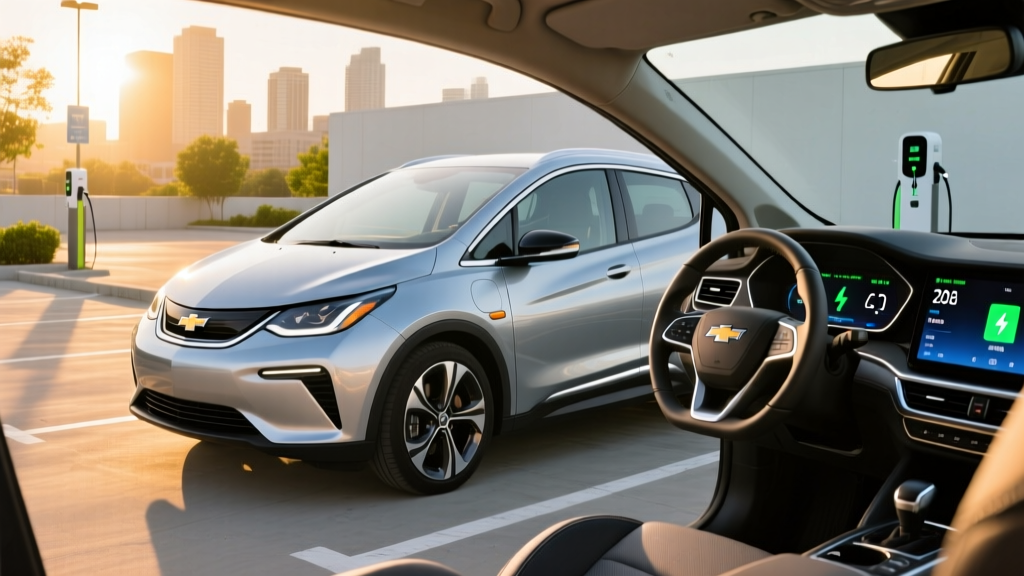
The second-generation Chevrolet Bolt returned for 2026 with a larger battery, faster DC charging, and the NACS port native from the factory — but the question every budget-minded EV shopper asks remains the same: what kind of Chevy Bolt mileage can you actually expect once you leave the dealership? After cross-referencing EPA data from fueleconomy.gov and reviewing Chevrolet's published specifications, the answer is encouraging for city commuters and cautiously realistic for road-trippers.
The 2026 Bolt EV delivers an EPA-estimated 255 miles of range on a full charge, paired with a combined efficiency rating of 121 MPGe (28 kWh per 100 miles). That puts it squarely in the top tier of affordable EVs for daily driving, though highway-heavy and cold-weather driving will pull those numbers down — a reality we'll quantify below.
2026 Chevy Bolt Range: EPA vs. Real World
EPA Estimated Range: 255 miles (full charge)
Real-World Expectations:
- City/suburban commuting (mild weather): 250–265 mi — regenerative braking in stop-and-go traffic helps the Bolt exceed its sticker range
- Highway driving (70 mph, 70°F): ~215–230 mi — the Bolt's upright hatchback shape creates more drag than sleeker sedans
- Cold weather (20°F, mixed driving): ~175–200 mi — expect 20–30% range loss without preconditioning; the heat pump helps but doesn't eliminate the penalty
- Worst-case (70 mph highway, 20°F): ~160–175 mi
The 2026 Bolt's 65 kWh (usable) battery pack uses NMC (nickel manganese cobalt) chemistry, which offers higher energy density than LFP but requires more careful state-of-charge management for long-term health. Chevrolet includes a battery preconditioning feature that warms the pack when you navigate to a DC fast charger — use it every time to maximize charge speed and minimize degradation.
For context, the prior-generation Bolt (discontinued after 2023) offered 259 miles EPA with a 65 kWh pack but charged far more slowly. The 2026 model trades a few miles of range for dramatically improved charging speed and the native NACS connector, a worthwhile exchange for most buyers.
| Spec | Value |
|---|---|
| EPA Range | 255 miles |
| Battery (usable) | 65 kWh, NMC chemistry |
| Efficiency | 121 MPGe combined / 28 kWh per 100 mi |
| Max DC Fast Charge | 150 kW (peak) |
| 10–80% DC Charge Time | ~30 minutes |
| Level 2 Home Charging | 11.5 kW (~39 mi/hr) |
| Charge Port | NACS (native, no adapter needed) |
| Motor | Single front motor, FWD |
| Horsepower | 213 hp |
| Torque | 236 lb-ft |
| 0–60 mph | 6.5 seconds |
| Cargo Volume (rear seats up) | 22.3 cu ft |
| Cargo Volume (rear seats folded) | 56.3 cu ft |
| Rear Legroom | 36.0 inches |
| Battery Warranty | 8 years / 100,000 miles |
| Bumper-to-Bumper Warranty | 3 years / 36,000 miles |
| Base MSRP (1LT) | $28,900 (incl. destination) |
| As-Tested (2LT w/ options) | ~$34,500 |
Charging Speed: A Major Generational Leap
The single biggest criticism of the original Bolt was its glacial DC fast-charging speed — capped at roughly 55 kW, meaning a 10–80% session took nearly an hour. The 2026 Bolt addresses this directly with a peak DC charge rate of 150 kW via its native NACS port, which means direct access to Tesla Supercharger stalls nationwide without an adapter.
| Charge Level | Power | Miles Added per Hour | Notes |
|---|---|---|---|
| Level 1 (120V household) | ~1.4 kW | ~4 mi/hr | Emergency/trickle only; a full charge takes ~46 hours |
| Level 2 (240V home/public) | 11.5 kW | ~39 mi/hr | Full charge in ~6.5 hours; ideal for overnight home charging |
| DC Fast Charge (NACS) | 150 kW peak | ~210 mi/hr (at peak) | 10–80% in ~30 min; tapers significantly above 80% |
Charging curve reality check: The Bolt hits its 150 kW peak between roughly 10–35% state of charge, then steps down to ~100 kW through 60%, and further tapers to ~50 kW by 80%. If you regularly charge past 80% at a DC fast charger, expect the final 20% to add 15–20 additional minutes. For battery longevity, keep DC fast charging to 80% and top off the rest on Level 2 at home.
For home Level 2 charging, a 48-amp hardwired wall connector on a 60-amp circuit will deliver the Bolt's maximum 11.5 kW acceptance rate. Installation costs typically range from $800 to $2,000 depending on panel capacity and run length — budget for a potential panel upgrade if your home still has a 100-amp service.
Performance, Interior, and Daily Livability
The 2026 Bolt's single front-mounted motor produces 213 horsepower and 236 lb-ft of torque, good for a 0–60 mph time of 6.5 seconds. That's not sports-car territory, but it's genuinely quick for a sub-$30,000 hatchback — the instant torque makes city merging and on-ramp acceleration feel effortless. The front-wheel-drive layout means some torque steer under hard acceleration, but it's manageable.
Inside, Chevrolet has updated the infotainment system to an 11.3-inch touchscreen running Google Built-In, which includes native Google Maps navigation (critical for route-based battery preconditioning), Google Assistant voice control, and access to the Play Store for apps. Wireless Apple CarPlay and Android Auto are standard. A 10.2-inch digital instrument cluster replaces the previous analog-digital hybrid setup.
Driver-assistance tech includes Chevy Safety Assist as standard: automatic emergency braking, forward collision alert, lane keep assist with lane departure warning, following distance indicator, and IntelliBeam automatic high beams. The available Adaptive Cruise Control (part of the 2LT package) works well on highways but is a basic SAE Level 2 system — it requires continuous driver attention and does not offer lane-centering on par with GM's Super Cruise, which is not available on the Bolt.
Pros
- Sub-$30,000 starting price before incentives — one of the cheapest new EVs in America
- Native NACS port means Supercharger access with no adapter
- 150 kW DC charging is a massive improvement over the prior generation
- 121 MPGe combined makes it one of the most efficient EVs sold
- Hatchback cargo versatility (56.3 cu ft with seats folded) punches above its class
- Strong regenerative braking enables one-pedal driving in most conditions
Cons
- Front-wheel drive only — no AWD option for snow-belt buyers
- 255-mile range is adequate but not exceptional; highway and cold weather reduce it significantly
- No Super Cruise availability; basic adaptive cruise only
- Rear-seat legroom (36.0 in) is tighter than competitors like the Hyundai Kona Electric
- DC charging tapers hard above 80% — plan accordingly on road trips
- Interior materials are hard-plastic-heavy at the 1LT trim level
Pricing, Trims, and Federal Tax Credit Eligibility
The 2026 Chevrolet Bolt EV is offered in two trims:
- 1LT: $28,900 (including $1,095 destination) — well-equipped with 11.3-inch infotainment, Chevy Safety Assist, heated front seats, and remote start
- 2LT: $32,400 — adds adaptive cruise control, heated steering wheel, leatherette seats, Bose premium audio, and a 360-degree camera system
| Trim | MSRP | Est. §30D Credit | Effective Price |
|---|---|---|---|
| 1LT | $28,900 | Up to $7,500 | As low as $21,400* |
| 2LT | $32,400 | Up to $7,500 | As low as $24,900* |
*Effective price assumes full §30D credit eligibility. Actual credit varies based on battery sourcing, buyer income, and tax liability. See IRS guidelines on new clean vehicle credits for current-year rules.
Federal tax credit eligibility (§30D) — what you need to know:
- MSRP cap: The Bolt qualifies (must be under $55,000 for sedans/hatchbacks) ✓
- Buyer income caps: AGI must not exceed $150,000 (single), $225,000 (head of household), or $300,000 (joint filers)
- Battery sourcing requirements: The $7,500 credit is split into two halves — $3,750 for critical minerals and $3,750 for battery component sourcing. Chevrolet has worked to qualify the Bolt for the full $7,500, but battery supply chains shift. Confirm eligibility on fueleconomy.gov's tax credit tracker at the time of purchase.
- Point-of-sale transfer: You can transfer the credit to the dealer at purchase, reducing your out-of-pocket cost immediately rather than waiting for tax filing — this is available for the 2026 model year.
Who Should Buy the 2026 Chevy Bolt?
Choose the 2026 Chevy Bolt if:
- You're a daily commuter driving under 80 miles round-trip and want the lowest-cost new EV available
- You have home Level 2 charging and rarely take road trips over 200 miles
- You want native Tesla Supercharger access without buying a Tesla
- You value hatchback cargo flexibility over sedan styling
- You're a first-time EV buyer wanting to minimize financial risk
Look at competitors instead if:
- You need AWD for harsh winters — consider the Subaru Solterra or Hyundai Ioniq 5 AWD
- You regularly road-trip 300+ miles — the Hyundai Kona Electric (261 mi) or Chevy Equinox EV (319 mi) offer more buffer
- You want advanced driver-assist with lane centering — the Hyundai Kona Electric and Kia Niro EV offer more robust highway assist
- You need back-seat space for adults — the VW ID.4 or Kia EV6 offer meaningfully more rear legroom
How the Bolt Stacks Up Against Key Competitors
| Spec | Chevy Bolt EV | Hyundai Kona Electric | Nissan Leaf |
|---|---|---|---|
| EPA Range | 255 mi | 261 mi | 212 mi (SV+) |
| Battery | 65 kWh NMC | 64.8 kWh NMC | 60 kWh NMC |
| Max DC Charge | 150 kW | 100 kW | 100 kW (CHAdeMO) |
| 10–80% DC Time | ~30 min | ~43 min | ~45 min |
| Charge Port | NACS | CCS1 (NACS adapter avail.) | CHAdeMO (legacy) |
| 0–60 mph | 6.5 sec | 7.0 sec | 6.9 sec |
| Base MSRP | $28,900 | $33,900 | $29,285 |
| Efficiency | 121 MPGe | 118 MPGe | 114 MPGe |
The Bolt's primary advantages are price, charging speed, and NACS-native Supercharger access. The Kona Electric edges ahead on range and rear-seat space but costs $5,000 more and charges slower. The Nissan Leaf is a legacy design with CHAdeMO charging — a connector with a shrinking public network — and we cannot recommend it for new buyers in 2026.
Frequently Asked Questions
What is the real-world range of the 2026 Chevy Bolt?
Expect 250–265 miles in city driving during mild weather, 215–230 miles on the highway at 70°F, and 175–200 miles in cold weather (20°F). The EPA sticker says 255 miles, but your actual Chevy Bolt mileage depends heavily on speed, temperature, and terrain.
How fast does the 2026 Bolt charge at home and on the road?
On a Level 2 home charger (240V, 48A), the Bolt charges at 11.5 kW, adding about 39 miles of range per hour — a full charge takes roughly 6.5 hours overnight. On a DC fast charger, it peaks at 150 kW and charges from 10–80% in approximately 30 minutes, though charging slows significantly above 80%.
Does the 2026 Chevy Bolt qualify for the $7,500 federal tax credit?
The Bolt is eligible for up to $7,500 under IRS §30D, subject to buyer income limits ($150K single / $300K joint AGI), the $55,000 MSRP cap (which the Bolt clears easily), and battery critical-mineral and component sourcing requirements that can shift throughout the year. Verify current eligibility at fueleconomy.gov before purchasing. The credit can be transferred to the dealer at point of sale.
Is the 2026 Bolt worth buying over the Equinox EV or Kona Electric?
If budget is your top priority and you drive under 100 miles daily, the Bolt at ~$21,400 after the tax credit is the best value in new EVs. If you need 300+ miles of range, AWD, or more rear-seat room, step up to the Chevy Equinox EV (319 mi, from ~$33,000) or Hyundai Kona Electric (261 mi, $33,900).
What is the battery warranty on the 2026 Bolt?
Chevrolet covers the Bolt's battery and electric powertrain for 8 years or 100,000 miles, whichever comes first. The warranty guarantees the battery will retain at least 60% of its original capacity during that period. In practice, NMC packs in GM vehicles have shown degradation of roughly 8–12% over the first 100,000 miles based on fleet data from the prior-generation Bolt.
Can I charge the 2026 Bolt at Tesla Superchargers?
Yes. The 2026 Bolt comes with a native NACS charge port, meaning it plugs directly into Tesla Supercharger V3 and V4 stalls without any adapter. This gives Bolt owners access to over 25,000 Supercharger stalls across North America — the most reliable DC fast-charging network currently available.