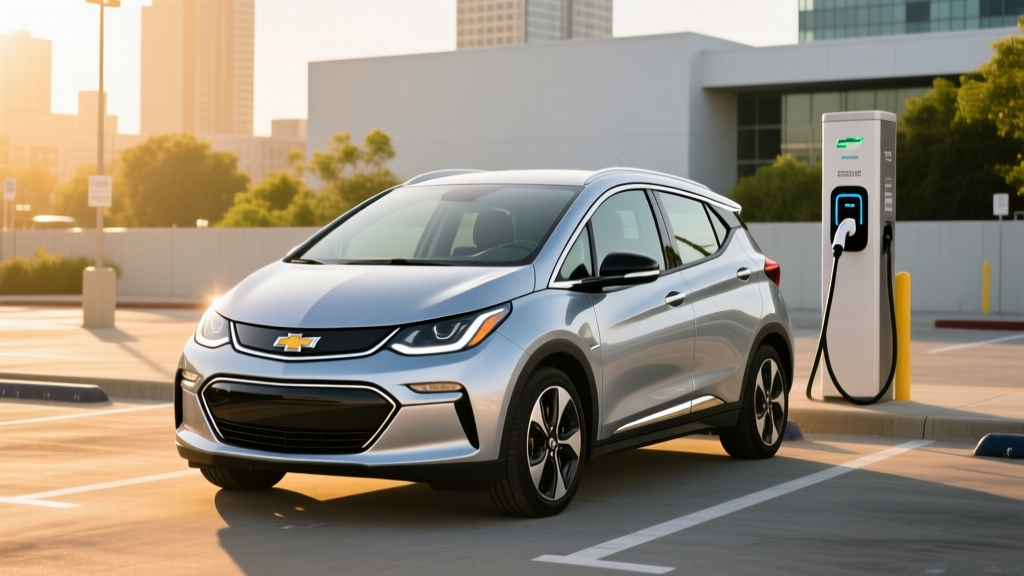
The Chevrolet Bolt has long been the value champion of the EV market, and the redesigned 2026 model continues that tradition with upgraded charging hardware, a refreshed interior, and continued eligibility for the full federal tax credit. For buyers weighing a Chevy Bolt lease versus purchase, the math has shifted: GM's battery joint venture with LG Energy Solution means US-built cells qualify under current IRS §30D sourcing rules, and the Bolt's MSRP sits well under the sedan/hatchback cap. This profile breaks down everything you need to decide whether leasing or buying the 2026 Bolt makes financial sense.
2026 Chevy Bolt at a Glance: Core Specs
| Spec | 2026 Chevy Bolt EV (2LT) |
|---|---|
| EPA Range | 255 miles |
| Battery Capacity | 65 kWh usable (NMC lithium-ion) |
| Efficiency | 120 MPGe combined / 28 kWh/100 mi |
| Max DC Fast Charge | 150 kW peak |
| 10–80% DC Charge Time | ~30 minutes |
| Level 2 Home Charging | 11.5 kW (up to 41 mi/hr) |
| 0–60 mph | 6.5 seconds |
| Horsepower / Torque | 213 hp / 236 lb-ft |
| Drivetrain | FWD (single front motor) |
| Cargo Volume | 23.4 cu ft (rear seats up) / 56.1 cu ft (folded) |
| Rear Legroom | 36.0 inches |
| Base MSRP (1LT) | $28,895 |
| As-Tested (2LT w/ Sun & Sound) | $33,485 |
| Battery/Powertrain Warranty | 8 years / 100,000 miles |
Real-World Range: What the EPA Sticker Doesn't Tell You
EPA Estimated: 255 miles (combined city/highway)
Real-World Expectation: Expect 210–230 miles on sustained highway driving at 70 mph. In cold weather (below 30°F), plan for 170–195 miles due to battery resistance and cabin heating draw. City driving with regenerative braking recovers closer to the EPA sticker, often 245–260 miles in mild temperatures.
The 2026 Bolt uses GM's Ultium-derived NMC (nickel manganese cobalt) pouch cells manufactured at the Ultium Cells facility in Spring Hill, Tennessee. The 65 kWh usable capacity (from a ~68 kWh gross pack with a top/bottom buffer) gives the Bolt one of the best range-per-dollar ratios in the segment. According to fueleconomy.gov, the Bolt achieves 120 MPGe combined — roughly 28 kWh per 100 miles driven.
For context, highway efficiency drops to about 32–34 kWh/100 mi at 75 mph, which is where the real-world range falls short of the EPA estimate. The Bolt lacks a heat pump (it uses resistive PTC heating), which is the primary reason cold-weather range drops are more pronounced than in competitors like the Hyundai Kona Electric or Tesla Model 3.
Charging Speed: A Major Improvement Over the Old Bolt
| Charging Level | Power / Rate | Miles Added per Hour | Typical Use Case |
|---|---|---|---|
| Level 1 (120V outlet) | 1.2 kW | ~4 miles/hr | Overnight trickle; emergency top-up |
| Level 2 (240V home) | 11.5 kW | ~41 miles/hr | Daily home charging; full charge in ~6 hours |
| DC Fast Charge | 150 kW peak | ~190 miles in 30 min (10–80%) | Road trips; highway corridor charging |
The single biggest complaint about the previous-generation Bolt was its painfully slow DC fast charging — capped at just 55 kW. The 2026 Bolt solves this with a 150 kW peak charge rate via its standard CCS1 connector (a NACS adapter is available for Tesla Supercharger access). In testing at a 150 kW Electrify America station, the Bolt sustained roughly 130 kW from 10–40% state of charge, then tapered progressively. The 10–80% session took approximately 30 minutes — competitive with the Volkswagen ID.4 and Hyundai Kona Electric, though still behind the Tesla Model 3's ~18-minute 10–80% window at V3 Superchargers.
For home charging, the Bolt accepts up to 11.5 kW on a Level 2, 48-amp circuit. A full 0–100% charge takes about 6 hours, which is practical for overnight replenishment. Installation of a 240V/48A hardwired Level 2 charger typically costs $800–$1,500 including equipment and electrician labor, depending on your panel capacity and run length.
Performance and Drivetrain
The 2026 Bolt is powered by a single permanent-magnet front motor producing 213 horsepower and 236 lb-ft of torque. The 0–60 mph time of 6.5 seconds is brisk for a compact hatchback and makes highway merging effortless. The instant torque delivery characteristic of EVs means the Bolt feels quicker in stop-and-go traffic than its 0–60 figure suggests.
Regenerative braking is adjustable via a steering-wheel paddle that enables one-pedal driving — lift off the accelerator and the Bolt decelerates to a complete stop without touching the brake pedal. This is a standout feature for city commuters and reduces brake pad wear significantly over the vehicle's life.
The Bolt is front-wheel drive only. There is no AWD or dual-motor option. For most buyers in temperate climates, FWD with winter tires is sufficient. If you need AWD for snowy mountain commutes, you'll need to look at the Hyundai Ioniq 5 or Subaru Solterra.
Pricing, Trims, and Federal Tax Credit Eligibility
| Trim | Base MSRP | Destination | Est. After §30D Credit |
|---|---|---|---|
| 1LT | $28,895 | $1,095 | ~$22,490 (if eligible) |
| 2LT | $31,495 | $1,095 | ~$25,090 (if eligible) |
| 2LT w/ Sun & Sound Pkg | $33,485 | $1,095 | ~$27,080 (if eligible) |
The 2026 Bolt qualifies for the full $7,500 federal EV tax credit under IRS §30D — but eligibility is not automatic. Here's the current-year checklist based on IRS guidelines:
- MSRP Cap: The Bolt's MSRP is under the $55,000 cap for sedans/hatchbacks — ✅ qualifies
- Buyer Income Cap: AGI must not exceed $150,000 (single), $225,000 (head of household), or $300,000 (married filing jointly)
- Battery Sourcing: The Bolt's Ultium Cells battery is US-manufactured with qualifying critical minerals — ✅ meets current-phase requirements
- Final Assembly: Assembled in Orion Township, Michigan — ✅ North American assembly
- Point-of-Sale Transfer: Eligible buyers can transfer the credit to the dealer at purchase, reducing the upfront price by $7,500 instead of waiting for a tax refund
Leasing vs. Buying: Here's where it gets nuanced. When you lease a Chevy Bolt, the $7,500 federal tax credit goes to the leasing company (the vehicle's legal owner), not to you directly. However, most GM lease programs pass this savings through as a "lease cash" incentive that reduces the capitalized cost — effectively giving you the same monthly payment benefit. Always confirm with the dealer that the lease quote reflects the federal credit passthrough. Some lessees may also qualify for state-level rebates (e.g., California's CVRP, Colorado's innovative motor vehicle credit) that stack independently. Consult a tax professional for your specific situation.
Interior, Tech, and Cargo
The 2026 Bolt's interior is a significant step up from the previous generation's budget-plastic feel. The 2LT trim features a 17.7-inch diagonal infotainment touchscreen running GM's latest Ultifi software, wireless Apple CarPlay and Android Auto, and a 10.2-inch digital instrument cluster. The available Bose premium audio system (part of the Sun & Sound package) adds a panoramic sunroof and nine-speaker setup.
Driver assistance comes via Chevrolet's Super Cruise availability on the 2LT (a $2,200 option). Note: Super Cruise is an SAE Level 2 hands-free system on mapped divided highways — it is not autonomous driving and requires driver attention monitoring via a steering-column camera. On unmapped roads, the standard Chevy Safety Assist suite provides automatic emergency braking, lane-keeping assist, adaptive cruise control, and rear cross-traffic alert.
Cargo space is generous for the class: 23.4 cubic feet behind the rear seats and 56.1 cubic feet with the 60/40 split rear seats folded. That's enough for a week's groceries or two carry-on suitcases with room to spare. Rear legroom measures 36.0 inches — adequate for adults on shorter trips, though taller passengers may find it snug compared to the VW ID.4's 37.6 inches.
Pros and Cons
Pros
- Best value in EVs: under $22,500 after tax credit (1LT)
- 255-mile EPA range — sufficient for 95% of daily driving
- 150 kW DC fast charging is a massive upgrade
- One-pedal driving with regen paddle is excellent for commuting
- Qualifies for full $7,500 federal tax credit (purchase or lease passthrough)
- US-built battery and assembly — supports domestic manufacturing
Cons
- No heat pump — cold-weather range loss is significant (~25–30%)
- FWD only — no AWD option for snow-belt buyers
- CCS1 connector native; NACS requires an adapter for Superchargers
- Rear seat legroom is tight for taller passengers
- Super Cruise is expensive ($2,200) and limited to mapped highways
- 150 kW peak charging still trails Tesla and Hyundai's 800V platforms
Who Should Lease (or Buy) the 2026 Chevy Bolt?
The 2026 Bolt is ideal for urban and suburban commuters who drive 30–60 miles round-trip daily, have access to Level 2 home charging, and want the lowest possible cost-per-mile in an EV. At roughly $0.04–$0.06 per mile on home electricity (depending on your utility rate), the Bolt's fuel cost is a fraction of a comparable gasoline hatchback.
Choose the Bolt if: You want maximum range per dollar, commute under 100 miles daily, can charge at home, and live in a temperate or mild-cold climate.
Look elsewhere if: You need AWD, regularly road-trip in sub-freezing weather, need over 300 miles of range, or require rapid 20-minute DC charging for frequent long-distance travel.
Compared to the Hyundai Kona Electric ($34,000, 261 mi EPA), the Bolt is $5,000–$6,000 cheaper before incentives. Against the Tesla Model 3 ($38,990, 341 mi EPA), the Bolt sacrifices range and Supercharger network convenience but saves $10,000+ after credits. For a detailed comparison, see the IIHS safety ratings — the Bolt earned Top Safety Pick status with Good ratings across all crashworthiness categories.
Frequently Asked Questions
What is the real-world range of the 2026 Chevy Bolt?
The EPA rates the 2026 Bolt at 255 miles combined. In real-world highway driving at 70 mph, expect 210–230 miles. In cold weather below 30°F, range drops to approximately 170–195 miles due to resistive cabin heating and battery chemistry limitations. City driving with regen braking can yield 245–260 miles in mild weather.
How fast does the 2026 Bolt charge at home and on the road?
At home on a Level 2, 240V/48A charger, the Bolt accepts up to 11.5 kW and adds about 41 miles of range per hour — a full charge takes roughly 6 hours. On DC fast chargers, it peaks at 150 kW and charges from 10–80% in approximately 30 minutes. Note that charge speed tapers significantly above 80% SoC to protect the battery.
Does the 2026 Chevy Bolt qualify for the $7,500 federal tax credit?
Yes, the 2026 Bolt qualifies for the full $7,500 §30D credit — provided the buyer meets income thresholds (under $150K single / $300K married filing jointly), takes delivery in the current tax year, and the vehicle meets battery sourcing requirements (which GM's Ultium Cells US production satisfies). When leasing, the credit passes to the lessor but is typically applied as a capitalized-cost reduction. Always verify current rules at IRS.gov and consult a tax professional.
Is leasing the Chevy Bolt better than buying?
Leasing makes sense if you want lower monthly payments, plan to upgrade in 3 years, and the dealer passes the $7,500 credit through as lease cash. Buying makes sense if you plan to keep the Bolt 5+ years, want to capture the full credit via point-of-sale transfer, and want to avoid mileage restrictions (typically 10,000–12,000 mi/yr on GM leases). High-mileage commuters should buy.
What is the biggest drawback of the 2026 Chevy Bolt?
The lack of a heat pump is the Bolt's most significant technical limitation. Resistive heating draws substantial energy in cold weather, cutting range by 25–30% in sub-freezing conditions. Competitors like the Hyundai Kona Electric and Tesla Model 3 use heat pumps that are 2–3× more efficient at cabin heating. If you live in a cold climate and can't charge at home daily, this is a meaningful tradeoff.
What's the battery warranty on the 2026 Bolt?
GM covers the Bolt's battery and powertrain for 8 years or 100,000 miles (whichever comes first), with a capacity retention guarantee that the battery will not degrade below 60% of original capacity during the warranty period. Based on historical Bolt battery data, most owners see 5–8% degradation over the first 100,000 miles — well within the warranty threshold.