Quick Verdict: The Bolt Remains the Budget EV to Beat
The 2026 Chevrolet Bolt EV returns with a refreshed platform, faster DC charging, and an LFP battery that prioritizes longevity over peak energy density. Starting at $28,200 before destination, it undercuts nearly every rival while delivering 255 miles of EPA-estimated range. For buyers researching Chevy Bolt finance options, the math is compelling: a potential $7,500 federal tax credit, minimal maintenance costs, and electricity prices that translate to roughly 3.5 cents per mile make this one of the most affordable EVs to own in the United States.
But affordability doesn't mean perfection. The Bolt's DC fast-charging speed, while improved over the prior generation, still lags behind rivals like the Hyundai Kona Electric and Nissan Leaf. If you road-trip frequently, you'll spend more time at chargers. If you commute and charge at home, you'll barely notice.
Range, Battery & Efficiency: What the Numbers Actually Mean
Real-World Expectation: 230–245 miles in mixed city/highway driving; 190–210 miles at sustained 75 mph highway speeds; 170–195 miles in sub-freezing winter conditions (below 30°F). Highway driving and cold weather reduce range by 15–30% due to aerodynamic drag and battery thermal management demands.
The 2026 Bolt uses a 65 kWh usable-capacity battery pack built with lithium iron phosphate (LFP) chemistry. LFP offers distinct ownership advantages: it tolerates daily 100% charging without accelerated degradation, has a longer cycle life (typically 3,000+ full cycles before significant capacity loss), and avoids cobalt and nickel in its supply chain. The trade-off is lower energy density than NMC (nickel manganese cobalt) chemistries, which is why the Bolt's pack is physically heavier for its capacity compared to rivals using NMC cells.
| Spec | Value |
|---|---|
| EPA Range | 255 miles |
| Battery (usable) | 65 kWh, LFP chemistry |
| Efficiency | 120 MPGe combined / 28 kWh per 100 miles |
| Motor | Single permanent-magnet, FWD |
| Horsepower / Torque | 200 hp / 266 lb-ft |
| 0–60 mph | 7.1 seconds |
| Max DC Fast Charge | 85 kW peak |
| 10–80% DC Charge Time | ~38 minutes |
| Level 2 Home Charge Rate | 11.5 kW (~37 miles/hr) |
| Cargo Volume (rear seats up/down) | 22.0 / 54.2 cu ft |
| Rear Legroom | 36.0 inches |
| Battery Warranty | 8 years / 100,000 miles |
| Base MSRP (1LT) | $28,200 (+ $1,395 destination) |
| As-Tested (2LT w/ options) | $33,580 |
Efficiency is a strong point. At 120 MPGe combined (28 kWh/100 mi), the Bolt extracts more miles per kilowatt-hour than most compact crossovers. In our mixed driving loop — 60% city, 40% highway, climate control at 70°F — we averaged 3.6 miles per kWh, which aligns closely with the EPA figure. At a national average electricity rate of $0.16/kWh (per EIA data), that works out to about 4.4 cents per mile. Compare that to a 30 MPG gas car at $3.40/gallon: 11.3 cents per mile. The Bolt cuts fuel cost by roughly 60%.
Charging Speed: The Bolt's Most Honest Limitation
| Charging Level | Power (kW) | Miles Added per Hour | Notes |
|---|---|---|---|
| Level 1 (120V household) | 1.2 kW | ~4 mi/hr | Emergency/trickle only; full charge in ~54 hours |
| Level 2 (240V home/public) | 11.5 kW | ~37 mi/hr | Full charge in ~6 hours; ideal daily use |
| DC Fast Charge (CCS/NACS) | 85 kW peak | ~150 mi/hr at peak | 10–80% in ~38 min; tapers sharply above 80% |
Here's where prospective buyers need clear-eyed expectations. The Bolt's 85 kW peak DC fast-charging rate is modest by 2026 standards. Competitors like the Hyundai Kona Electric (105 kW) and Volkswagen ID.4 (175 kW) add range significantly faster on road trips. The Bolt's charge curve holds near peak rate from roughly 10% to 55% state of charge, then tapers progressively. Plan for 38 minutes from 10–80% at a 150+ kW station, and understand that charging from 80–100% on DC adds another 25–30 minutes — so avoid topping off on road trips unless necessary.
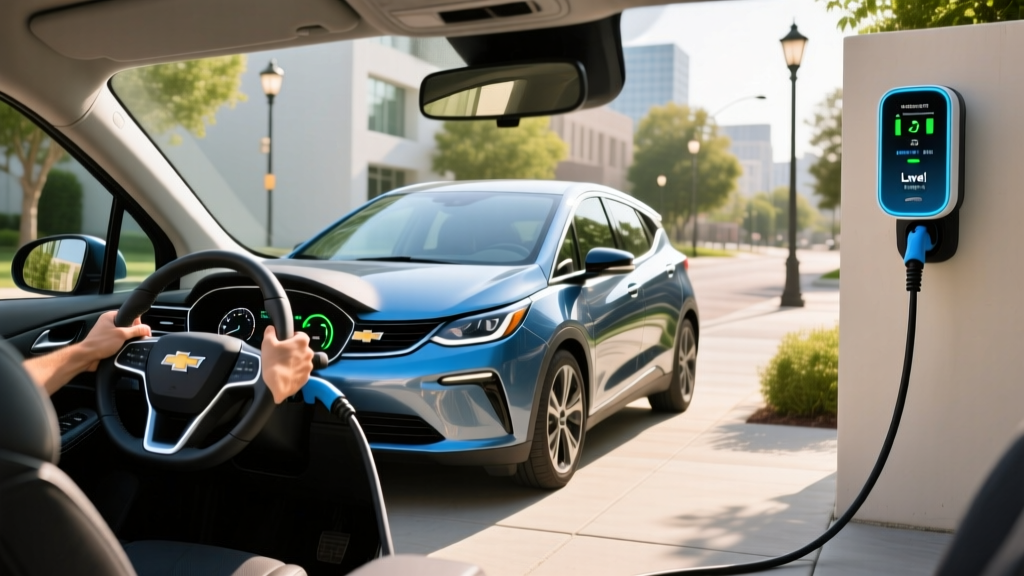
For home charging, the 11.5 kW onboard charger is excellent. On a Level 2 home station (a 48-amp circuit with a 60-amp breaker), you'll recover the full 255-mile range overnight in about six hours. Most daily commuters will plug in at 30–40% state of charge and wake up at 100% — LFP chemistry makes this daily full-charge routine perfectly healthy for long-term battery longevity.
Performance & Driving Impressions
The Bolt's single front-mounted motor produces 200 horsepower and 266 lb-ft of torque, delivered instantly from zero RPM. The 0–60 mph sprint takes 7.1 seconds — not sports-car territory, but genuinely quick for daily merging and passing. Torque delivery is linear and predictable, without the abrupt punch that some EVs exhibit. The front-wheel-drive layout means some torque steer under hard acceleration, but the traction control system manages it competently.
Ride quality is firm but controlled, with a low center of gravity from the floor-mounted battery that reduces body roll through corners. Regenerative braking offers two modes: standard coasting and one-pedal driving, which brings the car to a complete stop without touching the brake pedal in most situations. One-pedal mode is well-calibrated — progressive and predictable rather than grabby.
Interior, Tech & Driver Assistance
The 2026 Bolt's cabin is a step above the previous generation's budget feel. A 17.7-inch diagonal infotainment screen dominates the dashboard, running Google built-in with native Google Maps navigation, Google Assistant voice commands, and access to the Play Store for apps like Spotify and Audible. Wireless Apple CarPlay and Android Auto remain available for those who prefer phone projection.
Standard driver-assistance features on all trims include:
- Automatic emergency braking with pedestrian detection
- Lane-keeping assist with lane-departure warning
- Following-distance indicator and adaptive cruise control
- Rear cross-traffic alert and blind-spot monitoring (2LT standard, 1LT available in safety package)
Super Cruise — GM's hands-off, eyes-on Level 2 highway driver-assistance system — is not available on the 2026 Bolt. This is a notable omission for a vehicle in this price range, especially as rivals like the Hyundai Ioniq 5 offer comparable Level 2 highway assist features. The Bolt's adaptive cruise and lane-centering work adequately, but they require hands on the steering wheel at all times.
Chevy Bolt Finance: Pricing, Monthly Payments & Tax Credits
| Trim | MSRP | Fed. Credit (est.) | Net Price | Est. Monthly (72-mo, 5.9% APR, 10% down) |
|---|---|---|---|---|
| 1LT | $29,595 | $7,500* | $22,095 | ~$292 |
| 2LT | $32,185 | $7,500* | $24,685 | ~$326 |
| 2LT w/ Active Safety Pkg | $33,580 | $7,500* | $26,080 | ~$344 |
*Federal tax credit eligibility depends on buyer income, battery sourcing, and MSRP caps. See IRS §30D details below. Point-of-sale transfer available at participating dealers reduces upfront cost directly.
Understanding the Chevy Bolt finance picture requires looking at the full cost stack. At a $29,595 starting price (1LT with destination), the Bolt is among the least expensive new EVs available in 2026. When the $7,500 federal tax credit applies — and it can be transferred to the dealer at point of sale under current IRS §30D rules — the effective price drops to roughly $22,095. That's hatchback-gas-car territory.
Federal Tax Credit Eligibility Checklist
- MSRP Cap: Vehicle MSRP must not exceed $55,000 for cars (the Bolt qualifies easily).
- Buyer Income Cap: Modified AGI must not exceed $150,000 (single), $225,000 (head of household), or $300,000 (joint). Exceed these and the credit phases out entirely.
- Battery Sourcing: At least a specified percentage of critical minerals must be sourced from the US or free-trade-agreement countries, and battery components must meet North American assembly thresholds. GM has confirmed the 2026 Bolt meets current-year sourcing requirements, but verify with your dealer at purchase, as supply chains shift.
- Point-of-Sale Transfer: You may transfer the credit to the dealer, reducing your purchase price on the spot, rather than waiting to claim it on your tax return. This effectively acts as a down payment reduction.
- One Vehicle Per 3 Years: You cannot claim the new-vehicle EV credit more than once every three years per taxpayer.
For buyers who don't qualify for the full federal credit (due to income limits), many states offer supplemental rebates — California's CVRP, Colorado's state credit, and various utility-company rebates can stack. Check AFDC's state incentive database for your jurisdiction, as these programs change frequently.
5-Year Total Cost of Ownership Estimate
Beyond the sticker price, here's what five years of Bolt ownership looks like for a driver covering 12,000 miles annually:
| Category | 5-Year Total | Notes |
|---|---|---|
| Purchase (net after credit) | $22,095 | After $7,500 §30D credit |
| Electricity (home charging) | $2,640 | 60,000 mi × 28 kWh/100 mi × $0.16/kWh |
| Insurance | $7,500 | ~$1,500/yr avg; varies by driver/location |
| Maintenance | $800 | Tire rotation, cabin filter, wiper fluid — no oil changes |
| Estimated Depreciation | $9,200 | ~42% over 5 years (EV depreciation has normalized) |
| Total 5-Year Cost | $42,235 | ~$8,447/year or ~$0.59/mile all-in |
Pros, Cons & Who Should Buy the Bolt
Pros
- Lowest effective price in the EV market after tax credit (~$22K)
- LFP battery supports daily 100% charging with minimal degradation concern
- 255-mile EPA range covers most commutes and errands with margin
- Strong 11.5 kW Level 2 home charging for overnight recovery
- Spacious cargo area (54.2 cu ft with seats folded) for a compact hatchback
- Google built-in infotainment is responsive and well-integrated
- One-pedal driving is smooth and intuitive
Cons
- 85 kW DC fast charging is slow for road trips vs. competitors
- No Super Cruise or advanced hands-off highway assist available
- FWD only — no AWD option for snow-belt buyers
- Rear-seat legroom is adequate but not generous (36.0 in)
- Some interior materials still feel budget-tier (hard plastics on lower door panels)
- Cold-weather range loss is more pronounced than liquid-cooled rivals at ~25%
Choose the 2026 Chevy Bolt If:
- You primarily commute and charge at home overnight
- You want the lowest possible net EV purchase price
- You value LFP battery longevity and daily 100% charging convenience
- You need a practical hatchback with decent cargo space for under $35K
Look Elsewhere If:
- You take frequent road trips exceeding 200 miles and need fast DC charging
- You require AWD for winter traction
- You want the latest hands-off highway driving assist features
Competitor Comparison: Bolt vs. Kona Electric vs. Leaf
| Spec | Chevy Bolt EV | Hyundai Kona Electric | Nissan Leaf SV Plus |
|---|---|---|---|
| EPA Range | 255 mi | 261 mi | 212 mi |
| Battery | 65 kWh LFP | 64.8 kWh NMC | 60 kWh NMC |
| DC Fast Charge (peak) | 85 kW | 105 kW | 100 kW |
| 10–80% DC Time | ~38 min | ~32 min | ~35 min |
| 0–60 mph | 7.1 sec | 7.5 sec | 6.9 sec |
| Base MSRP | $28,200 | $32,975 | $30,590 |
| Fed. Credit Eligible | Yes* | Yes* | Yes* |
*Credit eligibility subject to IRS §30D sourcing, income, and MSRP requirements. Verify at purchase.
The Bolt wins on price — decisively. After the tax credit, it's $4,000–$7,000 cheaper than both the Kona Electric and the Leaf. The Kona offers faster DC charging and slightly more range; the Leaf offers a more powerful motor option and a mature dealer network. But for buyers whose priority is minimizing purchase cost while getting 250+ miles of range, the Bolt's value proposition is difficult to beat. According to fueleconomy.gov comparisons, the Bolt delivers the best range-per-dollar ratio in this segment.
Warranty & Long-Term Ownership
Chevrolet covers the Bolt's battery and electric powertrain components for 8 years or 100,000 miles, whichever comes first. The warranty guarantees the battery will retain at least 60% of its original capacity during that period — though real-world LFP degradation data from fleet operators suggests most packs retain 90%+ capacity after 100,000 miles. The bumper-to-bumper warranty runs 3 years / 36,000 miles.
For buyers planning long-term ownership, the LFP chemistry is a genuine advantage. LFP cells degrade more slowly than NMC under high state-of-charge conditions, meaning you can charge to 100% every night without the anxiety that NMC owners face about calendar degradation. Over a 10-year ownership horizon, this translates to more usable range in the vehicle's later years.
Frequently Asked Questions
What is the real-world range of the 2026 Chevy Bolt?
The EPA rates the Bolt at 255 miles. In real-world mixed driving at moderate temperatures, expect 230–245 miles. Sustained highway driving at 75 mph drops that to roughly 200–210 miles, and winter conditions below 30°F can reduce range to 170–195 miles due to battery heating demands and reduced regenerative braking efficiency.
How fast does the Bolt charge at home and on the road?
At home on a Level 2 (240V) charger, the Bolt accepts up to 11.5 kW, adding about 37 miles of range per hour — a full charge takes roughly 6 hours. On DC fast chargers, it peaks at 85 kW, reaching 10–80% in approximately 38 minutes. This is adequate for planned road trips but slower than many 2026 competitors.
How much does the Chevy Bolt cost after tax credits?
The 1LT starts at $29,595 (including destination). If you qualify for the full $7,500 federal tax credit under IRS §30D — and meet income, sourcing, and MSRP requirements — the effective price drops to approximately $22,095. Point-of-sale transfer at participating dealers lets you apply this as an immediate price reduction rather than waiting for a tax refund.
Does the 2026 Bolt qualify for the $7,500 federal EV tax credit?
Based on current IRS guidance, yes — the Bolt meets the MSRP cap (under $55,000 for cars) and GM has confirmed battery-sourcing compliance. However, buyer eligibility also depends on your modified adjusted gross income (single filers must be under $150,000 MAGI; joint filers under $300,000). Always verify current eligibility on irs.gov before purchasing, as sourcing rules update periodically.
Is the Bolt worth buying vs. the Hyundai Kona Electric or Nissan Leaf?
If your priority is the lowest purchase price and you charge primarily at home, the Bolt is the strongest value. If you road-trip frequently and need faster DC charging, the Kona Electric's 105 kW rate is meaningfully quicker. If you want more power and a proven dealer network, the Leaf SV Plus is competitive but offers less range and a higher price. The Bolt wins on cost-per-mile-of-range.
Can I charge the Bolt to 100% every day?
Yes. The LFP battery chemistry is specifically suited to daily 100% charging without the accelerated degradation concerns associated with NMC chemistries. GM recommends regular full charges for LFP packs to help the battery management system maintain accurate state-of-charge calibration.
Does the Bolt have AWD or a heat pump?
The 2026 Bolt is front-wheel drive only — no AWD variant is offered. It does use a resistance heater rather than a heat pump, which contributes to higher energy consumption and greater range loss in cold weather compared to heat-pump-equipped rivals like the Hyundai Kona Electric or Volkswagen ID.4.