Quick Verdict: The Bolt EV Still Owns the Budget-EV Space
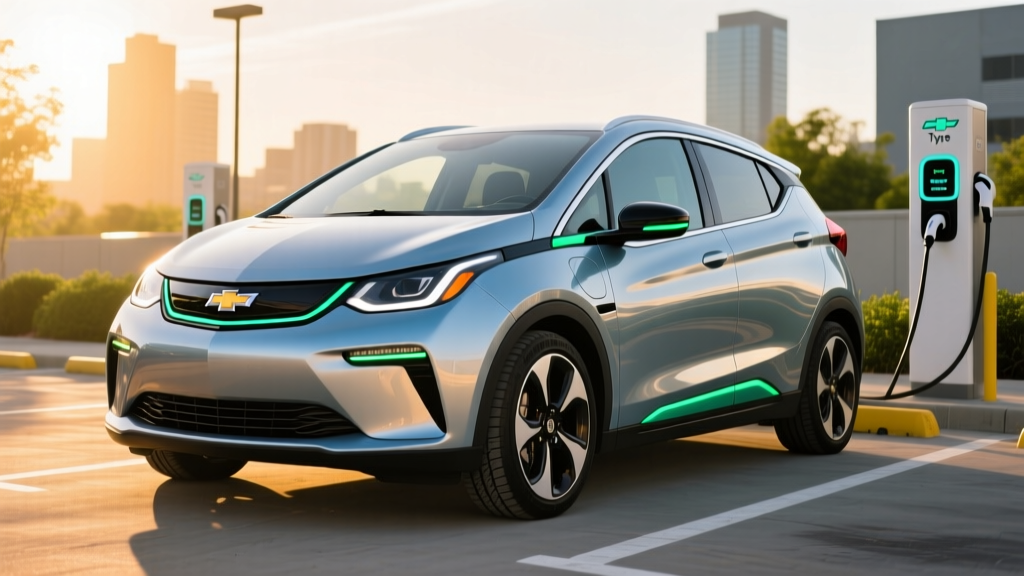
Chevrolet killed the original Bolt in 2023, then brought it back on GM's Ultium platform for the 2025 model year. The 2026 Chevy Bolt EV carries over that redesigned formula: a sub-$28,000 compact hatchback with competitive range, decent interior space, and a practical tech suite. It isn't the fastest-charging EV on the market, and its DC fast-charge rate remains its most significant weakness. But for budget-conscious buyers who charge mostly at home, the Bolt EV continues to offer the most accessible entry point into a new electric vehicle.
This guide functions as a comprehensive 2026 Chevy Bolt EV wiki — every spec, real-world performance figure, and ownership detail you need in one place.
Range, Battery, and Efficiency
Real-World Expectation: Plan for ~210–230 miles on a 70+ mph highway trip in moderate temperatures. In freezing weather (below 30°F), expect range to drop to approximately 170–195 miles without aggressive preconditioning. City and suburban driving with regenerative braking can match or even exceed the EPA sticker.
| Specification | Value |
|---|---|
| EPA Range (1LT, 17" wheels) | 255 miles |
| EPA Range (2LT, 18" wheels) | ~243 miles |
| Usable Battery Capacity | 65.2 kWh (NMC lithium-ion, Ultium platform) |
| Gross Battery Capacity | ~68 kWh |
| Battery Chemistry | NMC (nickel-manganese-cobalt) |
| Battery Thermal Management | Active liquid cooling/heating |
| Combined MPGe | 120 MPGe |
| Efficiency | 28 kWh / 100 miles |
| Drivetrain | FWD (front-wheel drive), single motor |
The Bolt EV uses an NMC (nickel-manganese-cobalt) Ultium pouch-cell pack rather than the LFP chemistry appearing in some rivals. NMC offers higher energy density — important in a compact package — but is less tolerant of daily 100% charges than LFP. Chevrolet recommends charging to 80% for routine use and reserving full charges for road trips.
Efficiency is a genuine strength. At 28 kWh per 100 miles, the Bolt EV sips electrons, which helps offset the modest battery size. For context, that's roughly comparable to the Hyundai Kona Electric and meaningfully better than larger crossovers like the Tesla Model Y.
Charging: The Bolt EV's Achilles' Heel
| Charging Level | Max Rate | Speed / Time |
|---|---|---|
| Level 1 (120V household outlet) | ~1.4 kW | ~4 miles per hour of charging |
| Level 2 (240V home / public AC) | 11.5 kW (onboard charger) | ~39 miles per hour; 0–100% in ~7 hours |
| DC Fast Charge (CCS) | 55 kW peak | 10–80% in approximately 45–50 minutes |
Let's be direct: 55 kW peak DC fast charging is the Bolt EV's most significant compromise in 2026. Competitors like the Hyundai Kona Electric (100+ kW), Kia Niro EV, and Tesla Model Y (up to 250 kW) charge dramatically faster on road trips. A 55 kW peak means a 10–80% session takes roughly 45 to 50 minutes — workable for a lunch stop, but noticeably slower than the 18–25 minute sessions you'll get in a Hyundai Ioniq 5 or Tesla.
The charge curve is relatively flat, which helps: the Bolt EV holds close to its peak rate through a wide state-of-charge window before tapering above 80%. But the ceiling is simply low. If you plan to take frequent road trips of 300+ miles, this matters. If 90% of your charging is at home overnight on Level 2, you'll rarely notice.
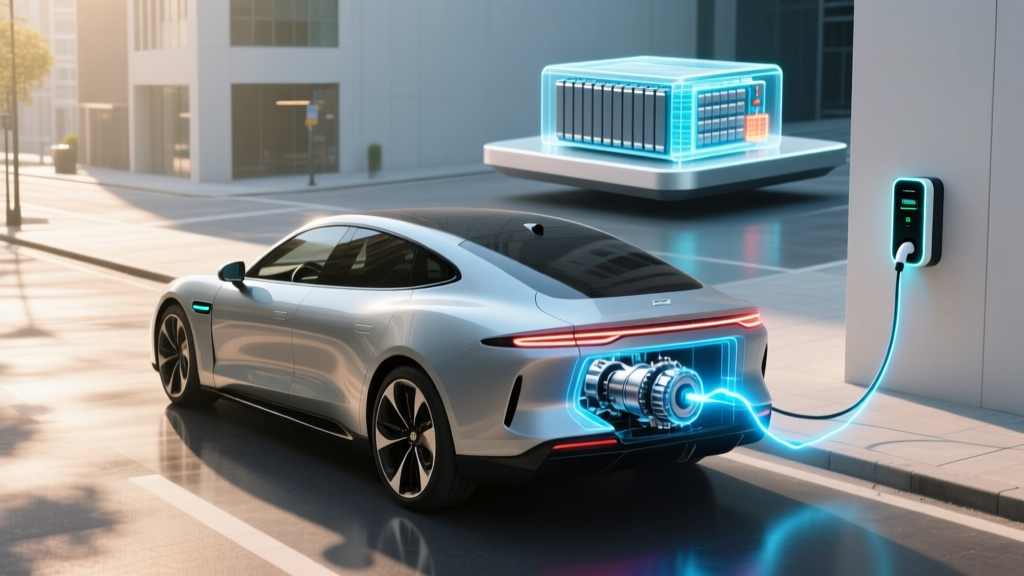
Home charging is a different story. The 11.5 kW onboard AC charger is competitive, replenishing the pack from empty in about 7 hours on a 240V/48-amp Level 2 home station. That's fast enough to wake up with a full battery every morning, which is how most EV owners actually charge.
Performance and Driving Dynamics
| Metric | Value |
|---|---|
| Horsepower | 200 hp |
| Torque | 236 lb-ft |
| 0–60 mph | ~7.0 seconds |
| Drivetrain | Front-wheel drive (FWD), single electric motor |
| Top Speed | ~93 mph (electronically limited) |
| Regenerative Braking | One-Pedal Driving mode + paddle regen adjust |
The single front motor delivers 200 hp and 236 lb-ft of instant torque, enough for a 0–60 mph sprint of approximately 7.0 seconds. That's adequate for merging and passing, though it trails the dual-motor and performance-oriented EVs in the segment. There's no AWD option.
Driving dynamics are commuter-pleasant rather than sporty. The ride is compliant, the steering is light, and the low center of gravity (thanks to the under-floor battery) keeps body lean reasonable in corners. One-Pedal Driving mode provides strong regenerative braking that allows true single-pedal operation in stop-and-go traffic — a feature that, once you're accustomed to it, makes driving a conventional car feel antiquated.
Interior, Cargo, and Technology
| Dimension | Value |
|---|---|
| Cargo Volume (behind rear seats) | ~22.5 cu ft |
| Cargo Volume (rear seats folded) | ~57.0 cu ft |
| Front Legroom | ~43.1 inches |
| Rear Legroom | ~36.0 inches |
| Seating Capacity | 5 passengers |
The Ultium-platform redesign gave the Bolt EV noticeably more interior room than the previous generation. Front-seat passengers get generous legroom, and the rear seat now accommodates adults on longer trips without the cramped feeling of the old model. Cargo space at 22.5 cubic feet behind the rear seats is competitive with the Hyundai Kona Electric and Kia Niro EV, and the 57 cubic feet with seats folded is genuinely useful for IKEA runs or camping gear.
Notably, the Bolt EV does not have a front trunk (frunk). The space under the hood is occupied by power electronics and the HVAC system.
Infotainment and Driver Assistance
The centerpiece is an 11-inch diagonal touchscreen running Chevrolet's latest infotainment software, paired with an 8-inch digital instrument cluster. Wireless Apple CarPlay and Android Auto are standard across all trims. The system is responsive, logically laid out, and includes built-in Google compatibility on higher trims.
Chevy Safety Assist comes standard and includes:
- Automatic Emergency Braking with pedestrian detection
- Lane Keep Assist with Lane Departure Warning
- Following Distance Indicator
- Forward Collision Alert
- IntelliBeam automatic high beams
- Rear Cross Traffic Alert
Available Super Cruise (on 2LT with the optional technology package) provides hands-free driving on over 750,000 miles of mapped highways in the US and Canada. This is a SAE Level 2 system — the driver must remain attentive, and a camera monitors eye gaze. It is not autonomous driving. But within its operational design domain (divided highways), it is one of the most refined driver-assistance systems available, reducing fatigue on long hauls considerably.
Pricing, Trims, and Federal Tax Credit
| Trim | Base MSRP | Est. After §30D Credit* |
|---|---|---|
| 1LT | ~$26,995 | ~$19,495 |
| 2LT | ~$29,995 | ~$22,495 |
*Tax credit estimates assume full $7,500 eligibility under IRS §30D. Eligibility depends on buyer income, battery component sourcing, critical mineral requirements, and MSRP caps. The Bolt EV's MSRP falls well under the $55,000 passenger-car cap. Consult a tax professional for your specific situation.
- MSRP Cap: Bolt EV MSRP is well under the $55,000 limit for passenger cars ✓
- Buyer Income Limits: AGI must not exceed $150,000 (single), $225,000 (head of household), or $300,000 (joint) — verify on irs.gov
- Battery Sourcing: GM has worked to qualify Ultium-pack vehicles, but critical-mineral and battery-component thresholds tighten annually. Confirm current-year status at the point of sale or on fueleconomy.gov
- Point-of-Sale Transfer: Eligible buyers can transfer the credit to the dealer at purchase, reducing the purchase price directly rather than waiting for tax filing
- Final Assembly: Must be assembled in North America — the Bolt EV is built in Michigan ✓
Battery Warranty and Longevity
| Coverage | Term |
|---|---|
| Battery Pack (capacity retention) | 8 years / 100,000 miles |
| Electric Propulsion Components | 8 years / 100,000 miles |
| Bumper-to-Bumper | 3 years / 36,000 miles |
| Powertrain (non-electric) | 5 years / 60,000 miles |
| Capacity Retention Threshold | Warranty triggers if battery falls below ~70% of original capacity |
GM's 8-year/100,000-mile battery warranty is standard for the industry. The ~70% capacity-retention threshold means Chevrolet will repair or replace the battery if it degrades below that level within the warranty period. Based on data from the previous-generation Bolt (which had its own well-documented recall history that GM resolved), the Ultium NMC pack is expected to retain approximately 85–90% of original capacity after 100,000 miles under normal use patterns — consistent with modern liquid-cooled NMC packs.
Who Should Buy the 2026 Chevy Bolt EV?
- You want the most affordable new EV with 250+ miles of range
- Most of your driving is commuting, errands, and suburban trips under 150 miles round-trip
- You can install a Level 2 charger at home
- You value hatchback practicality and cargo flexibility
- You qualify for the full $7,500 federal tax credit, bringing the effective price under $20,000
- You take frequent 300+ mile road trips (the 55 kW DC charging is frustrating on long hauls)
- You need AWD for snow-belt winters
- You want the latest in ultra-fast 800V charging architecture
- You need towing capability (the Bolt EV is not rated for towing)
Pros and Cons
- Lowest starting MSRP of any 250+ mile EV in the US market
- Strong real-world efficiency (28 kWh/100mi, 120 MPGe combined)
- Spacious interior and cargo area for the compact-hatchback segment
- Standard Chevy Safety Assist suite
- Available Super Cruise for hands-free highway driving
- Federal tax credit eligibility can bring effective price below $20,000
- 11.5 kW onboard Level 2 charger is fast for overnight home charging
- 55 kW peak DC fast charging is significantly slower than competitors
- No AWD option available
- No front trunk (frunk)
- NMC chemistry requires 80% daily charge limit for longevity (unlike LFP rivals that tolerate 100%)
- Rear-seat legroom, while improved, still trails compact SUVs
- Not rated for towing
Competitor Comparison
| Spec | Chevy Bolt EV | Hyundai Kona Electric | Tesla Model Y (Standard) |
|---|---|---|---|
| EPA Range | 255 mi | ~261 mi | ~320 mi |
| Battery (usable) | 65.2 kWh | ~64.8 kWh | ~60 kWh (LFP) |
| DC Fast Charge Peak | 55 kW | ~100 kW | ~170 kW |
| 10–80% DC Time | ~47 min | ~40 min | ~25 min |
| 0–60 mph | ~7.0 sec | ~7.5 sec | ~5.0 sec (AWD) |
| Starting MSRP | ~$26,995 | ~$32,975 | ~$44,990 |
| Federal §30D Credit | Eligible (verify) | Eligible (verify) | Eligible (verify) |
The Bolt EV wins on price by a wide margin. The Kona Electric offers faster DC charging and a similar form factor at a higher cost. The Model Y delivers more range, far faster charging, AWD, and a Supercharger network advantage — but at nearly double the Bolt's starting price. The decision ultimately comes down to budget versus road-trip convenience.
Frequently Asked Questions
What is the real-world range of the 2026 Chevy Bolt EV?
The EPA rates the Bolt EV 1LT at 255 miles. In real-world highway driving at 70–75 mph in moderate temperatures, expect approximately 210–230 miles. In sub-freezing conditions, that can drop to 170–195 miles. City driving with regenerative braking often matches or slightly exceeds the EPA figure.
How fast does the Bolt EV charge at home and on DC fast chargers?
At home on a 240V Level 2 charger, the Bolt EV accepts up to 11.5 kW, adding roughly 39 miles of range per hour and charging from empty to full in about 7 hours. On a DC fast charger, it peaks at 55 kW, taking approximately 45–50 minutes for a 10–80% session.
How much does the 2026 Chevy Bolt EV cost after tax credits?
The 1LT starts at approximately $26,995. If you qualify for the full $7,500 §30D federal tax credit (subject to income limits, battery sourcing rules, and MSRP caps), the effective price drops to roughly $19,495 — making it one of the least expensive new EVs in America.
Is the Bolt EV worth buying over the Hyundai Kona Electric or Tesla Model Y?
If your budget is firm around $20,000–$27,000 after incentives and you primarily commute locally with home charging, the Bolt EV is an outstanding value. If you road-trip frequently and fast DC charging matters, the Kona Electric or Model Y are better choices at higher price points.
Does the 2026 Chevy Bolt EV qualify for the federal EV tax credit?
The Bolt EV is assembled in North America and its MSRP falls well under the $55,000 passenger-vehicle cap, satisfying two key requirements. However, full $7,500 credit eligibility also depends on your adjusted gross income, the battery's critical-mineral and component sourcing percentages (which tighten each year), and dealer documentation. Always verify current eligibility on fueleconomy.gov or with your tax professional before purchasing.
What are the biggest pros and cons of the Bolt EV?
The biggest pro is value: nothing else delivers 255 miles of EPA range for under $27,000 MSRP (potentially under $20,000 after the tax credit). The biggest con is 55 kW DC fast charging, which makes road trips noticeably slower than in competing EVs.
Does the Bolt EV have a front trunk (frunk)?
No. The Bolt EV does not have a frunk. All cargo space is in the rear hatchback area (22.5 cu ft behind rear seats, 57.0 cu ft with seats folded).
Is Super Cruise available on the Bolt EV?
Yes, GM's Super Cruise hands-free driving system is available on the 2LT trim as part of an optional technology package. Super Cruise is an SAE Level 2 driver-assistance system — the driver must remain attentive at all times. It operates on over 750,000 miles of compatible divided highways in the US and Canada.