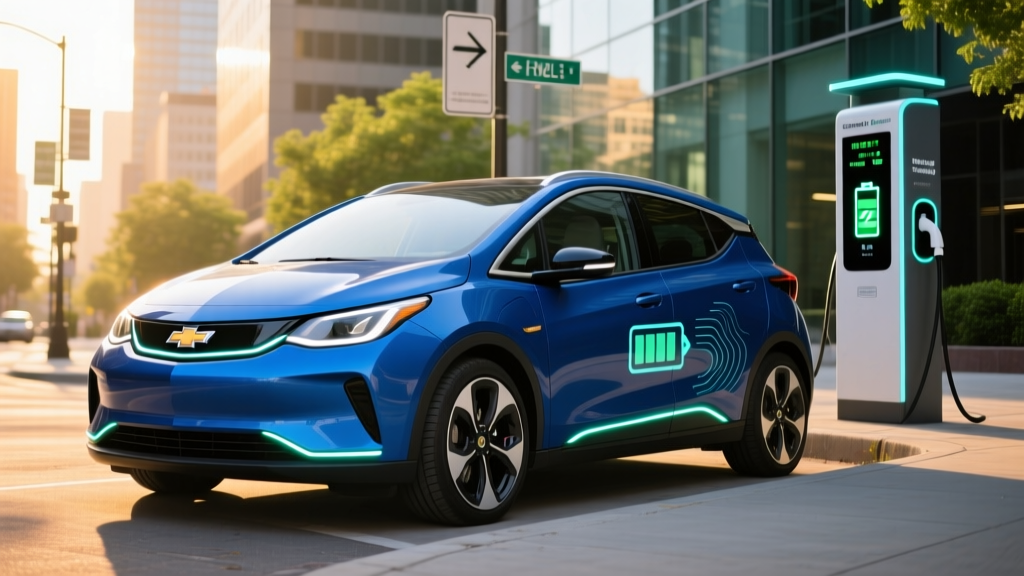
The original Chevy Bolt EV and EUV bowed out after the 2023 model year, but General Motors confirmed a next-generation Bolt built on its Ultium platform — and the 2026 Chevy Bolt teased new features that address the outgoing model's most glaring weaknesses: sluggish DC fast charging, an aging CCS connector, and a battery chemistry that traded energy density for cost. With the compact EV segment more crowded than ever (Hyundai Kona Electric, Nissan Leaf successor, Tesla Model 2 speculation), Chevy's revival hinges on whether it can deliver a sub-$30,000 electric car that actually charges at modern speeds.
Below is everything confirmed or strongly indicated by GM as of early 2026 — along with honest real-world caveats and a framework for deciding whether to wait for the Bolt or buy a competitor now.
What the 2026 Chevy Bolt Teased: Confirmed vs. Expected Specs
GM first confirmed the next-gen Bolt's return in early 2024 and has released incremental details through 2025 and into the 2026 model-year reveal window. Here is where each major spec stands:
| Spec | Status | Figure |
|---|---|---|
| Platform | Confirmed | GM Ultium (BEV3) |
| Body styles | Confirmed | Hatchback (Bolt EV) and EUV crossover |
| Battery chemistry | Confirmed | LFP (lithium iron phosphate) |
| Usable battery capacity | Estimated | ~65 kWh |
| EPA-estimated range | Target (not yet EPA-certified) | ~260–290 miles |
| DC fast-charge peak rate | Target | ~150 kW |
| Charge port | Confirmed | NACS (native Tesla Supercharger access) |
| Drivetrain | Confirmed | FWD, single motor |
| Horsepower | Estimated | ~200 hp |
| 0–60 mph | Estimated | ~7.0 seconds |
| Base MSRP (target) | Announced target | ~$27,000–$29,000 |
| On-sale timing | Confirmed window | Late 2026 (as 2027 MY possible) |
The single most important shift is the move to LFP chemistry. The outgoing Bolt used an LG-sourced NMC (nickel manganese cobalt) pack that, while energy-dense, was expensive and tied the Bolt to supply-chain headaches (remember the 2021–2022 battery recall and stop-sale). LFP eliminates cobalt entirely, costs less per kWh, and tolerates daily charging to 100% without the same degradation concerns as NMC — a meaningful ownership advantage for a budget EV meant to be driven hard and plugged in nightly.
Range and Efficiency: EPA Target vs. Real-World Reality
GM has targeted a range improvement over the outgoing Bolt EV's 259-mile EPA rating. With a larger ~65 kWh LFP pack and improved powertrain efficiency on the Ultium architecture, the 260–290 mile EPA target is plausible — but buyers should read that number carefully.
Real-world expectations: In mixed suburban/highway driving at moderate temperatures (60–75°F), expect to see 230–265 miles from a full charge. Sustained 75+ mph highway driving will push consumption higher — likely 200–230 miles before you're hunting for a charger. In cold weather (below 32°F), LFP batteries are more susceptible to range loss than NMC; expect 170–210 miles of usable range with cabin heat running and no preconditioning. LFP's lower energy density is the trade-off for its cost and longevity advantages.
Efficiency should land around 115–120 MPGe combined (roughly 28–30 kWh/100 miles), competitive with the Hyundai Kona Electric but trailing the Tesla Model 3's class-leading efficiency. The Bolt's boxy hatchback shape works against it at highway speeds compared to sleeker sedans.
Charging: The Bolt's Biggest Upgrade — And Remaining Question Mark
The outgoing Bolt's 55 kW peak DC fast-charge rate was its most criticized flaw, making road trips an exercise in patience (10–80% took nearly an hour). The 2026 Bolt addresses this directly, but the numbers tell a nuanced story.
| Charging Level | Power / Rate | Time or Miles Added |
|---|---|---|
| Level 1 (120V household) | ~1.4 kW | ~4–5 miles per hour |
| Level 2 (240V home/workplace) | ~11.5 kW (est.) | ~35–40 miles per hour; full charge in ~6–7 hours |
| DC fast charge (peak) | ~150 kW | 10–80% in ~30–35 minutes (est.) |
The jump from 55 kW to ~150 kW peak is substantial and brings the Bolt into acceptable road-trip territory. However, LFP batteries have a flatter but lower charge curve than NMC packs — meaning the Bolt may sustain a decent rate through the mid-SoC range but won't hit the 200+ kW peaks of competitors like the Hyundai Ioniq 5 (240 kW) or Tesla Model 3 (250 kW). A 30–35 minute 10–80% session is workable for highway rest stops but noticeably slower than the segment's best.
The native NACS charge port is the bigger practical win. Bolt owners will have direct access to Tesla's Supercharger network — the most reliable and extensive DC fast-charging infrastructure in the U.S. — without the adapter headaches that CCS vehicles currently face. This alone may be the deciding factor for buyers in areas with sparse Electrify America or EVgo coverage.
Source: GM has confirmed NACS adoption across its EV lineup; see Chevrolet's charging overview for network details.
Performance, Platform, and Daily Drivability
The Ultium platform gives the new Bolt a stiffer, more modern chassis than the outgoing BEV2 architecture. Estimated output is ~200 horsepower driving the front wheels — a meaningful bump from the old Bolt's 200 hp (similar number, but Ultium's torque delivery and weight distribution should feel more refined). Expect a 0–60 mph time around 7.0 seconds, which is brisk for a budget hatchback and perfectly adequate for highway merging.
GM has not confirmed an AWD or dual-motor variant. Given the Bolt's price-conscious positioning, FWD-only is the likely strategy — keeping MSRP down and efficiency up. If you need all-wheel drive for snow-belt winters, the Hyundai Ioniq 5 and Kia EV6 (both available with AWD) remain alternatives, though at higher price points.
Interior, Tech, and the Features GM Is Highlighting
The 2026 Bolt teased new features around infotainment and driver assistance, areas where the outgoing model showed its age. Confirmed and strongly expected tech includes:
- 11.3-inch infotainment touchscreen running GM's latest Ultifi-based software with wireless Apple CarPlay and Android Auto
- Google Built-In (maps, assistant, Play Store) on higher trims
- Super Cruise availability on the EUV variant — GM's hands-off-wheel Level 2 system for mapped divided highways (a first for the Bolt nameplate)
- Updated Chevy Safety Assist suite: automatic emergency braking, lane-keep assist, adaptive cruise, blind-spot monitoring, rear cross-traffic alert
- Vehicle-to-load (V2L) capability — power devices or a campsite from the Bolt's battery (a feature competitors like the Hyundai Ioniq 5 already offer)
- Over-the-air updates for powertrain calibration, infotainment, and ADAS improvements
You must remain attentive, eyes on the road, at all times. The system monitors driver engagement via an infrared camera and will disengage if you look away. Only Level 4 services like Waymo operate without a human driver. See NHTSA's automation level guide for the full SAE framework.
Notable drawbacks to watch for: The Bolt's compact footprint means rear-seat legroom (~35–36 inches estimated) and cargo space (~20–22 cu ft behind the rear seats, ~55–57 cu ft with seats folded) will remain tight compared to the EUV or larger crossovers. If you regularly haul adults in back or need serious cargo room, the Bolt is a commuter, not a family hauler.
Pricing, Tax Credits, and Total Cost
GM has targeted a base MSRP in the $27,000–$29,000 range for the Bolt EV hatchback, with the EUV starting roughly $2,000–$3,000 higher. A fully loaded EUV with Super Cruise could approach $37,000–$39,000. These are preliminary figures; final MSRP by trim will be confirmed closer to launch.
| Trim (Est.) | Base MSRP | After §30D Credit | Effective Price |
|---|---|---|---|
| Bolt EV 1LT | ~$27,500 | Up to $7,500 | ~$20,000 |
| Bolt EV 2LT | ~$30,500 | Up to $7,500 | ~$23,000 |
| Bolt EUV 1LT | ~$30,000 | Up to $7,500 | ~$22,500 |
| Bolt EUV Premier (w/ Super Cruise) | ~$38,000 | Up to $7,500 | ~$30,500 |
Federal tax credit eligibility (§30D) is not automatic. The Bolt must satisfy several requirements under current IRS rules:
- MSRP cap: Vans/SUVs/pickups: $80,000; sedans/hatchbacks: $55,000. The Bolt clears this easily.
- Buyer income cap: AGI must not exceed $150,000 (single), $225,000 (head of household), or $300,000 (joint).
- Battery sourcing: Critical minerals and battery components must meet escalating domestic/free-trade-partner percentages — GM's LFP sourcing is the key variable here and may determine whether the Bolt qualifies for the full $7,500 or only $3,750 (or none, if sourcing falls short).
- Point-of-sale transfer: Eligible buyers can apply the credit as a down-payment reduction at the dealer rather than waiting for a tax refund.
The LFP battery sourcing question is the biggest unknown. Most LFP cells are manufactured in China (CATL, BYD), and if GM sources from a Chinese supplier, the Bolt could be disqualified from the §30D credit entirely under the foreign-entity-of-concern (FEOC) rules. GM has hinted at North American LFP cell production partnerships, but this remains the single most important detail to watch before placing a deposit. Consult a tax professional for your specific eligibility.
Warranty and Long-Term Ownership
GM's standard EV warranty structure should carry over:
- Battery: 8 years / 100,000 miles (capacity retention threshold typically 60–70% of original)
- Powertrain: 5 years / 60,000 miles
- Bumper-to-bumper: 3 years / 36,000 miles
LFP chemistry offers a longevity advantage: these cells typically tolerate 3,000+ full charge cycles before reaching 80% state of health — far more than most owners will use in a vehicle's lifetime. You can also charge LFP to 100% daily without the accelerated degradation concerns that apply to NMC. For a budget commuter that will live on a home Level 2 charger, this is a significant long-term value proposition.
How It Compares: Bolt vs. the Compact EV Field
- You want the lowest-cost new EV with 250+ miles of range
- You have reliable home Level 2 charging and mostly commute under 60 miles/day
- You value Supercharger network access via native NACS
- You plan to charge to 100% daily and keep the car 8+ years (LFP longevity)
- You need AWD (look at Hyundai Ioniq 5, Kia EV6, Subaru Solterra)
- You want 200+ kW DC fast charging for frequent road trips (Ioniq 5, Tesla Model 3)
- You need more rear-seat and cargo space (Bolt EUV helps, but a compact SUV is better)
- You can't wait until late 2026 — the Kona Electric and Nissan Leaf successor are available now
Pros, Cons, and the Bottom Line
- Targeted sub-$28K base MSRP — potentially the cheapest new 250+ mile EV
- Native NACS port = direct Supercharger access
- LFP battery: daily 100% charging, 3,000+ cycle life, no cobalt
- Super Cruise availability on EUV (rare in this price class)
- V2L capability for camping/emergency power
- Significantly faster DC charging than the outgoing Bolt (55 kW → ~150 kW)
- Not on sale until late 2026 — long wait with no test drives available yet
- ~150 kW peak DC charge rate trails segment leaders (200–250 kW)
- FWD only; no AWD option for snow-belt buyers
- Compact rear seat and cargo area limit family utility
- LFP cold-weather range loss may be significant (20–30% below freezing)
- Tax credit eligibility uncertain due to LFP battery sourcing rules
Frequently Asked Questions
What is the real-world range of the 2026 Chevy Bolt?
GM targets 260–290 miles EPA, but real-world mixed driving should yield 230–265 miles. Highway-only at 75+ mph drops to roughly 200–230 miles, and cold weather (below 32°F) can push range down to 170–210 miles due to LFP's temperature sensitivity. Preconditioning the battery while plugged in will help mitigate cold-weather losses.
How fast does the 2026 Bolt charge at home and on the road?
At home on a 240V Level 2 charger (~11.5 kW), expect a full charge in 6–7 hours and roughly 35–40 miles of range added per hour. On DC fast chargers, the Bolt should peak at ~150 kW and complete a 10–80% session in approximately 30–35 minutes. The native NACS port means direct Tesla Supercharger compatibility.
How much will the 2026 Bolt cost after tax credits?
If the Bolt qualifies for the full $7,500 federal §30D credit, a base ~$27,500 Bolt EV could effectively cost around $20,000. However, eligibility depends on battery sourcing rules (LFP supply chains are a wildcard), buyer income caps, and MSRP limits. The MSRP cap is easily met, but FEOC battery-sourcing restrictions could reduce or eliminate the credit. Always verify current rules at irs.gov before purchasing.
Is the 2026 Bolt worth waiting for vs. buying a competitor now?
If you can wait until late 2026 and prioritize lowest purchase price plus Supercharger access, the Bolt is worth the wait. If you need a vehicle now, the Hyundai Kona Electric (~$33K, 261-mile EPA) and used Tesla Model 3 are strong alternatives. The Bolt's ~150 kW charging and FWD-only layout mean it won't be the best road-trip or snow-belt EV — just the most affordable.
Does the 2026 Chevy Bolt qualify for the federal EV tax credit?
It's expected to, but not guaranteed. The Bolt's MSRP clears the $55,000 sedan/hatchback cap, and most buyers will fall within income limits. The determining factor is battery sourcing: if GM's LFP cells come from a foreign entity of concern (most LFP production is currently China-based), the Bolt could lose partial or full credit eligibility. GM's North American battery partnerships will determine the final answer — watch for IRS fuelcell/credit updates closer to launch.
Can I charge a 2026 Bolt at Tesla Superchargers?
Yes. The 2026 Bolt will have a native NACS charge port, meaning it can plug directly into Tesla Superchargers without an adapter. This is a major advantage over CCS-equipped competitors that currently require a J3400 adapter for Supercharger access.