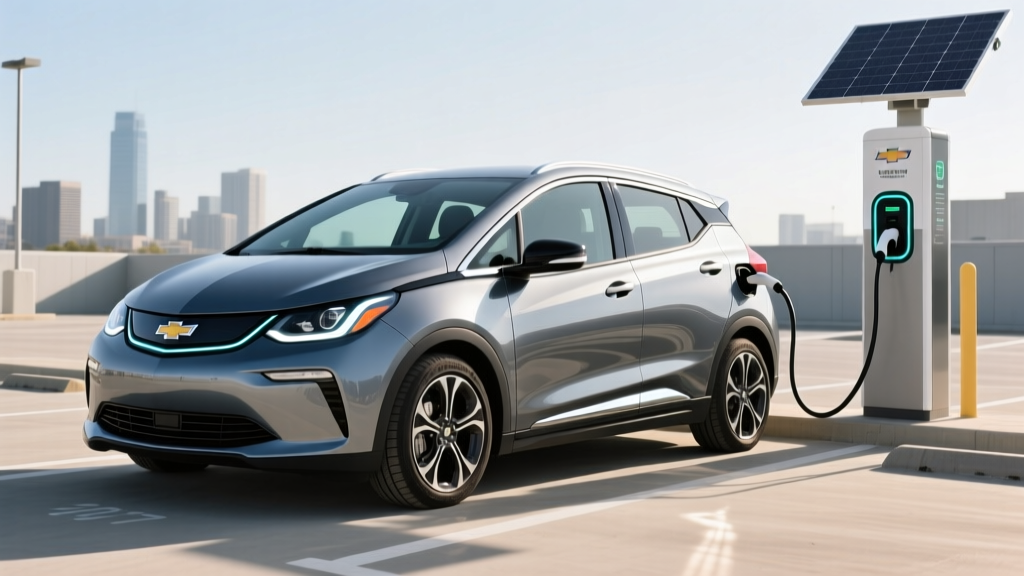
The Chevrolet Bolt has long been the benchmark for affordable electric mobility, and the second-generation model continues that tradition with updated battery chemistry, faster charging, and a starting price that undercuts nearly every EV on the market. But the sticker price is only part of the equation. This breakdown examines the true 2026 Chevy Bolt cost — from MSRP and federal tax credit eligibility to charging expenses and long-term ownership economics — so you can decide whether this compact hatchback delivers genuine value or just a low entry price.
2026 Chevy Bolt Pricing by Trim
Chevrolet streamlined the Bolt lineup for its second generation, offering two trims that keep things simple while covering the essentials. Here is what you will pay before any incentives or dealer adjustments:
| Trim | Base MSRP | Destination | Total Before Incentives |
|---|---|---|---|
| 1LT | $26,995 | $1,195 | $28,190 |
| 2LT | $29,995 | $1,195 | $31,190 |
The 1LT includes an 11-inch infotainment touchscreen, wireless Apple CarPlay and Android Auto, a 6-speaker audio system, heated front seats, and Chevy's full suite of driver-assistance features. The 2LT adds a heated steering wheel, Bose premium audio, a 360-degree camera, adaptive cruise control, and a wireless phone charger.
Both trims remain well under the IRS §30D MSRP cap of $55,000 for passenger cars, which is the first hurdle for federal tax credit eligibility.
Federal Tax Credit: Does the Bolt Qualify?
The 2026 Chevy Bolt is assembled at GM's Orion Assembly plant in Michigan, and its Ultium-sourced battery components are designed to meet the critical-minerals and battery-component sourcing thresholds established under the Inflation Reduction Act. For eligible buyers, this means the full $7,500 federal tax credit can apply — or, since 2024, it can be transferred to the dealer as a point-of-sale discount.
§30D Eligibility Checklist for the 2026 Bolt
- MSRP cap: Vehicle MSRP must be ≤ $55,000 (passenger car) — Bolt qualifies at ~$27K–$30K
- Buyer income cap: Modified AGI ≤ $150,000 (single), $225,000 (head of household), $300,000 (joint)
- Assembly: Final assembly in North America — Bolt is built in Michigan
- Battery sourcing: Critical minerals and component thresholds must be met — GM has confirmed compliance for the 2026 model year
- Point-of-sale transfer: You can apply the $7,500 as an instant rebate at the dealership, reducing your out-of-pocket cost regardless of tax liability
Effective cost after credit: A 1LT Bolt drops to approximately $20,690 after the full $7,500 credit. That puts it in the territory of well-equipped compact gas hatchbacks, but with dramatically lower running costs. Always verify your personal eligibility with a tax professional, as IRS rules can shift and individual circumstances vary.
| Trim | MSRP + Destination | After $7,500 Credit | Est. State Rebate (varies) | Best-Case Net |
|---|---|---|---|---|
| 1LT | $28,190 | $20,690 | $1,000–$4,000 | ~$16,690–$19,690 |
| 2LT | $31,190 | $23,690 | $1,000–$4,000 | ~$19,690–$22,690 |
Range, Efficiency, and Battery Specs
The 2026 Bolt carries a 65 kWh usable lithium-ion battery pack using GM's Ultium platform with NMC (nickel manganese cobalt) chemistry. This represents a meaningful upgrade from the first-generation Bolt's 60 kWh pack, yielding more range in a similar footprint.
| Spec | Value |
|---|---|
| EPA Estimated Range | 255 miles |
| Battery Capacity (usable) | 65 kWh (NMC) |
| Combined MPGe | 120 MPGe |
| Efficiency | 28 kWh / 100 mi |
| Drivetrain | FWD, single motor |
| Horsepower | 200 hp |
| Torque | 266 lb-ft |
| 0–60 mph | 6.8 seconds |
Real-World Range Expectations
EPA sticker: 255 miles
City/commute driving (mild weather): 260–280 miles — regenerative braking in stop-and-go traffic extends range beyond the EPA estimate
Highway driving (70–75 mph): ~210–230 miles — the Bolt's upright hatchback shape creates more drag at sustained speed
Cold weather (below 32°F): ~175–200 miles — NMC chemistry loses 15–25% capacity in freezing temps, and cabin heating draws significant energy
Combined real-world average: Plan for ~220–240 miles in mixed driving across seasons
The Bolt does not include a heat pump — it uses a resistive PTC heater for cabin warmth. This is one of the few areas where cost-cutting is noticeable, as a heat pump would preserve roughly 10–15% more range in winter conditions. If you live in a cold climate and lack home charging, this is worth factoring into your decision.
Charging Speed: DC Fast and Home Level 2
The first-generation Bolt's biggest criticism was its sluggish 50 kW DC fast-charging rate. The 2026 model addresses this directly with a substantially improved charge curve.
| Charging Level | Power (kW) | Speed | Notes |
|---|---|---|---|
| Level 1 (120V household) | ~1.4 kW | ~4 miles per hour | Emergency/trickle only; ~60+ hours for full charge |
| Level 2 (240V, 32A) | 7.7 kW | ~26 miles per hour | Full charge in ~8.5 hours; ideal overnight |
| Level 2 (240V, 48A) | 11.5 kW | ~38 miles per hour | Full charge in ~6 hours; requires 60A circuit |
| DC Fast Charge (peak) | 115 kW | 10–80% in ~30 min | Peak rate sustained to ~55% SoC, then tapers |
At 115 kW peak, the Bolt will not match the 250+ kW charge rates of Hyundai's E-GMP or Tesla's latest V4 Superchargers, but it is a vast improvement over its predecessor. On a road trip, expect a 30-minute stop to take you from 10% to 80% — enough to add roughly 175 miles of range. The charge curve tapers noticeably above 60% state of charge, which is typical for NMC cells at this price point.
The Bolt uses the NACS (Tesla) connector natively for the 2026 model year, giving you direct access to Tesla's Supercharger network without an adapter. This is a major practical advantage for road trips and is one of the strongest arguments in the Bolt's favor versus CCS-equipped competitors.
Interior Space, Cargo, and Daily Practicality
The Bolt is a compact hatchback, not a crossover, so expectations should be calibrated accordingly. That said, GM has maximized interior volume impressively:
- Front headroom: 40.0 in
- Front legroom: 42.1 in
- Rear headroom: 38.0 in
- Rear legroom: 35.7 in
- Cargo (behind rear seats): 22.3 cu ft
- Cargo (rear seats folded): 56.4 cu ft
For context, 22.3 cubic feet behind the rear seats exceeds many compact crossovers. Two adults in the back seat will have adequate legroom for trips under an hour, though taller passengers may find the seat cushion positioned low. The flat load floor (thanks to the under-floor battery pack) makes the cargo area genuinely useful for grocery runs, luggage, or a week's worth of commuting gear.
There is no frunk (front trunk). The space under the hood is occupied by the motor, power electronics, and HVAC components. This is standard for vehicles adapted from GM's front-drive Ultium architecture.
Technology and Driver Assistance
The 2026 Bolt comes equipped with Chevy Safety Assist 2.0, which includes:
- Automatic emergency braking with pedestrian detection
- Lane keep assist with lane departure warning
- Following distance indicator
- Intelligent speed assist
- Automatic high beams
- Rear cross-traffic alert (2LT standard, 1LT optional)
These are SAE Level 1 driver-assistance features — they support the driver but do not steer or accelerate the vehicle autonomously. The 2LT's adaptive cruise control adds a layer of convenience for highway commuting but still requires hands-on-wheel engagement at all times.
Super Cruise (GM's hands-free Level 2 highway driving system) is not available on the Bolt. If hands-free highway driving is a priority, you will need to look at the Equinox EV or Blazer EV at a higher price point.
The 11-inch touchscreen runs GM's latest Ultifi-based software with over-the-air update capability. Wireless CarPlay and Android Auto are standard on both trims. The digital instrument cluster is an 8-inch display. One welcome addition: the Bolt now supports V2L (vehicle-to-load), allowing you to power small appliances or tools from the battery via an accessory adapter — useful for tailgating or emergency backup.
Warranty and Long-Term Battery Confidence
| Coverage | Term |
|---|---|
| Limited Vehicle Warranty | 3 years / 36,000 miles |
| Powertrain Warranty | 5 years / 60,000 miles |
| Battery Warranty | 8 years / 100,000 miles (≥70% capacity retention) |
| Corrosion Protection | 6 years / 100,000 miles |
| Roadside Assistance | 5 years / 60,000 miles |
GM's 8-year/100,000-mile battery warranty guarantees that the pack will retain at least 70% of its original capacity. Based on first-generation Bolt data and GM's Ultium cell validation, most owners report degradation in the 5–8% range over the first 100,000 miles under normal use. NMC chemistry is well-understood and has a proven track record in the Bolt's predecessor.
If you are concerned about battery replacement cost out of warranty, GM has quoted approximately $9,000–$12,000 for a full pack replacement (parts and labor) at current pricing. However, individual module replacement — addressing only degraded cells — can run significantly less. This is an area to revisit as the vehicle ages and the aftermarket for Ultium components matures.
2026 Chevy Bolt Cost of Ownership: 5-Year Estimate
The purchase price is only the beginning. Here is how the Bolt's running costs compare to a similarly priced gas-powered compact hatchback over five years and 75,000 miles:
| Category | 2026 Chevy Bolt (1LT) | Gas Compact (e.g., Civic Hatchback) |
|---|---|---|
| Purchase Price (after credit) | ~$20,690 | ~$28,500 |
| Fuel/Energy (75K mi) | ~$2,800 (home charging at $0.14/kWh) | ~$7,900 (30 MPG avg, $3.50/gal) |
| Maintenance (5 yr) | ~$1,200 | ~$3,500 |
| Insurance (5 yr avg) | ~$8,500 | ~$7,200 |
| Estimated Depreciation | ~$9,000 | ~$11,000 |
| Total 5-Year Cost | ~$42,190 | ~$58,100 |
Source: Energy cost estimates based on fueleconomy.gov data; insurance averages from industry aggregators. Your mileage — literally — will vary by region, electricity rate, and driving profile.
The Bolt saves roughly $15,000–$16,000 over five years compared to a gas equivalent, even accounting for slightly higher EV insurance premiums. The savings widen further if your state offers additional rebates or if your utility provides off-peak charging rates below $0.10/kWh.
How It Stacks Up Against Key Competitors
The Bolt's closest rivals in the affordable EV segment include the Nissan Leaf, Hyundai Kona Electric, and the base Tesla Model 3. Here is how they compare on the metrics that matter most:
| Spec | 2026 Chevy Bolt | 2026 Hyundai Kona Electric | 2026 Nissan Leaf |
|---|---|---|---|
| Base MSRP | $26,995 | $32,975 | $28,140 |
| EPA Range | 255 mi | 261 mi | 212 mi (S) / 226 mi (SV+) |
| Battery | 65 kWh (NMC) | 64.8 kWh (NMC) | 60 kWh (NMC) |
| DC Fast Charge Peak | 115 kW | 100 kW | 100 kW |
| 10–80% DC Time | ~30 min | ~43 min | ~40 min |
| Connector | NACS (native) | NACS (native) | CHAdeMO |
| 0–60 mph | 6.8 sec | 7.5 sec | 7.4 sec |
| Horsepower | 200 hp | 201 hp | 214 hp |
| Federal Tax Credit | $7,500 (eligible) | $7,500 (eligible) | $3,750 (partial) |
The Bolt's combination of lowest MSRP, fastest DC charging in its class, native NACS connectivity, and full $7,500 credit eligibility makes it the strongest value proposition in this comparison. The Kona Electric offers slightly more range and a more refined interior, but at a $6,000 premium before incentives. The Leaf's CHAdeMO connector is an increasing liability as the industry converges on NACS and CCS, and its shorter range and partial credit eligibility make it harder to recommend.
Who Should Buy the 2026 Chevy Bolt?
Choose the Bolt if: You want the lowest-cost new EV on the market, you commute under 100 miles round-trip daily, you have access to home Level 2 charging, and you value access to the Tesla Supercharger network for occasional road trips.
Look elsewhere if: You need AWD for snow-belt winters, you regularly drive more than 200 highway miles in a single trip, you need three-across rear seating, or hands-free highway driving (Super Cruise) is a priority.
Pros
- Lowest MSRP of any new EV in 2026 — under $21K after federal credit
- Native NACS connector with full Supercharger network access
- 115 kW DC fast charging — best in its price class
- Spacious hatchback cargo area (56.4 cu ft max)
- Strong 5-year cost-of-ownership advantage over gas equivalents
- V2L capability for accessories and emergency power
Cons
- No heat pump — cold-weather range drops 15–25%
- FWD only — no AWD option for winter traction
- No Super Cruise availability — Level 1 ADAS only
- Rear seat is adequate but not generous for tall adults
- No frunk — all cargo space is in the rear hatch area
- 115 kW peak charge rate trails 200+ kW competitors
Frequently Asked Questions
What is the real-world range of the 2026 Chevy Bolt?
The EPA rates the Bolt at 255 miles combined. In real-world mixed driving, expect 220–240 miles. City commuting with regenerative braking can push past 260 miles in mild weather, while sustained highway driving at 75 mph drops range to roughly 210–230 miles. In freezing temperatures, plan for 175–200 miles due to the resistive cabin heater and NMC chemistry limitations.
How fast does the Bolt charge at home and on the road?
At home on a 240V Level 2 charger at 32 amps, the Bolt adds about 26 miles of range per hour, reaching a full charge in roughly 8.5 hours. On a 48-amp Level 2 circuit, that improves to ~38 miles per hour and a ~6-hour full charge. On DC fast chargers, the Bolt peaks at 115 kW and charges from 10% to 80% in approximately 30 minutes.
How much does the 2026 Chevy Bolt cost after tax credits?
The 1LT starts at $28,190 including destination. After the full $7,500 federal tax credit (available as a point-of-sale rebate), the effective price drops to approximately $20,690. The 2LT comes in around $23,690 after the credit. Additional state and utility rebates can reduce this further depending on your location.
Does the 2026 Bolt qualify for the full $7,500 federal EV tax credit?
Yes, the 2026 Bolt meets all current §30D requirements: it is assembled in North America (Michigan), its MSRP is well under the $55,000 passenger-car cap, and GM has confirmed its battery meets critical-mineral and component-sourcing thresholds. Buyer income must fall within IRS limits ($150K single / $300K joint). Consult a tax professional to confirm your personal eligibility, and verify current rules at IRS.gov.
Is the 2026 Bolt worth buying versus the Hyundai Kona Electric or Tesla Model 3?
If budget is the primary driver, the Bolt is the clear winner — it costs $6,000–$10,000 less than either competitor before incentives, charges faster than the Kona, and includes native Supercharger access. The Model 3 offers more range (341 mi), faster charging (250 kW), and a more premium interior, but starts above $38,000. The Kona Electric is a strong runner-up with slightly more range and a more refined cabin, but the Bolt's price advantage is difficult to overcome for budget-conscious buyers.
How long will the Bolt's battery last?
GM warranties the battery for 8 years or 100,000 miles with a guaranteed minimum of 70% capacity retention. Based on data from the first-generation Bolt and Ultium cell testing, most packs retain 90–95% capacity at 100,000 miles under normal charging habits. Avoiding routine DC fast charging to 100% and keeping the battery between 20–80% for daily use will maximize longevity. Out-of-warranty replacement runs $9,000–$12,000 at current pricing.
Can I use Tesla Superchargers with the 2026 Bolt?
Yes. The 2026 Bolt uses the NACS connector natively, meaning you can plug directly into any Tesla Supercharger without an adapter. This gives you access to the largest and most reliable fast-charging network in North America — a significant practical advantage for road trips.
Specs and pricing reflect 2026 model year information available at publication. Federal tax credit rules under IRS §30D are subject to change. Always verify eligibility with the IRS and confirm vehicle pricing with your local Chevrolet dealer. Range and efficiency data sourced from fueleconomy.gov.