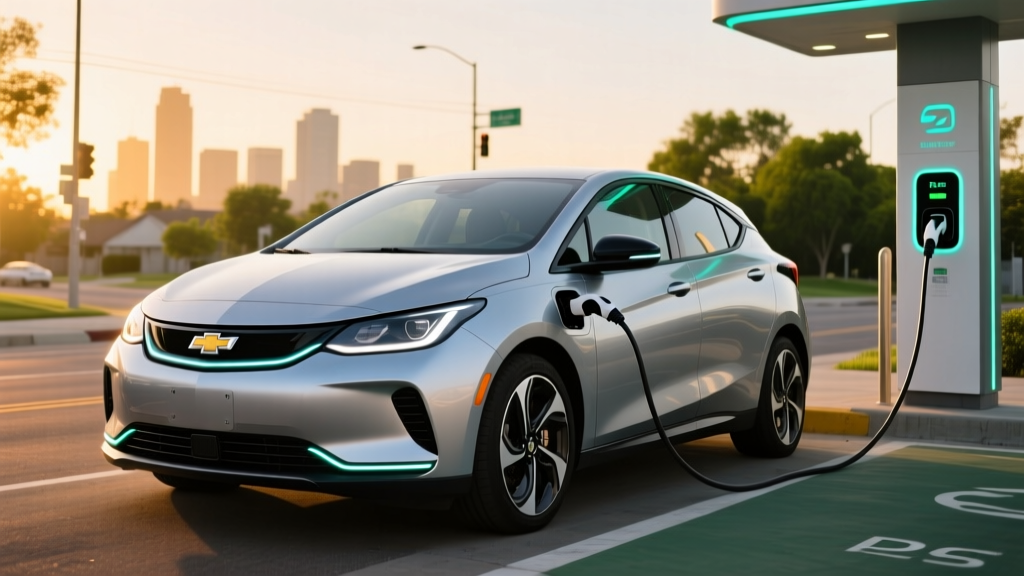
The 2026 Chevrolet Bolt EV returns to the affordable compact EV segment with a refreshed platform, faster DC charging, and a price that undercuts nearly every rival. For buyers researching the Chevy Bolt 0 to 60 time, real-world range, and whether this budget EV can handle daily commuting and road trips, this review covers every number that matters.
Quick Verdict: Who the 2026 Bolt Is For
The 2026 Bolt is a pragmatic commuter and city EV, not a road-trip cruiser. Its 255-mile EPA range is adequate for most daily driving, and its newly upgraded 150-kW DC fast-charging capability cuts stop times significantly over the previous generation. The trade-off: a relatively firm ride, limited rear legroom, and an interior that reflects its sub-$30,000 price point. If your priority is value-per-mile and urban efficiency, the Bolt remains one of the smartest EV purchases available.
| Spec | Value |
|---|---|
| EPA Range | 255 miles |
| Battery (usable) | 65 kWh (estimated), LFP chemistry |
| Efficiency | 118 MPGe combined / 28 kWh/100 mi |
| 0–60 mph | 7.0 seconds |
| Horsepower / Torque | 200 hp / 266 lb-ft |
| Drivetrain | FWD, single-speed reduction |
| Max DC Fast Charge | 150 kW peak |
| 10–80% DC Charge Time | ~28 minutes |
| Level 2 Home Charge Rate | 11.5 kW (~39 mi/hr) |
| Cargo Volume | 16.3 cu ft (rear seats up), 57.2 cu ft (folded) |
| Rear Legroom | 36.0 inches |
| Base MSRP (2LT trim) | $27,895 |
| Battery Warranty | 8 years / 100,000 miles |
0 to 60 and Performance: Adequate, Not Thrilling
The 2026 Bolt EV's single front-mounted permanent-magnet motor produces 200 horsepower and 266 lb-ft of torque. The Chevy Bolt 0 to 60 mph time of 7.0 seconds is unchanged from the previous generation's final output tune. That puts it in the same ballpark as a Volkswagen ID.4 (7.3 sec, RWD) but well behind the Hyundai Kona Electric (6.8 sec with the 201-hp motor) and far from the Tesla Model 3 RWD (5.8 sec).
In practice, the Bolt's instant torque delivery makes it feel quicker than 7.0 seconds around town. Stoplight-to-stoplight acceleration is responsive, and highway merging is confident up to about 75 mph. Beyond that, power tapers noticeably — a trait common to single-motor FWD EVs optimized for efficiency rather than top-end pull.
The regenerative braking system offers multiple levels via steering-wheel paddles, including a true one-pedal driving mode that can bring the car to a full stop without touching the brake pedal. This is a standout feature for stop-and-go commuters.
Range and Efficiency: Real-World Expectations
The EPA rates the 2026 Bolt at 255 miles of combined range on a full charge, with an efficiency rating of approximately 118 MPGe combined (28 kWh per 100 miles). That's competitive with the base Nissan Leaf SV Plus (212 mi) and trails the Hyundai Kona Electric (261 mi) and Tesla Model 3 RWD (272 mi).
Real-World Range Reality Check
EPA sticker: 255 miles
Real-world highway (70 mph, 75°F): Expect 220–235 miles
Cold weather (30°F, mixed driving): Expect 180–205 miles (20–30% reduction typical for LFP packs without a standard heat pump)
Best-case city/regen-heavy driving (65°F): 255–270 miles achievable
The Bolt's LFP battery chemistry is less sensitive to repeated 100% charges than NMC, so daily full charges are acceptable — but cold-weather range loss is more pronounced than in heat-pump-equipped rivals. Chevy does offer a heat pump as part of the Cold Weather package on 2LT trims.
Charging Speed: The Biggest Gen-2 Improvement
The original Bolt's painfully slow 50-kW DC fast-charging cap was its most-criticized flaw. The 2026 Bolt addresses this with a 150-kW peak DC fast-charge rate via its CCS connector (NACS adapter available through GM's partnership network). At a capable 150-kW+ station, the Bolt can charge from 10% to 80% in approximately 28 minutes.
| Charging Level | Max Power | Speed / Time |
|---|---|---|
| Level 1 (120V household) | 1.4 kW | ~4 miles per hour |
| Level 2 (240V home / public) | 11.5 kW | ~39 miles per hour (full charge in ~6.5 hrs) |
| DC Fast Charge (CCS) | 150 kW peak | 10–80% in ~28 min; adds ~120 mi in 15 min |
Charging curve note: The Bolt's peak 150-kW rate is sustained from approximately 10% to 50% state of charge, then tapers to ~100 kW through 65%, and drops further above 80%. This is typical LFP behavior — plan your road-trip stops to charge to 80% and move on rather than waiting for a full top-off, which adds significant time.
For home charging, the Bolt's onboard 11.5-kW charger is a strong point. On a properly installed 48-amp Level 2 circuit (hardwired, 60-amp breaker), you'll recover a full battery overnight in about 6.5 hours. Most owners installing a home Level 2 charger should budget $500–$1,500 for equipment and electrician labor, depending on panel capacity and run distance.
Pricing, Trims, and Federal Tax Credit
The 2026 Bolt EV is offered in two trims:
- 2LT: $27,895 MSRP — includes 17-inch wheels, heated front seats, 10.2-inch touchscreen, wireless Apple CarPlay/Android Auto, and Chevy Safety Assist.
- RS: $30,395 MSRP — adds sport appearance package, EV-specific interior trim, and additional driver-assist features.
| Trim | MSRP | Est. Federal Credit (§30D) | Effective Price |
|---|---|---|---|
| 2LT | $27,895 | Up to $7,500* | ~$20,395* |
| RS | $30,395 | Up to $7,500* | ~$22,895* |
*Federal §30D tax credit eligibility depends on buyer income caps ($150K single / $300K joint MAGI), MSRP caps ($55,000 for cars), and battery critical-mineral and component sourcing requirements. The Bolt qualifies as of early 2026, but sourcing rules tighten annually. Confirm eligibility at fueleconomy.gov before purchasing. Point-of-sale transfer is available at participating dealers.
Interior, Tech, and Daily Usability
The Bolt's cabin is functional rather than luxurious. The 10.2-inch infotainment screen runs GM's latest interface with wireless phone integration, and an 8-inch digital driver cluster provides range, efficiency, and navigation readouts. Physical climate controls remain — a welcome choice for usability.
Cargo space: 16.3 cubic feet behind the rear seats (enough for a week's groceries or two carry-on bags) expands to 57.2 cubic feet with the 60/40 rear bench folded. That trails the Hyundai Kona Electric (25.8 cu ft rear seats up) but beats the Nissan Leaf (14.3 cu ft).
Rear legroom: 36.0 inches — tight for adults on longer trips. A 6-foot passenger behind a similarly tall driver will find knees pressed into the seatback. Families with older children or regular rear-seat adult passengers should cross-shop the Kona or a compact SUV like the Equinox EV.
Driver assistance: Chevy Safety Assist is standard and includes automatic emergency braking, forward collision alert, lane-keep assist, following-distance indicator, and IntelliBeam headlights. Adaptive cruise control and a 360-degree camera are available on 2LT and standard on RS. Note: this is SAE Level 1–2 driver assistance — the driver must remain fully engaged at all times.
Warranty and Battery Longevity
Chevrolet covers the Bolt's battery and powertrain for 8 years or 100,000 miles, whichever comes first. The battery warranty guarantees at least 70% capacity retention over that period — consistent with industry norms. The LFP chemistry is expected to degrade more slowly over calendar life than NMC packs, though it sacrifices some energy density and cold-weather performance.
The vehicle limited warranty is 3 years / 36,000 miles bumper-to-bumper. Roadside assistance covers 5 years / 60,000 miles.
Pros, Cons, and How It Stacks Up
Pros
- Under $28K base price; potentially ~$20K after federal credit
- 150-kW DC charging — a massive improvement over Gen 1
- LFP battery tolerates daily 100% charging
- One-pedal driving with multi-level regen
- Strong efficiency (118 MPGe combined)
Cons
- 7.0-sec 0–60 is adequate but unexciting
- Rear legroom is tight (36.0 in)
- Cold-weather range loss significant without heat pump
- Interior materials feel budget-grade
- No frunk (front trunk) storage
Is it worth buying vs. key competitors? The Bolt's value proposition is hard to beat if price is your primary filter. At an effective ~$20,000–$23,000 after credits, it is the cheapest new EV in America. The Hyundai Kona Electric offers more cargo space, slightly better range, and a nicer interior for ~$5,000 more. The Tesla Model 3 RWD delivers far superior performance and Supercharger access but starts above $38,000. For budget-conscious commuters who charge at home, the Bolt is the value champion.
Frequently Asked Questions
What is the real-world range of the 2026 Chevy Bolt?
Expect 220–235 miles on the highway in moderate temperatures, 180–205 miles in freezing conditions, and up to 270 miles in city driving with heavy regen use. The EPA sticker reads 255 miles combined.
How fast does the 2026 Bolt charge at home and on DC fast chargers?
At home on a 240V Level 2 charger (11.5 kW), the Bolt adds ~39 miles per hour and fully charges in about 6.5 hours. On a DC fast charger, it peaks at 150 kW and reaches 10–80% in approximately 28 minutes.
How much does the 2026 Bolt cost after tax credits?
The 2LT starts at $27,895. If you qualify for the full $7,500 federal §30D credit (based on income, MSRP cap, and battery-sourcing rules), the effective price drops to approximately $20,395. The RS trim would be approximately $22,895. Confirm current eligibility on fueleconomy.gov.
Does the 2026 Chevy Bolt qualify for the federal EV tax credit?
As of early 2026, the Bolt EV qualifies for up to $7,500 under IRS §30D. Eligibility requires the buyer to meet income caps ($150K single / $300K joint MAGI), the vehicle must be under the $55,000 MSRP cap for cars (the Bolt clears this easily), and the battery must meet critical-mineral and North American component sourcing thresholds. Rules tighten over time — verify before purchasing.
Is the Chevy Bolt 0 to 60 time fast enough for highway driving?
The 7.0-second 0–60 mph time is sufficient for confident highway merging and passing. The instant electric torque makes it feel brisker than the number suggests at city speeds. It won't match dual-motor or performance EVs, but it's adequate for daily driving.
Can the 2026 Bolt use Tesla Superchargers?
GM has partnered with Tesla to provide NACS adapter access to the Supercharger network. Bolt owners can use a GM-approved NACS adapter to charge at V2 and V3 Superchargers equipped with the "Magic Dock" CCS-compatible connector or via the adapter for NACS-native stalls. Confirm adapter availability and compatibility with your specific model year at your dealer.
What are the biggest drawbacks of the 2026 Bolt?
Limited rear legroom, no front trunk, noticeable cold-weather range loss (especially without the optional heat pump), budget interior materials, and a 0–60 time that trails sportier competitors. It excels as a value commuter, not as a family road-trip EV.
Sources: fueleconomy.gov (EPA range and MPGe data), Chevrolet official specifications, IRS §30D clean vehicle credit guidance.