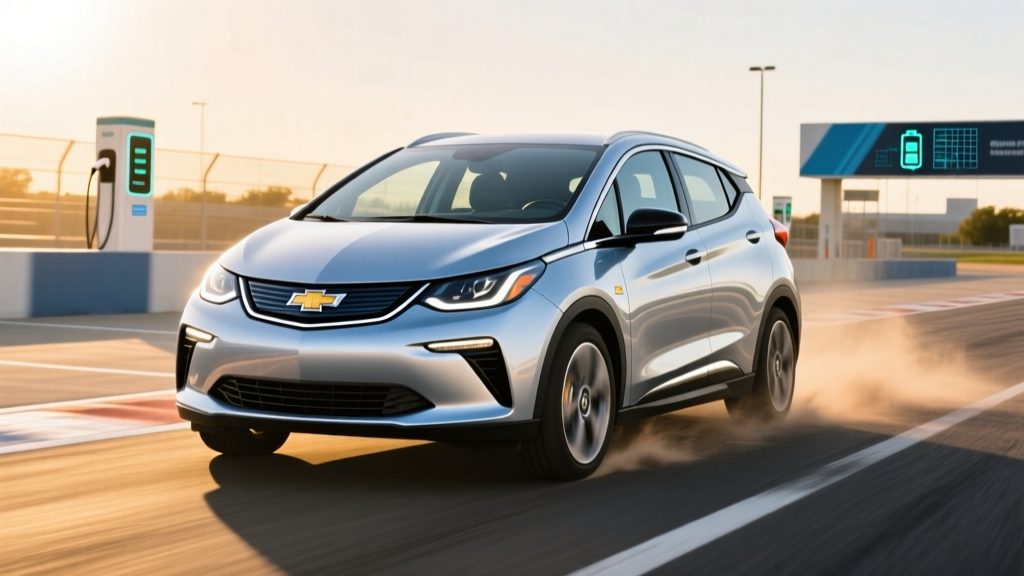
The original Chevy Bolt was the budget EV king — until General Motors pulled it from production in late 2023. After a highly anticipated hiatus, the redesigned 2026 Chevy Bolt returns on GM's updated Ultium platform, promising faster charging, slightly more range, and a modernized interior. But the question every buyer asks is whether the new Bolt retains its value proposition — and how its performance numbers stack up in an increasingly crowded sub-$30,000 EV segment.
In this review, we break down the 2026 Chevy Bolt's 0-60 mph time, real-world range, charging specs, tax credit eligibility, and whether it's still the smartest budget EV buy in 2026.
Quick Verdict: The Bolt Is Back — and Faster
The 2026 Chevy Bolt addresses the original's biggest weakness — painfully slow DC fast charging — while keeping its core appeal: an affordable, practical hatchback with solid range. The new Ultium-based battery charges at up to 115 kW on DC fast chargers (up from the old Bolt's dismal 55 kW cap), and the updated powertrain shaves nearly a full second off the 0-60 sprint. It's still not a performance EV, but it's no longer sluggish either.
| Spec | Value |
|---|---|
| EPA Range (2LT trim) | 259 miles |
| Battery (usable) | 65 kWh, LFP chemistry |
| 0-60 mph | 6.5 seconds |
| Horsepower / Torque | 200 hp / 236 lb-ft |
| Drivetrain | Front-wheel drive (FWD) |
| Max DC Fast Charge | 115 kW (CCS → NACS adapter available) |
| 10-80% DC Fast Charge | ~30 minutes |
| Level 2 Home Charging | 11.5 kW (~37 miles/hr) |
| EPA Efficiency | 120 MPGe combined (28 kWh/100 mi) |
| Cargo Volume | 56.2 cu ft (rear seats folded) |
| Base MSRP (1LT) | $26,900 |
| Battery Warranty | 8 years / 100,000 miles |
2026 Chevy Bolt 0-60 Time and Performance
The 2026 Chevy Bolt hits 0-60 mph in approximately 6.5 seconds, a meaningful improvement over the outgoing model's 6.9-second time. The new single-motor FWD powertrain produces 200 horsepower and 236 lb-ft of torque — numbers that put it ahead of the Hyundai Kona Electric (6.5 sec, 201 hp) and well ahead of most gas-powered compact hatchbacks.
Is it quick by modern EV standards? No. The Tesla Model 3 RWD does 0-60 in 5.8 seconds, and dual-motor AWD competitors hit the mark in under 5 seconds. But the Bolt's instant torque delivery makes it feel punchy around town, and the 6.5-second time is more than adequate for highway merging and passing.
The Bolt remains front-wheel-drive only. There is no AWD option for 2026, which may deter buyers in heavy-snow regions. Traction control and GM's standard stability systems handle light winter conditions fine, but dedicated winter tires are a smart investment if you're in the northern U.S.
Real-World Range: What the EPA Number Doesn't Tell You
EPA Estimated Range: 259 miles (2LT with 17" wheels)
Real-World Expectation: 220–240 miles on mixed highway driving; 190–210 miles in sustained cold weather (below 30°F) or at sustained 80+ mph speeds.
The 2026 Bolt's 65 kWh usable LFP (lithium iron phosphate) battery delivers an EPA-rated 259 miles in its most efficient trim. That's the same headline number as the outgoing Bolt, but the path to get there is different: the Ultium-platform LFP pack is more thermally stable, charges faster, and tolerates daily 100% charging better than the old NMC cells.
LFP chemistry is a key differentiator here. Unlike NMC batteries, LFP cells can — and should — be charged to 100% regularly without accelerating degradation. That means you actually get to use more of the pack's capacity day-to-day. The trade-off is lower energy density (LFP packs are heavier for the same kWh), which is why the new Bolt is slightly heavier despite similar range.
In real-world mixed driving at moderate temperatures (60–80°F), expect 230–245 miles before needing a charge. Sustained highway speeds above 75 mph will push consumption higher — plan for roughly 210–225 miles on a road trip. In cold weather (20–30°F), range drops of 20–30% are typical for any EV, and the Bolt is no exception. Budget around 190 miles in deep winter.
The Bolt does not include a heat pump as standard on the 1LT trim (it's included on 2LT). Without a heat pump, cabin heating draws directly from the traction battery, which contributes to the cold-weather range penalty. If you live in a cold climate, the 2LT's heat pump is worth the upgrade cost.
Charging Speed: The Bolt's Biggest Upgrade
The original Bolt's 55 kW DC fast-charge cap was its most-criticized flaw. The 2026 model fixes this decisively.
| Charging Level | Power | Speed / Time |
|---|---|---|
| Level 1 (120V household) | ~1.4 kW | ~4 miles per hour |
| Level 2 (240V home) | 11.5 kW | ~37 miles per hour (full charge in ~6 hrs) |
| DC Fast Charge (peak) | 115 kW | 10–80% in ~30 min |
| DC Fast Charge (sustained) | ~80–90 kW avg | ~170 miles added in 30 min |
The 115 kW peak DC fast-charge rate isn't class-leading (the Hyundai Ioniq 5 hits 240 kW), but it's a massive improvement and puts the Bolt on par with the Nissan Leaf and close to the Kona Electric. On a typical 150 kW or 350 kW Electrify America or Tesla Supercharger (via NACS adapter), you'll see peak rates around 110–115 kW up to about 50% state of charge, then a gradual taper. The 10–80% charge takes roughly 30 minutes — perfectly reasonable for a highway rest stop.
For home charging, the Bolt's onboard charger handles 11.5 kW on a Level 2 (240V) connection, adding about 37 miles of range per hour. A full charge from near-empty takes roughly 6 hours — easily done overnight. Home Level 2 installation costs typically range from $500 to $2,000 depending on your electrical panel and run length, according to Energy.gov.
Connector note: The 2026 Bolt ships with a CCS1 port but includes a NACS adapter for access to Tesla Supercharger stations. GM has committed to the North American Charging Standard, and future Bolt model years may ship with a native NACS port.
Pricing, Trims, and Federal Tax Credit Eligibility
The 2026 Chevy Bolt starts at $26,900 for the 1LT trim, making it one of the least expensive new EVs in the U.S. market. The better-equipped 2LT starts at $29,400 and adds the heat pump, heated seats, a 360-degree camera, and enhanced driver-assist features.
| Trim | Base MSRP | Est. After §30D Credit |
|---|---|---|
| 1LT | $26,900 | ~$19,400* |
| 2LT | $29,400 | ~$21,900* |
*Credit eligibility depends on buyer income, battery sourcing, and point-of-sale transfer rules. See details below.
Does the 2026 Chevy Bolt Qualify for the Federal EV Tax Credit?
The Bolt is expected to qualify for up to $7,500 under IRS §30D, but eligibility is not automatic for every buyer. Here's what determines your actual credit:
- MSRP cap: The Bolt's MSRP is well under the $55,000 cap for cars/hatchbacks — ✅ passes.
- Buyer income cap: Modified AGI must not exceed $150,000 (single), $225,000 (head of household), or $300,000 (joint). If you exceed these, no credit.
- Battery sourcing (§30D requirements): The critical minerals and battery component requirements phase in more strictly each year. GM has stated the 2026 Bolt's LFP cells use U.S.-sourced materials to meet current-year thresholds, but final IRS certification for each model year is published on fueleconomy.gov. Always verify before purchasing.
- Point-of-sale transfer: As of 2024, buyers can transfer the credit to the dealer at purchase, reducing the vehicle price directly rather than waiting for a tax refund. This is available for the Bolt if all criteria are met.
If you qualify for the full $7,500, the Bolt 1LT effectively costs around $19,400 — a remarkable value for a 259-mile EV. Consult a tax professional or check IRS.gov clean vehicle credits for your specific situation.
Interior, Cargo, and Technology
The 2026 Bolt's interior is a clear step up from the previous generation. GM has moved to a standard 11-inch digital instrument cluster and an 11.3-inch infotainment touchscreen running the latest Google Built-In software — meaning Google Maps, Google Assistant, and the Play Store are native to the car.
Passenger and cargo dimensions:
- Front legroom: 42.1 inches
- Rear legroom: 35.8 inches
- Cargo (behind rear seats): 17.4 cu ft
- Cargo (rear seats folded): 56.2 cu ft
The cargo space is competitive with the Hyundai Kona Electric (25.5 cu ft seats-up) but less than the Tesla Model Y's hatchback area. For a subcompact hatch, the Bolt's 56.2 cu ft maximum is practical for weekend trips, IKEA runs, or a week's groceries for a family of four.
Driver assistance: The Bolt comes standard with Chevy Safety Assist (automatic emergency braking, lane-keeping, following distance indicator, front pedestrian braking). Super Cruise — GM's hands-off, eyes-on Level 2 highway driving system — is available on the 2LT trim for an additional $2,200. Super Cruise works on over 750,000 miles of mapped U.S. highways and is one of the best Level 2 systems available, though it is not autonomous driving — you must remain attentive.
Pros and Cons
✅ Pros
- Lowest MSRP of any 250+ mile EV in 2026
- LFP battery allows daily 100% charging without degradation worry
- Dramatically improved DC fast charging (115 kW vs old 55 kW)
- Qualifies for up to $7,500 federal tax credit (if eligible)
- Super Cruise availability at this price point is rare
- Google Built-In infotainment is responsive and useful
❌ Cons
- No AWD option — FWD only
- Heat pump not standard on base 1LT trim
- 30-minute 10–80% charge is acceptable but not class-leading
- Rear seat legroom is tight for tall adults on long trips
- No front trunk (frunk) — Ultium packaging doesn't allow one here
- CCS port requires adapter for Tesla Superchargers
Who Should Buy the 2026 Chevy Bolt?
Buy the Bolt if: You want the most affordable new long-range EV available, primarily commute under 80 miles round-trip, charge at home, and can take advantage of the $7,500 federal tax credit. It's ideal as a first EV, a second car, or a budget-conscious commuter vehicle.
Look elsewhere if: You need AWD for harsh winters (check the Hyundai Kona Electric AWD or Subaru Solterra), regularly road-trip 400+ miles and want the fastest possible charging (the Ioniq 5 or Tesla Model 3 charge significantly faster), or need a larger back seat for car seats and teenagers.
Frequently Asked Questions
What is the 2026 Chevy Bolt's real-world range?
The EPA rates the 2026 Bolt at 259 miles, but expect 220–240 miles in real-world mixed driving and around 190–210 miles in cold weather or at sustained highway speeds above 75 mph.
How fast does the 2026 Bolt charge at home and on DC fast chargers?
On a Level 2 home charger (240V), the Bolt charges at 11.5 kW, adding roughly 37 miles of range per hour and reaching a full charge in about 6 hours. On DC fast chargers, it peaks at 115 kW and charges from 10–80% in approximately 30 minutes.
What is the Chevy Bolt's 0-60 mph time?
The 2026 Chevy Bolt reaches 0-60 mph in approximately 6.5 seconds with its 200-hp single front motor. That's roughly 0.4 seconds quicker than the outgoing pre-2024 Bolt.
Does the 2026 Chevy Bolt qualify for the $7,500 federal tax credit?
GM expects the 2026 Bolt to qualify for the full $7,500 §30D credit, but buyer eligibility depends on income caps ($150K single / $300K joint), battery sourcing compliance, and the vehicle's MSRP (which passes the cap). Always verify on fueleconomy.gov before purchasing.
Is the 2026 Bolt worth buying over the Hyundai Kona Electric or Tesla Model 3?
If budget is your primary concern, the Bolt wins — it's thousands less than either competitor, especially after the tax credit. The Kona Electric offers slightly more cargo space and AWD availability. The Model 3 offers faster charging, a Supercharger-native network, and more range, but starts around $12,000 higher. The Bolt is the best value play; the others offer more capability at higher cost.
What battery chemistry does the 2026 Bolt use?
The 2026 Bolt uses LFP (lithium iron phosphate) battery cells. LFP offers longer cycle life, better thermal stability, and the ability to charge to 100% daily without the degradation concerns of NMC chemistry. The trade-off is slightly lower energy density.
What is the Bolt's battery warranty?
GM covers the Bolt's battery and powertrain for 8 years or 100,000 miles, whichever comes first. The warranty covers capacity loss below a specified threshold (typically 60–70% state of health) as well as defects.