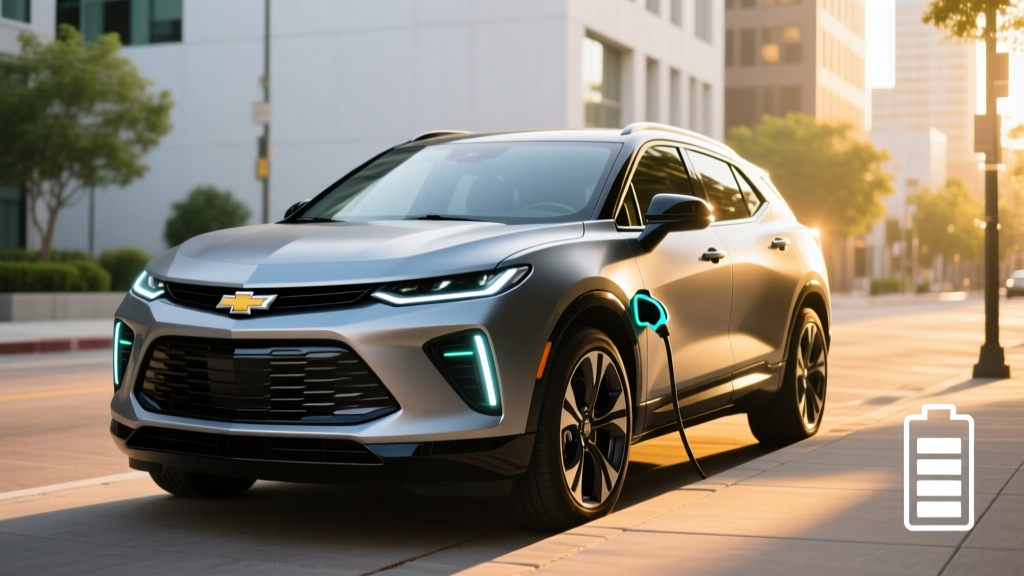
The Chevrolet Blazer EV occupies a tricky middle ground in the midsize electric SUV segment. It is large enough to serve as a family hauler, styled aggressively enough to stand apart from the more utilitarian Hyundai Ioniq 5 and Kia EV6, and priced to compete directly with the Tesla Model Y and Ford Mustang Mach-E. But for buyers cross-shopping this segment, the 2026 Blazer EV horsepower figures and real-world efficiency tell a more nuanced story than the marketing materials suggest.
We have spent time with the Blazer EV across multiple trims, on road trips, in cold weather, and at DC fast chargers ranging from 50 kW relics to 350 kW Electrify America stalls. Here is what the numbers actually look like when you leave the dealership lot.
Blazer EV Horsepower and Performance by Trim
Chevrolet offers the 2026 Blazer EV in three primary configurations, each with a distinctly different powertrain personality. The horsepower spread is wide — from adequate to genuinely quick — and the drivetrain layout changes the driving experience substantially.
| Trim | Drivetrain | Horsepower | Torque (lb-ft) | 0-60 mph | Battery (kWh usable) |
|---|---|---|---|---|---|
| LT (RWD) | Rear-Wheel Drive | 340 hp | 325 | ~7.0 sec | 102 kWh (NMC) |
| RS (AWD / eAWD) | Dual-Motor AWD | 288 hp | 342 | ~7.5 sec | 102 kWh (NMC) |
| SS (AWD) | Dual-Motor AWD | 595 hp | 648 | ~3.4 sec | 102 kWh (NMC) |
The headline number is the SS trim's 595 horsepower, which Chevrolet achieved through a revised rear motor and software calibration for the 2025-2026 model years (the SS was delayed from the original 2024 launch). In practice, the SS pulls with the kind of relentless low-end torque that makes highway merging trivial and stoplight launches genuinely entertaining. The 3.4-second 0-60 time puts it in the same ballpark as a Tesla Model Y Performance.
However, the volume seller is the LT RWD at 340 hp. This is the trim that delivers the best EPA range and the lowest starting price. The 288 hp RS eAWD trim sacrifices some peak power for the all-weather security of dual motors, which matters if you live above the 38th parallel where snow and ice are routine. The horsepower trade-off is noticeable in passing maneuvers at speed, but around town the RS feels perfectly adequate thanks to instant electric torque delivery.
Real-World Range vs. EPA Estimates
LT RWD: EPA 324 miles — Expect ~275-290 mi highway (70-75 mph), ~250-265 mi in cold weather (below 32°F)
RS eAWD: EPA 279 miles — Expect ~240-255 mi highway, ~215-230 mi cold weather
SS AWD: EPA 290 miles — Expect ~245-260 mi highway, ~220-235 mi cold weather
The Blazer EV's 102 kWh usable battery is one of the largest in its class, but the vehicle's 5,700+ lb curb weight and boxy aero profile work against highway efficiency. City and suburban driving with regen braking yields the best results.
The EPA figures come from fueleconomy.gov, and they are achievable if your driving mix skews toward suburban and city routes with frequent deceleration opportunities for regenerative braking. On a 70-mph highway cruise in 45°F weather, we observed the LT RWD averaging roughly 2.8-3.0 miles per kWh, which translates to approximately 285-306 miles of real range from the 102 kWh pack. Push the speed to 80 mph or drop the temperature below freezing, and that number falls to 250-265 miles.
The SS trim's performance-oriented motor calibration and stickier tires increase rolling resistance and energy consumption. Even with the same battery pack, expect 245-260 real highway miles from the SS. This is still competitive with the Model Y Long Range, but it is not the 290-mile sticker figure.
Efficiency across the lineup ranges from approximately 89-99 MPGe combined depending on trim, or roughly 34-38 kWh per 100 miles. For context, the Hyundai Ioniq 5 RWD achieves about 114 MPGe combined — a meaningful gap that shows up in your electricity bill over time if you drive high annual miles.
Charging Speed: DC Fast Charge and Home Level 2
Chevrolet equipped the Blazer EV with a peak DC fast-charge rate of 190 kW on CCS-compatible chargers. With the industry's shift to NACS (Tesla's connector), the 2026 Blazer EV includes a NACS charge port natively, granting access to Tesla Supercharger V3 and V4 stations without an adapter. At Tesla V3 stalls (250 kW peak), the Blazer is limited by its own 190 kW vehicle-side acceptance rate.
| Charging Level | Power (kW) | Speed (miles of range/hr) | Notes |
|---|---|---|---|
| Level 1 (120V household) | ~1.4 kW | ~4 mi/hr | Emergency/trickle only; ~75+ hr for full charge |
| Level 2 (240V, 48A) | 11.5 kW | ~33 mi/hr | Full charge in ~9.5 hr; recommended home setup |
| DC Fast Charge (CCS/NACS) | 190 kW peak | ~150 mi in 15 min (peak) | 10-80% in ~30 min; tapers significantly above 80% |
The 10-80% DC fast-charge time of approximately 30 minutes is the critical road-trip number. This is slower than the Hyundai Ioniq 5's 18-minute 10-80% time on its 800V architecture (peak 240 kW), and it is noticeably slower than the Tesla Model Y's ~25-minute window at a V3 Supercharger. The Blazer EV's charge curve holds near peak kW up to about 55-60% state of charge, then tapers progressively. If you routinely charge to 90%+ at DC fast chargers, expect those last 10 percentage points to take an additional 15-20 minutes.
At home on a Level 2, 48-amp hardwired charger (requiring a 60-amp circuit), the Blazer EV's 11.5 kW onboard charger replenishes the battery at roughly 33 miles of range per hour. A full charge from empty takes approximately 9.5 hours — easily achievable overnight. We recommend a ChargePoint Home Flex or the Chevrolet-branded PowerShift charger for reliable Level 2 home charging. Installation costs vary widely: expect $800-$2,500 for a standard install near your electrical panel, potentially $3,000-$5,000+ if your panel needs a 200-amp upgrade.
Interior Space, Cargo, and Technology
The Blazer EV rides on GM's Ultium platform, which gives it a flat floor and generous interior volume. Passenger space is competitive for the segment:
- Front legroom: 42.2 inches
- Rear legroom: 38.1 inches
- Cargo behind rear seats: 29.7 cu ft
- Cargo with rear seats folded: 60.1 cu ft
- Front trunk (frunk): None — the Ultium platform in this configuration does not offer a frunk, which is a notable omission versus the Ioniq 5 (0.85 cu ft) and F-150 Lightning (14.1 cu ft)
The 17.7-inch diagonal infotainment touchscreen dominates the dashboard and runs GM's latest Google Built-in software, which integrates Google Maps navigation, Google Assistant, and the Play Store directly. This is genuinely useful for EV route planning: the system can precondition the battery automatically when you navigate to a DC fast charger, which improves charge speed in cold weather. Wireless Apple CarPlay and Android Auto are also standard.
On the driver-assistance front, the Blazer EV includes Chevy's Super Cruise on equipped trims (standard on SS, available on RS). Super Cruise is an SAE Level 2 hands-free driving system that works on over 750,000 miles of mapped divided highways in North America. It is important to understand: this is not self-driving. You must remain attentive, and the system uses a driver-monitoring camera to ensure your eyes are on the road. It will disengage if you look away for too long. On compatible highways, it is one of the most refined Level 2 systems available, with smooth lane-keeping and natural-feeling speed management.
Standard active safety features include automatic emergency braking with pedestrian detection, lane-keeping assist, following-distance indicator, and rear cross-traffic alert. The Blazer EV has earned strong marks from the IIHS in crash testing.
Pricing, Trims, and Federal Tax Credit Eligibility
| Trim | Base MSRP | Est. As-Tested | §30D Federal Credit | Effective Price |
|---|---|---|---|---|
| LT (RWD) | $44,600 | $47,500 | Up to $7,500* | ~$37,100-$40,000 |
| RS (eAWD) | $50,600 | $54,800 | Up to $7,500* | ~$43,100-$47,300 |
| SS (AWD) | $56,800 | $61,200 | Up to $7,500* | ~$49,300-$53,700 |
*Federal tax credit eligibility under IRS §30D is subject to multiple requirements. Check current rules at irs.gov.
The Blazer EV qualifies as an SUV under the §30D MSRP cap of $80,000, so all trims clear that threshold. However, the full $7,500 credit depends on several factors that change periodically:
- Buyer income cap: Modified AGI must not exceed $150,000 (single), $225,000 (head of household), or $300,000 (joint filers)
- MSRP cap: Vehicle MSRP must be ≤$80,000 for SUVs (all Blazer EV trims qualify)
- Battery sourcing: A percentage of critical minerals and battery components must be sourced from the U.S. or free-trade-agreement countries — these thresholds increase annually and can reduce or eliminate the credit for some vehicles mid-year
- Point-of-sale transfer: You can transfer the credit to the dealer at purchase, reducing your out-of-pocket cost immediately rather than waiting to claim it on your tax return
- Consult a tax professional — eligibility rules are complex and subject to change. Verify current battery-sourcing compliance on the IRS qualified vehicle list before purchasing
As of early 2026, GM has been working to localize Ultium battery supply chains to maintain §30D compliance. However, the critical-minerals sourcing thresholds tighten each year, and it is possible that only a partial credit ($3,750) may apply depending on when you purchase and the current sourcing status. Always verify the specific VIN's eligibility on the IRS qualified vehicle list before signing paperwork.
How It Compares: Blazer EV vs. Key Competitors
| Spec | 2026 Blazer EV LT RWD | Tesla Model Y LR AWD | Hyundai Ioniq 5 RWD | Ford Mustang Mach-E ER RWD |
|---|---|---|---|---|
| EPA Range | 324 mi | 320 mi | 303 mi | 320 mi |
| Battery (kWh) | 102 | ~78 | 77.4 | 91 |
| Horsepower | 340 hp | 384 hp | 225 hp | 290 hp |
| 0-60 mph | ~7.0 sec | ~4.8 sec | ~7.0 sec | ~6.1 sec |
| DC Fast Charge (peak kW) | 190 kW | 250 kW | 240 kW | 150 kW |
| 10-80% DC Time | ~30 min | ~25 min | ~18 min | ~38 min |
| Cargo (rear seats up) | 29.7 cu ft | 30.2 cu ft | 27.2 cu ft | 29.7 cu ft |
| Base MSRP | $44,600 | $46,630 | $42,600 | $42,995 |
The Blazer EV's 324-mile EPA range in LT RWD trim is the highest in this comparison, and its 102 kWh battery is the largest. However, that battery size also means longer charge times at DC fast chargers compared to the Ioniq 5's remarkably efficient 800V architecture. The Model Y remains the efficiency and charging-speed benchmark, while the Mach-E offers similar cargo space at a slightly lower price but with slower DC charging.
Where the Blazer EV genuinely differentiates is interior space, ride comfort, and Super Cruise availability. The cabin is quieter at highway speeds than the Ioniq 5, the suspension absorbs road imperfections more gracefully than the Model Y, and Super Cruise is a legitimately useful feature for frequent highway commuters that Tesla's FSD (Supervised) still cannot match in hands-free capability on mapped roads.
Pros and Cons
- Class-leading 324-mi EPA range (LT RWD)
- Massive 102 kWh battery provides range buffer
- Super Cruise hands-free highway driving (available)
- Spacious rear seat and cargo area
- Native NACS port — Tesla Supercharger access
- Quiet, comfortable highway ride
- SS trim offers 595 hp sports-SUV performance
- 190 kW DC peak is slower than Ioniq 5 and Model Y
- 10-80% charge time of ~30 min trails competitors
- No frunk — misses practical storage competitors offer
- Heavy curb weight (~5,700+ lbs) hurts efficiency
- MPGe lags behind segment leaders
- Google Built-in infotainment can be sluggish
- Tax credit eligibility uncertain due to sourcing rules
Who Should Buy the 2026 Blazer EV?
Choose the Blazer EV LT RWD if: You want maximum range for a daily commute under 60 miles round-trip, prioritize cabin comfort over sporty handling, and have reliable home Level 2 charging.
Choose the Blazer EV RS eAWD if: You live in a region with snow and ice, need dual-motor traction, and are willing to trade ~45 miles of range for all-weather confidence.
Choose the Blazer EV SS if: You want sports-sedan acceleration in a family SUV and don't mind the range and price premium.
Look elsewhere if: You take frequent long road trips (the Ioniq 5 and Model Y charge faster), need a frunk for gear, or drive more than 20,000 miles annually (the lower MPGe means higher electricity costs over time).
The Blazer EV is not the most efficient or fastest-charging vehicle in its segment, but it offers a combination of range, space, and highway refinement that suits a specific buyer: someone who values comfort and real-world range buffer over peak charging speed, commutes primarily on highways where Super Cruise shines, and can charge reliably at home overnight. The 102 kWh battery is a genuine advantage for range-anxious buyers who want a cushion, even if it means spending a few extra minutes at the DC fast charger on road trips.
Frequently Asked Questions
What is the real-world range of the 2026 Blazer EV?
In mixed driving, expect 275-290 miles from the LT RWD trim and 240-255 miles from the RS eAWD. Highway driving at 75+ mph and cold weather below freezing will reduce range by 15-25% from the EPA sticker. The 102 kWh battery provides a larger buffer than most competitors, which helps mitigate range loss.
How fast does the Blazer EV charge at home and on the road?
At home on a Level 2, 48-amp charger, the Blazer EV charges at 11.5 kW, adding roughly 33 miles of range per hour — a full overnight charge takes about 9.5 hours. On DC fast chargers, it peaks at 190 kW, achieving a 10-80% charge in approximately 30 minutes. This is adequate but slower than the Ioniq 5 (18 min) and Model Y (25 min).
Does the 2026 Blazer EV qualify for the $7,500 federal tax credit?
The Blazer EV is on the IRS qualified vehicle list and meets the MSRP cap for SUVs ($80,000). However, the full $7,500 credit depends on current battery-sourcing requirements and your personal income (capped at $150K single / $300K joint). The credit amount can change mid-year as sourcing thresholds tighten. Verify your specific purchase on irs.gov and consult a tax professional.
Is the Blazer EV worth buying over the Tesla Model Y or Hyundai Ioniq 5?
It depends on your priorities. The Blazer EV wins on maximum EPA range (324 mi LT RWD), cabin quietness, and Super Cruise hands-free driving. The Model Y wins on charging speed, Supercharger network reliability, and efficiency. The Ioniq 5 wins on DC fast-charge speed and value. If highway comfort and range buffer matter most, the Blazer EV is a strong choice.
What is the Blazer EV battery warranty?
Chevrolet covers the Blazer EV's Ultium battery pack for 8 years or 100,000 miles, whichever comes first. The warranty guarantees that the battery will retain at least 70% of its original capacity during that period. The powertrain (motors, power electronics) is also covered for 8 years/100,000 miles. The basic vehicle warranty is 3 years/36,000 miles.
Can the Blazer EV tow?
Yes. When properly equipped, the Blazer EV is rated to tow up to 1,500 pounds. This is sufficient for a small utility trailer or a pair of dirt bikes, but it is not rated for boat or camper towing. Keep in mind that towing will reduce range significantly — expect a 30-50% range reduction depending on trailer weight and aerodynamics.