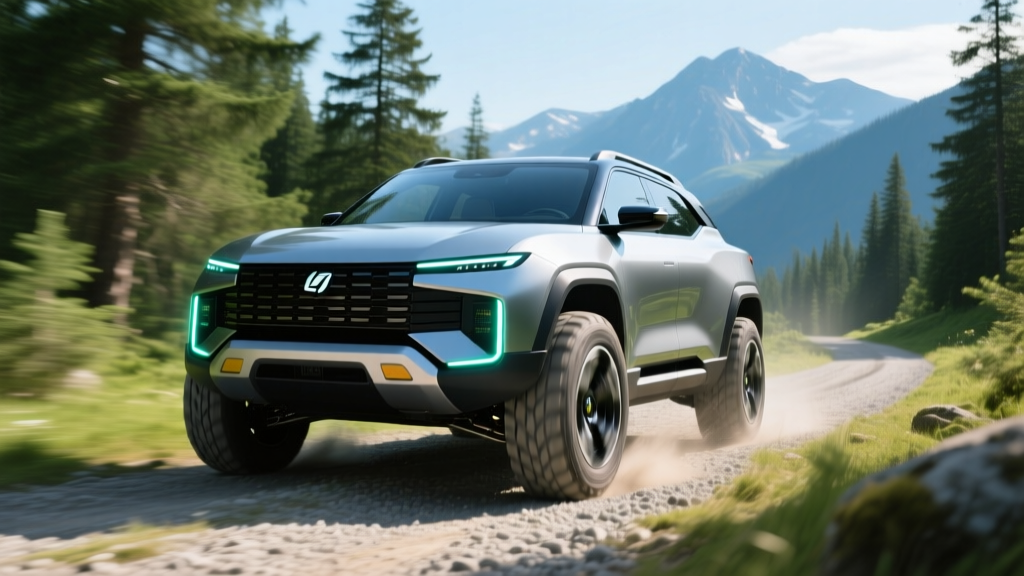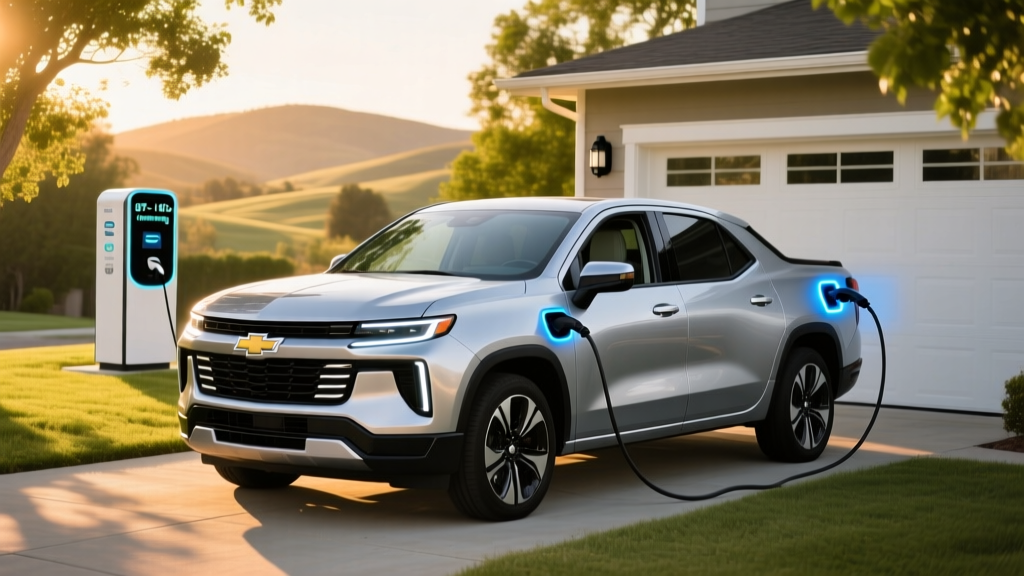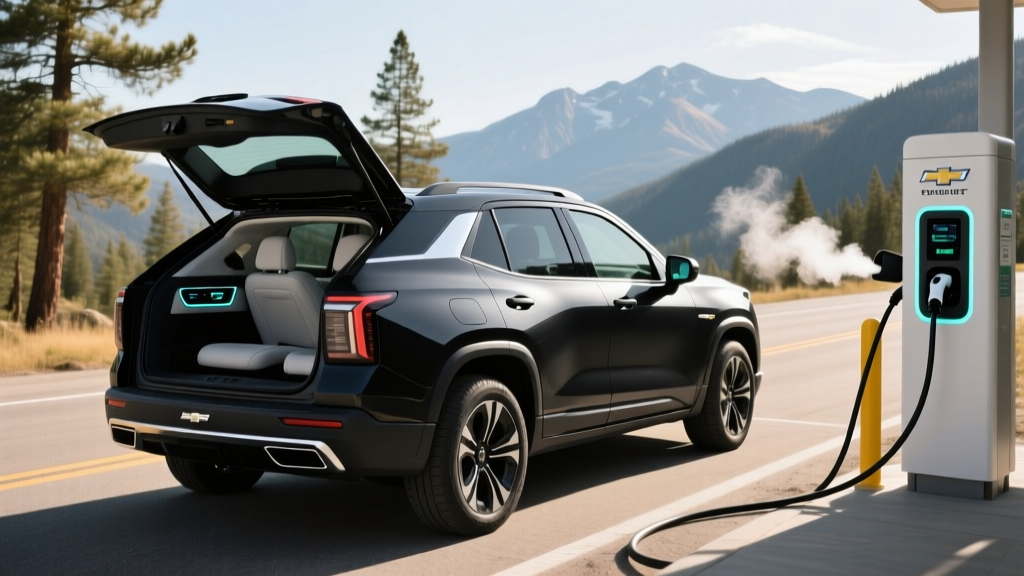
The 2026 Chevrolet Silverado EV is Chevrolet's full-size electric pickup, built on GM's Ultium platform and aimed squarely at fleet buyers, tradespeople, and suburban truck owners who want to eliminate fuel costs without sacrificing utility. With up to 492 miles of EPA-estimated range on select trims and a maximum DC fast-charge rate of 350 kW, it's one of the most capable electric trucks on the market. But how does it hold up when you factor in real-world highway driving, cold-weather range loss, and the realities of towing a 5,000-pound trailer? This review breaks down every number that matters.
Range and Efficiency: What the EPA Sticker Doesn't Tell You
The 2026 Silverado EV lineup offers two battery sizes and multiple range ratings depending on trim and drivetrain configuration. The Work Truck (WT) fleet-oriented model with the standard pack targets shorter duty cycles, while the RST and LT trims with the larger Ultium pack push range well past 400 miles.
| Trim | EPA Range | Real-World Highway (70 mph) | Cold Weather (20°F) |
|---|---|---|---|
| WT (Standard Battery) | ~280 mi | ~220-240 mi | ~180-200 mi |
| LT / RST (Extended Battery) | 492 mi (RST) | ~370-400 mi | ~300-340 mi |
| Trail Boss (Extended Battery) | ~390 mi | ~310-340 mi | ~250-280 mi |
The 492-mile RST figure is an EPA combined cycle rating. In real-world highway driving at sustained 70-75 mph speeds, expect roughly 15-20% less range due to aerodynamic drag — the Silverado EV's large frontal area works against it at speed. In freezing temperatures, the range penalty can reach 25-35% even with the heat pump engaged, though GM's battery preconditioning helps mitigate some losses. Towing a 6,000-lb trailer cuts range roughly in half — plan for 180-220 miles between charges when hauling.
Efficiency on the combined cycle lands around 56-62 MPGe depending on trim, or roughly 54-60 kWh per 100 miles. That's typical for a full-size electric truck — the Rivian R1T and Ford F-150 Lightning post similar figures. The Silverado EV's massive battery compensates for its thirst with sheer capacity rather than efficiency tricks.
Battery Specs, Chemistry, and Longevity
The 2026 Silverado EV uses GM's Ultium battery platform with NMC (nickel manganese cobalt) chemistry in the extended-range pack. The standard battery in the WT fleet trim uses a smaller module configuration for cost optimization.
| Specification | Standard Battery (WT) | Extended Battery (LT/RST/Trail Boss) |
|---|---|---|
| Usable Capacity | ~100 kWh | ~200 kWh |
| Chemistry | NMC (Ultium) | NMC (Ultium) |
| Voltage Architecture | 400V | 400V (dual-pack) |
| Thermal Management | Active liquid | Active liquid w/ heat pump |
| Battery Warranty | 8 years / 100,000 miles | 8 years / 100,000 miles |
| Capacity Retention Guarantee | ≥70% over warranty period | ≥70% over warranty period |
The 200 kWh extended pack is enormous — one of the largest production EV batteries available. It's physically two 100 kWh modules stacked in the skateboard chassis. GM's 8-year/100,000-mile battery warranty with a 70% capacity retention floor is standard for the segment. Long-term degradation data on the Ultium platform is still emerging, but early fleet data from commercial WT models suggests degradation is tracking within expectations. The sheer size of the extended pack means that even with 10-15% degradation over a decade, you'd still have 420+ miles of EPA-rated range — a meaningful buffer.
Charging: DC Fast, Level 2, and Infrastructure Reality
The Silverado EV's charging capability is where the Ultium platform's engineering investment pays off, though the 400V architecture means it can't quite match the peak speeds of 800V rivals like the Hyundai Ioniq 5 or Porsche Macan EV.
| Charging Level | Max Power | Speed / Time | Notes |
|---|---|---|---|
| Level 1 (120V, 12A) | ~1.4 kW | ~3-4 mi/hr | Emergency/trickle only |
| Level 2 (240V, 48A) | 11.5 kW | ~25-30 mi/hr | Home or workplace; ~16-18 hr for 10-100% (extended) |
| Level 2 (240V, 80A) | 19.2 kW | ~42-48 mi/hr | Requires upgraded home charger + 100A circuit |
| DC Fast Charge | 350 kW (peak) | 10-80% in ~35-40 min | Peak rate sustained briefly; tapers above 60% SoC |
| DC Fast Charge (150 kW station) | ~150 kW | 10-80% in ~65-75 min | More common station type |
The 350 kW peak DC fast-charge rate is impressive on paper, but as with all EVs, that peak is sustained only at low state-of-charge (typically 10-30% SoC) before tapering. The 10-80% time of roughly 35-40 minutes assumes a 350 kW-capable CCS/NACS station — which are still relatively rare outside of Tesla Supercharger V4 sites and select Electrify America locations. On a more common 150 kW station, plan on about 65-75 minutes for a 10-80% session with the extended battery.
For home charging, the onboard 19.2 kW AC charger (available on higher trims) is a standout feature. It cuts Level 2 charge times nearly in half compared to the base 11.5 kW charger — but it requires a dedicated 100-amp circuit and a hardwired Level 2 EVSE. Budget $1,500-$3,000 for a professional electrical installation if your panel supports it; a panel upgrade to 200A service can add $2,000-$4,000. Most Silverado EV owners will find the standard 11.5 kW charger sufficient for overnight replenishment, adding roughly 200+ miles during an 8-hour sleep cycle.
The 2026 Silverado EV ships with a NACS (North American Charging Standard) port, giving it native access to Tesla's Supercharger network — a significant advantage for road-tripping truck owners in areas where CCS infrastructure is sparse.
Performance, Towing, and Payload
| Trim | Drivetrain | Horsepower | Torque (lb-ft) | 0-60 mph | Max Towing | Max Payload |
|---|---|---|---|---|---|---|
| WT (Standard) | AWD (Dual Motor) | 510 hp | 615 | ~6.0 sec | 8,000 lbs | 1,800 lbs |
| LT | AWD (Dual Motor) | 665 hp | 780 | ~4.5 sec | 10,000 lbs | 1,600 lbs |
| RST | AWD (Dual Motor) | 754 hp | 785 | ~4.0 sec | 10,000 lbs | 1,500 lbs |
| Trail Boss | AWD (Dual Motor) | 665 hp | 780 | ~4.8 sec | 10,000 lbs | 1,500 lbs |
The RST's 4.0-second 0-60 time is legitimately quick for a vehicle weighing over 8,500 pounds. Dual-motor AWD is standard across all trims, and the instant torque delivery makes the Silverado EV feel significantly more responsive than its gas counterparts at city speeds. The Trail Boss trim adds off-road-oriented suspension tuning, skid plates, and terrain drive modes.
Towing capacity maxes out at 10,000 lbs on LT, RST, and Trail Boss trims (with the Max Trailering package), which is competitive with the F-150 Lightning's 10,000-lb rating but falls short of the Rivian R1T's 11,000-lb capacity and far below what a gas Silverado 2500HD can handle. The critical towing consideration for EVs is range: pulling 8,000-10,000 lbs will roughly halve your effective range, so a 492-mile RST becomes a ~220-mile truck under load. For fleet buyers doing predictable short-haul towing routes, this is manageable with depot charging. For cross-country trailer towing, frequent DC fast-charge stops (every 150-180 miles) are mandatory.
Pricing, Trims, and Federal Tax Credit Eligibility
| Trim | Base MSRP | Federal §30D Credit | Effective Price (if eligible) |
|---|---|---|---|
| WT (Fleet/Standard Battery) | ~$57,000 | Up to $7,500 | ~$49,500 |
| LT (Extended Battery) | ~$72,000 | Up to $7,500 | ~$64,500 |
| RST (Extended Battery) | ~$87,000 | Up to $7,500 | ~$79,500 |
| Trail Boss (Extended Battery) | ~$78,000 | Up to $7,500 | ~$70,500 |
As a full-size pickup, the Silverado EV is classified as a truck under IRS §30D rules, meaning it is subject to the $80,000 MSRP cap for trucks/vans/SUVs. The WT, LT, and Trail Boss trims clear this cap; the RST at ~$87,000 exceeds it and does not qualify for the federal purchase credit. However, buyers may be able to structure a lease to access the commercial credit equivalent passed through as a lease incentive — consult a tax professional for specifics.
- MSRP Cap: ≤$80,000 for trucks, vans, and SUVs
- Buyer Income Cap: AGI ≤$300,000 (joint), ≤$225,000 (head of household), ≤$150,000 (single)
- Battery Sourcing: Must meet critical-mineral and battery-component requirements (phased thresholds increase annually through 2032)
- Final Assembly: Must be assembled in North America (Silverado EV is built at GM's Factory ZERO in Detroit — qualifies)
- Point-of-Sale Transfer: Eligible buyers can transfer the credit to the dealer for an upfront price reduction at purchase
Always verify current eligibility on fueleconomy.gov and consult IRS guidance before purchasing.
Interior, Cargo, and Technology
The Silverado EV's interior is a clear step up from the outgoing gas Silverado's utilitarian roots, particularly in the LT and RST trims. The cabin uses GM's latest digital architecture with a 17.7-inch diagonal infotainment touchscreen (11-inch on WT) and an 11-inch driver display.
Key dimensions and cargo specs:
- Bed length: 5 ft 11 in (standard); available 6 ft 11 in with mid-gate open
- Bed volume: ~55-75 cu ft (depending on mid-gate position)
- Front trunk (e-trunk/frunk): ~10.7 cu ft — lockable, weatherproof, useful for secure tool or gear storage
- Multi-Flex Midgate: Pass-through between bed and cabin allows carrying items up to 10 ft 10 in with the tailgate down
- Rear legroom: ~43.4 inches (crew cab configuration)
- Front headroom: ~40.9 inches
The midgate is the Silverado EV's party trick. Borrowed from the Avalanche of the 2000s, it folds the rear cabin wall down into the bed, creating a continuous flat load floor from the tailgate to the front seats. For a contractor hauling lumber or a family moving furniture, this is genuinely more useful than a longer fixed bed.
On the tech front, the Silverado EV includes:
- Super Cruise (available): GM's hands-free Level 2 driver-assistance system on mapped highways — not self-driving; the driver must remain attentive and a camera monitors eye gaze
- Google Built-In: Google Maps, Google Assistant, and Play Store apps integrated into the infotainment system
- Power station feature: Up to 9.6 kW of bidirectional power output (Pro Power Onboard equivalent) for running tools at a job site or powering essential home circuits during an outage via available V2H (vehicle-to-home) integration
- Trailer integration: Digital trailer camera views, trailer tire pressure monitoring, and integrated trailer brake controller
Notable drawbacks: The WT trim's interior materials feel fleet-grade, and the base 11-inch screen is undersized for 2026. Rear visibility is hampered by the thick C-pillars — the digital rearview camera mirror is essentially mandatory and should be standard, not optional. The RST's ~$87,000 price pushes it into luxury truck territory without offering luxury-brand refinement.
Safety and Driver Assistance
The 2026 Silverado EV comes standard with Chevy Safety Assist, which includes automatic emergency braking with pedestrian detection, forward collision alert, lane keep assist with lane departure warning, following distance indicator, and IntelliBeam automatic high beams. Available upgrades include enhanced adaptive cruise control, blind-zone steering assist, and rear cross-traffic braking.
The Silverado EV had not yet received full NHTSA crash-test ratings at the time of this review. Its Ultium skateboard chassis places the battery mass low, which typically benefits rollover resistance. Check IIHS for updated ratings as they become available.
Competitor Comparison: Silverado EV vs. F-150 Lightning vs. Rivian R1T
| Attribute | 2026 Chevy Silverado EV RST | 2026 Ford F-150 Lightning (Ext. Range) | 2026 Rivian R1T (Dual-Motor Max) |
|---|---|---|---|
| EPA Range | 492 mi | ~320 mi | ~410 mi |
| Battery (usable) | ~200 kWh | ~131 kWh | ~149 kWh |
| Peak DC Charge | 350 kW | ~150 kW | ~220 kW |
| 10-80% DCFC | ~35-40 min | ~45-50 min | ~30-35 min |
| Horsepower | 754 hp | 580 hp | 665 hp |
| 0-60 mph | ~4.0 sec | ~4.5 sec | ~3.5 sec |
| Max Towing | 10,000 lbs | 10,000 lbs | 11,000 lbs |
| Base MSRP (comparable trim) | ~$87,000 | ~$72,000 | ~$82,000 |
| Federal Credit Eligible | No (over $80k MSRP cap) | Yes (select trims) | Yes (select trims) |
| Charging Port | NACS | NACS (2025+) | NACS (2025+) |
- Choose the Silverado EV if: You need maximum range above all else, value the midgate for long-cargo flexibility, want 9.6 kW onboard power for job-site use, and primarily buy/lease in a trim under $80k for credit eligibility.
- Choose the F-150 Lightning if: You want the most mainstream dealer network, need a proven platform with years of real-world data, and want to stay under the $80k MSRP cap for the federal credit.
- Choose the Rivian R1T if: You prioritize off-road capability, want a more refined interior, value the quad-motor option for extreme performance, and don't need a full-size bed for commercial work.
Pros and Cons
- Class-leading 492-mile EPA range (RST)
- 350 kW peak DC fast charging — among the fastest in the truck segment
- NACS port = native Tesla Supercharger access
- Multi-Flex Midgate for 10+ ft cargo pass-through
- 9.6 kW bidirectional power output for job-site or home backup
- Super Cruise hands-free driving on mapped highways
- Strong 0-60 performance across all trims
- Spacious crew cab with generous rear legroom
- RST trim exceeds $80k MSRP cap — no federal tax credit
- Highway and cold-weather range losses are significant (20-35%)
- Towing halves effective range — 180-220 mi under load
- Heavy curb weight (~8,500-9,000 lbs) impacts tire wear and efficiency
- WT trim interior is fleet-basic; base screen is small
- Home charging at 19.2 kW may require electrical panel upgrade
- Rear visibility is poor without the camera mirror
- Long-term Ultium battery degradation data still limited
Who Should Buy the 2026 Silverado EV?
The 2026 Silverado EV is best suited for three buyer profiles:
Fleet and commercial buyers: The WT trim at ~$57,000 (before credit) is compelling for businesses with depot charging. Low operating costs, 8,000-lb towing, and the 9.6 kW onboard power outlet eliminate the need for a separate generator on many job sites. The federal credit and commercial clean vehicle credit (§45W) further improve the math.
Suburban truck owners who commute and tow occasionally: If you drive 40-60 miles daily and tow a boat or camper on weekends, the LT or Trail Boss (both under the $80k credit cap) offer 370-400 real-world commuting miles with enough range for 150-mile towing day trips. Home Level 2 charging means you start every day with a full "tank."
Range-priority buyers: If the idea of a 492-mile EPA-rated truck appeals to you and budget is flexible, the RST delivers the longest range of any production electric truck. Just know that you'll pay a premium and likely won't qualify for the federal purchase credit.
This truck is not ideal for: frequent long-distance trailer towers (the range penalty is too severe), buyers in areas with sparse DC fast-charging infrastructure, or those who need heavy-duty towing capacity beyond 10,000 lbs (look at a gas 2500HD or wait for future heavy-duty EV platforms).
Frequently Asked Questions
What is the real-world range of the 2026 Chevrolet Silverado EV?
The EPA rates the RST trim at 492 miles combined. In real-world highway driving at 70-75 mph, expect roughly 370-400 miles. In cold weather (below 30°F), plan for 300-340 miles. Towing a heavy trailer cuts range to approximately 180-220 miles. The LT and Trail Boss with the extended battery deliver roughly 310-340 real-world highway miles.
How fast does the Silverado EV charge at home and on the road?
At home on a 240V Level 2 charger, the Silverado EV charges at up to 11.5 kW (standard) or 19.2 kW (available), adding roughly 25-48 miles per hour of charging. A full overnight charge (8 hours) replenishes 200-350+ miles depending on the charger. On DC fast chargers, it peaks at 350 kW and can charge from 10-80% in approximately 35-40 minutes on a compatible station, though 150 kW stations are more common and will take 65-75 minutes for the same session.
How much does the 2026 Silverado EV cost after tax credits?
The WT starts around $57,000 and can drop to ~$49,500 with the full $7,500 federal credit. The LT at ~$72,000 drops to ~$64,500 with the credit. The Trail Boss at ~$78,000 can reach ~$70,500. The RST at ~$87,000 exceeds the $80,000 MSRP cap for the §30D credit and does not qualify for the federal purchase credit. Leasing may provide an alternative path to savings via the commercial credit passed through as a lease incentive. Always verify current rules with a tax professional and check IRS guidance.
Is the 2026 Silverado EV worth buying vs. the Ford F-150 Lightning or Rivian R1T?
It depends on your priorities. The Silverado EV wins on maximum range (492 vs. 320-410 miles) and DC fast-charge peak speed (350 kW). The F-150 Lightning wins on price, dealer network breadth, and easier federal credit eligibility. The Rivian R1T wins on off-road capability, interior refinement, and acceleration. If range is your top concern and you can access the right trim under the credit cap, the Silverado EV is a strong choice.
Does the 2026 Chevrolet Silverado EV qualify for the federal EV tax credit?
The WT, LT, and Trail Boss trims (all under $80,000 MSRP) qualify for up to $7,500 under IRS §30D, provided the buyer meets income caps ($300k joint / $150k single), the vehicle meets battery sourcing requirements, and it is assembled in North America (it is — at GM's Factory ZERO in Detroit). The RST trim exceeds the $80,000 MSRP cap and does not qualify for the purchase credit. The credit can be transferred to the dealer at point of sale for an upfront price reduction. Rules are subject to change — always confirm eligibility before purchasing.
Can the Silverado EV power my home or job site?
Yes. The Silverado EV offers up to 9.6 kW of bidirectional power output through its Pro Power-style outlets. This is enough to run most power tools on a job site simultaneously or power essential home circuits (refrigerator, lights, HVAC fan) during an outage for several days when paired with a compatible V2H (vehicle-to-home) system. Installation of a V2H-compatible home energy system requires professional electrical work and typically costs $3,000-$6,000 in addition to the vehicle.
What is the battery warranty on the 2026 Silverado EV?
GM covers the Ultium battery pack for 8 years or 100,000 miles (whichever comes first) with a minimum 70% capacity retention guarantee. If the battery degrades below 70% of its original usable capacity within the warranty period, GM will repair or replace it at no cost. The powertrain (motors, power electronics) carries the same 8-year/100,000-mile coverage. The bumper-to-bumper limited warranty is 3 years / 36,000 miles.