Quick Verdict: A Mainstream EV That Gets the Basics Right
The 2026 Chevrolet Equinox EV RS occupies a rare position in the electric vehicle market: it delivers over 300 miles of EPA-estimated range at a price point that undercuts nearly every rival in the compact electric SUV segment. The RS trim adds sport-tuned suspension, blacked-out styling cues, and a dual-motor all-wheel-drive powertrain producing 300 horsepower — without pushing the MSRP past the federal tax credit cap.
After spending time with the Equinox EV RS on highway loops, suburban commutes, and DC fast-charging stops, the verdict is clear: Chevrolet has built a practical, efficient electric crossover that prioritizes range and value over performance theatrics. It won't win drag races against an Ioniq 5 or Model Y, but it will get most drivers through a full work week without plugging in.
| Spec | Value |
|---|---|
| EPA Range | 315 miles (AWD RS) |
| Battery (Usable) | 85 kWh, NMC lithium-ion |
| Powertrain | Dual-motor AWD, 300 hp / 355 lb-ft |
| 0–60 mph | 5.9 seconds |
| Max DC Fast Charge | 150 kW (peak) |
| 10–80% DC Charge Time | ~33 minutes |
| Level 2 Home Charging | 11.5 kW (~34 mi/hr) |
| EPA Efficiency | 109 MPGe combined / 31 kWh/100 mi |
| Cargo Volume | 26.4 cu ft (rear seats up) / 57.2 cu ft (folded) |
| Base MSRP (RS AWD) | $44,900 (before destination) |
| Battery Warranty | 8 years / 100,000 miles |
Range and Efficiency: 315 Miles on Paper, What About Reality?
The Equinox EV RS AWD carries an EPA-estimated 315 miles of range from its 85 kWh usable NMC battery pack. For a dual-motor compact SUV at this price, that figure is genuinely competitive — it matches or exceeds the Volkswagen ID.4 AWD (291 mi) and sits close to the Hyundai Ioniq 5 AWD (290 mi for the Long Range).
- City/suburban mixed driving (65–75°F): 300–320 mi — regenerative braking in stop-and-go traffic helps you meet or slightly exceed the EPA sticker.
- Highway cruising (70–75 mph, moderate temps): 260–280 mi — aerodynamic drag cuts into the Ultium platform's efficiency at sustained speed.
- Cold weather (20–35°F, highway): 210–240 mi — expect a 25–30% reduction. The Equinox EV uses a resistive heater rather than a heat pump, which draws more from the pack in freezing temps.
- Towing (1,500-lb max rating): 170–200 mi — towing with any compact EV slashes range significantly.
The absence of a heat pump is the Equinox EV's most notable efficiency compromise. Competitors like the Ioniq 5 and Model Y use heat pumps to scavenge waste heat from the powertrain, reducing cabin-heating energy draw in winter. If you live in the upper Midwest or Northeast and plan to drive year-round without preconditioning in a garage, budget for that cold-weather range loss.
Efficiency settles around 31 kWh per 100 miles in mixed driving, translating to 109 MPGe combined per the EPA. That's respectable for a 4,400-pound dual-motor SUV, though the lighter RWD Equinox EV trims achieve up to 115 MPGe.
Charging: 150 kW Peak, but the Curve Tells the Real Story
Chevrolet rates the Equinox EV RS for a peak DC fast-charge rate of 150 kW on a CCS connector (the Equinox EV launched with CCS1 and GM has confirmed NACS adapter availability for Tesla Supercharger access). Here's what the charging experience actually looks like:
| Charging Level | Power | Speed | Notes |
|---|---|---|---|
| Level 1 (120V household) | 1.4 kW | ~4 mi/hr | Emergency/trickle only; 80+ hours for full charge |
| Level 2 (240V home, 48A) | 11.5 kW | ~34 mi/hr | Full charge in ~9 hours; ideal overnight setup |
| DC Fast Charge (peak) | 150 kW | ~190 mi/hr at peak | Sustains ~130–150 kW to ~55% SoC |
| DC 10–80% | — | ~33 minutes | Curve tapers sharply above 80%; don't wait past 85% |
The 150 kW peak is modest compared to the Ioniq 5's 240 kW or the Model Y's ~250 kW on V3 Superchargers. In practice, the Equinox EV holds a strong charge curve between 10% and 55% state of charge, sustaining close to its peak rate. Above 60%, the curve tapers progressively — by 80%, you're looking at roughly 60–70 kW, and above 90% it drops to under 30 kW.
Practical takeaway: Plan road-trip stops around 10–80% sessions (~33 minutes). Charging from 80–100% at a DC fast charger adds another 25+ minutes for roughly 60 miles of range — not worth the time. Precondition the battery using the vehicle's navigation-routed preconditioning feature before arriving at a charger to hit peak speeds.
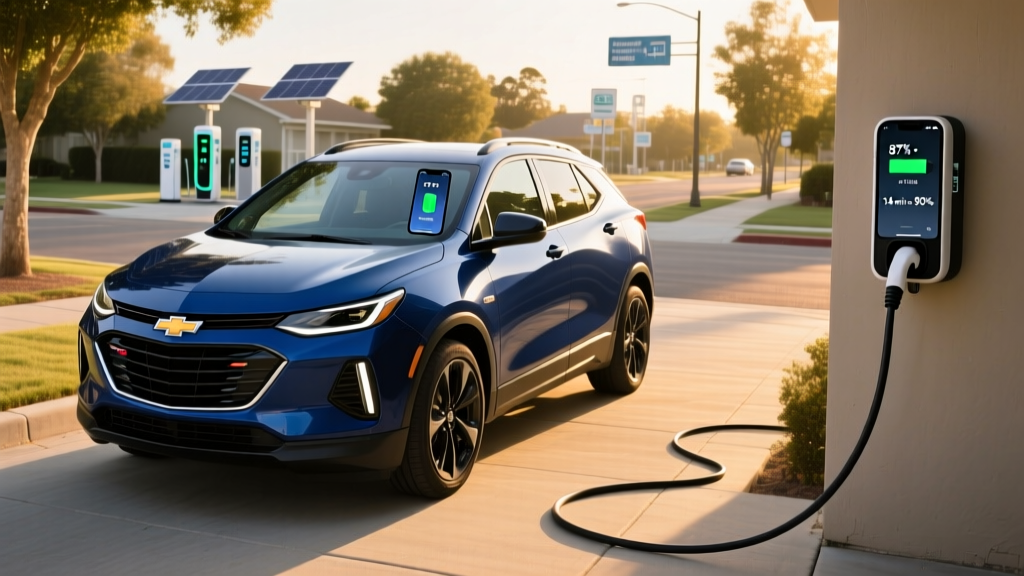
For home charging, the 11.5 kW onboard AC charger is competitive. A full Level 2 session from empty takes roughly 9 hours, meaning any overnight window covers a full replenishment. Installation of a 240V/48A home charger typically runs $800–$2,000 depending on panel proximity and whether your electrical panel needs an upgrade to 200A service.
Performance and Driving Dynamics
The RS trim's dual-motor AWD setup produces 300 horsepower and 355 lb-ft of torque, launching the Equinox EV to 60 mph in 5.9 seconds. That's brisk for a family crossover but deliberately relaxed compared to the 3.5-second sprints offered by performance-oriented rivals. Chevrolet tuned the RS for composed highway manners rather than track heroics.
The RS-specific sport suspension lowers the ride height slightly and firms up damping compared to the LT and Launch Edition trims. Body roll is well-controlled in corners, and the 4,400-pound curb weight is managed competently by the regenerative braking system, which offers a one-pedal driving mode with adjustable regen intensity through the infotainment screen.
Steering feel is the weakest dynamic link — it's numb and overly assisted, a common trait in electric crossovers optimized for low-effort city driving. On-center feel improves at highway speed, but don't expect the communicative helm of a BMW iX.
Ride quality is a strong point. The Ultium platform's low center of gravity and the RS suspension tuning yield a planted, quiet cabin at 75 mph. Road noise is notably lower than in the gas Equinox, aided by acoustic laminated front glass and active noise cancellation on higher trims.
Interior, Tech, and Cargo
The Equinox EV RS cabin is dominated by a 17.7-inch diagonal infotainment touchscreen paired with an 11-inch digital instrument cluster, both running GM's latest Ultifi-based software platform. The interface is responsive, with customizable home screens and native Google Built-in (Google Maps, Assistant, and Play Store). Wireless Apple CarPlay and Android Auto are standard.
Build quality represents a step up from the outgoing gas Equinox. Soft-touch materials cover the dash and upper door panels, and the RS adds unique upholstery with red contrast stitching and a flat-bottom steering wheel. Heated front seats and a heated steering wheel are standard; ventilated front seats are available in the RS Convenience package.
Cargo and passenger space:
- Rear legroom: 37.8 inches — generous for the class, sufficient for adult passengers on longer trips
- Front headroom: 40.0 inches
- Cargo (behind rear seats): 26.4 cu ft
- Cargo (rear seats folded): 57.2 cu ft
- Front trunk (frunk): Not available — the Ultium platform in this configuration does not include a front storage compartment
The lack of a frunk is a missed opportunity for weather-sealed storage, and the 26.4 cu ft behind the rear seats trails the Tesla Model Y's 30.2 cu ft. However, the cargo area is square and usable, with a low load floor thanks to the flat battery pack.
Driver assistance: The Equinox EV RS comes standard with Chevy's Super Cruise capability on over 400,000 miles of compatible highways in the U.S. and Canada. Super Cruise is an SAE Level 2 system — it handles steering, acceleration, and braking on mapped divided highways, but requires the driver to remain attentive at all times, monitored by an infrared camera on the steering column. It is not self-driving. Off mapped roads, the standard Chevy Safety Assist suite provides adaptive cruise control, lane-keeping assist, automatic emergency braking, and blind-spot monitoring.
Pricing, Trims, and Federal Tax Credit
The 2026 Equinox EV RS AWD starts at $44,900 (plus $1,395 destination). Chevrolet also offers the Equinox EV in LT (FWD from $33,600) and RS FWD ($41,900) configurations, but the RS AWD is the most popular choice for buyers in snow-belt states.
| Item | Amount |
|---|---|
| Base MSRP (RS AWD) | $44,900 |
| Destination charge | $1,395 |
| RS Convenience Package | +$1,450 |
| As-tested price (loaded) | ~$47,745 |
| Federal §30D tax credit (if eligible) | Up to $7,500 |
| Effective price after max credit | ~$40,245 |
Federal tax credit eligibility — key caveats: Under IRS §30D rules current for the 2026 tax year, the Equinox EV RS may qualify for up to $7,500 in federal tax credits, but eligibility depends on multiple factors:
- MSRP cap: SUVs must have an MSRP at or below $80,000 — the Equinox EV RS clears this easily.
- Buyer income cap: Modified adjusted gross income must not exceed $150,000 (single), $225,000 (head of household), or $300,000 (joint filing).
- Battery sourcing: A percentage of critical minerals and battery components must be sourced from the U.S. or free-trade-agreement countries. GM has been working to localize Ultium battery supply chains at U.S. plants, but the exact credit amount ($3,750 or $7,500) depends on current-year sourcing compliance. Verify on the IRS qualified vehicles list before purchasing.
- Point-of-sale transfer: Eligible buyers can transfer the credit to the dealer at purchase, reducing the out-of-pocket price immediately rather than waiting for a tax refund.
Always confirm eligibility with a tax professional and check the latest IRS qualified vehicle list — sourcing requirements tighten annually and credit amounts can change mid-year.
Warranty and Long-Term Ownership
Chevrolet backs the Equinox EV's battery pack and electric powertrain components with an 8-year / 100,000-mile limited warranty, covering defects and capacity loss below a specified threshold (typically 60–70% of original capacity, though GM has not published an exact retention guarantee for the 2026 model year). The bumper-to-bumper limited warranty runs 3 years / 36,000 miles.
The NMC chemistry in the Ultium pack is well-proven across GM's EV lineup. Based on degradation data from earlier Ultium-platform vehicles (Lyriq, Blazer EV), expect roughly 5–8% capacity loss over the first 100,000 miles under normal use — meaning a 315-mile new vehicle might deliver 290–300 miles after five years. Avoid habitual DC fast charging above 90% SoC and repeated deep discharges to 0% to maximize longevity.
Maintenance costs are minimal compared to the gas Equinox: no oil changes, no transmission fluid, no spark plugs. Budget for cabin air filter replacement (~$30–$50 every 20,000 miles), brake fluid checks (regen braking extends pad life dramatically), and tire rotation. EV-specific tires carry a cost premium — expect $250–$350 per corner for the RS's 21-inch all-season rubber.
Pros, Cons, and Who Should Buy
- 315-mile EPA range at a sub-$45K starting price (AWD)
- Spacious rear seat with 37.8" legroom
- Super Cruise standard on RS — a class-leading Level 2 highway assist
- Competitive 11.5 kW Level 2 home charging speed
- Quiet, composed ride quality at highway speeds
- Qualifies for up to $7,500 federal tax credit (subject to sourcing rules)
- 150 kW peak DC charge rate trails Ioniq 5 (240 kW) and Model Y (~250 kW)
- No heat pump — cold-weather range loss is significant (25–30%)
- No front trunk (frunk)
- Numb steering feel, even in RS sport mode
- 5.9-second 0–60 is adequate but unexciting for the RS badge
- Cargo volume (26.4 cu ft) trails key competitors
Who the 2026 Equinox EV RS suits best:
- Daily commuters driving 30–60 miles round-trip who want to charge at home nightly and rarely visit a DC fast charger.
- Small families needing rear-seat space for car seats and a usable cargo area, without paying premium-SUV prices.
- Buyers in moderate climates where the lack of a heat pump won't meaningfully impact daily range.
- Highway-heavy drivers who will benefit from standard Super Cruise on long divided-highway commutes.
Consider alternatives if: You regularly road-trip in winter (Ioniq 5's heat pump and faster charging win), need maximum cargo space (Model Y), or prioritize sporty acceleration (Ford Mustang Mach-E GT).
Frequently Asked Questions
What is the real-world range of the 2026 Equinox EV RS?
In mixed city/suburban driving at moderate temperatures, expect 300–320 miles — close to the 315-mile EPA sticker. Sustained highway driving at 70–75 mph drops that to 260–280 miles, and cold-weather highway driving (below 35°F) can reduce range to 210–240 miles due to the lack of a heat pump.
How fast does the Equinox EV RS charge at home and on the road?
At home on a 240V Level 2 charger (48A), the Equinox EV RS adds roughly 34 miles of range per hour and fully charges in about 9 hours. On a DC fast charger, it peaks at 150 kW and charges from 10–80% in approximately 33 minutes — adequate but slower than the Hyundai Ioniq 5 (18 min) or Tesla Model Y (~25 min on V3 Superchargers).
Does the 2026 Equinox EV RS qualify for the federal EV tax credit?
It may qualify for up to $7,500 under IRS §30D, subject to buyer income limits ($150K single / $300K joint), the $80,000 SUV MSRP cap (easily met), and battery critical-mineral and component sourcing requirements that tighten each year. The credit can be transferred to the dealer at point of sale. Always verify current eligibility on irs.gov and consult a tax professional before purchase.
Is the Equinox EV RS worth buying over the Ioniq 5 or Model Y?
The Equinox EV RS wins on starting price and standard Super Cruise, making it the value pick for commuters who prioritize range-per-dollar and hands-free highway driving. The Ioniq 5 is superior for road-trippers thanks to its 240 kW charging, heat pump, and more engaging driving dynamics. The Model Y offers more cargo space and faster Supercharger network access but costs more and lacks the Equinox's traditional dealership service network.
Does the Equinox EV RS have a frunk?
No. The Ultium platform configuration in the Equinox EV does not include a front trunk. All storage is in the rear cargo area (26.4 cu ft behind the second row, 57.2 cu ft with seats folded).
What is the battery warranty on the Equinox EV RS?
Chevrolet covers the high-voltage battery and electric drive components for 8 years or 100,000 miles, whichever comes first. The bumper-to-bumper limited warranty is 3 years / 36,000 miles.