2026 Chevrolet Equinox EV Lease: Is It the Smartest EV Deal Right Now?
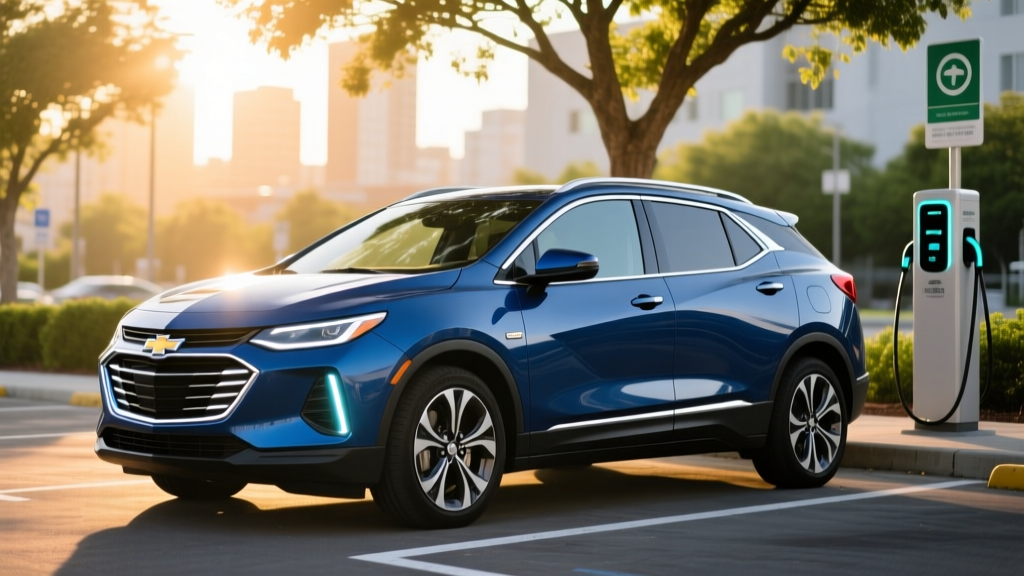
The 2026 Chevrolet Equinox EV has positioned itself as one of the most affordable long-range electric crossovers on the market, with a starting MSRP around $33,600 and an EPA-estimated range up to 319 miles. But for many shoppers, the real question isn't sticker price — it's whether leasing or buying makes more financial sense once you factor in the federal tax credit, charging costs, insurance premiums, and depreciation. This guide walks through the real numbers behind a 2026 Chevrolet Equinox EV lease and ownership scenario so you can decide with data, not dealer pitches.
| Spec | 2026 Equinox EV 2LT (FWD) | 2026 Equinox EV RS (AWD) |
|---|---|---|
| Base MSRP | $33,600 | $43,400 |
| EPA Range | 319 mi | 285 mi |
| Battery (usable) | 85 kWh (NMC) | 85 kWh (NMC) |
| Max DC Fast Charge | 150 kW | 150 kW |
| 10–80% DC Time | ~30 min | ~30 min |
| Level 2 Rate | 11.5 kW | 11.5 kW |
| Horsepower | 213 hp | 288 hp |
| 0–60 mph | ~8.2 sec | ~5.9 sec |
| MPGe (combined) | 95 MPGe | 90 MPGe |
| Battery/Powertrain Warranty | 8 yr / 100,000 mi | 8 yr / 100,000 mi |
The Lease-vs-Buy Question: How the Federal Tax Credit Changes the Math
Under current IRS §30D rules, the federal clean vehicle credit offers up to $7,500 for eligible new EVs. The Equinox EV is assembled in the U.S. (at GM's Orion Assembly in Michigan) and has historically qualified for the full credit, but eligibility depends on your income, the vehicle's MSRP, and battery mineral sourcing requirements that tighten annually.
Here's where leasing gets interesting: under the IRS commercial clean vehicle credit (§45W), the leasing company — technically the vehicle owner — can claim a $7,500 credit and pass it through as a "lease cash" reduction. This bypasses the personal income and MSRP caps that apply to a purchase. Many dealerships and manufacturers structure lease deals to pass this savings directly to the lessee.
§30D Federal Tax Credit Checklist (Purchase)
- Income caps (MAGI): $300,000 joint / $225,000 head of household / $150,000 single
- MSRP caps: $80,000 for SUVs, vans, trucks; $55,000 for sedans (Equinox EV qualifies as SUV)
- Battery sourcing: Critical minerals and battery components must meet phased-in domestic/free-trade percentages — check the specific VIN at fueleconomy.gov
- Point-of-sale transfer: You can elect to transfer the credit to the dealer at purchase, reducing your down payment or monthly payment — but the dealer must be IRS-registered
- Tax liability: Credit is non-refundable on a purchase — you must owe at least $7,500 in federal tax to capture the full amount (the lease commercial credit path avoids this limitation)
Bottom line for the Equinox EV: If your income exceeds the §30D caps or your tax liability is too low, leasing may be the only way to capture the full $7,500 incentive. Confirm with the dealer that the lease cash is reflected in the capitalized cost reduction — don't assume it's automatic.
5-Year Total Cost of Ownership: The Real Numbers
Below is a 5-year / 75,000-mile ownership projection comparing the Equinox EV 2LT (FWD) to a comparably priced gas compact SUV (we used the 2026 Chevrolet Equinox 1.5T AWD at ~$32,000 MSRP as the baseline). Assumptions: 15,000 miles/year, $0.14/kWh home electricity, $3.50/gallon regular unleaded, and 27 MPG combined for the gas model.
| Cost Category | Equinox EV 2LT | Gas Equinox 1.5T AWD |
|---|---|---|
| Purchase/Lease (after incentives) | $26,100* | $32,000 |
| Fuel / Electricity (5 yr) | $3,938 | $9,722 |
| Maintenance (5 yr) | $1,800 | $4,200 |
| Insurance (5 yr) | $10,500 | $8,400 |
| Depreciation (est.) | $11,700 | $14,400 |
| Total 5-Year Cost | $54,038 | $68,722 |
| Cost per mile | $0.72 | $0.92 |
*Assumes $7,500 federal credit applied via lease cash or point-of-sale transfer. Actual cost depends on trim, options, and local fees.
The EV saves roughly $14,684 over five years, or about $0.20 per mile. The biggest savings come from fuel and maintenance, partially offset by higher insurance premiums. Let's break each category down.
Charging vs. Gas: The Per-Mile Cost Reality
The Equinox EV's efficiency of approximately 3.2 miles per kWh (derived from its 95 MPGe combined rating) makes it one of the more efficient crossovers in its class. Here's how the math works at different charging scenarios:
| Charging Scenario | Cost per kWh | Cost per Mile | Annual (15k mi) |
|---|---|---|---|
| Home Level 2 (national avg) | $0.14 | $0.044 | $656 |
| Home with off-peak TOU rate | $0.09 | $0.028 | $422 |
| Public DC Fast (avg network) | $0.40 | $0.125 | $1,875 |
| Gas Equinox (27 MPG, $3.50/gal) | — | $0.130 | $1,944 |
If you charge predominantly at home — which industry surveys show about 80% of EV owners do — your per-mile fuel cost is roughly one-third of the gas equivalent. The savings shrink if you rely heavily on public DC fast charging, where rates of $0.35–$0.55/kWh are common on networks like Electrify America and EVgo. Even at public charger prices, though, the EV still edges out the gas SUV per mile in most markets.
Charging cost gotcha: The Equinox EV's 150 kW peak DC charge rate means a 10–80% session takes approximately 30 minutes. The charge curve tapers significantly above 80% SoC — don't plan your road trip stops around a "full charge." For daily driving, charging to 80% at home on a Level 2 unit (11.5 kW) takes about 7.5 hours, easily covering overnight replenishment.
Maintenance Savings: Where EVs Quietly Win
Electric vehicles eliminate the most routine — and cumulatively expensive — maintenance items that gas car owners accept as normal. The Equinox EV has no engine oil, no transmission fluid, no spark plugs, no timing belt, and no exhaust system. Its regenerative braking system also dramatically reduces brake pad wear; many EV owners report original brake pads lasting 80,000–100,000+ miles.
| Maintenance Item | Equinox EV | Gas Equinox |
|---|---|---|
| Oil changes (5 yr / 75k mi) | $0 | $750–$1,050 |
| Transmission fluid | $0 (sealed single-speed) | $200–$350 |
| Brake pads (front) | $0 (regen extends life) | $400–$600 |
| Engine air filter | $0 (no engine) | $150–$200 |
| Coolant / spark plugs | $0 | $300–$500 |
| Tire rotation (both need this) | $250–$350 | $250–$350 |
| Cabin air filter (both) | $150–$200 | $150–$200 |
| Total est. maintenance (5 yr) | $1,800 | $4,200 |
The roughly $2,400 five-year maintenance savings is one of the most reliable EV ownership advantages. The main EV-specific maintenance costs are cabin air filter replacement, windshield washer fluid, tire rotation, and eventually brake fluid checks. The battery and drive unit are covered under GM's 8-year / 100,000-mile warranty, and the battery must retain at least 70% of original capacity under that warranty.
Insurance: The Cost Category Where EVs Lose
Let's be direct: insuring the Equinox EV will cost more than insuring its gas counterpart. Industry data consistently shows EV insurance premiums running 15–30% higher than equivalent gas vehicles. For the Equinox EV, expect average annual premiums of roughly $1,900–$2,300 depending on your state, driving record, and coverage levels — compared to $1,500–$1,800 for the gas Equinox.
Why the premium?
- Higher repair costs: EV battery packs and power electronics are expensive to replace after collision damage, and fewer body shops have high-voltage certification.
- Higher vehicle value: Insurers price comprehensive and collision coverage based on replacement cost, and the EV's MSRP (even after incentives) factors into premiums.
- Specialized parts and labor: Aluminum body panels, high-voltage wiring harnesses, and Ultium-specific components carry higher parts costs.
- Repair network limitations: Some insurers factor in limited repair-shop availability for EV-specific damage.
How to reduce EV insurance costs: Shop at least three quotes before delivery. Bundling with homeowners insurance, maintaining a clean driving record, and choosing higher deductibles ($1,000 vs. $500) can narrow the gap. Some insurers now offer EV-specific policies with battery replacement coverage — ask explicitly about this.
Depreciation and Resale Value: The Evolving Picture
EV depreciation has historically been steeper than gas vehicles, driven by rapid technology advancement, periodic price cuts from Tesla, and consumer uncertainty about long-term battery health. However, the picture is improving for mainstream models like the Equinox EV.
Current projections suggest the Equinox EV will retain approximately 45–55% of its transaction price after 5 years / 75,000 miles, depending on trim, condition, and market demand. The gas Equinox typically retains 50–60%. The gap has narrowed as battery warranties have strengthened and consumer familiarity with EVs has grown.
Key depreciation factors for the Equinox EV:
- Lease impact: If you lease, depreciation is the lessor's problem, not yours. Your exposure is limited to excess mileage and wear charges. This is a significant advantage if you're uncertain about long-term EV resale values.
- Battery health: GM's 8-year/100,000-mile battery warranty with a 70% capacity retention threshold provides a floor. Vehicles with documented battery State of Health (SoH) above 90% at trade-in command premium resale.
- Tax credit changes: If federal incentives are reduced or restructured in future years, it could either boost used EV demand (making them more attractive) or suppress new EV pricing (hurting used values). This is the biggest wildcard.
- Charging infrastructure growth: Expanding DC fast charger networks and GM's access to the Tesla Supercharger network (via NACS adapter) are long-term positives for resale demand.
State, Local, and Utility Incentives
Beyond the federal §30D credit, many states and utilities offer additional incentives that can reduce your effective cost by $500–$5,000+. Examples include:
- State rebates: California's CVRP, Colorado's innovative motor vehicle credit, Massachusetts' MOR-EV, and New York's Drive Clean rebate all offer $1,000–$5,000+ based on income and vehicle price. Check AFDC's state incentive database for current programs.
- Utility rebates: Many electric utilities offer $250–$1,500 rebates for home Level 2 charger installation, plus time-of-use rate plans that cut charging costs by 30–50%.
- HOV lane access: States including California, Colorado, and Virginia offer single-occupant HOV lane access for qualifying EVs — a non-monetary but high-value perk in congested metros.
Incentive availability, amounts, and eligibility vary by jurisdiction and change frequently. Verify current programs through official state and utility sources before making purchase decisions.
Lease-Specific Considerations for the 2026 Equinox EV
If you're specifically evaluating a 2026 Chevrolet Equinox EV lease, several deal-structure factors determine whether the math works in your favor:
- Money factor and residual: Ask the dealer for the money factor (lease interest rate, expressed as a decimal — multiply by 2,400 to get the APR equivalent) and the residual percentage. A strong residual (55%+ at 36 months) keeps monthly payments lower.
- Lease cash vs. purchase credit: Confirm whether GM Financial or the dealer is applying the $7,500 commercial clean vehicle credit as a capitalized cost reduction. This should visibly lower your monthly payment — if it doesn't appear on the lease worksheet, ask why.
- Mileage allowance: Standard EV leases often come with 10,000 miles/year. If you drive 15,000+, negotiate a 12,000 or 15,000-mile lease upfront — excess mileage penalties of $0.20–$0.30/mile at turn-in are expensive.
- Disposition fee: Most leases include a $350–$500 disposition fee at return unless you lease or purchase another vehicle from the same brand. Factor this in.
- End-of-lease flexibility: Unlike ownership, you walk away at lease end with no resale-value risk. If battery technology leaps forward or EV prices drop further, you're free to move to the next generation without being underwater on a loan.
Frequently Asked Questions
How much does it really cost to own a 2026 Chevrolet Equinox EV over 5 years?
Our analysis projects approximately $54,000 in total 5-year costs for the 2LT FWD trim, assuming the $7,500 federal incentive is captured. That's roughly $14,000–$15,000 less than a comparably equipped gas Equinox over the same period. Your actual costs depend on local electricity rates, insurance premiums, and driving patterns.
Do I qualify for the federal tax credit on the Equinox EV?
For a purchase, you must meet IRS §30D income caps ($300K joint / $150K single), the vehicle must be under the $80,000 SUV MSRP cap (all Equinox EV trims qualify), and the battery must meet current-year critical mineral and component sourcing thresholds. For a lease, the commercial credit path (§45W) bypasses personal income and tax-liability limitations — the leasing company claims the credit and can pass savings to you as lease cash. Always verify eligibility for your specific VIN at fueleconomy.gov and consult a tax professional.
How much do I save on fuel and maintenance compared to a gas SUV?
With home charging at $0.14/kWh, the Equinox EV costs roughly $0.04 per mile in electricity versus $0.13 per mile in gasoline for the gas Equinox — saving about $1,300 per year in fuel. Maintenance savings add another ~$480 per year. Combined, that's approximately $1,780 in annual operating savings.
Are EVs more expensive to insure?
Yes, typically 15–30% more than equivalent gas vehicles. For the Equinox EV, expect $1,900–$2,300 annually versus $1,500–$1,800 for the gas model. Higher repair costs, specialized parts, and elevated vehicle values drive the premium. Shopping multiple quotes and bundling policies can reduce the gap.
How well does the Equinox EV hold its value?
Current projections estimate 45–55% value retention after 5 years and 75,000 miles, slightly below the gas Equinox's 50–60%. If you lease, resale risk belongs to the lessor — you simply return the vehicle. Battery warranty coverage (8 years / 100,000 miles) and growing charging infrastructure are supporting long-term resale values.
Can I charge the Equinox EV at Tesla Superchargers?
Yes. GM has adopted the NACS (North American Charging Standard) connector for the Equinox EV, granting access to Tesla's Supercharger network — the most reliable and widespread DC fast-charging network in the U.S. Verify your trim includes the NACS port or adapter at delivery.