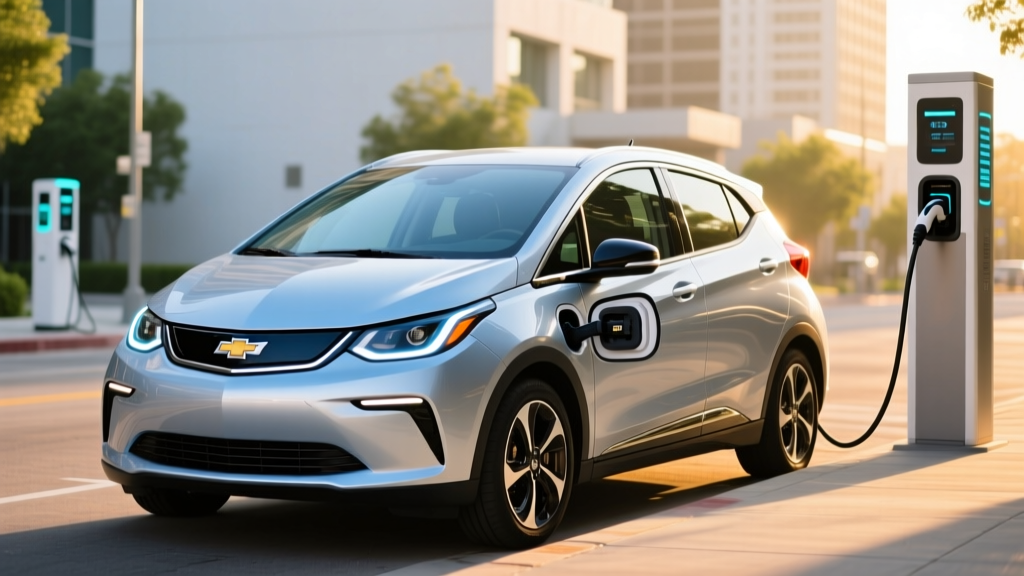
The Chevrolet Bolt EV returns for 2026 after a brief hiatus, re-engineered on GM's updated Ultium-adjacent BEV3 platform with a new LFP battery pack, faster DC charging, and a starting price that undercuts nearly every new electric vehicle on the US market. For budget-minded EV shoppers, the 2026 Bolt EV remains the value benchmark — but compromises in charging speed and rear-seat space mean it isn't for everyone.
We've driven the 2026 Bolt EV, run the numbers on its updated battery chemistry, and cross-referenced its federal tax credit eligibility against current IRS rules. Here's everything you need to know before you buy.
Quick Verdict: Who Should Buy the 2026 Bolt EV?
The 2026 Bolt EV is ideal for daily commuters and urban drivers who can charge at home and want a new EV under $30,000 before incentives. Its 255-mile EPA range handles most commutes comfortably, and LFP chemistry means less long-term degradation anxiety. It's less suited for frequent road trippers (DC charging tops out around 85 kW), tall rear passengers, or anyone needing AWD for snowy climates.
- You commute under 80 miles round-trip and charge at home nightly
- Your budget is firm under $32,000 and you want a new EV with full warranty
- You prioritize low running costs and battery longevity over performance
- You take road trips over 200 miles more than a few times a year
- You regularly carry adult rear-seat passengers
- You need AWD or tow capacity
Range, Battery & Real-World Efficiency
| Spec | Value |
|---|---|
| EPA Range | 255 miles |
| Battery Capacity (usable) | 65 kWh |
| Battery Chemistry | LFP (Lithium Iron Phosphate) |
| EPA Efficiency | 120 MPGe combined (28 kWh/100 mi) |
| Drivetrain | FWD, single motor |
| Horsepower / Torque | 200 hp / 266 lb-ft |
| 0–60 mph | ~7.0 seconds |
Real-world expectation: Expect roughly 230–240 miles in mixed suburban/highway driving at 70 mph, and as low as 190–205 miles in sustained cold weather (below 30°F) without preconditioning. City driving with regen braking can push close to the EPA number or slightly above. The Bolt EV's LFP pack has a relatively flat voltage curve, meaning range drops off predictably rather than suddenly at low state-of-charge.
The switch to LFP chemistry for 2026 is the biggest technical change. LFP cells sacrifice some energy density compared to the previous generation's NMC pouch cells — the old Bolt EUV packed 65 kWh into a slightly smaller physical footprint — but they gain significantly in cycle life and thermal stability. GM rates this pack for minimal degradation over 8 years, and LFP's tolerance for daily 100% charging means you can use the full 255 miles every day without the "charge to 80%" anxiety that NMC owners face.
Efficiency is strong. At 28 kWh/100 miles, the Bolt EV costs roughly $0.04–$0.05 per mile to fuel on residential electricity (national average $0.16/kWh), versus $0.12–$0.14/mile for a comparable 30 MPG gas car at $3.50/gallon.
Charging Speed: DC Fast & Home Level 2
| Charging Level | Power / Rate | Miles Added | Time (10–80%) |
|---|---|---|---|
| Level 1 (120V, 12A) | 1.4 kW | ~4 mi/hr | ~45+ hours (full) |
| Level 2 (240V, 48A) | 11.5 kW | ~34 mi/hr | ~5.5 hours (full) |
| DC Fast Charge (CCS/NACS) | Peak ~85 kW | ~150 mi in 30 min | ~35 minutes |
The 2026 Bolt EV's most common criticism remains its DC fast-charging speed. GM has improved the charge curve over the pre-2024 models (which peaked around 55 kW), but at roughly 85 kW peak, this is not a road-trip champion. On a 150+ kW Electrify America or Tesla Supercharger stall (via NACS adapter), the Bolt EV will peak near 85 kW from 10–40% SoC, then taper steadily — averaging closer to 55–60 kW across the full 10–80% session.
For context, a Hyundai Ioniq 5 peaks at 240 kW and completes 10–80% in about 18 minutes. The Bolt EV takes roughly twice as long. If you road-trip more than a handful of times per year, plan for 35–40 minute charging stops rather than 20-minute ones.
Home charging is where the Bolt EV shines. The 11.5 kW onboard charger is among the best in its class, meaning a standard overnight session on a Level 2 home wallbox fully replenishes the battery in about 5.5 hours. This is more than enough for daily use, and it means even a late-night plug-in gets you back to full before morning.
The 2026 Bolt EV ships with a NACS (Tesla-style) charge port as standard, giving native access to Tesla's Supercharger network. A CCS adapter is available for legacy Electrify America and EVgo stations still using the CCS1 connector.
Performance & Driving Impressions
The single front-mounted motor delivers 200 hp and 266 lb-ft of torque — identical output to the outgoing generation, but the updated platform is slightly lighter, yielding a 0–60 mph time of approximately 7.0 seconds. That's adequate for highway merging and passing, though it trails the dual-motor competition (a Model 3 RWD hits 60 in about 5.8 seconds).
What the Bolt EV gives up in straight-line speed, it makes up in ride quality. The 2026 model's revised suspension tuning absorbs potholes and expansion joints better than its predecessor, and the low center of gravity from the floor-mounted battery pack keeps body roll controlled in corners. Regenerative braking offers two levels via steering-wheel paddles, and one-pedal driving mode is strong enough to bring the car to a full stop without touching the brake pedal.
Steering is light and numb — expected in this segment — but the turning radius of 36.4 feet makes the Bolt EV exceptionally easy to park in tight urban spots. The FWD-only drivetrain means no AWD option; winter drivers should plan for dedicated snow tires.
Interior, Cargo & Technology
| Dimension | Measurement |
|---|---|
| Front Legroom | 42.3 in |
| Rear Legroom | 35.1 in |
| Cargo (behind rear seats) | 22.0 cu ft |
| Cargo (seats folded) | 56.1 cu ft |
The cabin is functional rather than luxurious. The 11.0-inch diagonal touchscreen runs GM's latest Google Built-In infotainment, which includes native Google Maps navigation with real-time charging station routing — a genuinely useful feature for EV road trips. Wireless Apple CarPlay and Android Auto are standard. A 10.2-inch digital driver display shows range, efficiency, and regen status.
Front seats are comfortable for long commutes, but rear legroom at 35.1 inches is tight for adults over 6 feet. Cargo space at 22.0 cu ft behind the rear seats is generous for the hatchback form factor, and the 56.1 cu ft maximum with seats folded rivals some compact crossovers. There is no front trunk (frunk); GM uses that space for power electronics.
On the driver-assistance front, the Bolt EV includes Chevy Safety Assist as standard: automatic emergency braking, forward collision alert, lane keep assist with lane departure warning, following distance indicator, and automatic high beams. GM's Super Cruise hands-free driving system is not available on the Bolt EV — it remains reserved for higher-tier models like the Equinox EV and Blazer EV. This is a Level 2 driver-assist vehicle; you must keep your hands on the wheel and eyes on the road at all times.
Pricing, Trims & Federal Tax Credit Eligibility
| Trim | Base MSRP | Est. After §30D Credit* |
|---|---|---|
| 1LT | $28,900 | ~$21,400 |
| 2LT | $31,500 | ~$24,000 |
| Premier | $34,200 | ~$26,700 |
*Federal tax credit estimates assume full eligibility. Actual credit amount and availability depend on IRS §30D requirements below. Point-of-sale transfer available at participating dealers.
- MSRP Cap: The Bolt EV qualifies — all trims fall under the $55,000 sedan/hatchback cap set by the IRS for new clean vehicles.
- Buyer Income Cap: Adjusted gross income must not exceed $150,000 (single), $225,000 (head of household), or $300,000 (married filing jointly). These thresholds apply to the tax year of delivery or the prior year, whichever is lower.
- Battery Sourcing: The credit amount depends on whether critical minerals and battery components meet North American sourcing thresholds, which tighten annually. For 2026, vehicles must meet both critical mineral and battery component requirements to qualify for the full $7,500. GM has stated the 2026 Bolt EV's LFP cells are sourced to meet §30D requirements, but the exact credit amount ($3,750 or $7,500) may vary by production batch. Always verify the specific VIN's eligibility on fueleconomy.gov before purchase.
- Point-of-Sale Transfer: As of 2024, eligible buyers can transfer the credit to the dealer at purchase, reducing the out-of-pocket price immediately rather than waiting for a tax refund. This is available for the 2026 Bolt EV at participating Chevrolet dealers.
Consult a tax professional and check the latest IRS guidance on clean vehicle credits before finalizing your purchase. Credit rules and sourcing requirements are subject to change.
Warranty & Long-Term Ownership
| Coverage | Term |
|---|---|
| Bumper-to-Bumper | 3 years / 36,000 miles |
| Powertrain | 5 years / 60,000 miles |
| Battery Pack | 8 years / 100,000 miles |
| Battery Capacity Retention | Warranted above 60% of original capacity |
The 8-year/100,000-mile battery warranty is standard for the segment, but the 60% capacity retention threshold is less generous than some competitors (Hyundai/Kia warrant 70%). In practice, LFP chemistry degrades more slowly than NMC — real-world data from fleet LFP packs suggests 90%+ capacity retention at 100,000 miles is typical. The Bolt EV's daily-charge-to-100% friendliness (a key LFP advantage) means you won't need to baby the battery to achieve that longevity.
GM's EV maintenance costs are minimal: no oil changes, no spark plugs, cabin air filter replacement every 22,500 miles, and tire rotation every 7,500 miles. Expect to spend roughly $400–$600 per year on maintenance versus $800–$1,200 for a comparable gas hatchback.
How the 2026 Bolt EV Compares
| Spec | 2026 Bolt EV 1LT | Nissan LEAF S | Hyundai Kona Electric SE |
|---|---|---|---|
| EPA Range | 255 mi | 149 mi (S) / 212 mi (SV+) | 261 mi |
| Base MSRP | $28,900 | ~$29,135 | ~$34,000 |
| DC Fast Charge (peak) | ~85 kW | ~50 kW (CHAdeMO) | ~100 kW |
| Battery Chemistry | LFP | NMC | NMC |
| Charge Port | NACS (native) | CHAdeMO | CCS1 |
The LEAF's CHAdeMO connector is effectively dead in the US — Tesla's NACS has won the standard war, and new public chargers are overwhelmingly NACS. The Bolt EV's native NACS port is a significant long-term advantage. The Kona Electric offers slightly more range and faster DC charging, but at $5,000+ more before incentives. For pure value, the Bolt EV 1LT is difficult to beat.
Pros, Cons & Final Assessment
- Lowest starting price of any new US-market EV
- LFP battery: daily 100% charging, slow degradation, thermal stability
- Native NACS port = direct Supercharger access
- Strong 11.5 kW Level 2 onboard charger
- Hatchback cargo versatility (56.1 cu ft max)
- Federal tax credit eligible across all trims
- DC fast charging limited to ~85 kW peak (35 min for 10–80%)
- Rear legroom tight for tall adults (35.1 in)
- No AWD option
- No Super Cruise or advanced hands-free driving available
- No frunk (front trunk)
- Interior materials feel budget-tier at higher trims
The 2026 Chevrolet Bolt EV doesn't try to be everything to everyone. It's a deliberate, well-executed commuter EV with class-leading value, a future-proof charge port, and a battery chemistry built for longevity. If your driving profile skews toward daily commuting with home charging and occasional weekend trips, the Bolt EV delivers more car per dollar than anything else in the 2026 EV market. Just don't expect to blow past road-trip charging stops in 15 minutes.
Frequently Asked Questions
What is the real-world range of the 2026 Chevrolet Bolt EV?
The EPA rates the 2026 Bolt EV at 255 miles. In real-world mixed driving at highway speeds (70–75 mph), expect 230–240 miles. In cold weather below 30°F, range can drop to 190–205 miles without battery preconditioning. City driving with regenerative braking may match or slightly exceed the EPA estimate.
How fast does the 2026 Bolt EV charge at home and on the road?
On a Level 2 home charger (240V, 48A), the Bolt EV charges at up to 11.5 kW, adding roughly 34 miles of range per hour — a full charge takes about 5.5 hours. On DC fast chargers, it peaks around 85 kW, with a 10–80% session taking approximately 35 minutes. This is slower than competitors like the Ioniq 5 or Model 3, which can complete the same session in 18–25 minutes.
Does the 2026 Bolt EV qualify for the $7,500 federal EV tax credit?
All 2026 Bolt EV trims fall under the $55,000 MSRP cap for sedans/hatchbacks under IRS §30D. Eligibility for the full $7,500 depends on the buyer's adjusted gross income (under $150K single / $300K joint), and the vehicle's battery critical-mineral and component sourcing meeting 2026 thresholds. GM has indicated the Bolt EV is designed to qualify, but verify your specific VIN on fueleconomy.gov and consult a tax professional.
Is the 2026 Bolt EV worth buying over the Equinox EV or a used Tesla Model 3?
If your budget is strictly under $30,000 and you want new-car warranty with the latest LFP battery technology, the Bolt EV is the clear choice. The Equinox EV offers more range (300+ miles), more space, and Super Cruise availability, but starts around $34,900. A used Model 3 may offer faster charging and performance, but you sacrifice new-car warranty and may not qualify for the $4,000 used-EV credit depending on the vehicle's age and battery sourcing. For pure cost-per-mile commuting, the Bolt EV is hard to beat.
Can I charge the 2026 Bolt EV at Tesla Superchargers?
Yes. The 2026 Bolt EV ships with a native NACS (Tesla-style) charge port, meaning you can plug directly into any Tesla Supercharger stall without an adapter. This gives you access to the largest and most reliable DC fast-charging network in North America.
How long will the Bolt EV's LFP battery last?
GM warrants the battery for 8 years / 100,000 miles with at least 60% capacity retention. However, LFP chemistry is known for exceptional cycle life — industry data from fleet vehicles suggests 90%+ capacity retention at 100,000 miles is realistic. Unlike NMC batteries, LFP can be charged to 100% daily without accelerated degradation, which means you get full use of the 255-mile range every day.