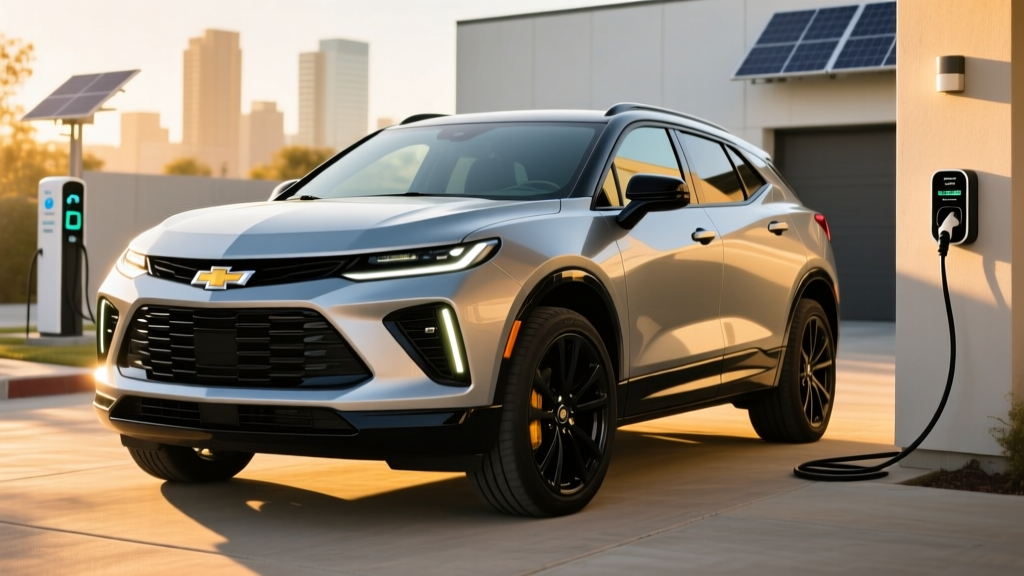
The 2026 Chevrolet Blazer EV SS is the performance flagship of GM's midsize electric crossover lineup, packing 595 horsepower and a 320-mile EPA range estimate into a package that undercuts rivals like the Tesla Model Y Performance and Ford Mustang Mach-E GT on price. After spending time with the spec sheet, cross-referencing EPA data, and evaluating its position in an increasingly crowded segment, here's everything buyers need to know before signing paperwork.
Real-World Range Reality Check
EPA Estimated: 320 miles (AWD SS trim, 102 kWh usable battery)
Real-World Expectation: Plan for 260-280 miles on sustained highway driving at 70+ mph. In cold weather (below 30°F), expect a 20-30% reduction, dropping effective range to 220-250 miles. City driving with regenerative braking recovers closer to the EPA sticker. The Blazer EV SS uses GM's Ultium platform with an NMC (nickel manganese cobalt) lithium-ion pack — higher energy density than LFP chemistry, but with slightly more degradation sensitivity over time if regularly charged to 100%.
Battery, Range & Efficiency Breakdown
The 2026 Blazer EV SS rides on GM's Ultium architecture with a 102 kWh usable battery pack (approximately 115 kWh gross capacity). This NMC chemistry pack delivers the energy density needed for 320 EPA miles while keeping weight manageable at around 5,700 pounds curb weight.
Efficiency lands at an EPA-rated 87 MPGe combined (39 kWh per 100 miles), which is competitive but not class-leading. The Tesla Model Y Long Range AWD achieves 111 MPGe combined, while the Ford Mustang Mach-E Extended Range AWD posts 91 MPGe. The Blazer EV SS's heavier weight and more aggressive performance tuning explain the gap — this is a muscle-crossover, not an efficiency maximizer.
| Specification | Value |
|---|---|
| EPA Range | 320 miles |
| Battery (Usable/Gross) | 102 kWh / ~115 kWh (NMC) |
| Efficiency | 87 MPGe / 39 kWh/100 mi |
| Drivetrain | Dual-motor AWD |
| Horsepower | 595 hp |
| Torque | 648 lb-ft |
| 0-60 mph | 3.4 seconds |
| Max DC Fast Charge | 190 kW |
| 10-80% DC Charge Time | ~24 minutes |
| Level 2 Home Charging | 11.5 kW (~36 miles/hour) |
| Cargo Volume (rear seats up/down) | 29.4 / 62.8 cu ft |
| Rear Legroom | 38.4 inches |
| Base MSRP (SS AWD) | $56,595 |
| Battery/Powertrain Warranty | 8 years / 100,000 miles |
Charging Speed: DC Fast & Home Level 2
The Blazer EV SS peaks at 190 kW on DC fast chargers using its native CCS1 connector (or NACS with GM's adapter, as the industry transitions to Tesla's standard). At peak rate, the 10-80% charge takes approximately 24 minutes. However, charging curves taper significantly above 80% — plan for 40+ minutes to reach 95% if you need maximum range for a long leg.
| Charging Level | Power (kW) | Miles Added Per Hour | Time to Full (0-100%) |
|---|---|---|---|
| Level 1 (120V household) | 1.4 kW | ~4 miles/hour | ~73 hours |
| Level 2 (240V, 48A) | 11.5 kW | ~36 miles/hour | ~9 hours |
| DC Fast Charge (peak) | 190 kW | ~520 miles/hour (peak) | 10-80% in ~24 min |
Home charging at 11.5 kW requires a 240-volt, 60-amp circuit with a 48-amp continuous charger — typical installation runs $800-$2,200 depending on panel proximity and local permitting, according to HomeAdvisor's national averages. If your electrical panel is at capacity, a 200-amp service upgrade can add $1,500-$3,000.
On Electrify America, EVgo, and other 150+ kW networks, the Blazer EV SS will sustain 150-170 kW through the 20-60% state-of-charge window before tapering. Preconditioning the battery (via navigation routing to a charger) is essential in cold weather to hit peak rates — without it, expect 30-40% slower charging in sub-40°F conditions.
Performance: 595 HP and a 3.4-Second 0-60
The SS badge isn't cosmetic. Dual electric motors produce 595 horsepower and 648 lb-ft of torque, launching the Blazer EV SS to 60 mph in 3.4 seconds. That's quicker than a Tesla Model Y Performance (3.5 seconds) and on par with the Ford Mustang Mach-E GT (3.3 seconds with Performance Upgrade).
GM's WOW (Wide Open Watts) mode — the EV equivalent of launch control — preconditions the battery and motors for maximum acceleration. The AWD system can vector torque front-to-rear, and the SS trim includes a limited-slip rear differential simulation via brake-based torque vectoring.
Ride quality is firm but compliant, with a sport-tuned adaptive suspension that dials between Tour and Sport modes. The 5,700-pound curb weight is noticeable in tight corners, but the low center of gravity (battery pack under the floor) keeps body roll controlled. This isn't a track car — it's a muscle-cruiser that happens to have supercar acceleration off the line.
Pricing, Trims & Federal Tax Credit Eligibility
The 2026 Blazer EV SS starts at $56,595 (including destination charge). This is a single-trim, fully loaded approach — the SS comes with adaptive suspension, 21-inch wheels, ventilated front seats, a 17.7-inch infotainment screen, and GM's Super Cruise hands-free driving system (subscription required after trial period).
| Item | Amount |
|---|---|
| Base MSRP (SS AWD) | $56,595 |
| Federal Tax Credit (§30D, if eligible) | Up to $7,500 |
| Effective Price (with full credit) | $49,095 |
| As-Tested (with metallic paint + accessories) | ~$58,200 |
Tax credit eligibility is not guaranteed. Under IRS §30D rules for 2026, buyers must meet three criteria:
- Income caps: Modified adjusted gross income (MAGI) cannot exceed $150,000 (single), $225,000 (head of household), or $300,000 (joint filers).
- MSRP cap: The Blazer EV SS at $56,595 clears the $80,000 SUV/truck cap — no issue here.
- Battery sourcing: A percentage of critical minerals and battery components must be sourced from the U.S. or free-trade-agreement countries. GM's Ultium battery supply chain has significant North American content, but final eligibility depends on the specific vehicle's VIN and IRS's annual sourcing determination. Always verify with your tax professional and the IRS qualifying vehicle list before purchase.
The credit can now be transferred to the dealer at point of sale, reducing your out-of-pocket cost immediately rather than waiting for tax refund season. This is a major cash-flow advantage for buyers.
Interior, Tech & Driver Assistance
The Blazer EV SS cabin is dominated by a 17.7-inch portrait-oriented infotainment touchscreen running GM's latest Android Automotive OS. Wireless Apple CarPlay and Android Auto are standard, as is a 11-inch digital instrument cluster. The SS trim includes a Bose 14-speaker audio system, wireless phone charging, and a head-up display.
Super Cruise — GM's Level 2 hands-free driver-assistance system — is standard on the SS with a 3-year subscription trial (then ~$25/month). On 400,000+ miles of mapped divided highways, Super Cruise allows hands-off-wheel driving with driver monitoring via infrared camera. This is not autonomous driving — you must remain attentive and ready to take over. It's a compelling highway cruising aid, not a replacement for a human driver.
Super Cruise Limitations
- Only operates on pre-mapped divided highways (no city streets, no construction zones)
- Requires driver attention monitoring — system will disengage if you look away too long
- Hands-free ≠ self-driving. You are legally responsible for the vehicle at all times.
- Subscription required after the 3-year trial period
Cargo space measures 29.4 cubic feet behind the rear seats and 62.8 cubic feet with the 60/40 split rear row folded. Rear legroom is a generous 38.4 inches, making this a viable family hauler. There is no frunk (front trunk) — the space under the hood houses HVAC and power electronics.
Pros, Cons & Who Should Buy
Pros
- 3.4-second 0-60 with 595 hp — genuine muscle-car acceleration
- 320-mile EPA range is competitive for the performance-SUV segment
- Super Cruise standard (with trial) — best hands-free system on mapped highways
- Spacious rear seat and 62.8 cu ft cargo volume
- 190 kW DC fast charging is adequate for road trips (24 min 10-80%)
- Undercuts Tesla Model Y Performance and Mach-E GT on MSRP
Cons
- 87 MPGe efficiency trails more efficiency-focused rivals
- No frunk for additional cargo storage
- 5,700-lb curb weight is noticeable in tight handling
- Super Cruise subscription required after trial ($25/month)
- Single SS trim means no lower-priced entry point for the performance package
- NMC battery chemistry is more degradation-sensitive than LFP if regularly charged to 100%
Who This EV Suits Best
Buy it if: You want muscle-car acceleration in a practical family crossover, prioritize highway comfort with hands-free driving, and need 300+ miles of range for road trips without frequent charging stops. The Blazer EV SS is ideal for performance-oriented commuters who also need cargo space and rear-seat room for kids or passengers.
Look elsewhere if: Maximum efficiency is your priority (Tesla Model Y Long Range), you need a third row (Kia EV9), or you want a lower entry price (base Blazer EV trims start in the low $40Ks without the SS performance package).
Frequently Asked Questions
What is the real-world range of the 2026 Blazer EV SS?
The EPA estimates 320 miles, but real-world highway driving at 70+ mph typically yields 260-280 miles. Cold weather (below 30°F) can reduce range by 20-30%, so plan for 220-250 miles in winter conditions. City driving with regenerative braking recovers closer to the EPA sticker.
How fast does the Blazer EV SS charge?
On DC fast chargers, it peaks at 190 kW, achieving a 10-80% charge in approximately 24 minutes. Home Level 2 charging at 11.5 kW adds about 36 miles per hour, taking roughly 9 hours for a full charge from empty.
How much does the 2026 Blazer EV SS cost after tax credits?
Base MSRP is $56,595. If you qualify for the full $7,500 federal tax credit under IRS §30D (income caps, MSRP caps, and battery-sourcing rules apply), the effective price drops to $49,095. The credit can be transferred to the dealer at point of sale for an immediate price reduction.
Is the Blazer EV SS worth buying vs. Tesla Model Y Performance or Ford Mustang Mach-E GT?
The Blazer EV SS undercuts both on MSRP while delivering comparable acceleration (3.4 sec 0-60). It wins on Super Cruise availability and rear-seat space, but loses on efficiency (87 MPGe vs. Model Y's 111 MPGe) and charging network convenience (Tesla's Supercharger network is still the gold standard, though GM is gaining NACS adapter access). Test-drive all three — the Blazer EV SS is the value-performance pick if you don't need maximum efficiency.
Does the 2026 Blazer EV SS qualify for the federal EV tax credit?
Likely yes, but with caveats. The MSRP ($56,595) clears the $80,000 SUV cap. Your income must be below $150K (single) / $300K (joint) MAGI. Battery-sourcing rules are the wildcard — GM's Ultium batteries have significant North American content, but final eligibility depends on the specific vehicle's VIN and IRS annual determinations. Verify on fueleconomy.gov and consult a tax professional before purchase.
What is the battery warranty on the Blazer EV SS?
GM covers the Ultium battery pack and electric powertrain for 8 years or 100,000 miles (whichever comes first), with a capacity-retention threshold typically around 70% state of health. This is industry-standard and matches Tesla, Ford, and Hyundai/Kia warranties.
The 2026 Chevrolet Blazer EV SS delivers legitimate performance credentials, competitive range, and a compelling price point in the midsize electric SUV segment. It's not the most efficient option, and the lack of a frunk or third row limits versatility for some buyers. But for drivers who want 595 horsepower, hands-free highway cruising, and 320 miles of range without breaking $60K before incentives, the Blazer EV SS makes a strong case as the muscle-cruiser of the EV era.