Quick Answer: Should You Buy the 2026 Cadillac Vistiq EV?
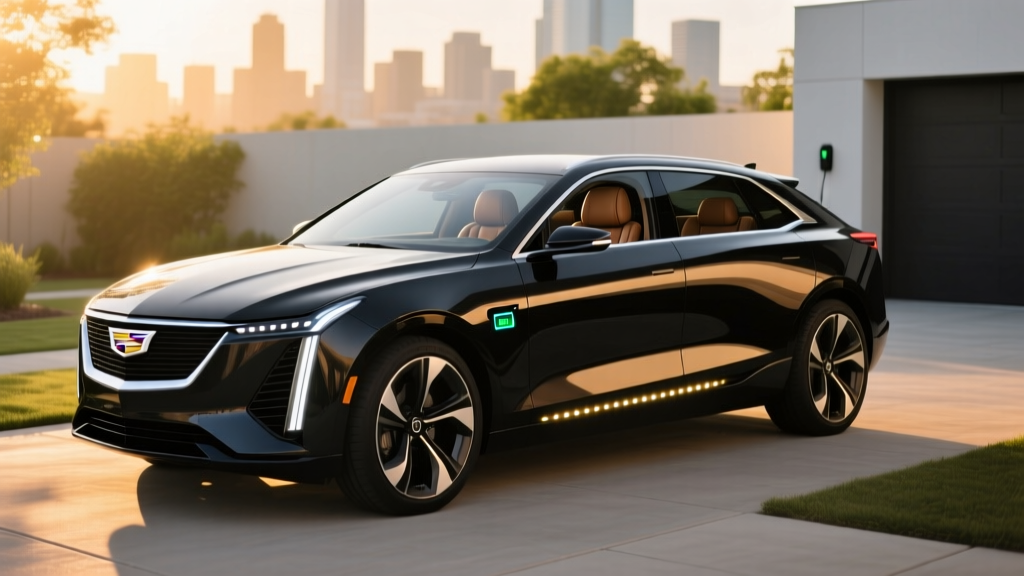
The 2026 Cadillac Vistiq EV is a three-row luxury electric SUV targeting families who want premium comfort without stepping up to the Escalade IQ's six-figure price tag. With an EPA-estimated 300 miles of range, a 102 kWh usable battery, DC fast charging up to 190 kW (10–80% in roughly 25 minutes), and a starting MSRP around $58,590, the Vistiq slots between the Lyriq and Escalade IQ in Cadillac's EV lineup. It qualifies for the $7,500 federal §30D tax credit at point of sale if buyer income and sourcing requirements are met, bringing effective pricing close to $51,000. It's best suited for buyers with home Level 2 charging access who drive under 250 miles daily and want a quiet, tech-forward family hauler. If you regularly tow over 4,000 lbs, live in an extreme-cold climate without garage parking, or lack any charging access, a plug-in hybrid like the Volvo XC90 Recharge may serve you better.
2026 Cadillac Vistiq EV: Core Specs at a Glance
Before getting into ownership realities, here are the numbers that matter. Cadillac positions the Vistiq on GM's Ultium platform, sharing architecture with the Lyriq but stretched for three rows of seating.
| Specification | 2026 Cadillac Vistiq EV |
|---|---|
| EPA Range (est.) | ~300 miles (real-world highway: ~250–270 mi; cold weather: ~220–240 mi) |
| Battery Capacity | 102 kWh usable, NMC (nickel manganese cobalt) chemistry |
| DC Fast Charge Peak | 190 kW (10–80% in ~25 min) |
| Level 2 Charge Rate | 19.2 kW (AC, ~29 mi/hr added) |
| Drivetrain | Dual-motor AWD, ~615 HP |
| 0–60 mph | ~4.5 seconds |
| Towing Capacity | 4,000 lbs (est.) |
| Seating | 6 or 7 passengers (three rows) |
| Starting MSRP | ~$58,590 (Luxury trim) |
| Federal Tax Credit (§30D) | Up to $7,500 (point-of-sale, income/sourcing rules apply) |
| Battery/Powertrain Warranty | 8 years / 100,000 miles |
A note on real-world range: the EPA sticker is a blended cycle. On a 75-mph highway road trip, expect to use roughly 350–380 Wh/mi, which translates to 260–270 miles before you'll want to stop. In sub-30°F weather without preconditioning, lithium-ion chemistry slows and cabin heating draws heavily from the pack — plan on 220–240 usable miles. The Vistiq's heat pump (standard) helps mitigate this, but physics is physics.
Charging the Vistiq: What You'll Actually Experience
Charging speed is where many buyers get tripped up. The Vistiq's peak rate of 190 kW is just that — a peak. Like all EVs, the charge curve tapers significantly above 80% state of charge (SoC) to protect the NMC battery. Here's what a typical DC fast-charging session looks like:
- 10–50% SoC: Sustained ~170–190 kW, roughly 12 minutes
- 50–80% SoC: Tapering from ~150 kW down to ~90 kW, roughly 13 minutes
- 80–100% SoC: Sharp taper to ~30–40 kW, adds 20+ minutes (avoid unless necessary)
For road trips, the practical strategy is charging from 10% to 80% (~25 minutes), then driving on. On the Electrify America or Tesla Supercharger network (with NACS adapter or native NACS port on 2026 models), you'll add roughly 180–200 miles in that window.
| Charging Level | Power (kW) | Miles Added per Hour | Use Case |
|---|---|---|---|
| Level 1 (120V household) | ~1.4 kW | ~3–4 mi/hr | Emergency/top-up only |
| Level 2 (240V home, 48A) | 11.5 kW | ~17 mi/hr | Daily overnight charging |
| Level 2 (240V home, 80A) | 19.2 kW | ~29 mi/hr | Fast home refill, requires 100A circuit |
| DC Fast Charging | Up to 190 kW | ~550+ mi/hr (peak) | Road trips, quick stops |
Home charging reality check: To unlock the Vistiq's full 19.2 kW AC rate, you need an 80-amp hardwired Level 2 charger on a dedicated 100-amp circuit. Most homes have 48-amp chargers on 60-amp circuits (11.5 kW), which still fully replenishes the 102 kWh pack overnight in about 9 hours. Budget $800–$2,500 for a quality Level 2 home installation, potentially more if your electrical panel needs a 200-amp service upgrade ($2,000–$4,000).
Vistiq vs. Gas SUV: The Real Cost of Ownership
The most common question: does the Vistiq actually save money versus a comparable three-row gas SUV like the BMW X5 xDrive40i or the Cadillac XT6? Let's run five-year numbers.
| Cost Category (5 Years) | 2026 Cadillac Vistiq EV | Gas SUV (Cadillac XT6 AWD) |
|---|---|---|
| Purchase Price (base, after credit) | ~$51,090 (after $7,500 credit) | ~$54,000 |
| Fuel / Electricity (75,000 mi) | ~$4,200 (home charging at $0.14/kWh) | ~$10,500 (22 MPG avg, $3.50/gal) |
| Maintenance | ~$1,200 (cabin filter, tires, wiper fluid) | ~$3,800 (oil, brakes, filters, transmission) |
| Insurance (avg) | ~$11,500 | ~$9,500 |
| Estimated Depreciation | ~$22,000 | ~$19,000 |
| 5-Year Total | ~$89,990 | ~$96,800 |
The Vistiq saves roughly $6,800 over five years when factoring in the federal tax credit, fuel savings, and lower maintenance. However, EV insurance premiums run 15–25% higher on average due to repair complexity and battery replacement costs. Depreciation on EVs remains slightly steeper than established luxury gas SUVs, though this gap is narrowing as the used-EV market matures.
Key variables that shift this math:
- Electricity rate: At $0.14/kWh (national average), you pay ~$5.60 to fully charge. In California at $0.30/kWh, that doubles to ~$11.20 — still cheaper than $60+ for a gas fill-up.
- Public DC fast charging: At $0.35–$0.48/kWh on networks like EVgo or Electrify America, a 10–80% session costs $35–$45. If you rely exclusively on public charging, fuel savings shrink significantly.
- Annual mileage: The more you drive, the more the fuel savings compound. At 20,000 miles/year, the Vistiq's advantage widens to ~$10,000+ over five years.
Federal Tax Credit: Does the Vistiq Qualify for §30D?
As of the 2026 tax year, the IRS §30D clean vehicle credit offers up to $7,500 for qualifying new EVs, transferable to the dealer at point of sale. The Vistiq's assembly in Spring Hill, Tennessee, and GM's battery sourcing position it favorably — but eligibility depends on your situation, not just the vehicle.
§30D Credit Requirements (2026)
- MSRP cap: SUVs must be under $80,000 — the Vistiq base trims qualify; fully loaded trims may exceed the cap
- Buyer income cap: Modified AGI ≤ $300,000 (joint), $225,000 (head of household), $150,000 (single)
- Battery sourcing: Critical minerals and battery components must meet phased-in domestic/free-trade thresholds — GM has been ramping North American sourcing for Ultium cells
- Point-of-sale transfer: You can apply the $7,500 as a down payment reduction at the dealer rather than waiting for a tax refund
- Tax liability: If transferred at POS, you don't need sufficient tax liability — the dealer absorbs the credit
Critical caveat: Sourcing requirements tighten annually. A vehicle that qualifies in January may not in December if supply chains shift. Always verify current eligibility at fueleconomy.gov before signing paperwork. Consult a tax professional for your specific situation.
Common Vistiq and EV Misconceptions, Corrected
| Myth | Fact |
|---|---|
| "The battery will need replacing in 5 years for $20,000" | NMC Ultium packs are warrantied for 8yr/100k mi at ≥70% capacity retention. Real-world degradation data from GM's Bolt and Lyriq shows ~5–8% loss over 100k miles. Full replacement is rare and costs $12,000–$18,000 if out of warranty. |
| "300 miles of range means I can drive 300 miles" | EPA range is a blended estimate. Sustained 75-mph highway driving yields ~250–270 miles. In sub-20°F cold without preconditioning, expect ~220 miles. Plan charging stops around 200-mile intervals for comfort. |
| "I can charge on any Level 2 plug and get full speed" | The Vistiq can accept up to 19.2 kW AC, but most public Level 2 stations deliver 6.6–7.2 kW. You'll only see full speed at home with the right equipment and circuit. |
| "EVs are worse in the cold" | EVs start instantly in cold (no engine cranking), and the heat pump provides efficient cabin heating. Range drops 15–30% in extreme cold, but preconditioning while plugged in recovers much of this loss. |
| "Super Cruise means I don't have to pay attention" | Super Cruise is SAE Level 2 driver assistance. Despite hands-free operation on mapped highways, the driver-monitoring camera requires your eyes on the road. You are legally and physically responsible for the vehicle at all times. |
Who Should Buy the Vistiq — and Who Shouldn't
Decision Framework
Choose the 2026 Cadillac Vistiq EV if:
- You have access to Level 2 home charging (garage or driveway with 240V circuit)
- Your daily driving is under 250 miles round-trip
- You want three rows of seating in a luxury EV without paying $100k+ for an Escalade IQ
- You value quiet operation, instant torque, and lower running costs over a gas SUV
- You qualify for the §30D tax credit (income under thresholds, MSRP under cap)
- You want hands-free highway driving via Super Cruise on compatible routes
Look elsewhere (hybrid or gas) if:
- You live in an apartment or condo without any EV charging access
- You regularly tow more than 4,000 lbs (towing cuts EV range 30–50%)
- Your typical road trips exceed 400 miles through areas with sparse DC fast-charging infrastructure
- You need maximum cargo volume — the battery floor reduces under-floor storage versus the XT6
- Your budget is under $50,000 effective — consider a used Lyriq or wait for lower trims
For buyers on the fence between the Vistiq and a plug-in hybrid like the Volvo XC90 Recharge (35 miles electric-only, then gas engine): the PHEV gives you flexibility for long road trips without charging stops, but you'll pay for oil changes, brake wear, and gas for the 80% of miles driven beyond electric range. If 90%+ of your driving is local and you can charge at home, the Vistiq's pure-EV simplicity wins on cost and refinement.
First-Time EV Buyer: What You Need to Know Before Signing
If the Vistiq is your first EV, here are the ownership realities that don't appear in the brochure:
- Install your Level 2 charger before delivery day. Schedule an electrician 4–6 weeks out. Get quotes for a 60-amp circuit (48A charger) minimum. If your panel is 100-amp, budget for a 200-amp upgrade.
- Download the charging apps now. Electrify America, EVgo, ChargePoint, and Tesla (if the Vistiq supports NACS in your region). Create accounts, add a payment method, and learn how to initiate a session before your first road trip.
- Learn to precondition. Set departure times in the Cadillac app while plugged in. The Vistiq will warm or cool the battery and cabin using grid power, preserving range and enabling faster DC charging.
- Tires wear faster on EVs. The Vistiq's ~6,000-lb curb weight and instant torque wear tires 15–25% faster than gas equivalents. Budget $1,200–$1,800 for a set of premium all-season tires every 30,000–40,000 miles.
- Regenerative braking changes how you drive. The Vistiq offers adjustable regen, including a one-pedal mode that slows the car significantly when you lift off the accelerator. Give yourself a week to adapt — then you'll rarely touch the brake pedal in city driving.
- Insurance will be higher. Get quotes before purchasing. EV repair costs (especially battery-adjacent damage) push premiums 15–25% above comparable gas SUVs. Shop multiple carriers; some now offer EV-specific policies.
Frequently Asked Questions
What is the real-world range of the 2026 Cadillac Vistiq?
The EPA estimates approximately 300 miles. In real-world highway driving at 70–75 mph, expect 250–270 miles. In cold weather (below 30°F) without preconditioning, plan for 220–240 miles. With preconditioning and moderate temperatures, 280–300 miles is achievable on mixed driving.
How long does it take to charge the Vistiq at home?
On a 48-amp Level 2 home charger (11.5 kW), a full 0–100% charge takes approximately 9 hours. On an 80-amp circuit (19.2 kW), that drops to roughly 5.5 hours. Most owners charge overnight and never need a full 0–100% cycle — plugging in at 30% and waking up at 90% is the typical routine.
Does the Vistiq use NACS or CCS for charging?
GM has transitioned to the NACS (North American Charging Standard) connector for its 2025+ EVs. The 2026 Vistiq should come equipped with a native NACS port, granting access to Tesla Supercharger stalls (now open to non-Tesla EVs) without an adapter. Verify with your dealer at purchase, as early-production units may still carry CCS1.
Can the Vistiq tow, and how does towing affect range?
The estimated towing capacity is 4,000 lbs. Towing any trailer cuts EV range by 30–50% depending on weight, aerodynamics, and terrain. With a 3,500-lb camper, expect roughly 160–190 miles of range. Towing is viable for short trips but impractical for long-distance hauling without frequent charging stops.
Is Super Cruise included, and is it self-driving?
Super Cruise is available on select trims (typically standard on Sport and Premium Luxury). It provides hands-free driving on over 400,000 miles of mapped highways in the US and Canada. However, it is SAE Level 2 — you must remain attentive, and the infrared driver-monitoring camera will alert you if your eyes leave the road. It is not autonomous driving.
What happens if the battery degrades significantly?
GM warrants the Ultium battery for 8 years/100,000 miles against defects and capacity loss below 70%. Based on data from the Bolt EUV and Lyriq, typical degradation is 5–8% over 100,000 miles. If the battery falls below the 70% threshold within the warranty period, GM will repair or replace modules at no cost. Out-of-warranty full pack replacement costs approximately $12,000–$18,000 depending on labor.
How does the Vistiq compare to the Lyriq?
The Lyriq is a two-row SUV (~314 miles range, ~$57,195 starting) aimed at couples and small families. The Vistiq stretches the platform for three rows, sacrificing roughly 15 miles of range and adding ~$1,400 to the base price. If you don't need the third row, the Lyriq is slightly more efficient and easier to park. If you need six or seven seats, the Vistiq is the clear choice.