Quick Verdict: Cadillac's Compact Electric Luxury Playbook
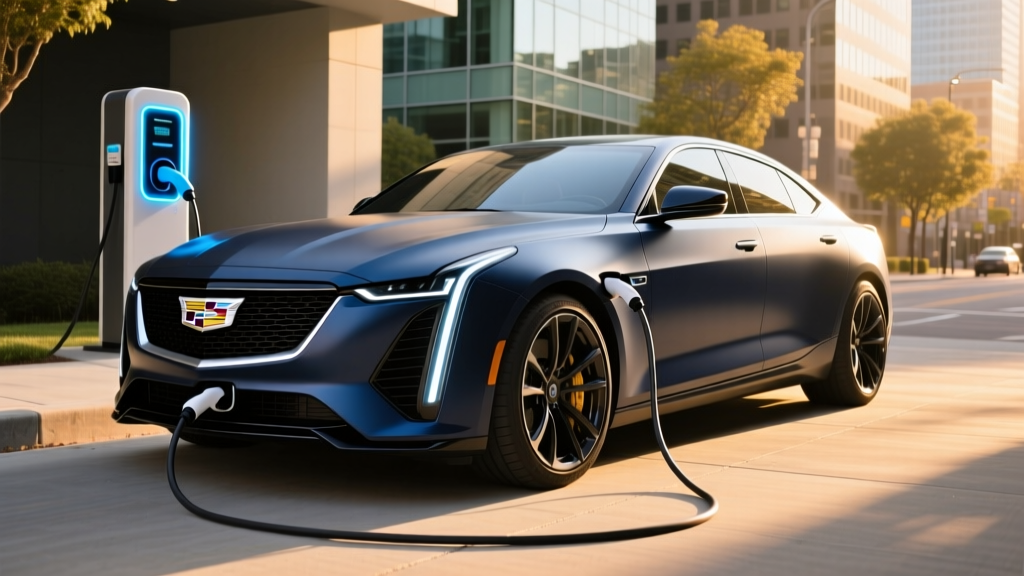
The 2026 Cadillac Optiq-V is the brand's entry point into electric luxury crossovers — a compact, dual-motor, all-wheel-drive SUV positioned below the Lyriq and Escalade IQ in both size and price. Built on GM's Ultium platform, the Optiq-V targets urban professionals and small families who want premium badging, advanced driver assistance, and usable daily range without stepping up to full-size pricing. After spending time with the specs, cross-referencing EPA data on fueleconomy.gov, and reviewing Cadillac's official technical disclosures, this is a vehicle that delivers where it counts — efficiency, charging speed, and cabin technology — while making predictable trade-offs in cargo volume and rear-seat legroom to keep its footprint compact.
The 2026 Cadillac Optiq-V carries an EPA-estimated range of 302 miles on a full charge (Optimistic AWD trim with 19-inch wheels). In real-world mixed driving, expect 260–280 miles on highway-heavy trips at 70+ mph. In cold weather (below 30°F), range can drop to 210–240 miles due to battery thermal losses and cabin heating demand. City driving with regenerative braking can approach or slightly exceed the EPA sticker.
Battery, Platform, and Efficiency Breakdown
The Optiq-V rides on a shortened variant of GM's Ultium battery-electric architecture. It uses a 87 kWh usable lithium-ion battery pack (102 kWh gross) with NMC (nickel-manganese-cobalt) chemistry, chosen for its higher energy density over LFP — a necessary trade-off to fit this much range into a compact crossover footprint. The pack operates on a 400-volt nominal architecture.
| Spec | 2026 Cadillac Optiq-V |
|---|---|
| Battery (usable / gross) | 87 kWh / 102 kWh |
| Chemistry | NMC (Nickel-Manganese-Cobalt) |
| Platform Voltage | 400V nominal |
| EPA Range | 302 miles (AWD, 19" wheels) |
| MPGe (combined) | 95 MPGe |
| Efficiency | 35 kWh / 100 mi |
| Drivetrain | Dual-motor AWD |
| Horsepower | 345 hp (combined) |
| Torque | 355 lb-ft |
| 0–60 mph | 5.5 seconds |
| Curb Weight (est.) | ~4,850 lbs |
At 35 kWh per 100 miles, the Optiq-V's efficiency is competitive with the BMW iX xDrive50 and slightly behind the Tesla Model Y Long Range (which benefits from lighter weight and a more aerodynamic profile). The heat pump is standard, which helps mitigate cold-weather range loss compared to resistive-heating-only EVs.
Charging: DC Fast, Level 2, and the 10–80% Reality
Charging speed is where the Optiq-V makes its strongest practical argument. The pack supports a peak DC fast-charge rate of 190 kW on compatible CCS or NACS stations (Cadillac confirmed NACS adoption for 2026 models). On an Electrify America or Tesla Supercharger V3/V4 stall, the 10–80% charge takes approximately 27 minutes under optimal battery preconditioning.
However, the charge curve tells the full story: the Optiq-V sustains peak kW between 10–55% SoC, then tapers to roughly 120 kW through 70%, and drops further above 80%. Charging from 80–100% on DC adds another 20+ minutes — plan your road-trip stops around the 10–80% window for the best time-to-miles ratio.
| Charging Level | Power / Rate | Time / Miles Added |
|---|---|---|
| Level 1 (120V, 12A) | ~1.4 kW | ~4 miles per hour |
| Level 2 (240V, 48A) | 11.5 kW | ~33 miles per hour; full charge ~9 hrs |
| DC Fast Charge (peak) | 190 kW | 10–80% in ~27 min |
| DC Fast Charge (sustained avg.) | ~140 kW (10–80%) | ~180 miles in 27 min |
For home charging, the onboard 11.5 kW Level 2 charger is adequate for overnight replenishment. Most owners driving 40–60 miles daily will recover their full commute in under two hours on a 48-amp Level 2 wall connector. A 200-amp electrical panel is generally sufficient for a Level 2 install; homes with older 100-amp service may require a panel upgrade ($1,500–$3,000 additional). Always consult a licensed electrician for final specifications.
Performance and Driving Dynamics
The dual-motor AWD layout puts one permanent-magnet motor on each axle, delivering 345 combined horsepower and 355 lb-ft of torque. The 0–60 mph sprint clocks in at 5.5 seconds — brisk but not blistering by EV standards. Cadillac has clearly tuned the Optiq-V for composed luxury rather than track performance; the suspension is adaptive (Magnetic Ride Control is available on upper trims) and the steering is weighted for comfort over feedback.
Regenerative braking offers two modes: a standard coasting mode that mimics a conventional automatic, and a one-pedal driving mode that brings the vehicle to a complete stop without touching the brake pedal. The transition between regen and friction braking is well-blended — a common pain point in lesser EVs that Cadillac has largely solved here.
Towing capacity is rated at 1,500 lbs when properly equipped — enough for a small utility trailer or a pair of dirt bikes, but not a camper. This is a compact luxury crossover, not a hauler.
Interior, Cargo, and Technology
The Optiq-V's cabin follows Cadillac's current design language: a sweeping 33-inch LED display that integrates the digital instrument cluster and infotainment touchscreen into a single curved panel. Google Built-in powers the infotainment system, meaning Google Maps, Google Assistant, and the Play Store are native — no phone projection required, though wireless Apple CarPlay and Android Auto are both supported.
Interior materials are a step above mainstream competitors: open-pore wood trim, perforated leather seating surfaces (heated and ventilated front seats standard), and a panoramic fixed glass roof that floods the cabin with light. Cabin noise isolation is excellent, aided by acoustic laminated glass on the front windows and active noise cancellation.
| Dimension | Measurement |
|---|---|
| Front Headroom | 39.8 in |
| Rear Headroom | 37.6 in |
| Front Legroom | 41.2 in |
| Rear Legroom | 35.8 in |
| Cargo (behind 2nd row) | 26.0 cu ft |
| Cargo (seats folded) | 56.5 cu ft |
| Front Trunk (Frunk) | Not available |
The rear legroom at 35.8 inches is adequate for average-height adults but will feel snug for taller passengers on longer trips. The 26 cubic feet of cargo space behind the second row is competitive with the Audi Q4 e-tron but trails the Genesis GV60 and Tesla Model Y. No frunk is offered — the front trunk space is occupied by HVAC and power electronics.
Driver Assistance: The Optiq-V comes standard with Cadillac's Super Cruise on mapped divided highways (over 750,000 miles of compatible roads in the US and Canada as of 2026). Super Cruise is an SAE Level 2 system — the driver must remain attentive, and the cabin camera monitors eye position. It is not self-driving. The Optiq-V also includes GM's standard safety suite: automatic emergency braking, lane-keep assist, blind-spot monitoring, rear cross-traffic alert, and a surround-view camera.
Super Cruise is a hands-off, eyes-on Level 2 driver-assist system. It operates only on pre-mapped divided highways. The driver must remain alert and ready to resume control at all times. It does not handle construction zones, unmapped surface streets, or adverse weather autonomously. This is not a Level 4 autonomous system.
Pricing, Trims, and Federal Tax Credit Eligibility
The 2026 Cadillac Optiq-V is offered in three trims. Pricing below is base MSRP before destination charges ($1,395) and before any federal or state incentives.
| Trim | Base MSRP | Est. After §30D Credit* |
|---|---|---|
| Luxury AWD | $53,990 | ~$46,490 |
| Premium Luxury AWD | $58,490 | ~$50,990 |
| Sport AWD | $61,290 | ~$53,790 |
*Federal tax credit estimates assume full $7,500 eligibility under IRS §30D rules. Eligibility is not guaranteed — it depends on buyer income, vehicle MSRP caps, battery component sourcing, and critical mineral requirements. See details below.
- MSRP Cap: SUVs/crossovers must have an MSRP at or below $80,000. All Optiq-V trims qualify.
- Buyer Income Cap: Modified adjusted gross income (MAGI) must not exceed $150,000 (single), $225,000 (head of household), or $300,000 (joint filers).
- Battery Sourcing: A percentage of critical minerals and battery components must be sourced from the US or free-trade-agreement countries. GM has been increasing North American sourcing, but final §30D eligibility varies by production batch. Verify on IRS.gov or with your dealer at point of sale.
- Point-of-Sale Transfer: As of 2024, buyers can transfer the credit to the dealer at purchase, reducing the upfront cost rather than waiting for a tax refund. This applies to the Optiq-V if eligible.
State incentives vary widely — California's CVRP, Colorado's state credit, and New York's Drive Clean rebate all have separate eligibility rules and funding availability. Check your state's energy office or DMV for current programs.
Warranty and Ownership Costs
Cadillac backs the Optiq-V with a competitive warranty package:
| Coverage | Term |
|---|---|
| Bumper-to-Bumper | 4 years / 50,000 miles |
| Powertrain | 6 years / 70,000 miles |
| Battery Pack | 8 years / 100,000 miles (minimum 70% capacity retention) |
| Corrosion | 6 years / unlimited miles |
| Roadside Assistance | 6 years / 70,000 miles |
The battery warranty guarantees at least 70% of original capacity over 8 years or 100,000 miles — in line with the industry standard set by federal mandate. GM's Ultium packs have shown modest degradation in early Lyriq data: approximately 5–7% loss over the first 50,000 miles, which projects to roughly 85–88% state of health at the 8-year mark under normal use. NMC chemistry is more energy-dense than LFP but typically shows slightly faster early-cycle degradation; however, GM's active thermal management system (liquid cooling with dedicated chiller) helps mitigate this.
Insurance premiums for the Optiq-V are expected to run 15–25% higher than an equivalent gas-powered Cadillac XT4, reflecting the higher repair costs and parts pricing common to EVs. Get a quote from your insurer before committing.
How the Optiq-V Stacks Up Against Key Competitors
| Spec | 2026 Cadillac Optiq-V | 2026 BMW iX xDrive50 | 2026 Genesis GV60 Advanced | 2026 Tesla Model Y LR |
|---|---|---|---|---|
| EPA Range | 302 mi | 324 mi | 280 mi | 330 mi |
| Battery (usable) | 87 kWh | 105 kWh | 77.4 kWh | 75 kWh |
| Peak DC Charge | 190 kW | 200 kW | 240 kW | 250 kW |
| 10–80% Time | ~27 min | ~31 min | ~18 min | ~22 min |
| 0–60 mph | 5.5 sec | 4.4 sec | 5.5 sec | 4.8 sec |
| Base MSRP | $53,990 | $87,250 | $53,350 | $48,990 |
| Super Cruise / ADAS | Super Cruise (L2) | Highway Assistant (L2) | HDA2 (L2) | Autopilot (L2) |
Choose the Optiq-V if: You want a compact luxury EV with hands-free highway driving (Super Cruise), value a quiet and well-appointed cabin over maximum cargo space, prefer traditional luxury brand dealer service, and want a vehicle under $60K that qualifies for the full federal tax credit.
Choose the Tesla Model Y instead if: You prioritize maximum range, the fastest charging, the largest Supercharger network, and the lowest price — and you don't mind a minimalist interior and the absence of a luxury badge.
Choose the Genesis GV60 instead if: You want the fastest DC charging in this segment, a more distinctive design, and similar luxury at a slightly lower entry price — but can accept ~22 fewer miles of EPA range.
Choose the BMW iX instead if: Budget is flexible and you want significantly more power, range, and interior space — but you'll sacrifice §30D tax credit eligibility on most trims due to the $80K MSRP cap.
Pros and Cons
- 302-mile EPA range is solid for the compact luxury class
- Super Cruise standard — one of the best Level 2 systems available
- Premium cabin materials and a 33-inch curved display
- All trims under $80K — eligible for §30D tax credit (if buyer qualifies)
- Quiet, composed ride with adaptive suspension available
- Heat pump standard for better cold-weather efficiency
- Rear legroom (35.8 in) is tight for taller passengers
- Cargo space (26 cu ft) trails the Model Y and some rivals
- No front trunk (frunk)
- 190 kW peak DC charge is adequate but not class-leading
- Towing limited to 1,500 lbs
- Insurance costs likely 15–25% above gas Cadillac equivalents
Frequently Asked Questions
What is the real-world range of the 2026 Cadillac Optiq-V?
The EPA estimates 302 miles for the AWD model with 19-inch wheels. In mixed real-world driving, expect 260–280 miles. Highway driving at sustained 75+ mph drops this to roughly 240–260 miles. In winter conditions below 30°F, plan for 210–240 miles depending on cabin heat usage and whether you precondition the battery while plugged in.
How fast does the Optiq-V charge at home and on the road?
On a Level 2 home charger (240V, 48 amps), the Optiq-V charges at 11.5 kW, adding roughly 33 miles per hour — a full charge takes about 9 hours overnight. On a DC fast charger, it peaks at 190 kW and charges from 10–80% in approximately 27 minutes. Always precondition the battery via the navigation system before arriving at a fast charger to reach peak rates.
Does the 2026 Cadillac Optiq-V qualify for the federal EV tax credit?
All Optiq-V trims fall under the $80,000 MSRP cap for SUVs/crossovers, making them potentially eligible for the full $7,500 federal tax credit under IRS §30D. However, eligibility also depends on your income (MAGI limits apply), and the battery must meet critical-mineral and component-sourcing thresholds that can vary by production date. Verify current eligibility on IRS.gov and confirm with your dealer. The credit can be transferred at point of sale to reduce your purchase price directly.
Is the Optiq-V worth buying over the Tesla Model Y or Genesis GV60?
It depends on your priorities. The Optiq-V wins on cabin luxury, Super Cruise highway capability, and brand cachet. The Model Y wins on range, charging speed, price, and cargo space. The GV60 wins on DC charging speed and design uniqueness. If hands-free highway driving and a traditional luxury experience matter most, the Optiq-V is the strongest choice in its price bracket.
What is the battery warranty on the Optiq-V?
Cadillac covers the battery pack for 8 years or 100,000 miles, whichever comes first, guaranteeing at least 70% of original capacity retention. This aligns with the federal minimum warranty requirement for EV battery packs.
Can the Optiq-V use Tesla Superchargers?
Yes. The 2026 Optiq-V is equipped with a native NACS (North American Charging Standard) port, granting access to Tesla's Supercharger network without an adapter. It is also backward-compatible with CCS stations via the growing network of NACS-to-CCS adapters, though native NACS stations are now the dominant standard in North America.