The 2026 Cadillac Optiq at a Glance
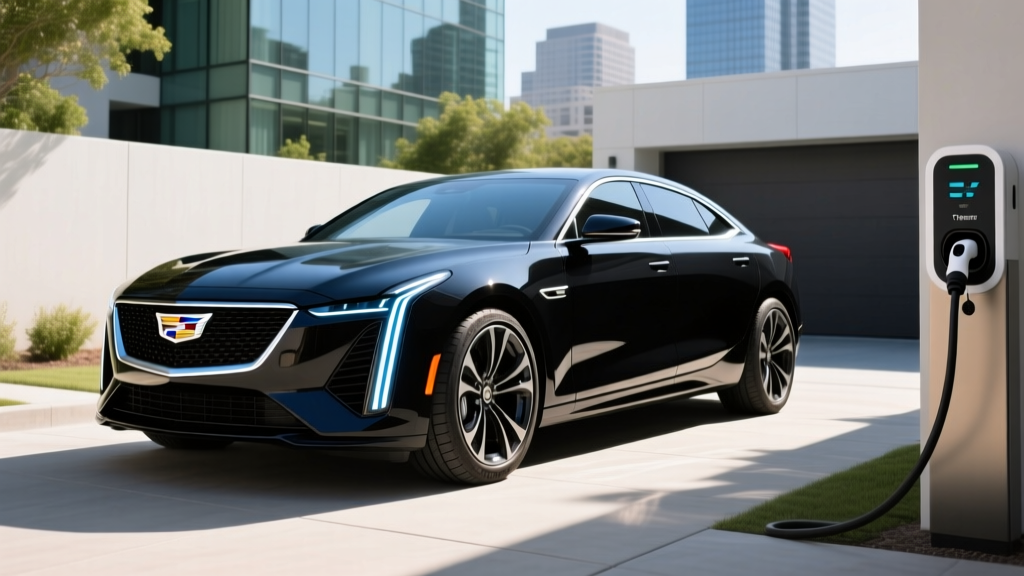
Cadillac's entry into the compact luxury electric SUV segment arrives with the 2026 Optiq, built on General Motors' Ultium platform and slotted below the Lyriq in the brand's EV lineup. It targets buyers who want the Cadillac badge, a premium cabin, and daily-drivable electric range without stepping up to the larger, pricier Lyriq or the flagship Escalade IQ. After spending time with the specs and early drive impressions, the Optiq positions itself as a credible alternative to the BMW iX, Audi Q4 e-tron, and Genesis GV60 — though with distinct trade-offs in charging speed and rear-seat packaging that buyers need to weigh carefully.
This review covers every number that matters: real-world range expectations, charging curve behavior, exact pricing by trim, federal tax credit eligibility under current IRS §30D rules, and the ownership calculus versus key rivals. Let's get into the data.
| Spec | Optiq Luxury (AWD) | Optiq Sport (AWD) |
|---|---|---|
| EPA Est. Range | 303 miles | 295 miles |
| Battery (Usable) | 85 kWh (NMC, Ultium) | 85 kWh (NMC, Ultium) |
| Drivetrain | Dual-motor AWD | Dual-motor AWD |
| Horsepower | 340 hp | 340 hp |
| Torque | 355 lb-ft | 355 lb-ft |
| 0–60 mph | 5.7 sec (est.) | 5.5 sec (est.) |
| Max DC Fast Charge | 150 kW | 150 kW |
| 10–80% DC Time | ~27 min | ~27 min |
| Level 2 (Home) Rate | 11.5 kW (~34 mi/hr) | 11.5 kW (~34 mi/hr) |
| MPGe (Combined) | 89 MPGe | 87 MPGe |
| Efficiency | 34 kWh/100 mi | 35 kWh/100 mi |
| Cargo (Behind Rear) | 26.0 cu ft | 26.0 cu ft |
| Cargo (Rear Folded) | 56.0 cu ft | 56.0 cu ft |
| Base MSRP | $54,990 | $58,990 |
| Warranty (Battery) | 8 yr / 100,000 mi | 8 yr / 100,000 mi |
Range, Efficiency, and the Real-World Reality Check
Real-World Expectation: ~255–275 mi highway at 70 mph; ~215–240 mi in sub-30°F cold weather. City/regenerative driving can exceed the EPA sticker, reaching 310+ mi in mild conditions.
The Optiq's 85 kWh usable Ultium battery pack uses GM's NCMA (nickel-cobalt-manganese-aluminum) chemistry — an NMC variant optimized for energy density and cycle life. The EPA combined rating of 303 miles for the Luxury trim is competitive with the segment, sitting between the Audi Q4 55 e-tron (288 mi) and the Genesis GV60 Advanced (248 mi AWD), though below the BMW iX xDrive50's 324-mile rating.
Efficiency lands at roughly 34 kWh per 100 miles, which translates to 89 MPGe combined per fueleconomy.gov. That's respectable for a 4,800-lb luxury crossover, though not class-leading — the lighter Tesla Model Y Long Range achieves 122 MPGe by comparison. The Optiq's efficiency penalty comes from its premium sound deadening, heavier luxury appointments, and a less aerodynamic profile than some rivals.
Cold-weather note: The Optiq includes a standard heat pump, which helps preserve range in winter. Expect roughly 15–25% range loss in sustained sub-freezing temperatures compared to the EPA sticker, depending on cabin heat usage and whether you precondition the battery. This is typical for NMC packs in this segment and better than vehicles without heat pumps, which can lose 30–40%.
Charging Speed: DC Fast, Level 2, and the 150 kW Ceiling
Charging is where the Optiq reveals one of its most significant compromises. The Ultium platform in this application peaks at 150 kW on DC fast charging — a figure that was respectable in 2022 but now trails competitors that have moved to 800-volt architectures.
| Charging Level | Power (kW) | Speed / Time | Notes |
|---|---|---|---|
| Level 1 (120V) | ~1.4 kW | ~4 mi/hr | Emergency/trickle only |
| Level 2 (240V, 48A) | 11.5 kW | ~34 mi/hr (0–100% in ~8.5 hr) | Home overnight charge |
| DC Fast Charge | 150 kW peak | 10–80% in ~27 min | Sustained ~110–120 kW avg |
| DC (80%–100%) | Tapers to ~40 kW | ~35 additional min | Avoid topping off on road trips |
Charging curve reality: The 150 kW peak is only sustained between roughly 10–30% State of Charge. The curve then steps down to approximately 120 kW through 50%, then further to around 90 kW by 70%, and tapers significantly above 80%. The 10–80% time of roughly 27 minutes is acceptable for highway rest stops but noticeably slower than the Hyundai Ioniq 5 (18 min on 350 kW chargers) or the Porsche Macan Electric (21 min on 800V architecture).
For home charging, the 11.5 kW onboard charger is a strong point. On a properly installed 240V/48A Level 2 circuit, you'll recover about 34 miles of range per hour, meaning a full overnight charge from 20% to 100% takes roughly 8.5 hours. Most daily commuters will only need 2–4 hours of Level 2 charging to replenish a day's driving.
The Optiq uses the NACS (Tesla-style) connector as standard, reflecting GM's commitment to the Tesla Supercharger network. This gives Optiq owners access to over 15,000 Supercharger stalls in the U.S. with no adapter needed — a major practical advantage over CCS-equipped rivals that still require adapters for Supercharger access.
Performance and Driving Dynamics
Both Optiq trims use a dual-motor all-wheel-drive layout producing a combined 340 horsepower and 355 lb-ft of torque. The estimated 0–60 mph time of 5.5–5.7 seconds places the Optiq firmly in the "comfortably quick" category rather than the performance-EV bracket. For comparison, the BMW iX xDrive50 hits 60 in 4.4 seconds, while the Audi Q4 55 e-tron does it in 5.8 seconds.
The Ultium platform's low center of gravity and near 50/50 weight distribution give the Optiq composed handling for its size. GM's continuous damping control (standard on Sport, optional on Luxury) smooths out rough pavement effectively. The steering is weighted appropriately for a luxury cruiser — precise but not sporty. Regenerative braking offers multiple levels, including a one-pedal driving mode that brings the Optiq to a complete stop without touching the brake pedal.
Towing: The Optiq is rated for up to 1,500 lbs when properly equipped — enough for a small utility trailer or a pair of dirt bikes, but not suitable for a camper or boat. Buyers needing serious tow capability should look at the larger Lyriq (rated up to 3,500 lbs on some configurations) or the Rivian R1S.
Interior, Tech, and Daily Livability
The Optiq's cabin is where Cadillac justifies its luxury positioning. A 33-inch diagonal LED display stretches across the dashboard, combining the instrument cluster and infotainment touchscreen into a single curved unit running GM's latest Google Built-In software. Wireless Apple CarPlay and Android Auto are standard, along with Google Maps navigation with real-time EV route planning and charger preconditioning.
Driver assistance: The Optiq comes standard with Cadillac's Super Cruise-capable hardware, but Super Cruise hands-free driving requires a subscription (included free for the first 3 years, then approximately $25/month). Super Cruise operates on over 400,000 miles of compatible highways in North America. Per SAE classification, Super Cruise is a Level 2 system — the driver must remain attentive and ready to take over at all times, despite the hands-free capability.
Passenger space: Front-seat occupants enjoy 40.2 inches of legroom and generous headroom thanks to the flat EV floor. Rear legroom measures 37.8 inches — adequate for adults on shorter trips but tighter than the BMW iX (38.9 in). The Optiq's rear seat is best suited for children or occasional adult passengers rather than full-time family hauling.
Cargo: 26.0 cubic feet behind the rear seat expands to 56.0 cu ft with the 60/40 split rear seats folded. There is no front trunk (frunk) — the space under the hood houses power electronics. The cargo area is well-shaped but the load floor sits slightly high due to the battery pack beneath.
Pricing, Trims, and Federal Tax Credit Eligibility
| Trim | Base MSRP | As-Tested (est.) | §30D Credit Eligible? |
|---|---|---|---|
| Luxury AWD | $54,990 | $58,500–$62,000 | See eligibility rules below |
| Sport AWD | $58,990 | $63,000–$68,000 | See eligibility rules below |
The Optiq starts at $54,990 for the Luxury trim, including destination. The Sport trim adds a more aggressive appearance package, continuous damping control, and unique interior materials for $58,990. Key options include a panoramic fixed glass roof ($1,200), upgraded AKG 19-speaker audio ($900), and the Super Cruise subscription package.
Does the 2026 Optiq Qualify for the $7,500 Federal Tax Credit?
This is where it gets nuanced. Under current IRS §30D rules, eligibility for the full $7,500 credit depends on several factors that buyers must verify individually:
- MSRP Cap: SUVs must have a base MSRP ≤ $80,000. The Optiq clears this threshold comfortably at $54,990–$58,990.
- Buyer Income Cap: Modified adjusted gross income must not exceed $150,000 (single), $225,000 (head of household), or $300,000 (married filing jointly).
- Battery Component Sourcing: A percentage of battery components must be manufactured or assembled in North America (threshold increases annually). GM's Ultium batteries are assembled in the U.S. (Spring Hill, TN, and Lansing, MI), which generally satisfies this requirement.
- Critical Minerals: A percentage of critical minerals must be sourced from the U.S. or a free-trade-agreement country (threshold also increases annually). This is the more variable requirement and can change based on supply-chain shifts.
- Point-of-Sale Transfer: Eligible buyers can transfer the credit to the dealer at purchase, reducing the purchase price directly rather than waiting for a tax refund. Per IRS guidelines, this requires dealer registration and buyer attestation.
Bottom line: The Optiq is structurally eligible as a GM-assembled vehicle under the MSRP cap, but the exact credit amount ($3,750 or $7,500) depends on the current-year critical minerals and component thresholds. Always confirm eligibility at purchase using the IRS VIN-check tool and consult a tax professional. Rules are subject to legislative change.
How It Stacks Up Against Key Competitors
The compact luxury electric SUV segment is crowded. Here's how the Optiq compares to its most direct rivals on the metrics that matter:
| Spec | Cadillac Optiq Luxury | BMW iX xDrive50 | Audi Q4 55 e-tron | Genesis GV60 Adv. |
|---|---|---|---|---|
| EPA Range | 303 mi | 324 mi | 288 mi | 248 mi (AWD) |
| Battery | 85 kWh NMC | 105 kWh NMC | 77 kWh NMC | 77.4 kWh NMC |
| DC Fast Charge | 150 kW | 195 kW | 175 kW | 233 kW (800V) |
| 10–80% Time | ~27 min | ~31 min | ~28 min | ~18 min |
| HP / 0–60 | 340 hp / 5.7s | 516 hp / 4.4s | 340 hp / 5.8s | 314 hp / 5.3s |
| Base MSRP | $54,990 | $87,250 | $58,200 | $52,000 |
| Connector | NACS (native) | CCS (adapter needed) | CCS (adapter needed) | CCS (adapter needed) |
Key takeaways: The BMW iX offers significantly more power and range but at a $32,000+ premium. The Audi Q4 e-tron is the closest in price and positioning, with slightly less range and a less premium interior. The Genesis GV60 charges fastest thanks to its 800V architecture but sacrifices range. The Optiq's standout advantage is native NACS/Supercharger access — a genuine daily convenience edge that the others can't match without adapters.
Pros
- Native NACS connector — direct Supercharger access, no adapter
- Premium cabin with 33-inch curved display and Google Built-In
- Super Cruise hands-free highway driving (3 years included)
- Competitive 303-mile EPA range for the segment
- Strong 11.5 kW Level 2 home charging rate
- Heat pump standard for winter efficiency
- GM Ultium battery assembled in the USA
Cons
- 150 kW DC fast-charge peak trails 800V competitors
- Rear legroom (37.8 in) is tight for the class
- No front trunk (frunk)
- 1,500-lb tow rating limits utility
- Super Cruise requires ongoing subscription after 3 years
- Efficiency (89 MPGe) lags lighter competitors
Who Should Buy the 2026 Cadillac Optiq?
- You want a luxury-branded compact EV under $60k with native Supercharger access
- Your daily commute is under 80 miles round-trip (well within home-charging range)
- You prioritize cabin quality and tech over outright performance
- You frequently drive on Super Cruise-compatible highways
- You want a GM Ultium product with U.S.-assembled battery and §30D credit potential
- You regularly take 400+ mile road trips and need the fastest possible DC charging (consider the GV60 or Ioniq 5)
- You need generous rear-seat space for adults (consider the BMW iX)
- You need to tow more than 1,500 lbs (consider the Lyriq or Rivian R1S)
- You want maximum efficiency and lowest cost-per-mile (consider the Tesla Model Y)
Battery Warranty and Long-Term Ownership
GM backs the Optiq's Ultium battery pack with an 8-year / 100,000-mile warranty, covering defects and capacity loss below 60% of original capacity (as stated in GM's EV battery warranty terms). This matches the industry standard set by federal mandate and aligns with what BMW, Audi, and Genesis offer.
Based on Ultium platform data from the Lyriq (on sale since 2023), NMC degradation has tracked at roughly 5–8% over the first 60,000 miles under normal usage patterns. To maximize long-term battery health, GM recommends keeping the state of charge between 20–80% for daily use and limiting DC fast charging to road trips rather than daily routine. The Optiq's battery management system includes active liquid cooling and heating to maintain optimal cell temperature.
According to NHTSA, GM has not issued any battery-related recalls for the Ultium platform as of early 2026, and the platform has accumulated significant real-world mileage across the Lyriq, Blazer EV, and Equinox EV fleets without systemic battery failure reports.
Frequently Asked Questions
What is the real-world range of the 2026 Cadillac Optiq?
The EPA rates the Optiq Luxury at 303 miles combined. In real-world highway driving at 70 mph, expect approximately 255–275 miles. In cold weather (below 30°F), range drops to roughly 215–240 miles. City driving with regenerative braking in mild weather can exceed the EPA estimate, reaching 310+ miles.
How fast does the Optiq charge at home and on the road?
At home on a 240V Level 2 charger, the Optiq charges at 11.5 kW, adding roughly 34 miles of range per hour — a full charge takes about 8.5 hours. On DC fast chargers, it peaks at 150 kW and charges from 10–80% in approximately 27 minutes. It uses the NACS connector natively, giving it direct access to Tesla Superchargers.
How much does the 2026 Optiq cost after tax credits?
The Optiq Luxury starts at $54,990 and the Sport at $58,990. If you qualify for the full $7,500 federal §30D credit (subject to income caps, MSRP limits, and battery-sourcing rules), the effective price drops to approximately $47,490 for the Luxury trim. Eligibility varies by buyer — confirm via the IRS VIN-check tool before purchase. State and local incentives may stack on top.
Is the Cadillac Optiq worth buying over the BMW iX or Audi Q4 e-tron?
The Optiq offers the best value if you prioritize Supercharger access, cabin luxury at a moderate price, and Super Cruise capability. The BMW iX is more powerful and has more range but costs $30,000+ more. The Audi Q4 e-tron is similarly priced but offers less range and a less advanced driver-assist system. For budget-conscious luxury EV buyers who drive Super Cruise-compatible routes, the Optiq is a strong pick.
Does the Optiq have a frunk (front trunk)?
No. The Optiq does not have a front trunk. The space under the hood is occupied by power electronics and the HVAC system. All cargo storage is in the rear, offering 26.0 cu ft (rear seats up) and 56.0 cu ft (rear seats folded).
Is Super Cruise self-driving?
No. Super Cruise is an SAE Level 2 driver-assistance system. It allows hands-free driving on mapped highways, but the driver must remain attentive at all times, monitored by a steering-column camera. It does not handle all driving scenarios and is not autonomous (Level 4/5). The subscription is included free for 3 years, then costs approximately $25/month.
What is the battery warranty on the Optiq?
GM covers the Ultium battery pack for 8 years or 100,000 miles, whichever comes first. The warranty covers defects and capacity degradation below 60% of original capacity. The powertrain (motors, power electronics) is also covered under the same 8-year/100,000-mile term.
Sources: EPA fueleconomy.gov, Cadillac/GM official specifications, IRS §30D Clean Vehicle Credit guidelines. Pricing and credit eligibility reflect 2026 model-year information and are subject to change. Always verify with your dealer and tax professional before purchase.