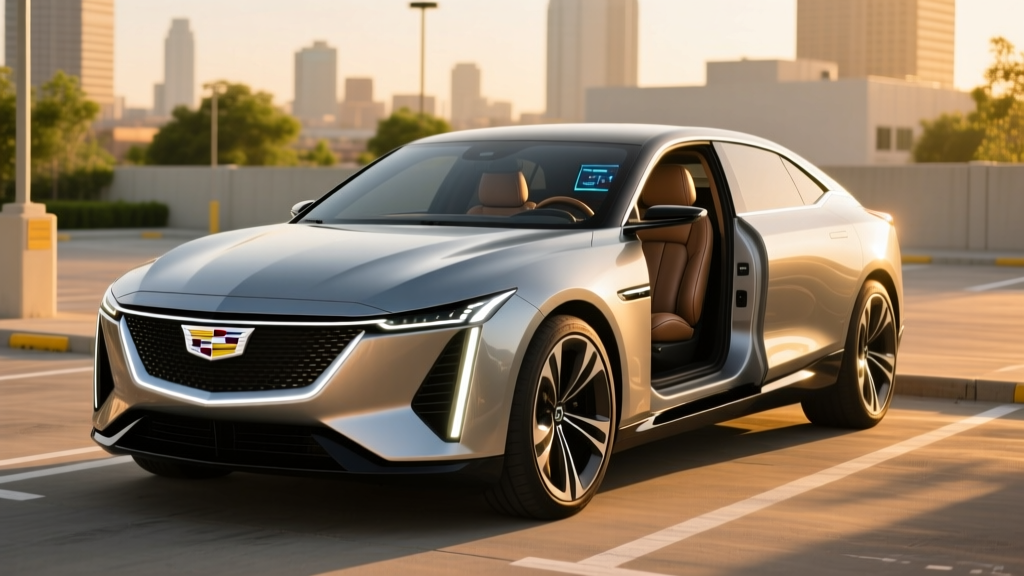
The 2026 Cadillac Optiq enters the luxury compact electric SUV segment as Cadillac's most accessible EV, slotting below the Lyriq and targeting buyers who want premium styling and solid range without stepping into six-figure territory. With an EPA-estimated range exceeding 300 miles, a spacious cabin, and GM's latest Ultium platform technology, the Optiq is positioned to compete directly with the BMW iX, Audi Q8 e-tron, and Genesis Electrified GV70. For shoppers researching a 2026 Cadillac Optiq lease, understanding the real-world efficiency, charging behavior, and tax-credit implications is essential before signing any paperwork.
This profile covers every number that matters — from battery chemistry and DC fast-charging curves to cargo dimensions and ownership costs — so you can evaluate the Optiq on data, not marketing.
Range, Battery, and Real-World Efficiency
The 2026 Optiq is built on GM's Ultium platform and packs a 102 kWh usable battery using NMC (nickel manganese cobalt) lithium-ion chemistry. NMC offers higher energy density than LFP, which helps the Optiq achieve its range target in a relatively compact SUV footprint. The trade-off is that NMC cells benefit more from staying between 20–80% state of charge for long-term health, and they're slightly more sensitive to extreme heat than LFP — though GM's active thermal management system mitigates this in daily use.
EPA Estimated: ~303 miles (AWD, 20-inch wheels)
Real-World Expectation: Plan for roughly 255–275 miles on sustained highway driving at 70–80 mph. In cold weather (below 30°F), expect a 15–25% reduction, bringing effective range to approximately 225–255 miles depending on cabin heating use and terrain. City driving with regenerative braking can match or slightly exceed the EPA sticker.
Efficiency is rated at approximately 89 MPGe combined (roughly 38 kWh/100 mi), which is competitive for a luxury SUV in this weight class but trails the more aerodynamic BMW iX xDrive50 (~86 MPGe combined with a larger battery). The Optiq's boxier design prioritizes interior volume and Cadillac styling over pure aero efficiency.
| Spec | Value |
|---|---|
| EPA Range (AWD) | ~303 miles |
| Battery (usable) | 102 kWh, NMC |
| Efficiency | ~89 MPGe / 38 kWh/100 mi |
| Max DC Fast Charge | ~150 kW (peak) |
| 10–80% DC Time | ~33 minutes |
| Level 2 Home Charge | 11.5 kW (~30 mi/hr) |
| Drivetrain | Dual-motor AWD |
| Horsepower | ~340 hp |
| 0–60 mph | ~5.8 seconds |
| Cargo (rear seats up) | ~26 cu ft |
| Cargo (rear seats folded) | ~57 cu ft |
| Rear Legroom | ~38.0 inches |
| Battery Warranty | 8 years / 100,000 miles |
| Base MSRP (Luxury) | ~$58,590 |
Charging Speed: DC Fast, Level 2, and the Curve Reality
The Optiq supports a peak DC fast-charge rate of approximately 150 kW via its CCS1 connector (with NACS adapter compatibility for Tesla Supercharger access as GM completes its network transition). On a compatible 150+ kW station, the Optiq can charge from 10–80% in roughly 33 minutes.
However, as with every EV, peak kW is not sustained kW. The Optiq's charge curve holds near 150 kW from roughly 10–35% state of charge, then tapers progressively. From 60–80%, expect charge rates to drop to 60–80 kW. This is normal behavior driven by battery protection protocols, but it means the last 20% of a charge session takes disproportionately longer. On road trips, plan stops around the 10–70% window for the best time-to-miles ratio.
| Level | Power | Miles Added per Hour | Notes |
|---|---|---|---|
| Level 1 (120V) | ~1.4 kW | ~3–4 mi/hr | Emergency/trickle only |
| Level 2 (240V, 48A) | 11.5 kW | ~30 mi/hr | Full charge in ~9 hrs |
| DC Fast (peak) | 150 kW | ~250+ mi/hr (to ~35%) | 10–80% in ~33 min |
For home Level 2 charging, you'll need a 240V circuit rated for at least 60 amps to support the Optiq's 48-amp onboard charger. Expect a licensed electrician to charge $800–$2,000 for a standard installation (charger + wiring + permit), potentially more if your panel needs an upgrade to 200A service.
Performance and Driving Dynamics
The 2026 Optiq comes standard with a dual-motor all-wheel-drive powertrain producing approximately 340 horsepower and 325 lb-ft of torque. The 0–60 mph sprint clocks in at around 5.8 seconds — brisk for daily driving and highway merging, though not in the performance-SUV territory of a Tesla Model Y Performance or BMW iX M60.
Ride quality leans toward comfort over sportiness, with a well-damped suspension that absorbs road imperfections. Steering is light and precise, making the Optiq easy to maneuver in urban settings despite its ~4,800 lb curb weight. Regenerative braking offers multiple levels, including a one-pedal driving mode that brings the vehicle to a complete stop — useful in stop-and-go traffic.
Pricing, Trims, and Federal Tax Credit Eligibility
The 2026 Optiq launches in two primary trims:
- Luxury (base): ~$58,590 MSRP (includes destination)
- Sport: ~$62,590 MSRP (sport-tuned suspension, unique styling, additional driver-assist features)
An as-tested Sport model with premium paint, upgraded wheels, and the technology package can reach $66,000–$68,000.
| Trim | MSRP | Est. §30D Credit* | Effective Price |
|---|---|---|---|
| Luxury | ~$58,590 | Up to $7,500 | ~$51,090 |
| Sport | ~$62,590 | Up to $7,500 | ~$55,090 |
*Federal tax credit eligibility under IRS §30D is subject to multiple requirements:
- MSRP Cap: SUVs must be at or below $80,000 — both Optiq trims qualify.
- Buyer Income Cap: AGI must not exceed $150,000 (single), $225,000 (head of household), or $300,000 (joint).
- Battery Sourcing: Critical minerals and battery components must meet phased-in domestic/free-trade sourcing thresholds. For 2026, these requirements are stringent — confirm eligibility with your dealer at point of sale.
- Point-of-Sale Transfer: Eligible buyers can apply the credit as an immediate rebate at the dealership rather than waiting for tax filing.
Leasing Note: If you lease the Optiq rather than purchase, the §30D credit technically goes to the lessor (the financing company). Many automakers pass this savings through as a "lease cash" incentive that reduces your monthly payment, but this is not guaranteed. Confirm with your Cadillac dealer whether the $7,500 is being applied to your lease terms.
Interior, Cargo, and Technology
The Optiq's cabin is where Cadillac's luxury positioning becomes most apparent. A 33-inch LED display spans the dashboard, combining the instrument cluster and infotainment touchscreen into a single curved unit running Google Built-In (with native Google Maps, Assistant, and Play Store apps). Wireless Apple CarPlay and Android Auto are standard.
Interior materials include standard synthetic leather with available genuine leather and open-pore wood trim on higher trims. The flat floor (thanks to the Ultium battery skateboard) provides generous rear-seat legroom of approximately 38.0 inches, making the Optiq comfortable for four adults on longer trips.
Cargo volume stands at ~26 cubic feet behind the rear seats and ~57 cubic feet with the 60/40 split rear seats folded. There is no front trunk (frunk), as GM allocated that space to HVAC and power electronics.
Driver Assistance: The Optiq comes standard with Cadillac's Super Cruise on mapped divided highways — a hands-off, SAE Level 2 system that requires the driver to remain attentive (monitored via a driver-facing camera). Super Cruise is one of the most refined Level 2 systems available, but it is not autonomous driving — you must be prepared to resume control at any time.
Warranty and Long-Term Ownership
GM backs the Optiq's battery and powertrain with an 8-year / 100,000-mile limited warranty, covering defects and excessive capacity loss (typically defined as falling below 60–70% of original capacity, though exact threshold should be confirmed in your purchase documentation). The basic vehicle warranty is 4 years / 50,000 miles.
Based on data from other Ultium-platform vehicles and GM's thermal management approach, NMC battery degradation is expected to be moderate — roughly 8–12% capacity loss over 100,000 miles under normal use patterns. Avoiding routine 100% charges and DC fast-charging in extreme heat will help preserve long-term state of health.
Who the 2026 Cadillac Optiq Suits Best
Choose the Optiq if:
- You want a luxury-branded EV under $65K with 300+ miles of EPA range
- You value a comfortable, tech-forward cabin with Google Built-In and Super Cruise
- You primarily commute and take moderate road trips (200–300 miles between stops)
- You need rear-seat space for adults or child seats
Look elsewhere if:
- You need maximum towing capacity (Optiq is rated for ~1,500 lbs — light duty only)
- You prioritize sporty handling over comfort (consider the BMW iX or Genesis Electrified GV70)
- You frequently drive in extreme cold without access to a garage or preconditioning
- You need the fastest DC charging in the segment (Hyundai Ioniq 5 peaks at 240 kW)
Pros and Cons at a Glance
- 300+ mile EPA range competitive for the segment
- Standard Super Cruise hands-free highway driving
- Spacious cabin with flat floor and strong rear legroom
- Google Built-In infotainment with native navigation
- Qualifies for up to $7,500 federal tax credit (verify sourcing)
- Comfortable ride quality suited to daily commuting
- 150 kW peak DC charging is slower than Hyundai/Kia 800V rivals
- No front trunk (frunk)
- Towing limited to ~1,500 lbs
- Real-world highway range drops notably in cold weather
- Lease credit pass-through depends on lessor policies
- Base price higher than non-luxury alternatives (Ioniq 5, EV6)
Frequently Asked Questions
What is the real-world range of the 2026 Cadillac Optiq?
The EPA estimates approximately 303 miles for the AWD model. In real-world highway driving at 70–80 mph, expect 255–275 miles. In cold weather below 30°F, range can drop to 225–255 miles due to battery resistance and cabin heating demand.
How fast does the Optiq charge at home and on the road?
At home on a Level 2 (240V, 48A) charger, the Optiq adds roughly 30 miles of range per hour, achieving a full charge in about 9 hours. On a DC fast charger, it peaks at 150 kW and can go from 10–80% in approximately 33 minutes, though charge speed tapers significantly above 60%.
How much does the 2026 Optiq cost after the federal tax credit?
The base Luxury trim starts around $58,590. If you qualify for the full $7,500 §30D credit (meeting income, MSRP, and battery-sourcing requirements), the effective price drops to approximately $51,090. Confirm eligibility at point of sale, as sourcing rules are strict for 2026.
Does the 2026 Cadillac Optiq qualify for the federal EV tax credit?
The Optiq's MSRP is below the $80,000 SUV cap, so it clears that hurdle. However, the full $7,500 credit depends on your adjusted gross income (under $150K single / $300K joint), and whether the battery meets 2026 critical-mineral and component sourcing thresholds. Always verify with your dealer and consult a tax professional. See IRS §30D guidelines for current rules.
Is the Optiq worth buying over the BMW iX or Audi Q8 e-tron?
The Optiq offers strong value with its lower starting price, standard Super Cruise, and competitive range. The BMW iX provides sportier handling and slightly faster charging but starts higher. The Audi Q8 e-tron offers a more refined ride and faster DC charging (~170 kW) but at a premium. If luxury-per-dollar and hands-free highway driving are your priorities, the Optiq is a strong contender.
What is the biggest drawback of the 2026 Optiq?
The 150 kW peak DC charging rate is the most notable limitation. Competitors like the Hyundai Ioniq 5 (240 kW) and Kia EV9 (236 kW) charge significantly faster on road trips. If you regularly take long highway trips and want minimal stop time, this is worth factoring in.
Sources: EPA Fuel Economy, IRS New Clean Vehicle Credit, Cadillac official specifications.