Quick Answer: Which 2026 Cadillac EV Fits Your Budget?
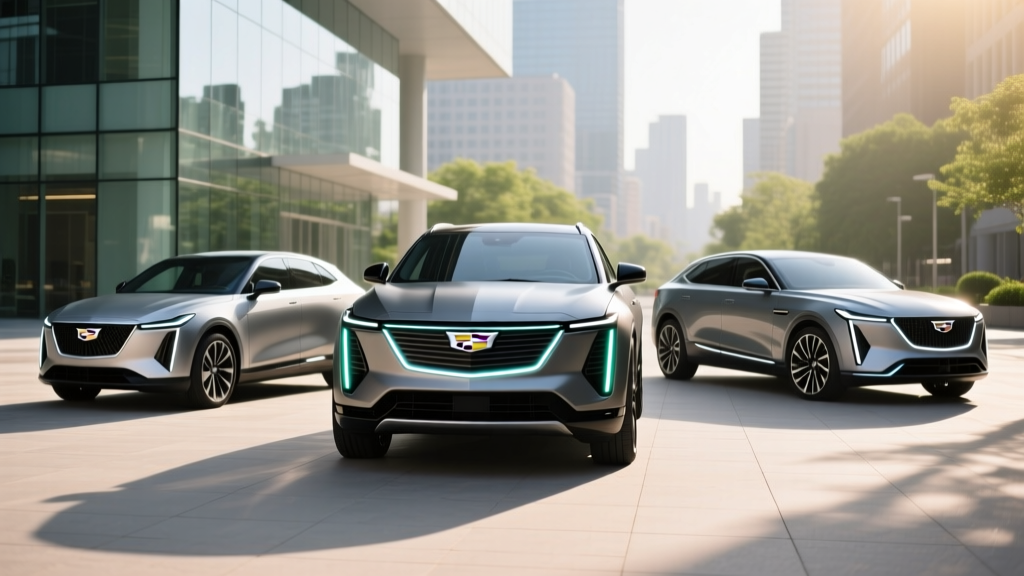
Cadillac's 2026 electric lineup spans three distinct models. The Lyriq SUV starts at $58,590 and delivers an EPA-estimated 314 miles of range — the volume seller and best value. The Optiq compact SUV slots in at approximately $52,000, targeting urban buyers who want Cadillac luxury without the Lyriq's footprint. The Celestiq is a hand-built, $340,000+ ultra-luxury flagship with 300+ miles of range, built in very limited numbers. All three ride on GM's Ultium platform with NMC battery chemistry and support DC fast charging up to 190 kW (Lyriq) or 150 kW (Optiq).
For most luxury EV shoppers, the Lyriq remains the sweet spot: competitive range, Super Cruise availability, and potential federal tax credit eligibility depending on your income and the vehicle's battery sourcing compliance with IRS §30D requirements.
2026 Cadillac EV Lineup at a Glance
Cadillac has committed fully to electrification, and by 2026 the brand's EV portfolio covers the critical luxury segments. Here is how the three models stack up on the numbers that matter most:
| Spec | 2026 Lyriq | 2026 Optiq | 2026 Celestiq |
|---|---|---|---|
| Body Style | Midsize SUV | Compact SUV | Ultra-Luxury Sedan |
| Base MSRP | $58,590 | ~$52,000 | $340,000+ |
| EPA Range (RWD / Max) | 314 mi (RWD) | ~300 mi (est.) | 300+ mi (est.) |
| Battery (Usable) | 102 kWh NMC | ~85 kWh NMC (est.) | ~111 kWh NMC |
| Drivetrain | RWD or AWD | AWD | AWD |
| Horsepower | 340 hp (RWD) / 500 hp (AWD) | ~400 hp (est.) | ~600 hp |
| 0-60 mph | 6.0s (RWD) / 4.6s (AWD) | ~5.0s (est.) | ~3.8s (est.) |
| Max DC Fast Charge | 190 kW | 150 kW | ~200 kW |
| 10-80% DC Charge | ~33 min | ~35 min (est.) | ~30 min (est.) |
| Level 2 Charge Rate | 19.2 kW (11.5 kW standard) | 11.5 kW | 19.2 kW |
| Super Cruise | Available | Available | Standard |
| Battery Warranty | 8 yr / 100,000 mi | 8 yr / 100,000 mi | 8 yr / 100,000 mi |
| Federal Tax Credit (§30D) | Up to $7,500 (eligibility varies) | Up to $7,500 (eligibility varies) | Ineligible (MSRP cap) |
Note: Optiq and Celestiq figures marked (est.) are based on preliminary manufacturer disclosures and platform data. Confirm final specs with your dealer before purchasing.
Real-World Range: What the EPA Sticker Doesn't Tell You
Lyriq RWD — EPA: 314 miles
Real-world expectation: 255-280 miles on highway road trips at 70-75 mph; approximately 210-240 miles in freezing temperatures (below 32°F) with cabin heat. The AWD variant drops to an EPA 307 miles, with real-world highway driving yielding roughly 245-270 miles.
The 102 kWh Ultium battery in the Lyriq uses nickel-manganese-cobalt (NMC) chemistry, which provides strong energy density but is more sensitive to cold-weather range loss than LFP alternatives. Expect a 20-30% range reduction in sustained sub-freezing driving — consistent across most NMC-based EVs.
Charging-curve reality matters too: the Lyriq's 190 kW peak charge rate applies only between roughly 10-40% state of charge. Above 60%, the rate tapers significantly, and the final 80-100% top-off can add 25+ minutes. Plan road-trip stops to charge from 10-80% and move on — charging to 100% at a DC fast station is rarely time-efficient.
The Optiq, with a smaller ~85 kWh pack, will see similar percentage losses in cold weather, but its lighter curb weight may help offset highway efficiency slightly. The Celestiq's larger battery and advanced thermal management should moderate cold-weather impact, but its heavy curb weight and performance-oriented tuning will keep real-world highway range closer to 250-270 miles in mixed conditions.
Charging at Home vs. Public Networks: What 2026 Cadillac Owners Need
| Level | Power | Connector | Miles Added/Hour | Best For |
|---|---|---|---|---|
| Level 1 | 1.4 kW (120V) | J1772 / NACS | ~4 mi/hr | Emergency / overnight trickle |
| Level 2 | 11.5 kW (240V, 48A) | J1772 / NACS | ~35 mi/hr | Daily home charging |
| Level 2 (max option) | 19.2 kW (240V, 80A) | NACS | ~52 mi/hr | Lyriq/Celestiq with upgraded panel |
| DC Fast | Up to 190 kW | NACS (Tesla Supercharger network) | ~195 mi in 15 min (Lyriq) | Road trips |
For 2026, GM has transitioned its EVs to the NACS (North American Charging Standard) connector, giving Cadillac owners native access to the Tesla Supercharger network — over 25,000 stalls nationwide. This is a significant practical advantage over CCS-only vehicles, especially on rural interstate corridors.
Home charging installation reality: Most Lyriq owners will install a Level 2 wall connector on a 240V/60A circuit. Expect to pay $800-$1,500 for the charger hardware and $1,200-$3,500 for professional electrical installation, depending on panel proximity and whether your home's 200A service panel needs an upgrade (a $2,000-$4,000 added cost in older homes). Total realistic budget: $2,000-$5,000 for a complete home Level 2 setup.
If you lack home charging access — apartment dwellers, street parkers — Cadillac ownership becomes significantly less convenient. Public DC fast charging costs roughly 2-4x more per mile than home Level 2 charging and adds wear from repeated high-rate charging. Factor this into your decision honestly.
Cost of Ownership: 2026 Cadillac EV vs. Gas Equivalent
Let's compare the 2026 Lyriq AWD ($63,590 MSRP for Luxury trim) against a comparable gas-powered luxury SUV — the BMW X5 xDrive40i ($67,200 MSRP) — over a 5-year, 75,000-mile ownership period.
| Cost Category | 2026 Lyriq AWD | BMW X5 xDrive40i |
|---|---|---|
| Purchase Price (MSRP) | $63,590 | $67,200 |
| Federal Tax Credit (§30D) | Up to -$7,500* | $0 |
| Effective Purchase Price | ~$56,090* | $67,200 |
| Fuel/Energy (75k mi) | ~$3,800 (home L2, $0.14/kWh avg) | ~$9,750 (gas, 24 MPG, $3.90/gal) |
| Maintenance (5 yr) | ~$1,200 | ~$4,500 |
| Insurance (5 yr avg) | ~$12,500 | ~$10,800 |
| Estimated Depreciation (5 yr) | ~$28,000 | ~$30,000 |
| 5-Year Total Cost | ~$94,090* | ~$122,250 |
*Tax credit eligibility depends on buyer income caps ($150K single / $300K joint), vehicle MSRP caps ($80K for SUVs), and battery critical-mineral sourcing requirements per current IRS rules. Confirm eligibility at irs.gov or with a tax professional before relying on this figure. Point-of-sale transfer is available at participating dealers.
The Lyriq's savings come primarily from energy and maintenance. EVs eliminate oil changes, spark plugs, transmission fluid, and brake pad replacements are rare thanks to regenerative braking. However, EV insurance premiums run 10-20% higher on average due to repair cost structures and battery replacement risk — a factor many buyers overlook.
Super Cruise vs. Competitor ADAS: Understanding What You're Buying
SAE Automation Level: Level 2
Super Cruise is a hands-free driver-assistance system, not self-driving. It operates on over 750,000 miles of pre-mapped divided highways in the US and Canada. The driver must remain attentive — an infrared camera monitors eye gaze and will escalate alerts, then bring the vehicle to a stop if engagement is lost. You are legally and practically responsible for the vehicle at all times.
Cadillac's Super Cruise remains one of the most capable Level 2 systems available. Compared to Tesla Autopilot, it is more geofenced (mapped roads only) but more reliable within its operating domain — smoother lane-keeping, more confident merging, and a genuinely hands-free experience that Tesla does not offer on public roads.
For 2026, Super Cruise includes automatic lane-change capability and is available on the Lyriq and Optiq (standard on Celestiq). Expect to pay approximately $2,500 as a standalone option or bundled in premium trim packages. The system requires an active OnStar subscription (~$25/month after the initial trial period) for real-time map updates and connectivity.
What Super Cruise does NOT do: Navigate city streets, stoplights, or roundabouts autonomously. Handle construction zones reliably. Operate on unmapped roads. Replace your attention. This is not a Level 4 robotaxi system — it is a highway cruising aid that reduces fatigue on long trips.
Tax Credit Eligibility: Who Actually Qualifies in 2026?
The federal §30D clean vehicle credit offers up to $7,500 for qualifying new EVs, but eligibility is a multi-factor checklist that disqualifies many buyers and some vehicle configurations:
- Buyer income caps: Modified AGI must not exceed $150,000 (single), $225,000 (head of household), or $300,000 (married filing jointly)
- Vehicle MSRP cap: SUVs (Lyriq, Optiq) capped at $80,000 — all Lyriq and Optiq trims qualify on price. The Celestiq exceeds this cap and is ineligible.
- Battery sourcing: The credit splits into two halves — $3,750 for critical minerals and $3,750 for battery component manufacturing, each with escalating domestic/free-trade sourcing thresholds that tighten annually
- Point-of-sale transfer: As of 2024+, buyers can transfer the credit to the dealer at purchase for an immediate price reduction, rather than waiting to claim it on their tax return
- Foreign entity of concern (FEOC): Vehicles with battery components or critical minerals from prohibited foreign entities may be partially or fully ineligible
The Lyriq's Ultium battery is manufactured in the US (Lansing, Michigan and Spring Hill, Tennessee plants), which helps with the component half of the credit. However, critical-mineral sourcing (lithium, cobalt, nickel) involves global supply chains that shift annually. Always verify current eligibility on fueleconomy.gov before purchasing — the list updates regularly.
Common Misconceptions About Cadillac EVs — Corrected
| Myth | Fact |
|---|---|
| "The Lyriq charges as fast as a Tesla Model Y." | The Lyriq peaks at 190 kW vs. the Model Y's ~250 kW. On a 10-80% charge, the Lyriq takes ~33 minutes while the Model Y takes ~20-22 minutes at a V3/V4 Supercharger. |
| "I'll never need to replace the battery." | GM warranties the Ultium battery for 8 years/100,000 miles against degradation below 70% capacity. Real-world data shows NMC batteries losing ~10-15% capacity over 8 years with normal use. Out-of-warranty replacement would cost $15,000-$22,000+. |
| "Cadillacs don't have access to Tesla Superchargers." | As of 2025, all GM EVs with NACS ports (including 2026 Cadillacs) have native access to the Tesla Supercharger network without adapters. |
| "The $7,500 credit applies to every buyer." | Income caps, MSRP caps, and battery sourcing rules eliminate many buyers. The Celestiq is categorically ineligible due to its MSRP. Always verify before purchase. |
| "EV maintenance is zero." | Tires wear 20-30% faster on heavy EVs. Cabin air filters, brake fluid, coolant, and wiper systems still require service. Budget ~$200-$400/year. |
Decision Framework: Which 2026 Cadillac EV Should You Buy?
Choose the Lyriq if:
- You want the best range-per-dollar in Cadillac's lineup (314 mi EPA, starting at $58,590)
- You need a midsize SUV for family use with 28.8 cu ft of cargo space (60.8 cu ft with seats folded)
- You take regular road trips and value Super Cruise for highway fatigue reduction
- Your household income falls within §30D limits and you want to maximize tax credit value
Choose the Optiq if:
- You live in an urban area and want a more compact footprint for parking and city driving
- Your budget tops out around $55,000-$60,000 and the Lyriq's MSRP is a stretch
- You primarily commute under 50 miles daily and can charge at home overnight
- You don't regularly need more than 2-3 passengers or significant cargo space
Choose the Celestiq if:
- You are in the ultra-luxury market competing with Rolls-Royce Spectre and Bentley offerings
- Tax credits are irrelevant to your purchase decision
- You value bespoke craftsmanship, exclusivity (very limited production), and hand-built quality
- You want Cadillac's absolute best technology and performance in a sedan format
Reconsider any Cadillac EV if:
- You lack reliable home or workplace Level 2 charging access
- You regularly drive in extreme cold (below 0°F) for long distances — consider a PHEV like the Cadillac's future offerings or a competitor with LFP chemistry
- You need towing capacity above 3,500 lbs (Lyriq max towing is 3,500 lbs; most competitors in this class are similar)
- You expect to recoup the EV price premium within 2-3 years through fuel savings alone — the math typically requires 5+ years of ownership
Frequently Asked Questions
Is the 2026 Lyriq eligible for the full $7,500 federal tax credit?
Potentially, but it depends on your income, the specific trim's MSRP (all Lyriq trims fall under the $80K SUV cap), and whether the battery's critical-mineral and component sourcing meets current-year thresholds. The credit can split into two $3,750 halves — you may qualify for one, both, or neither depending on sourcing compliance. Check the latest eligibility list at fueleconomy.gov and consult a tax professional.
How does the Lyriq's charging speed compare to rivals like the BMW iX or Genesis Electrified GV70?
The Lyriq's 190 kW peak is competitive but not class-leading. The BMW iX xDrive50 supports up to 200 kW and charges 10-80% in roughly 31 minutes. The Genesis Electrified GV70 peaks at 240 kW but has a smaller battery, so its 10-80% time is around 18 minutes. The Lyriq trades peak charge speed for larger battery capacity and longer range.
Can I charge a 2026 Cadillac EV at a Tesla Supercharger?
Yes. All 2026 Cadillacs come equipped with the NACS charge port natively, meaning direct access to Tesla's Supercharger network without an adapter. This is one of the strongest practical advantages of GM's switch to NACS, particularly for road-trip charging infrastructure.
What happens if the Ultium battery degrades significantly?
GM covers the battery for 8 years or 100,000 miles against capacity loss below 70%. If your battery falls below this threshold within the warranty period, GM will repair or replace it at no cost. Beyond the warranty, NMC battery replacement currently costs $15,000-$22,000+ depending on the model and pack size — though prices are expected to decline as the battery supply chain matures.
Is Super Cruise standard on all 2026 Cadillacs?
No. Super Cruise is standard on the Celestiq and available as an option (typically ~$2,500 or bundled in premium packages) on the Lyriq and Optiq. It requires an active OnStar connected-services subscription for map data and connectivity, which is included for an initial trial period (usually 3 years) and then costs approximately $25/month.
How does cold weather affect the Lyriq's range in real-world driving?
In sustained temperatures below 32°F, expect 20-30% range reduction from the EPA 314-mile figure — yielding roughly 220-250 miles of real-world range. Below 0°F, losses can exceed 35%. The Lyriq's heat pump (standard on AWD trims) helps moderate cabin heating energy draw, but battery chemistry and cabin heating demands still significantly reduce range. Preconditioning the battery while plugged in before departure helps recover some efficiency.