Quick Verdict: The 2026 Cadillac Celestiq Is a Hand-Built EV Flagship
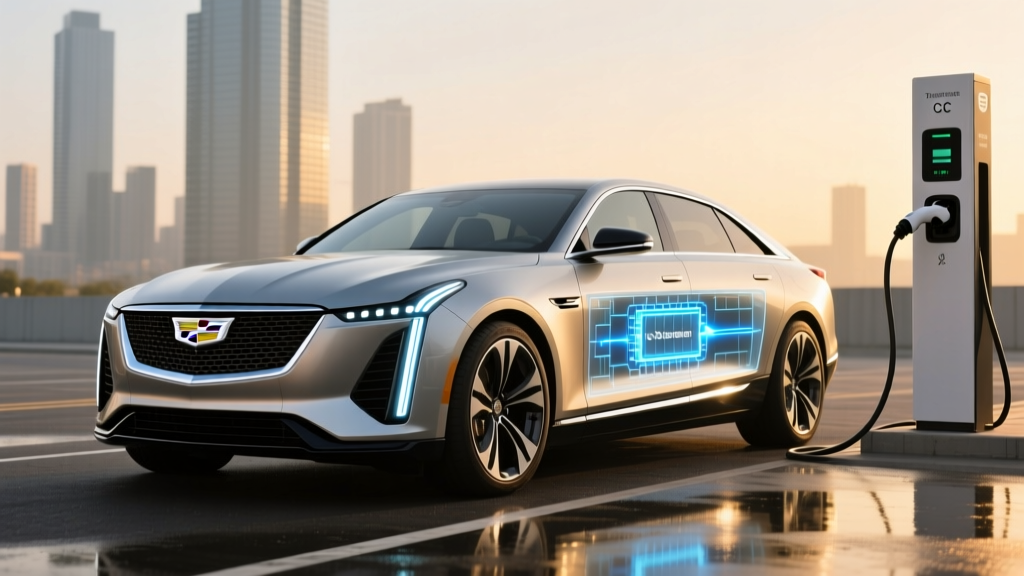
The 2026 Cadillac Celestiq is not a mass-market electric vehicle. It is a low-volume, hand-assembled ultra-luxury sedan built on GM's Ultium platform, designed to compete with the Rolls-Royce Spectre and Bentley's electrified ambitions. With a starting price north of $340,000, a 111 kWh NMC battery, and a dual-motor all-wheel-drive powertrain producing 600 horsepower, the Celestiq is an engineering showcase first and a daily driver second. This review breaks down the real-world range, charging behavior, ownership economics, and practical limitations you need to know before writing a deposit check.
Production remains extremely limited — Cadillac plans to build roughly 400 units per year at its Global Technical Center in Warren, Michigan. Every Celestiq is commissioned individually, with buyers working directly with Cadillac's design team on materials, colorways, and bespoke interior elements. If you're evaluating this car, you're not cross-shopping a Tesla Model S. You're deciding whether an American ultra-luxury EV can justify its position against established European rivals.
Range, Efficiency, and Real-World Expectations
The Celestiq carries a large Ultium battery pack rated at approximately 111 kWh of usable capacity, using NMC (nickel-manganese-cobalt) pouch cells. Cadillac's target EPA-estimated range sits at around 300 miles, though final EPA certification figures for the 2026 model year should be confirmed on fueleconomy.gov once the vehicle appears in the database.
EPA Estimated: ~300 miles
Real-World Highway (70-75 mph): Expect approximately 250–270 miles. The Celestiq's large frontal area, heavy curb weight (estimated 6,000+ lbs), and luxury-focused tire compounds trade rolling resistance for ride comfort.
Cold Weather (below 32°F): Plan for 200–230 miles. NMC chemistry loses efficiency in freezing temps, and cabin heating draws significant energy despite the heat pump system.
City/Mixed Driving: Closest to the EPA sticker — regenerative braking recovers energy in stop-and-go traffic, and the Celestiq's one-pedal driving mode is well-calibrated.
Efficiency lands in the neighborhood of 80–85 MPGe combined (roughly 39–42 kWh/100 miles). That is not class-leading — the Lucid Air achieves over 130 MPGe — but buyers in this segment prioritize power delivery and ride isolation over efficiency optimization. The Celestiq is tuned for effortless acceleration and whisper-quiet cruising, not hypermiling.
Charging Speed: DC Fast Charge and Home Level 2
Charging a 111 kWh battery requires patience unless you have access to high-power DC infrastructure. The Celestiq supports the North American Charging Standard (NACS) connector natively, giving it access to Tesla Supercharger V3/V4 stations and the growing NACS-equipped public charging network.
| Charging Level | Power (kW) | Speed / Notes |
|---|---|---|
| Level 1 (120V) | ~1.4 kW | ~3–4 mi/hr — emergency trickle only |
| Level 2 (240V, 48A) | 11.5 kW | ~26–30 mi/hr — full charge in ~10–12 hours |
| Level 2 (240V, 80A) | 19.2 kW | ~44–50 mi/hr — full charge in ~6–7 hours (requires capable home charger) |
| DC Fast Charge (Peak) | ~200 kW | 10–80% in approximately 30 minutes |
| DC Fast Charge (Sustained) | ~150 kW avg | Charging curve tapers significantly above 80% SoC |
A few ownership realities matter here. The 200 kW peak is not sustained across the full charging session — like all Ultium-based vehicles, the Celestiq's battery management system ramps power aggressively between 10–50% SoC, then progressively tapers to protect cell longevity. On a 350 kW-capable Electrify America or Tesla V4 Supercharger stall, you'll see peak rates early, but the session average will land closer to 150 kW. That means a 10–80% session takes roughly 30 minutes, which is adequate for road-trip breaks but not class-leading. The Porsche Taycan and Lucid Air, with their 800V+ architectures, can pull higher sustained power and reach 10–80% faster.
For home charging, the Celestiq's onboard charger supports up to 19.2 kW on a capable Level 2 circuit (80A). Most Celestiq owners will have a dedicated 100A circuit installed with a high-amperage wall connector — budget $1,500–$3,000 for professional installation assuming your electrical panel has capacity. At 19.2 kW, overnight charging easily replenishes a full day's driving. At the more common 11.5 kW (48A circuit), a full charge takes 10–12 hours, which still works for overnight top-ups.
Performance and Drivetrain
The Celestiq uses a dual-motor all-wheel-drive configuration producing an estimated 600 horsepower and 640 lb-ft of torque. Cadillac quotes a 0–60 mph time of approximately 3.8 seconds. That is quick for a 6,000-pound luxury sedan, though it deliberately stops short of the sub-3-second times posted by the Tesla Model S Plaid or Lucid Air Sapphire. The Celestiq's mission is effortless, refined acceleration — not drag-strip dominance.
| Specification | 2026 Cadillac Celestiq |
|---|---|
| Battery Capacity | ~111 kWh usable (NMC pouch cells, Ultium platform) |
| EPA Est. Range | ~300 miles |
| Drivetrain | Dual-motor AWD |
| Horsepower | 600 hp (est.) |
| Torque | 640 lb-ft (est.) |
| 0–60 mph | ~3.8 seconds |
| Top Speed | Electronically limited (est. ~130 mph) |
| Max DC Charge Rate | ~200 kW peak |
| 10–80% DC Charge Time | ~30 minutes |
| Level 2 Onboard Charger | Up to 19.2 kW (80A) |
| Connector | NACS (native) |
| Efficiency | ~80–85 MPGe / ~39–42 kWh/100 mi |
Ride quality is where the Celestiq earns its price. The car uses a five-link rear suspension with GM's Magnetic Ride Control 4.0, rear-wheel steering (up to 3.5 degrees), and an active air suspension that reads the road surface ahead via cameras and pre-adjusts damping. The result is a genuinely isolating ride — road imperfections are absorbed before they reach the cabin, and the steering is tuned for low-effort cruising rather than sporty feedback. This is a chauffeur-grade luxury sedan that also happens to be an EV.
Interior, Tech, and Cargo Space
The Celestiq's cabin is its primary selling point. Cadillac has moved away from the screen-dominated approach of the Lyriq and instead focuses on material richness: hand-stitched leather, real wood veneers, brushed aluminum, and available glass switchgear. Each vehicle is customized through Cadillac's bespoke program, meaning no two Celestiqs are identical.
The dashboard features a pillar-to-pillar 55-inch diagonal LED display spanning the full width of the car, divided into zones for driver information, infotainment, and a front-passenger entertainment screen. Rear passengers get individual 12.6-inch displays integrated into the front seatbacks. The infotainment system runs Google Built-In with native Google Maps navigation, Google Assistant voice control, and access to the Play Store for apps. Wireless Apple CarPlay and Android Auto are included.
Driver-assistance technology includes GM's Super Cruise hands-free driving system on compatible mapped highways. Super Cruise is a Level 2 SAE driver-assist system — it handles steering, acceleration, and braking on divided highways, but the driver must remain attentive and is monitored via an infrared camera on the steering column. This is not autonomous driving; it is an advanced cruise-and-steering assist that works well on interstates but requires engagement on surface streets and unmapped roads.
• SAE Level 2 only — driver supervision is required at all times
• Hands-free operation limited to ~400,000+ miles of compatible divided highways in the US and Canada
• Does not handle traffic lights, stop signs, roundabouts, or unmapped roads
• System will issue escalating alerts and bring the vehicle to a stop if the driver is unresponsive
Cargo space is the Celestiq's most obvious practical compromise. As a low-slung luxury sedan with a fixed rear parcel shelf, trunk volume is estimated at approximately 12–14 cubic feet. That is tight for the segment — the Rolls-Royce Spectre offers a similarly modest trunk. Rear-seat legroom is generous (estimated 40+ inches) given the vehicle's 129.9-inch wheelbase, and the four-seat layout (two individual rear chairs with a full-length center console) ensures ample personal space. There is no front trunk (frunk); the space under the hood is occupied by power electronics and the HVAC system.
Pricing, Trims, and Federal Tax Credit Eligibility
The 2026 Cadillac Celestiq starts at approximately $340,000, and the bespoke commissioning process means most examples will land well above that figure. Cadillac has not published traditional trim levels — instead, each Celestiq is built to the buyer's specification through a personal consultation process. Options like custom paint-to-sample colors, unique interior materials, and bespoke luggage sets can push the final price toward $400,000 or more.
| Pricing Element | Amount |
|---|---|
| Base MSRP | ~$340,000 |
| Typical As-Tested / Commissioned Price | $350,000–$400,000+ |
| Destination Charge | Included (white-glove delivery) |
| Federal §30D Tax Credit | $0 — does not qualify |
Does the Celestiq Qualify for the Federal EV Tax Credit?
No. The 2026 Cadillac Celestiq does not qualify for the IRS §30D federal clean vehicle credit. The reason is straightforward: the §30D credit has an MSRP cap of $55,000 for sedans. At roughly $340,000, the Celestiq exceeds that cap by a factor of six. Additionally, the buyer income caps ($150,000 single / $300,000 joint modified AGI) would exclude many buyers regardless.
This is not unusual for ultra-luxury vehicles. The Rolls-Royce Spectre ($420,000+), Bentley Bentayga EWB, and similar vehicles also fail the MSRP test. State-level incentives may still apply depending on your jurisdiction — check your state's energy or environmental agency for local EV rebate programs, though many also carry MSRP or income limits.
Warranty and Ownership Costs
Cadillac backs the Celestiq with a comprehensive warranty package appropriate for its price point:
- Battery/Powertrain Warranty: 8 years / 100,000 miles (whichever comes first), covering the Ultium battery pack and drive units against defects and excessive capacity loss (typically defined as retention below 60–70% of original capacity)
- Bumper-to-Bumper Limited Warranty: 6 years / 70,000 miles
- Corrosion Protection: 6 years / unlimited miles
- Roadside Assistance: 6 years / 70,000 miles
- Concierge Service: White-glove pickup/delivery for scheduled maintenance during the warranty period
Insurance premiums will be substantial. Given the Celestiq's price, limited production volume (meaning expensive body panels and parts), and repair complexity, expect annual insurance costs in the $8,000–$15,000 range depending on your location, driving record, and coverage levels. Obtain quotes from your insurer before committing.
Maintenance costs are lower than a comparable internal-combustion ultra-luxury sedan — there are no oil changes, no spark plugs, no transmission fluid, and brake pad life is extended by regenerative braking. Cadillac includes a scheduled maintenance plan for the first several years of ownership. Tire replacement, however, will be expensive: the Celestiq wears large, custom-spec tires (likely 22-inch) that may cost $500–$800 per corner and may not be readily available at standard tire shops.
Pros and Cons
- Genuine hand-built exclusivity — ~400 units/year
- Exceptional ride quality with Magnetic Ride Control 4.0, air suspension, and rear-wheel steering
- 300-mile EPA range is adequate for a luxury grand tourer
- Native NACS connector with access to the full Supercharger network
- Bespoke customization program ensures no two cars are alike
- Super Cruise hands-free driving on mapped highways
- 55-inch pillar-to-pillar display is visually stunning
- Silent, effortless dual-motor acceleration (600 hp, ~3.8s 0–60)
- $340,000+ price with no federal tax credit eligibility
- Limited cargo space (~12–14 cu ft trunk, no frunk)
- DC charging at 200 kW peak is slower than 800V competitors (Taycan, Lucid Air)
- Efficiency (~80 MPGe) trails lighter, more aero-efficient EVs
- Four-seat-only layout limits passenger flexibility
- Long-term parts availability and resale value are unproven
- Insurance costs will be very high ($8K–$15K/year est.)
- Very limited service network — repairs may require factory technicians
Who Should Buy the 2026 Cadillac Celestiq?
Choose the Celestiq if:
- You want an American-built ultra-luxury EV with bespoke craftsmanship and extreme exclusivity
- You have a dedicated garage with Level 2 charging and rarely need public DC fast charging
- Your typical drives are under 250 miles, with occasional longer trips where a 30-minute charge stop is acceptable
- You value ride isolation, material quality, and personalization over outright performance numbers
- You're cross-shopping the Rolls-Royce Spectre and want something more distinctive and technologically current
Look elsewhere if:
- You need practical cargo space, a frunk, or seating for more than four
- You want the fastest-charging EV available — the Porsche Taycan or Lucid Air charge significantly faster
- You're seeking value or efficiency — the Lucid Air Grand Touring offers more range and efficiency at a fraction of the price
- You want a proven long-term ownership experience with widely available service and parts
How the Celestiq Compares to Key Rivals
The Celestiq's competitive set is small but formidable:
- Rolls-Royce Spectre (~$420,000): The Spectre offers even more prestige and a slightly larger trunk, but its range (~260 miles EPA) and charging speed are inferior. The Celestiq is more technologically advanced inside.
- Lucid Air Sapphire (~$250,000): Half the price, over 1,200 hp, 427-mile range, and faster charging. The Lucid wins on performance and efficiency but cannot match the Celestiq's bespoke luxury or exclusivity.
- Mercedes-Maybach EQS SUV (~$230,000): More practical (SUV cargo space, five seats) but less distinctive. The Maybach shares too much with the standard EQS to feel truly bespoke.
- Bentley Flying Spur Hybrid (~$220,000): A plug-in hybrid, not a full EV, with only ~25 miles of electric range. The Celestiq is the more forward-looking choice.
Frequently Asked Questions
What is the real-world range of the 2026 Cadillac Celestiq?
The Celestiq targets approximately 300 miles of EPA-estimated range. In real-world highway driving at 70–75 mph, expect roughly 250–270 miles. In cold weather (below freezing), that drops to approximately 200–230 miles due to NMC battery chemistry losses and cabin heating demands. City driving with regenerative braking will return results closest to the EPA sticker.
How fast does the Celestiq charge at home and on the road?
On a DC fast charger, the Celestiq peaks at approximately 200 kW, reaching 10–80% in about 30 minutes. The charge curve tapers significantly above 80% SoC to protect battery health. At home on a Level 2 charger at 19.2 kW (80A circuit), a full charge takes roughly 6–7 hours. On a standard 48A Level 2 circuit (11.5 kW), plan for 10–12 hours overnight.
Does the 2026 Celestiq qualify for the $7,500 federal EV tax credit?
No. The IRS §30D clean vehicle credit has an MSRP cap of $55,000 for sedans. At approximately $340,000, the Celestiq far exceeds this limit. Buyer income caps ($150,000 single / $300,000 joint) and battery critical-mineral sourcing requirements also apply to the credit, but the MSRP cap alone disqualifies the Celestiq. Consult a tax professional or IRS.gov for details on EV credit eligibility.
Is the Celestiq worth buying versus the Rolls-Royce Spectre?
It depends on your priorities. The Celestiq offers better range (~300 vs. ~260 miles), faster charging, more advanced technology (55-inch display, Super Cruise, native NACS), and a lower starting price (~$340K vs. ~$420K). The Spectre carries stronger global brand prestige and a more established ownership infrastructure. If you value American craftsmanship and cutting-edge EV tech, the Celestiq is compelling. If brand heritage and resale stability matter most, the Spectre may be the safer choice.
What are the biggest pros and cons of the Celestiq?
The biggest pros are its hand-built exclusivity, exceptional ride quality, bespoke customization, 300-mile range, and NACS charging access. The biggest cons are its $340,000+ price with no tax credit, limited cargo and seating, slower DC charging than 800V competitors, high insurance costs, and an unproven long-term service and parts network.
Can I order a Celestiq online?
No. The Celestiq is commissioned through a personal consultation process with Cadillac's design team. Interested buyers typically begin by contacting a Cadillac flagship dealer or the Celestiq concierge team to express interest and begin the specification process. Wait times can be significant given the ~400-unit annual production target.