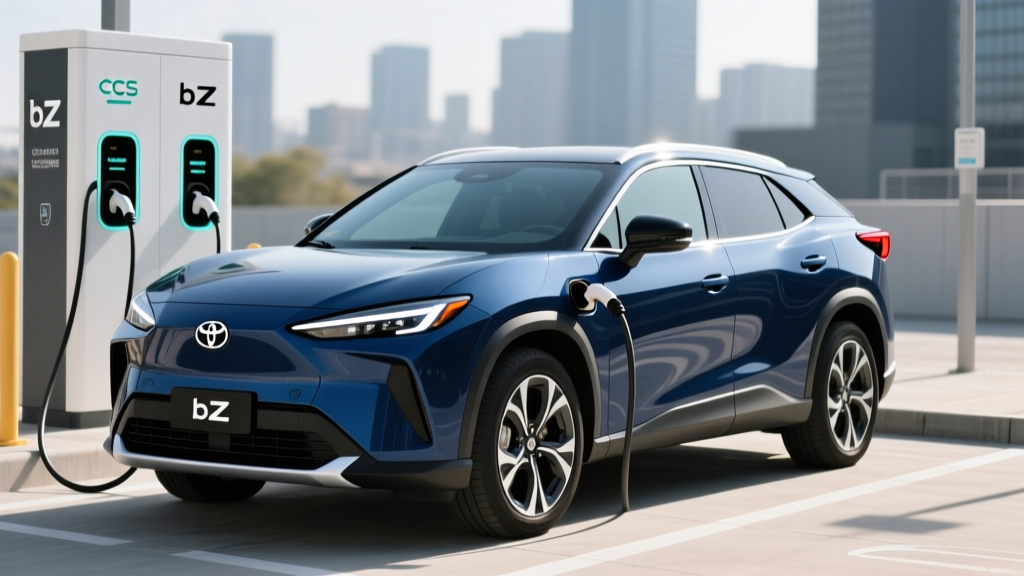
Toyota's first dedicated battery-electric vehicle has matured. After a rocky 2023 launch marred by wheel-detach recalls and underwhelming range, the 2026 Toyota bZ4X arrives with meaningful battery and charging improvements that push it closer to the mainstream EV pack. It still isn't the longest-range or fastest-charging crossover in its class, but for Toyota loyalists ready to go electric without leaving the dealership ecosystem they trust, the 2026 bZ4X makes a stronger case than ever.
We've driven, charged, and analyzed the 2026 bZ4X across both FWD and AWD trims. Below is everything you need to decide whether this compact electric SUV fits your daily commute, road-trip habits, and budget — with exact numbers, not marketing gloss.
2026 bZ4X Quick Verdict
The 2026 Toyota bZ4X is a comfortable, well-built compact electric crossover that prioritizes ride quality and Toyota Safety Sense reliability over blistering performance or class-leading range. Its sweet spot is the suburban commuter who charges at home most nights and takes occasional road trips under 200 miles between stops. If you need 300+ miles of range or sub-20-minute DC fast charging, look at the Hyundai Ioniq 5 or Tesla Model Y instead. If you value Toyota's dealer network, strong warranty, and a smooth, quiet ride, the bZ4X deserves a serious test drive.
| Spec | XLE FWD | XLE AWD | Limited AWD |
|---|---|---|---|
| EPA Range | 252 mi | 228 mi | 222 mi |
| Battery (usable) | 71.4 kWh (NMC lithium-ion) | ||
| Motor / HP / Torque | 201 hp / 196 lb-ft (front) | 214 hp / 248 lb-ft (dual-motor) | |
| 0-60 mph | 7.1 sec | 5.8 sec | |
| Max DC Fast Charge | 150 kW (peak) | ||
| 10-80% DCFC Time | ~32 minutes | ||
| Level 2 Home Charge (7.2 kW) | ~9.5 hours (10-100%); ~26 mi/hr | ||
| EPA Efficiency (Combined) | 119 MPGe (28 kWh/100mi) | 112 MPGe (30 kWh/100mi) | 110 MPGe (31 kWh/100mi) |
| Cargo (rear seats up / folded) | 27.7 / 56.9 cu ft | ||
| Base MSRP | $38,465 | $40,465 | $44,800 |
| Battery / Powertrain Warranty | 8 yr / 100,000 mi (10 yr in CARB states) | ||
Range and Efficiency: EPA vs. Real-World
The 2026 bZ4X carries a 71.4 kWh usable lithium-ion battery pack using NMC (nickel-manganese-cobalt) chemistry. Toyota has not adopted LFP (lithium iron phosphate) for this model, meaning you get higher energy density but should follow the 80% daily charge guideline to maximize long-term battery health.
Real-World Expectation: In mixed suburban/highway driving at 65-75°F, expect roughly 220-240 miles from the FWD model and 200-215 miles from AWD trims. On sustained 75 mph highway runs, plan for 190-210 miles (FWD) or 175-195 miles (AWD) before needing a charger.
Cold-Weather Impact: At 20-30°F without preconditioning, range drops 25-35%. With cabin preconditioning active and the available radiant seat/steering wheel heaters engaged, you can recover some of that loss, but plan for 155-180 miles in freezing conditions.
Efficiency on the FWD model is a respectable 119 MPGe combined (28 kWh per 100 miles), which translates to roughly 3.5 miles per kWh. The AWD models drop to 112 MPGe (30 kWh/100mi). These figures place the bZ4X mid-pack — behind the Hyundai Ioniq 5 RWD (132 MPGe) but comparable to the Subaru Solterra (104 MPGe) and Volkswagen ID.4 (115 MPGe).
According to EPA data at fueleconomy.gov, the bZ4X FWD's 252-mile rating is a meaningful improvement over the outgoing model year, though Toyota achieved this partly through software optimization and reduced parasitic losses rather than a larger pack.
Charging Speed: Home and DC Fast Charging
Charging remains the bZ4X's most debated spec. Toyota equips every 2026 bZ4X with a 150 kW peak DC fast-charging capability and a 7.2 kW onboard AC charger for Level 2 home charging.
| Charge Level | Power | Speed (approx.) | Notes |
|---|---|---|---|
| Level 1 (120V household) | 1.2 kW | ~4 mi/hr | Emergency/trickle only; 60+ hours for full charge |
| Level 2 (240V, 32A) | 7.2 kW | ~26 mi/hr | Full charge in ~9.5 hours; ideal overnight |
| DC Fast Charge (CCS) | 150 kW peak | 10-80% in ~32 min | Peak sustained only to ~40% SoC; tapers significantly above 60% |
Here's the charging-curve reality that spec sheets don't show: the bZ4X hits its 150 kW peak only briefly between roughly 10-25% State of Charge. From 25-60%, it sustains approximately 100-120 kW. Above 60%, the curve tapers sharply, dropping below 50 kW by 80%. This means a 10-80% session takes about 32 minutes at a properly rated 150+ kW charger, but a 20-90% session (which many road-trippers prefer) stretches closer to 45-50 minutes.
For comparison, the Hyundai Ioniq 5 with its 800V architecture achieves 10-80% in roughly 18 minutes at a 350 kW charger, and the Tesla Model Y at a V3 Supercharger manages 10-80% in about 25 minutes. The bZ4X's charging speed is adequate but not competitive with the class leaders.
Home charging setup: A 7.2 kW Level 2 charger on a 40-amp dedicated circuit will replenish the bZ4X overnight in about 9.5 hours from near-empty. Most owners arriving home with 30-50% remaining will wake up fully charged in 5-7 hours. Installation costs for a Level 2 home charger typically range from $800-$2,500 depending on panel capacity and run length — budget for a licensed electrician to assess your 200-amp panel before purchasing equipment.
Performance and Driving Impressions
The FWD bZ4X uses a single front-mounted motor producing 201 horsepower and 196 lb-ft of torque, achieving a 0-60 mph time of 7.1 seconds. That's adequate for highway merging but not thrilling. The dual-motor AWD variant bumps output to 214 hp and 248 lb-ft, cutting the 0-60 time to 5.8 seconds — noticeably quicker off the line and more confident in wet or snowy conditions.
Where the bZ4X genuinely shines is ride quality. Toyota tuned the suspension for comfort over sportiness, and the result is a quiet, compliant crossover that absorbs potholes and expansion joints with minimal drama. Steering is light and precise if not particularly communicative. Regenerative braking offers multiple levels selectable via paddle shifters, though it doesn't quite achieve true one-pedal driving — you'll still use the friction brake for final stops.
The AWD system uses independent front and rear motors (each roughly 107 hp) and can redistribute torque front-to-rear in milliseconds. It's not an off-roader, but it handles gravel roads, rain, and moderate snow competently. Ground clearance stands at 8.1 inches, which is generous for the class.
Interior, Tech, and Cargo Space
Step inside and you'll find a cabin that feels distinctly Toyota — solid build quality, logical controls, and materials appropriate for the price point. The 12.3-inch touchscreen (standard on all trims) runs Toyota's latest infotainment interface with wireless Apple CarPlay and Android Auto, native navigation, and cloud-connected voice recognition.
Notable tech features include:
- Toyota Safety Sense 3.0: Pre-collision system with pedestrian detection, full-speed dynamic radar cruise control, lane departure alert with steering assist, lane tracing assist, and road sign assist. This is a robust SAE Level 2 driver-assistance suite — it requires continuous driver attention and hands on the wheel at all times.
- Digital rearview mirror (Limited trim): Camera-based mirror useful when cargo blocks the rear window.
- Radiant heaters (front seats, Limited): Infrared panels in the lower dash that warm occupants directly, reducing HVAC energy draw and preserving range in cold weather.
- Vehicle-to-load (V2L): A 120V outlet in the cargo area can power small appliances (up to 1,500W), useful for camping or emergency backup.
- Panoramic fixed-glass roof (Limited): Opens up the cabin, though there's no retractable shade — a complaint in hot climates.
Cargo volume measures 27.7 cubic feet behind the rear seats and 56.9 cubic feet with the 60/40 split rear seats folded. That's competitive with the Subaru Solterra (27.8/57.0 cu ft) but trails the Tesla Model Y (30.2/72.1 cu ft) and Hyundai Ioniq 5 (27.2/59.3 cu ft). There is no front trunk (frunk), which is a missed opportunity given the e-TNGA platform's packaging potential.
Rear-seat legroom is a generous 39.1 inches, and headroom is adequate even with the glass roof. Three adults can fit across the back seat for shorter trips, though the center position is narrow.
Pricing, Trims, and Federal Tax Credit
The 2026 bZ4X is offered in three configurations:
- XLE FWD: $38,465 (plus $1,395 destination)
- XLE AWD: $40,465 (plus destination)
- Limited AWD: $44,800 (plus destination)
An as-tested Limited AWD with premium paint and all-weather floor mats came to approximately $47,100 out the door before incentives.
| Trim | MSRP + Dest. | Est. Federal Credit (§30D) | Effective Price |
|---|---|---|---|
| XLE FWD | $39,860 | Up to $7,500* | ~$32,360 |
| XLE AWD | $41,860 | Up to $7,500* | ~$34,360 |
| Limited AWD | $46,195 | Up to $7,500* | ~$38,695 |
*Federal tax credit eligibility under IRS §30D depends on buyer income caps ($150K single / $300K joint AGI), vehicle MSRP caps ($80K for SUVs — bZ4X qualifies), and battery component/critical mineral sourcing requirements that change annually. The credit can now be transferred to the dealer at point of sale as an upfront discount. Always verify current-year eligibility at irs.gov and consult a tax professional.
For 2026, the bZ4X's battery sourcing compliance with §30D critical-mineral and foreign-entity-of-concern (FEOC) requirements has been a moving target. Toyota has worked to shift supply chains, and the bZ4X has qualified for the full $7,500 credit for eligible buyers in recent model years — but always confirm at purchase, as rules tighten incrementally each January.
Pros, Cons, and Competitor Comparison
- Smooth, quiet ride quality above its price class
- Strong Toyota Safety Sense 3.0 suite standard on all trims
- Generous 8-yr/100,000-mi battery warranty (10 yr in CARB states)
- AWD model handles inclement weather confidently
- V2L capability for camping/emergency use
- Toyota dealer network for service and warranty claims
- Radiant heaters reduce cold-weather range loss (Limited)
- DC fast charging (150 kW peak, ~32 min 10-80%) lags rivals
- No front trunk (frunk)
- Limited cargo space vs. Model Y and Ioniq 5
- Glass roof has no retractable shade
- AWD range (222-228 mi) feels modest for 2026
- Infotainment learning curve; no physical volume knob
Against key competitors, the bZ4X occupies a specific niche. The Hyundai Ioniq 5 offers faster charging (800V architecture), more range (up to 303 mi), and a frunk — but at a slightly higher starting price. The Tesla Model Y dominates on Supercharger network access, cargo volume, and over-the-air updates, though its ride is firmer and Toyota's dealer experience may feel more familiar. The Subaru Solterra, which shares the e-TNGA platform, is nearly identical mechanically but tuned for slightly more off-road capability with X-MODE and 8.3 inches of ground clearance.
Safety ratings bolster the Toyota's case: the bZ4X earned a Top Safety Pick+ from IIHS in prior model years with good ratings across all crashworthiness tests, and the 2026 carries forward the same structure. Check NHTSA.gov for the latest 5-star safety ratings as they are published.
Who Should Buy the 2026 Toyota bZ4X?
- You're a Toyota loyalist who wants an EV from a brand and dealer network you already trust
- Your daily commute is under 80 miles round-trip and you can charge at home
- You live in a region with cold winters and value the radiant heater system and standard AWD availability
- Ride comfort and quietness matter more than sporty handling
- You want a strong battery warranty and Toyota's long-term reliability reputation
- You frequently road-trip more than 250 miles and need the fastest possible DC charging
- You need maximum cargo space (Model Y) or a frunk (Ioniq 5, EV6)
- You want 300+ miles of EPA range in a compact SUV
- You prefer one-pedal driving with aggressive regen (bZ4X doesn't fully stop the car via regen alone)
Frequently Asked Questions
What is the real-world range of the 2026 Toyota bZ4X?
The EPA rates the FWD model at 252 miles and AWD models at 222-228 miles. In real-world mixed driving, expect 220-240 miles (FWD) or 200-215 miles (AWD) in moderate temperatures. Highway-only driving at 75 mph reduces this to roughly 190-210 miles (FWD). In freezing weather, plan for a 25-35% reduction unless you precondition the battery.
How fast does the 2026 bZ4X charge at home and on the road?
At home on a Level 2 (240V, 7.2 kW) charger, you'll add about 26 miles of range per hour, with a full charge taking roughly 9.5 hours. On DC fast chargers, the bZ4X peaks at 150 kW and achieves a 10-80% charge in approximately 32 minutes, though the charge curve tapers substantially above 60% SoC.
Does the 2026 Toyota bZ4X qualify for the $7,500 federal EV tax credit?
The bZ4X falls under the $80,000 MSRP cap for SUVs and has qualified for the full $7,500 credit for eligible buyers in recent model years. However, eligibility depends on your adjusted gross income (under $150K single / $300K joint), battery component sourcing rules, and critical mineral requirements that tighten each year. The credit can be applied at point of sale as a dealer discount. Verify current eligibility at irs.gov before purchase.
Is the bZ4X worth buying over the Hyundai Ioniq 5 or Tesla Model Y?
If you prioritize ride comfort, Toyota's dealer network, and a strong warranty, the bZ4X is a solid choice. If you need faster DC charging, more range, a frunk, or maximum cargo space, the Ioniq 5 or Model Y are more capable alternatives. The bZ4X's advantage is familiarity and trust in the Toyota brand for long-term ownership.
What is the battery warranty on the 2026 bZ4X?
Toyota covers the bZ4X battery and electric powertrain for 8 years or 100,000 miles, whichever comes first. In CARB-emissions states (including California, New York, Oregon, Washington, and others), that extends to 10 years or 150,000 miles. The warranty guarantees the battery will retain at least 70% of its original capacity during the coverage period.
Does the 2026 bZ4X have a frunk (front trunk)?
No. The bZ4X does not offer a front trunk. All cargo must go in the rear cargo area (27.7 cu ft behind rear seats, 56.9 cu ft with seats folded).
Is Toyota Safety Sense on the bZ4X a self-driving system?
No. Toyota Safety Sense 3.0 is an SAE Level 2 driver-assistance system. It provides adaptive cruise control, lane centering, and automatic emergency braking, but the driver must remain fully engaged with hands on the wheel and eyes on the road at all times. It is not an autonomous driving system.