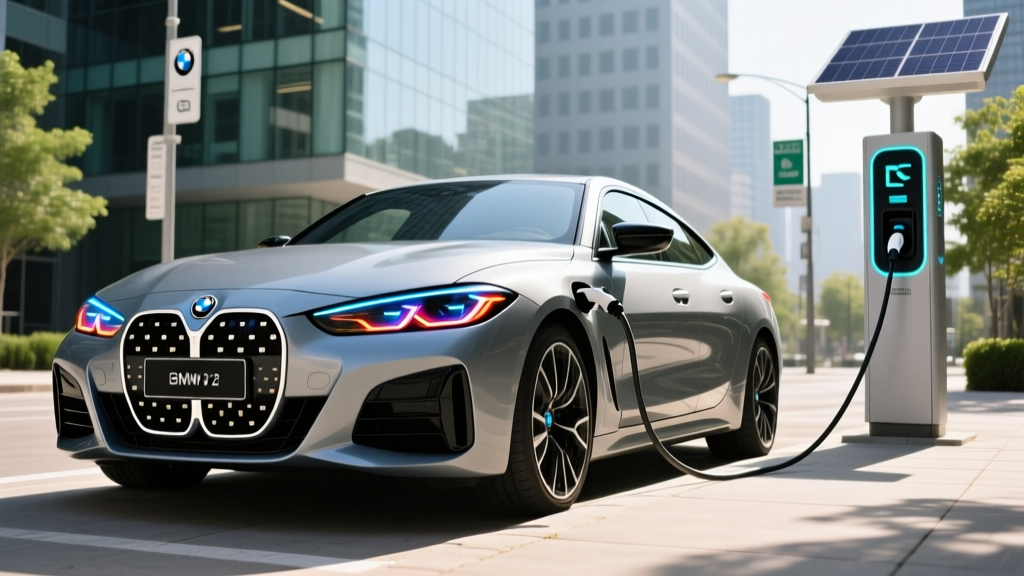
The BMW i4 has always occupied a specific niche: a luxury electric sport sedan that looks and drives like a conventional BMW, minus the tailpipe. For 2026, the i4 Gran Coupe receives a meaningful refresh with updated styling, a revised powertrain lineup, and the latest iDrive 8.5 infotainment system. But with competitors like the Tesla Model 3 Performance, Hyundai Ioniq 6, and Mercedes-Benz CLA EV pressing hard on price, range, and charging speed, does the 2026 BMW i4 Gran Coupe still justify its premium?
We've analyzed the official EPA figures, BMW's spec sheets, and real-world driving data to give you everything you need to decide — exact range, charging curves, trim pricing, and tax credit eligibility. No fluff, just numbers.
Quick Verdict: Who Should Buy the 2026 BMW i4?
The 2026 BMW i4 Gran Coupe is best for drivers who want a luxury electric daily driver with genuine sport-sedan dynamics, a premium interior, and fast DC charging — without the crossover styling that dominates today's EV market. It suits commuters and road trippers who have access to home Level 2 charging and want something more refined than a Tesla but less ostentatious than a Porsche Taycan.
It is not the right pick if you need maximum rear-seat headroom (the sloping roofline cuts into it), if you're chasing the absolute lowest cost-per-mile EV, or if you need the longest possible EPA range under $55,000.
2026 BMW i4 Gran Coupe: Full Spec Table
| Specification | eDrive40 | xDrive40 | M50 |
|---|---|---|---|
| Drivetrain | RWD (single motor) | AWD (dual motor) | AWD (dual motor) |
| Horsepower | 335 hp | 469 hp | 593 hp |
| 0-60 mph | 5.5 sec | 4.4 sec | 3.7 sec |
| Battery (usable) | 83.9 kWh (NMC) | 83.9 kWh (NMC) | 83.9 kWh (NMC) |
| EPA Range | 307 mi | 279 mi | 269 mi |
| MPGe (combined) | 109 MPGe | 98 MPGe | 93 MPGe |
| Efficiency (kWh/100 mi) | 29 kWh/100 mi | 33 kWh/100 mi | 35 kWh/100 mi |
| Max DC Fast Charge | 205 kW | 205 kW | 205 kW |
| 10-80% DC Charge Time | ~31 min | ~31 min | ~31 min |
| Level 2 Charge Rate | 11 kW (AC) | 11 kW (AC) | 11 kW (AC) |
| Base MSRP | $52,200 | $58,200 | $69,900 |
Range, Efficiency & Real-World Expectations
EPA Estimated: 307 miles (eDrive40 with 18" wheels)
Real-World Expectation: 250–275 miles at sustained highway speeds (70-80 mph); 215–240 miles in cold weather (below 32°F) with cabin heating
Best Case: 295–310 miles in mild conditions, mixed city/suburban driving with regenerative braking engaged
The i4's 83.9 kWh usable battery pack uses NMC (nickel-manganese-cobalt) lithium-ion cells supplied by CATL and Samsung SDI. NMC chemistry offers higher energy density than LFP, which is why BMW can package this much capacity into the CLAR platform's underfloor without compromising the cabin.
Efficiency for the eDrive40 is rated at 29 kWh per 100 miles — respectable for a 4,700-lb luxury sedan but trailing the Hyundai Ioniq 6's 24 kWh/100 mi. The dual-motor xDrive40 and M50 variants consume more energy due to added weight and power output, dropping range to 279 and 269 miles respectively.
The range penalty from the M50's performance tuning is real: larger wheels (19" or 20" optional), stickier tires, and more aggressive thermal management under load all reduce highway range. On a 75-mph highway loop in moderate temperatures, expect roughly 235–250 miles before needing to charge the M50. Source: fueleconomy.gov.
Charging Speed: DC Fast & Home Level 2
| Charging Level | Power | Miles Added Per Hour | Notes |
|---|---|---|---|
| Level 1 (120V) | 1.4 kW | ~4 mi/hr | Emergency/trickle only |
| Level 2 (240V home) | 11 kW | ~35 mi/hr | Full charge in ~8.5 hours |
| DC Fast Charge | Peak 205 kW | ~195 mi in 10 min | 10-80% in ~31 min; tapers above 80% |
The i4 uses the CCS1 connector for DC fast charging in North America. BMW quotes a peak charge rate of 205 kW on a capable 350 kW station. However, as with all EVs, the charge curve is not flat. The i4 sustains roughly 180–200 kW from 10% to about 45% state of charge, then gradually tapers to ~100 kW by 70%, and drops further to ~50 kW above 85%. This is normal NMC behavior driven by cell-temperature and voltage management.
The 10-80% time of approximately 31 minutes is competitive but not class-leading. The Hyundai Ioniq 6 (800V architecture) achieves 10-80% in roughly 18 minutes at a 350 kW charger, and the Tesla Model 3 Highland at a V4 Supercharger does it in about 20–22 minutes. If DC charging speed is your top priority, the i4 trails these rivals.
For home charging, the 11 kW onboard charger means a full 0-100% replenishment takes about 8.5 hours on a 48-amp Level 2 circuit. Most owners charging overnight from 20% will wake to a full battery with time to spare. A 60-amp dedicated circuit with a BMW Wallbox or quality third-party unit (ChargePoint Home Flex, Emporia VUE) is recommended; installation typically runs $800–$2,000 depending on panel proximity.
Performance, Drivetrain & Driving Dynamics
The eDrive40's single rear motor produces 335 hp and delivers a 5.5-second 0-60 mph time — brisk enough for daily merging and passing. More importantly, the RWD layout preserves the balanced steering feel BMW is known for. The instant torque delivery (317 lb-ft from 0 RPM) makes it feel quicker in urban driving than the stopwatch suggests.
Step up to the xDrive40 and dual-motor AWD adds traction, stability, and a 4.4-second 0-60. The M50 is the performance flagship: 593 hp, 586 lb-ft, and a 3.7-second sprint. The M50 also includes adaptive M suspension, M Sport brakes, and a more aggressive regen profile that enables near one-pedal driving in its strongest setting.
All trims feature BMW's fifth-generation eDrive technology with a heat pump as standard equipment — critical for preserving range in cold climates. The heat pump scavenges waste heat from the powertrain and ambient air, reducing the cabin-heating energy draw that plagues EVs without one. In sub-freezing testing, i4 models with heat pumps show roughly 15–20% less range loss compared to EVs relying solely on resistive heating.
Interior, Technology & Cargo Space
The 2026 i4 runs BMW's iDrive 8.5 system on a curved display that merges a 12.3-inch digital instrument cluster with a 14.9-inch central touchscreen. The interface is responsive and supports wireless Apple CarPlay and Android Auto, over-the-air updates, and BMW's latest voice assistant. A head-up display with augmented-reality navigation overlays is available on higher trims.
Driver assistance comes via BMW's Driving Assistant Professional, which includes adaptive cruise control with stop-and-go, lane centering, and automatic emergency braking. This is an SAE Level 2 system — the driver must remain attentive and keep hands available. It is not autonomous driving. The Highway Assistant feature (on equipped models) allows hands-off driving up to 85 mph on divided highways, but requires confirmed driver engagement via eye monitoring.
BMW's Driving Assistant Professional is a Level 2 driver-assist system. The driver is responsible for steering, braking, and situational awareness at all times. This is not "self-driving" — it is an advanced cruise and lane-keeping aid.
Cargo & Passenger Dimensions:
- Rear cargo (trunk): 16.6 cu ft (47.0 cu ft with rear seats folded)
- Front headroom: 40.0 in
- Rear headroom: 37.6 in (the Gran Coupe roofline costs ~1.5 in vs. the 3 Series sedan)
- Front legroom: 41.5 in
- Rear legroom: 34.5 in
The rear seat is the i4's most common complaint. The 34.5 inches of legroom is tight for adults over 6 feet, and the sloping roofline reduces headroom noticeably compared to the BMW iX or i5. Two adults fit comfortably; three across is a squeeze. If rear passenger comfort is a priority, the i5 or Tesla Model S offer meaningfully more space.
Pricing, Trims & Federal Tax Credit Eligibility
| Trim | Base MSRP | Federal Tax Credit (§30D) | Effective Price (if eligible) |
|---|---|---|---|
| eDrive40 | $52,200 | Up to $7,500* | ~$44,700 |
| xDrive40 | $58,200 | Up to $7,500* | ~$50,700 |
| M50 | $69,900 | Up to $7,500* | ~$62,400 |
*Destination fee of $995 not included. As-tested M50 with Premium Package, 20" wheels, and Driving Assistant Professional typically reaches $76,000–$78,000 before incentives.
- MSRP Cap: Sedans must be ≤$55,000. The eDrive40 ($52,200) qualifies; xDrive40 ($58,200) and M50 ($69,900) exceed the cap and are not eligible.
- Buyer Income Limits (MAGI): $150,000 single / $225,000 head of household / $300,000 joint filers
- Battery Sourcing: Critical minerals and battery components must meet phased-in domestic/free-trade sourcing thresholds per IRS rules
- Point-of-Sale Transfer: Eligible buyers can apply the credit at purchase, reducing the down payment directly
- Final Assembly: Vehicle must undergo final assembly in North America — verify VIN at fueleconomy.gov
Rules per IRS.gov. Consult a tax professional — eligibility depends on your specific situation and can change with regulatory updates.
The MSRP cap is the critical detail here. BMW classifies the i4 as a sedan, which means the $55,000 MSRP ceiling applies. Only the base eDrive40 at $52,200 clears this threshold. Adding even one major option package can push the MSRP above $55,000 and disqualify the vehicle. Always confirm the exact MSRP on the window sticker and verify the VIN's eligibility before committing.
Battery Warranty & Long-Term Ownership
BMW covers the i4's high-voltage battery for 8 years or 100,000 miles, whichever comes first, against defects and capacity loss below 70% of original capacity. This is the industry-standard warranty mandated by CARB-emissions states and matches Tesla, Hyundai, and Mercedes-Benz.
NMC batteries in the i4's generation have shown degradation of roughly 5–8% over the first 100,000 miles in fleet data from European i4 models (which have been on sale since 2021). This means an i4 eDrive40 starting at 307 miles EPA might deliver roughly 285–292 miles at the 100,000-mile mark — well within BMW's 70% warranty threshold (which would be 215 miles).
For longevity, BMW recommends keeping the state of charge between 20% and 80% for daily use and limiting 100% charges to trip preparation. The i4's battery management system includes active liquid cooling and heating, which helps mitigate degradation from DC fast charging and extreme temperatures.
Pros, Cons & How It Compares
✅ Pros
- Excellent ride quality and steering feel — drives like a true BMW sport sedan
- Fast 205 kW DC charging with practical 31-min 10-80% time
- Standard heat pump preserves cold-weather range
- Premium interior with excellent material quality and iDrive 8.5
- Strong 0-60 across all trims; M50 is genuinely quick
- Eligible for $7,500 tax credit on base eDrive40 trim
❌ Cons
- Tight rear seat — headroom and legroom trail rivals like Model S and i5
- Only base eDrive40 qualifies for federal tax credit (MSRP cap)
- Efficiency (29 kWh/100 mi) trails Ioniq 6 and Model 3
- CCS charging slower than 800V rivals (Ioniq 6, Taycan)
- Options quickly push price past $60,000 on mid trims
- No front trunk (frunk) — CLAR platform conversion limits storage
Decision Framework: 2026 BMW i4 vs. Key Competitors
Choose the BMW i4 eDrive40 if: You want a luxury sport sedan with premium interior quality, engaging driving dynamics, and a proven brand — and you can charge at home. The eDrive40 at ~$44,700 after the tax credit is a compelling luxury EV value.
Choose the Tesla Model 3 Performance if: You prioritize Supercharger network access, maximum efficiency, and a lower starting price. The Model 3 is lighter, more efficient, and has more rear headroom, but the interior is spartan compared to BMW.
Choose the Hyundai Ioniq 6 if: DC fast-charging speed is your top priority (18-minute 10-80%) and you want the best efficiency in the segment. The Ioniq 6's interior feels less premium, but its 800V architecture is a genuine road-trip advantage.
Choose the BMW i5 if: You need more rear-seat space and cargo room, and can stretch the budget. The i5 is a full class larger and starts around $67,000.
Frequently Asked Questions
What is the real-world range of the 2026 BMW i4 Gran Coupe?
The EPA rates the eDrive40 at 307 miles. In real-world highway driving at 70-80 mph, expect 250–275 miles. In cold weather below freezing, plan for 215–240 miles due to battery and cabin heating demands. The xDrive40 and M50 deliver less range due to AWD weight and performance tuning.
How fast does the 2026 BMW i4 charge at home and on DC fast chargers?
On a DC fast charger, the i4 peaks at 205 kW and charges from 10-80% in approximately 31 minutes, adding roughly 195 miles of range in the first 10 minutes. At home on a Level 2 charger (240V, 48A), the 11 kW onboard charger adds about 35 miles per hour, with a full charge taking around 8.5 hours.
Does the 2026 BMW i4 qualify for the $7,500 federal EV tax credit?
Only the base eDrive40 at $52,200 MSRP qualifies, since the IRS §30D sedan cap is $55,000. The xDrive40 ($58,200) and M50 ($69,900) exceed this cap and are ineligible. Additionally, buyer income limits, battery sourcing requirements, and North American final assembly must all be satisfied. Verify your VIN at fueleconomy.gov and consult a tax professional.
Is the 2026 BMW i4 worth buying over the Tesla Model 3 or Hyundai Ioniq 6?
The i4 wins on interior quality, ride comfort, and driving engagement. The Model 3 wins on efficiency, Supercharger access, and price. The Ioniq 6 wins on DC charging speed and MPGe. If luxury feel and BMW driving dynamics matter most to you, the i4 is worth the premium. If you prioritize lowest cost-per-mile or fastest road-trip charging, look at the alternatives.
What is the battery warranty on the 2026 BMW i4?
BMW provides an 8-year/100,000-mile warranty on the high-voltage battery, covering defects and capacity loss below 70% of original capacity. The general vehicle warranty is 4 years/50,000 miles. Real-world NMC degradation data from early i4 models suggests roughly 5–8% capacity loss over 100,000 miles with normal use.
Does the i4 have a frunk (front trunk)?
No. Because the i4 is built on BMW's CLAR platform (shared with ICE 4 Series models), there is no front trunk. The 16.6 cu ft rear trunk is the sole cargo area, expanding to 47.0 cu ft with the rear seats folded. This is a notable disadvantage versus native EV platforms like Tesla's Model 3 or Hyundai's Ioniq 6, which offer modest frunk storage.