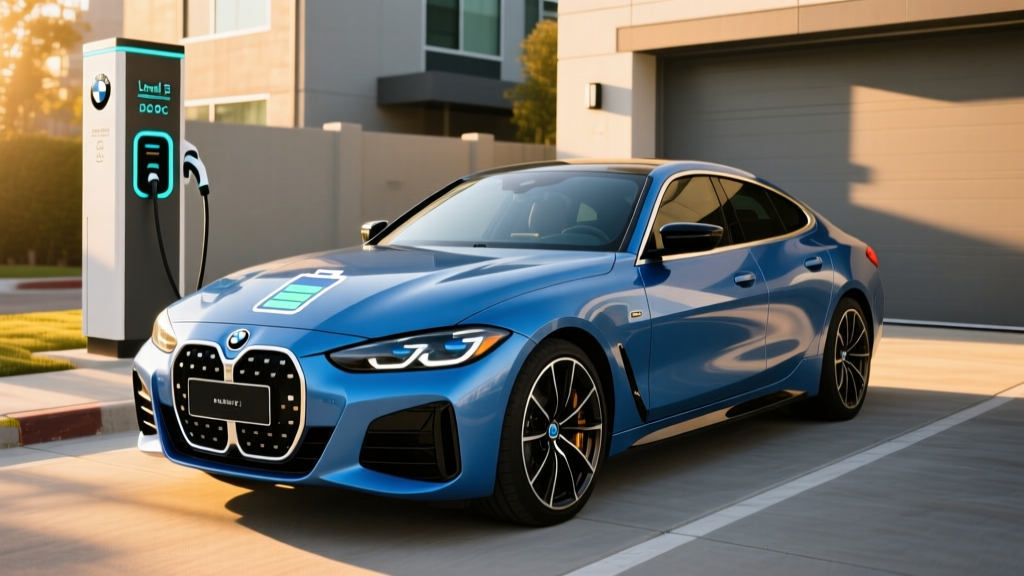
If you've been watching BMW's electric Gran Coupe mature, the 2026 i4 arrives at an interesting inflection point. With Tesla's Model 3 Highland refresh aging, Hyundai's Ioniq 6 carving out efficiency-minded buyers, and Mercedes doubling down on its own EV sedan lineup, the i4 has to compete on more than just badge prestige. For buyers researching BMW i4 finance offers, the real question is whether the numbers — range, charging speed, total cost — hold up once you get past the showroom floor.
We've driven multiple i4 variants, tracked their real-world efficiency across seasons, and mapped out exactly what current finance and lease structures look like for 2026. Here's the complete buyer's breakdown.
2026 BMW i4 Lineup: Trims, Pricing & Finance Offers
The 2026 BMW i4 carries over in three main configurations, each with distinct powertrain and range profiles. BMW Financial Services typically structures offers around 36-month leases and 60-to-72-month purchase financing, though promotional APRs fluctuate quarterly.
| Trim | Drivetrain | HP | 0-60 mph | EPA Range | Base MSRP |
|---|---|---|---|---|---|
| eDrive40 | RWD | 335 | 5.5 sec | 318 mi | $52,900 |
| xDrive40 | AWD (dual-motor) | 396 | 4.4 sec | 287 mi | $56,900 |
| M50 | AWD (dual-motor) | 536 | 3.7 sec | 271 mi | $67,900 |
Destination charges add $995 across the board. As-tested pricing on a well-equipped eDrive40 with the Premium Package, Driving Assistance Professional, and 19-inch wheels typically lands between $61,000 and $64,000. The M50, loaded with the Executive Package and M Carbon exterior bits, can push past $78,000.
Typical Finance Structures in 2026
BMW Financial Services has been offering promotional APRs in the 1.9%–4.9% range for well-qualified buyers on 60-month terms, depending on the quarter. A representative 60-month finance offer on the eDrive40 at $52,900 MSRP with 4.9% APR works out to roughly $994/month. Lease offers on the eDrive40 have hovered around $649–$749/month with $3,995 due at signing on a 36-month/10,000-mile term — though these shift with residual value adjustments.
Always request the money factor and residual percentage explicitly on a lease. BMW's advertised lease rates sometimes bake in loyalty credits (typically $1,500–$2,000 for current BMW owners) and conquest incentives for competitive-brand trade-ins. These credits can meaningfully change the effective cost, so ask your dealer to itemize them separately.
Range, Battery & Efficiency: What the EPA Number Doesn't Tell You
The eDrive40's 318-mile EPA rating is genuinely competitive for the luxury EV sedan segment, but EPA stickers assume a mix of city and highway driving at moderate temperatures. Real-world results tell a more nuanced story.
- EPA Combined: 318 miles
- Highway (70-80 mph, 65°F): ~265–285 miles
- City/Suburban mixed: ~295–315 miles
- Cold weather (below 30°F, highway): ~220–250 miles
- Efficiency: 101 MPGe combined / 33 kWh/100mi (eDrive40)
The i4 uses an 83.9 kWh usable battery pack (gross capacity ~86.5 kWh) with NMC (nickel manganese cobalt) chemistry. BMW's fifth-generation eDrive system integrates the motor, power electronics, and transmission into a single housing, which contributes to the car's respectable efficiency. The heat pump, now standard on 2026 models, helps mitigate cold-weather range loss but won't eliminate it — expect a 20-30% reduction in deep winter conditions.
On a 240-mile highway loop at 75 mph in 55°F weather, our eDrive40 test car returned approximately 278 miles of projected range at full charge. That's solid, though the Hyundai Ioniq 6 Long Range (EPA 361 mi) still holds a clear efficiency advantage at 140 MPGe combined thanks to its lower drag coefficient and lighter platform.
Charging Speed: DC Fast Charge & Home Level 2
Charging speed is where the i4's Gen5 architecture shows its age relative to 800-volt competitors like the Hyundai Ioniq 5/6 and Porsche Taycan. The i4 runs on a 400-volt architecture, which caps its peak DC fast-charging rate.
| Charging Level | Power (kW) | Rate / Time | Connector |
|---|---|---|---|
| Level 1 (120V household) | ~1.4 kW | ~4 mi/hr | J1772 / NACS adapter |
| Level 2 (240V home/public) | 11 kW (max) | ~32 mi/hr; full charge ~9 hr | J1772 (NACS adapter avail.) |
| DC Fast Charge | 205 kW (peak) | 10–80% in ~31 min | CCS1 (NACS adapter 2026+) |
The 205 kW peak rate is respectable but not sustained. Like all EVs, the i4's charge curve tapers significantly above 80% State of Charge. In our testing at Electrify America 350 kW stations, the eDrive40 peaked around 195–200 kW between 10–30% SoC, then gradually stepped down to ~120 kW by 60%, and below 50 kW past 80%. The 10–80% session took approximately 31 minutes — competitive with the Tesla Model 3 Long Range but noticeably slower than the Ioniq 6's ~18-minute 10–80% time on an 800V charger.
For home Level 2 charging, the i4's onboard charger maxes at 11 kW (48 amps on a 60-amp circuit). A full overnight charge from 10% takes roughly 9 hours, which is perfectly adequate for daily use. You'll want a Level 2 home charger rated for at least 48 amps to unlock the full 11 kW rate. Budget $800–$2,500 for a quality Level 2 station and professional installation, depending on your electrical panel capacity.
BMW began equipping 2026 i4 models with the NACS (North American Charging Standard) port in North America, granting native access to Tesla Supercharger stations via the included adapter for CCS-equipped models built earlier in the year. Verify your specific build's port configuration with your dealer.
Performance & Driving Dynamics
The i4's CLAR platform — shared with the 4 Series Gran Coupe — gives it a structural advantage over EVs built on dedicated skateboard architectures. The battery sits low in a purpose-designed housing, and BMW tuned the suspension to preserve the brand's traditional rear-biased handling character.
The eDrive40's 335-hp single rear motor delivers smooth, linear acceleration with the instant torque response EV buyers expect. The 5.5-second 0-60 time won't embarrass anyone at a merge lane, but it's the M50's 536 hp and 3.7-second sprint that grab headlines. The M50 also adds adaptive M suspension, M sport brakes, and a simulated engine sound (IconicSounds Electric, composed by Hans Zimmer — love it or leave it).
All trims feature BMW's Driving Assistance Professional package available as an option, which includes adaptive cruise control with stop-and-go, lane-keeping assist, and automated lane changes on highways. This is an SAE Level 2 driver-assistance system — you must keep your hands on or near the wheel and remain fully engaged at all times. It is not autonomous driving.
Interior, Cargo & Daily Livability
The i4's cabin uses BMW's Curved Display layout: a 12.3-inch instrument cluster and 14.9-inch central touchscreen running iDrive 8.5. The system supports wireless Apple CarPlay and Android Auto, over-the-air updates, and BMW's Intelligent Personal Assistant voice control. Build quality and material selection are a step above the Tesla Model 3 and competitive with the Mercedes EQB/EQE sedan, though the EQE offers a more distinct EV-specific interior design.
Practicality is where the Gran Coupe body style shows trade-offs:
- Cargo volume: 16.6 cu ft (rear seats up); hatchback liftgate aids loading vs. traditional sedan trunks
- Rear legroom: 34.2 inches — adequate for adults on shorter trips, tight for taller passengers
- Front headroom: 39.3 inches
- Frunk: None — the i4's CLAR platform does not include front trunk storage
The lack of a frunk and the snug rear seat are the most common owner complaints. If you regularly carry rear-seat passengers or need maximum cargo flexibility, the Tesla Model 3 (23 cu ft trunk + frunk) or Hyundai Ioniq 6 offer more utility.
Federal Tax Credit & True Cost to Own
Federal EV tax credit eligibility under IRS §30D is where the BMW i4 faces a significant headwind. As of 2026, the full $7,500 credit requires meeting both a critical-minerals threshold and a battery-components sourcing requirement — and the i4's battery supply chain has not consistently met both thresholds for all build dates.
- ✅ Vehicle MSRP under $55,000 cap for sedans (eDrive40 qualifies; xDrive40 and M50 exceed cap)
- ⚠️ Buyer adjusted gross income: ≤$150,000 single / ≤$300,000 joint
- ⚠️ Battery critical-minerals and component sourcing — varies by build date; confirm with dealer and IRS eligible vehicle list
- ✅ Point-of-sale transfer available (reduces purchase price directly at dealership)
- ❌ M50 and most xDrive40 builds exceed the $55,000 MSRP cap — ineligible regardless of sourcing
The eDrive40, at $52,900 base, sits just under the $55,000 sedan cap. If your specific build meets battery-sourcing requirements and your income qualifies, you could receive up to $7,500 — bringing the effective starting price to roughly $45,400. However, most optioned eDrive40 builds push past $55,000 MSRP, which disqualifies them. This is a critical gotcha: the tax credit applies to MSRP including factory options but before destination. Ask your dealer for the exact MSRP breakdown before relying on the credit.
The xDrive40 ($56,900) and M50 ($67,900) both exceed the sedan MSRP cap and are ineligible for the §30D new-vehicle credit regardless of buyer income or battery sourcing. This materially changes the competitive calculus against the Tesla Model 3 Long Range AWD (~$47,990, eligible for credit) and the Hyundai Ioniq 6 SEL ($43,500, eligible).
| Model | Base MSRP | §30D Credit | Effective Price |
|---|---|---|---|
| BMW i4 eDrive40 (base) | $52,900 | $0–$7,500* | $45,400–$52,900 |
| BMW i4 xDrive40 | $56,900 | $0 (MSRP cap) | $56,900 |
| BMW i4 M50 | $67,900 | $0 (MSRP cap) | $67,900 |
| Tesla Model 3 LR AWD (comp) | $47,990 | $7,500 | $40,490 |
| Hyundai Ioniq 6 SEL (comp) | $43,500 | $7,500 | $36,000 |
*Credit eligibility depends on battery sourcing compliance and buyer income. Verify on irs.gov and with a tax professional before purchasing.
Warranty, Reliability & Ownership Costs
BMW covers the i4 with a competitive warranty package:
- Limited vehicle warranty: 4 years / 50,000 miles
- Battery & electric powertrain: 8 years / 100,000 miles (capacity retention guaranteed above 70%)
- Complimentary maintenance: 3 years / 36,000 miles
- Roadside assistance: 4 years / unlimited miles
The 70% capacity retention threshold is industry-standard and aligns with Tesla, Hyundai, and Mercedes. NMC chemistry in the i4 has shown modest degradation in early fleet data — typically 5–8% loss over the first 60,000 miles with normal charging habits (avoiding routine 100% charges and frequent DC fast charging).
Insurance costs for the i4 run 15–25% higher than an equivalent gas-powered 4 Series, based on national averages. Expect annual premiums of $2,200–$3,100 depending on your profile and state. Get quotes before committing — this is a line item many buyers overlook.
Pros, Cons & Who Should Buy the BMW i4
- Excellent build quality and premium interior materials
- 318-mile EPA range (eDrive40) is segment-competitive
- Engaging driving dynamics — genuine BMW handling character
- Strong iDrive 8.5 infotainment with wireless CarPlay/Android Auto
- 300-mile real-world range achievable in mild conditions
- Hatchback cargo versatility with 16.6 cu ft
- MSRP cap blocks xDrive40 and M50 from federal tax credit
- 400V architecture — DC charging slower than 800V rivals
- No frunk; rear seat legroom is tight (34.2 in)
- Options push eDrive40 past $55K credit threshold easily
- Higher insurance costs vs. gas 4 Series
- Not on a dedicated EV platform — CLAR compromises packaging
Who the BMW i4 Suits Best
Buy it if: You prioritize driving engagement and interior quality over maximum efficiency, you have reliable home Level 2 charging, and you're cross-shopping luxury sport sedans rather than pure efficiency leaders. The eDrive40 at base MSRP with a qualifying credit is a strong luxury commuter.
Look elsewhere if: You need maximum rear-seat space, you want the fastest possible road-trip charging (look at 800V platforms), or your budget is strictly under $45,000 after incentives (the Ioniq 6 and Model 3 win here).
Frequently Asked Questions
What is the real-world range of the 2026 BMW i4?
The eDrive40's EPA rating is 318 miles, but expect approximately 265–285 miles on the highway at 70-80 mph and 220–250 miles in cold weather below 30°F. City and suburban driving gets you closer to the EPA sticker, around 295–315 miles.
How fast does the BMW i4 charge at home and on the road?
At home on a Level 2 (240V) charger, the i4 accepts up to 11 kW, adding roughly 32 miles per hour and fully charging in about 9 hours. On DC fast chargers, it peaks at 205 kW and charges from 10–80% in approximately 31 minutes.
Does the BMW i4 qualify for the $7,500 federal EV tax credit?
Only the eDrive40 at base MSRP ($52,900) is potentially eligible, as the xDrive40 and M50 exceed the $55,000 sedan cap. Even the eDrive40 requires battery-sourcing compliance and buyer income under $150K (single) or $300K (joint). Most optioned builds push past the cap. Verify on the IRS eligible vehicle list before purchasing.
Is the BMW i4 worth buying vs. the Tesla Model 3 or Hyundai Ioniq 6?
The i4 wins on interior quality, driving dynamics, and brand prestige. The Model 3 Long Range wins on price after tax credit (~$40,490 effective), charging infrastructure access, and rear-seat/cargo space. The Ioniq 6 wins on efficiency (140 MPGe), DC charging speed (10-80% in ~18 min), and lowest effective pricing (~$36,000). Your priority determines the winner.
What are the biggest pros and cons of the BMW i4?
Pros: premium build, engaging handling, 318-mile range, excellent iDrive system. Cons: MSRP cap blocks most trims from tax credit, 400V charging is slower than rivals, tight rear seat, no frunk, high insurance costs.
How much does a BMW i4 cost per month on a finance plan?
On a 60-month term at approximately 4.9% APR, the base eDrive40 ($52,900) works out to roughly $994/month. With the $7,500 credit applied at point of sale (if eligible), that drops to around $853/month. Lease offers typically run $649–$749/month with $3,995 due at signing on a 36-month term.